Deborah Epstein Nord - Böcker
Visar alla böcker från författaren Deborah Epstein Nord. Handla med fri frakt och snabb leverans.
6 produkter
6 produkter
328 kr
Skickas inom 7-10 vardagar
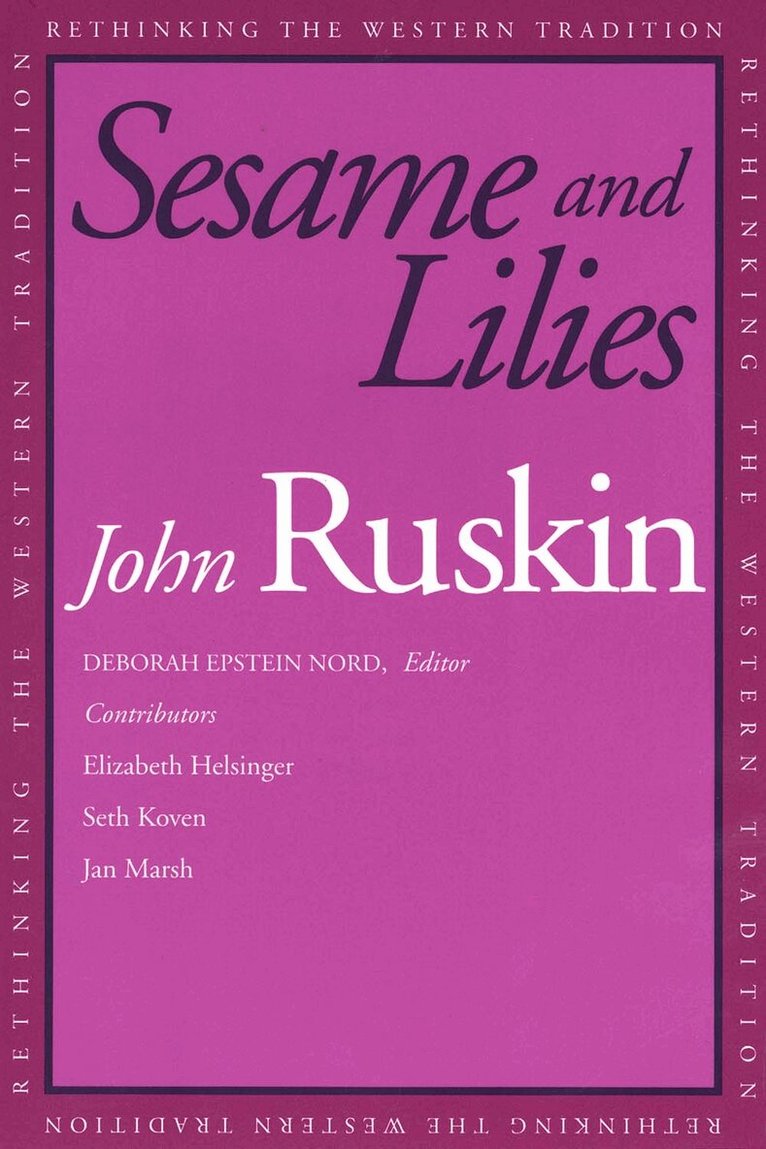
John Ruskin’s Sesame and Lilies, first published in 1865, stands as a classic nineteenth-century statement on the natures and duties of men and women. Although widely popular in its time, the work in its entirety has been out of print since the early twentieth century. This volume returns Sesame and Lilies to easy availability and reunites the two halves of the work: Of Kings’ Treasuries, in which Ruskin critiques Victorian manhood, and Of Queens’ Gardens, in which he counsels women to take their places as the moral guides of men and urges the parents of girls to educate them to this end. Feminist critics of the 1960s and 1970s regarded Of Queens’ Gardens as an exemplary expression of repressive Victorian ideas about femininity, and they paired it with John Stuart Mill’s more progressive Subjection of Women. This volume, by including the often ignored Of Kings’ Treasuries, offers readers full access to Ruskin’s complex and sometimes contradictory views on men and women. The accompanying essays place Sesame and Lilies within historical debates on men, women, culture, and the family. Elizabeth Helsinger examines the text as a meditation on the pleasures of reading, Seth Koven gives a wide-ranging account of how Victorians read Sesame and Lilies, and Jan Marsh situates the work within controversies over educational reform.
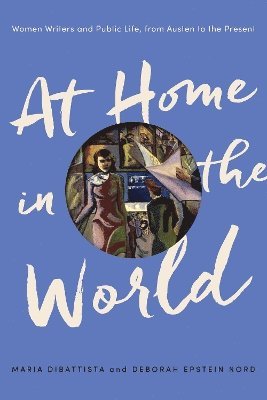
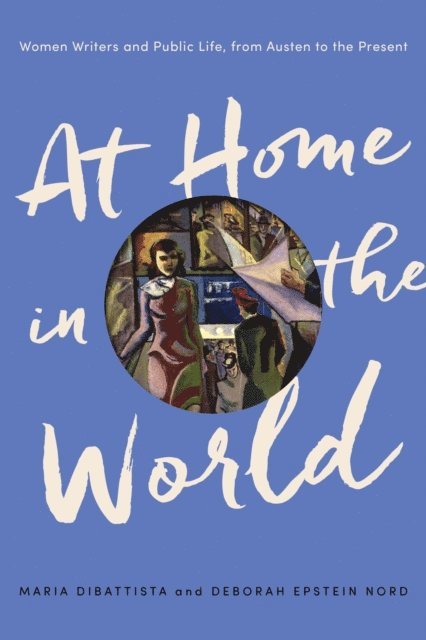
At Home in the World
Women Writers and Public Life, from Austen to the Present
Inbunden, Engelska, 2017
233 kr
Skickas inom 7-10 vardagar
A bold new literary history that says women's writing is defined less by domestic concerns than by an engagement with public life In a bold and sweeping reevaluation of the past two centuries of women's writing, At Home in the World argues that this body of work has been defined less by domestic concerns than by an active engagement with the most pressing issues of public life: from class and religious divisions, slavery, warfare, and labor unrest to democracy, tyranny, globalism, and the clash of cultures. In this new literary history, Maria DiBattista and Deborah Epstein Nord contend that even the most seemingly traditional works by British, American, and other English-language women writers redefine the domestic sphere in ways that incorporate the concerns of public life, allowing characters and authors alike to forge new, emancipatory narratives.The book explores works by a wide range of writers, including canonical figures such as Jane Austen, Charlotte Bronte, George Eliot, Harriet Jacobs, Edith Wharton, Virginia Woolf, Willa Cather, Gertrude Stein, and Toni Morrison; neglected or marginalized writers like Mary Antin, Tess Slesinger, and Martha Gellhorn; and recent and contemporary figures, including Nadine Gordimer, Anita Desai, Edwidge Danticat, and Jhumpa Lahiri. DiBattista and Nord show how these writers dramatize tensions between home and the wider world through recurrent themes of sailing forth, escape, exploration, dissent, and emigration. Throughout, the book uncovers the undervalued public concerns of women writers who ventured into ever-wider geographical, cultural, and political territories, forging new definitions of what it means to create a home in the world. The result is an enlightening reinterpretation of women's writing from the early nineteenth century to the present day.
233 kr
Skickas inom 7-10 vardagar
A bold literary history that says women’s writing is defined less by domestic concerns than by an engagement with public lifeIn a bold and sweeping reevaluation of the past two centuries of women’s writing, At Home in the World argues that this work has been defined less by domestic concerns than by an active engagement with the most pressing issues of public life: from class and religious divisions, slavery, warfare, and labor unrest to democracy, tyranny, globalism, and the clash of cultures. Maria DiBattista and Deborah Epstein Nord show that even the most seemingly traditional works by British, American, and other English-language women writers redefine the domestic sphere in ways that incorporate the concerns of public life. Exploring works by a wide range of writers, including canonical, neglected, and contemporary figures, this compelling and concise literary history uncovers the public concerns of women writers who ventured into ever-wider geographical, cultural, and political territories, forging new definitions of what it means to create a home in the world.
1 746 kr
Skickas inom 10-15 vardagar
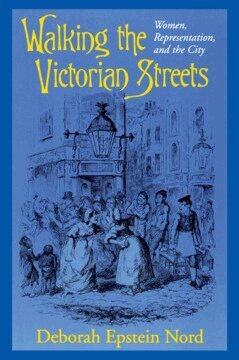
Literary traditions of urban description in the nineteenth century revolve around the figure of the stroller, a man who navigates and observes the city streets with impunity. Whether the stroller appears as fictional character, literary persona, or the nameless, omnipresent narrator of panoramic fiction, he casts the woman of the streets in a distinctive role. She functions at times as a double for the walker's marginal and alienated self and at others as connector and contaminant, carrier of the literal and symbolic diseases of modern urban life. In Walking the Victorian Streets, Deborah Epstein Nord explores the way in which the female figure is used as a marker for social suffering, poverty, and contagion in texts by De Quincey, Lamb, Pierce Egan, and Dickens.What, then, of the female walker and urban chronicler? While the male spectator enjoyed the ability to see without being seen, the female stroller struggled to transcend her role as urban spectacle and her association with sexual transgression. In novels, nonfiction, and poetry by Elizabeth Gaskell1 Flora Tristan, Margaret Harkness, Amy Levy, Maud Pember Reeves, Beatrice Webb, Helen Bosanquet, and others, Nord locates the tensions felt by the female spectator conscious of herself as both observer and observed. Finally, Walking the Victorian Streets considers the legacy of urban rambling and the uses of incognito in twentieth-century texts by George Orwell and Virginia Woolf.
299 kr
Skickas inom 10-15 vardagar
Literary traditions of urban description in the nineteenth century revolve around the figure of the stroller, a man who navigates and observes the city streets with impunity. Whether the stroller appears as fictional character, literary persona, or the nameless, omnipresent narrator of panoramic fiction, he casts the woman of the streets in a distinctive role. She functions at times as a double for the walker's marginal and alienated self and at others as connector and contaminant, carrier of the literal and symbolic diseases of modern urban life. In Walking the Victorian Streets, Deborah Epstein Nord explores the way in which the female figure is used as a marker for social suffering, poverty, and contagion in texts by De Quincey, Lamb, Pierce Egan, and Dickens.What, then, of the female walker and urban chronicler? While the male spectator enjoyed the ability to see without being seen, the female stroller struggled to transcend her role as urban spectacle and her association with sexual transgression. In novels, nonfiction, and poetry by Elizabeth Gaskell1 Flora Tristan, Margaret Harkness, Amy Levy, Maud Pember Reeves, Beatrice Webb, Helen Bosanquet, and others, Nord locates the tensions felt by the female spectator conscious of herself as both observer and observed. Finally, Walking the Victorian Streets considers the legacy of urban rambling and the uses of incognito in twentieth-century texts by George Orwell and Virginia Woolf.
535 kr
Skickas inom 10-15 vardagar