Dieter Gosewinkel – författare
Visar alla böcker från författaren Dieter Gosewinkel. Handla med fri frakt och snabb leverans.
14 produkter
Struggles for Belonging
Citizenship in Europe, 1900-2020
E-bok, 2021
1832 kr
Lägg i varukorg
Citizenship was the most important mark of political belonging in Europe in the twentieth century, while estate, religion, party, class, and nation lost political significance in the century of extremes. This is shown by examining the legal institution of citizenship, with its deciding influence on …
Struggles for Belonging
Citizenship in Europe, 1900-2020
E-bok, 2021
1832 kr
Lägg i varukorg
Citizenship was the most important mark of political belonging in Europe in the twentieth century, while estate, religion, party, class, and nation lost political significance in the century of extremes. This is shown by examining the legal institution of citizenship, with its deciding influence on …
Struggles for Belonging
Citizenship in Europe, 1900-2020
Inbunden, 2021
2055 kr
Lägg i varukorg
Citizenship was the most important mark of political belonging in Europe in the twentieth century, while estate, religion, party, class, and nation lost political significance in the century of extremes. This is shown by examining the legal institution of citizenship, with its deciding influence on …
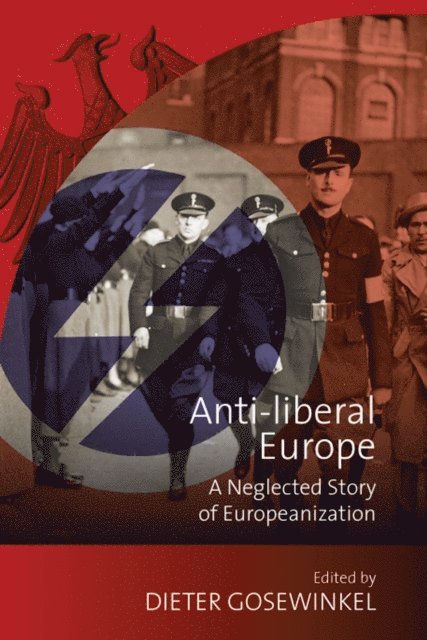
Anti-liberal Europe
A Neglected Story of Europeanization
Inbunden, 2014
1979 kr
Lägg i varukorg
The history of modern Europe is often presented with the hindsight of present-day European integration, which was a genuinely liberal project based on political and economic freedom. Many other visions for Europe developed in the 20th century, however, were based on an idea of community rooted in …
Anti-liberal Europe
A Neglected Story of Europeanization
E-bok, 2014
335 kr
Lägg i varukorg
The history of modern Europe is often presented with the hindsight of present-day European integration, which was a genuinely liberal project based on political and economic freedom. Many other visions for Europe developed in the 20th century, however, were based on an idea of community rooted in …
Transnational Struggles for Recognition
New Perspectives on Civil Society since the 20th Century
Av Dieter Gosewinkel, Dieter Rucht
Inbunden, 2016
1921 kr
Lägg i varukorg
Now more than ever, “recognition” represents a critical concept for social movements, both as a strategic tool and an important policy aim. While the subject’s theoretical and empirical dimensions have usually been studied separately, this interdisciplinary collection focuses on both to examine the …
Transnational Struggles for Recognition
New Perspectives on Civil Society since the 20th Century
Av Dieter Rucht, Dieter Gosewinkel
E-bok, 2016
326 kr
Lägg i varukorg
Now more than ever, “recognition” represents a critical concept for social movements, both as a strategic tool and an important policy aim. While the subject’s theoretical and empirical dimensions have usually been studied separately, this interdisciplinary collection focuses on both to examine the …
Figurationen Des Staates in Deutschland Und Frankreich 1870-1945. Les Figures de L'Etat En Allemagne Et En France
Av Alain Chatriot, Dieter Gosewinkel
Inbunden, 2006
745 kr
Lägg i varukorg
Der Staat ist ein zentraler geschichts- und sozialwissenschaftlicher Topos in Deutschland wie in Frankreich. In der vergleichenden Forschung zu beiden Ländern taucht er hingegen so gut wie nicht auf. Der vorliegende Band zielt auf diese Lücke. Er vereint aktuelle Forschungen zur Geschichte des …
Staatsbürgerschaften
Kämpfe um politische Zugehörigkeit in Deutschland, Frankreich und Polen seit dem 19. Jahrhundert
Av Raphael Gross, Dieter Gosewinkel m. fl.
E-bok, 2023
249 kr
Lägg i varukorg
Vom 19. Jahrhundert bis zur Gegenwart wird der Bedeutungswandel von Staatsbürgerschaft gezeigt: ihr Aufstieg zur dominanten Form politischer Zugehörigkeit im Zeitalter des Nationalstaats und Instrument ethnischer und politischer Selektion in Diktaturen bis hin zur neuen Gestalt der …
Wissenschaft, Politik, Verfassungsgericht
Av Ernst-Wolfgang Böckenförde, Dieter Gosewinkel
Häftad, 2011
263 kr
Lägg i varukorg
Einbürgern und Ausschließen
Die Nationalisierung der Staatsangehörigkeit vom Deutschen Bund bis zur Bundesrepublik Deutschland
E-bok, 2003
475 kr
Lägg i varukorg
In aktuellen Diskussionen etwa über Spätaussiedler oder die Integration von Ausländern geht es immer wieder um Staatsangehörigkeit und Einbürgerung. Die Staatsangehörigkeit wurde im 19. Jahrhundert zur Institution des Nationalstaates, der mit der Einbürgerung die Maßstäbe seines …
Menschenrechte und ihre Kritiker
Ideologien, Argumente, Wirkungen
Av Annette Weinke, Dieter Gosewinkel
E-bok, 2019
204 kr
Lägg i varukorg
Unterschiedliche historische Spielarten der Menschenrechtskritik und deren Wirkungsgeschichte.Während die 1990er Jahre als eine Hochzeit der internationalen Menschenrechtsbewegung galten, ist die Debatte über Menschenrechte seit einigen Jahren zunehmend von Skepsis und Pessimismus geprägt. …
Staatsbürgerschaft im 19. und 20. Jahrhundert
Eine Veröffentlichung aus dem Arbeitskreis für Rechtswissenschaft und Zeitgeschichte an der Akademie der Wissenschaften und der Literatur | Mainz
Av Julia Angster, Dieter Gosewinkel m. fl.
Inbunden, 2019
454 kr
Tillfälligt slut
Die Staatsbürgerschaft ist eine Institution des Rechts, die tief in der Geschichte Europas wurzelt. Sie markiert mit Mitteln des Rechts die Grenze zwischen Zugehörigkeit und Nicht-Zugehörigkeit und erfüllt damit eine elementare Funktion politischer Ordnung. Warum und mit welchen Folgen für die …