Disasters Roundtable – författare
Visar alla böcker från författaren Disasters Roundtable. Handla med fri frakt och snabb leverans.
4 produkter
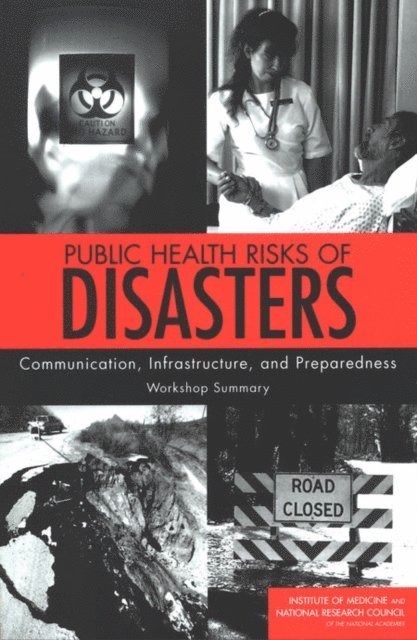
Public Health Risks of Disasters
Communication, Infrastructure, and Preparedness: Workshop Summary
Av and Medicine Roundtable on Environmental Health Sciences, Research, Board on Health Sciences Policy m. fl.
E-bok, 2005
428 kr
Lägg i varukorg
The National Research Council''s Disasters Roundtable and the Institute of Medicine''s Roundtable on Environmental Health Sciences, Research, and Medicine were established as mechanisms for bringing various stakeholders together to discuss timely issues in a neutral setting. The goal was not to …
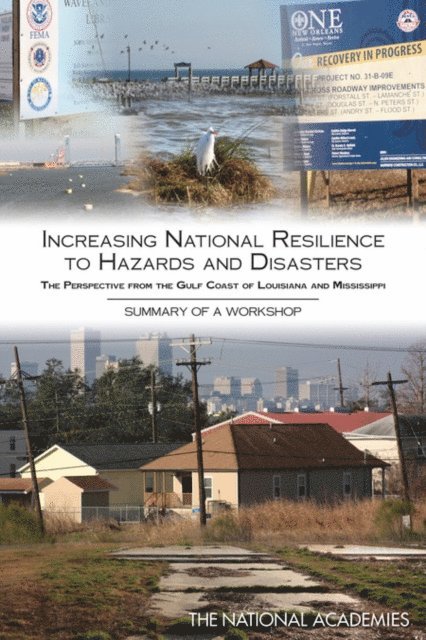
Increasing National Resilience to Hazards and Disasters
The Perspective from the Gulf Coast of Louisiana and Mississippi: Summary of a Workshop
Av Committee on Increasing National Resilience to Hazards and Disasters, and Public Policy Committee on Science, Engineering m. fl.
E-bok, 2011
475 kr
Lägg i varukorg
Natural disasters are having an increasing effect on the lives of people in the United States and throughout the world. Every decade, property damage caused by natural disasters and hazards doubles or triples in the United States. More than half of the U.S. population lives within 50 miles of a …
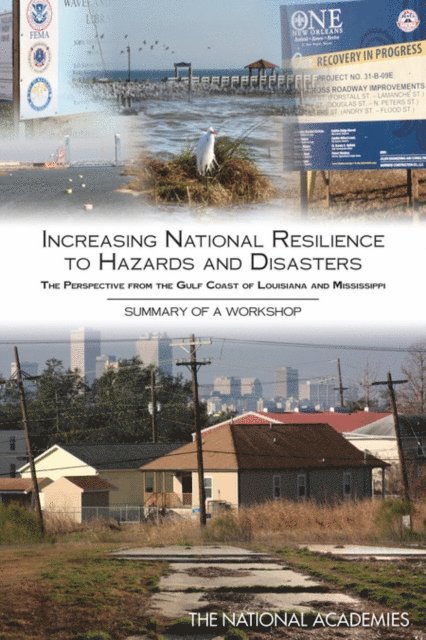
Increasing National Resilience to Hazards and Disasters
The Perspective from the Gulf Coast of Louisiana and Mississippi: Summary of a Workshop
Av Committee on Increasing National Resilience to Hazards and Disasters, and Public Policy Committee on Science, Engineering m. fl.
E-bok, 2011
502 kr
Lägg i varukorg
Natural disasters are having an increasing effect on the lives of people in the United States and throughout the world. Every decade, property damage caused by natural disasters and hazards doubles or triples in the United States. More than half of the U.S. population lives within 50 miles of a …
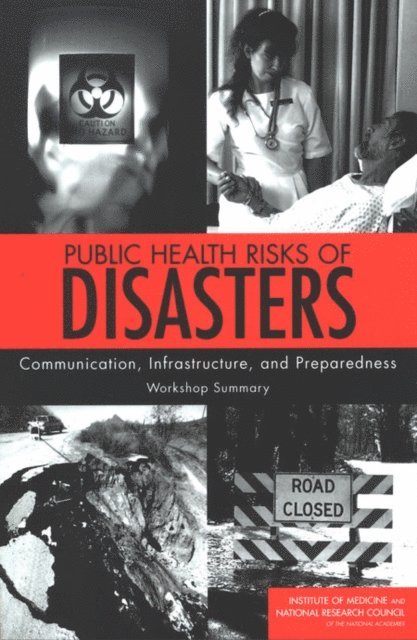
Public Health Risks of Disasters
Communication, Infrastructure, and Preparedness: Workshop Summary
Av and Medicine Roundtable on Environmental Health Sciences, Research, Board on Health Sciences Policy m. fl.
E-bok, 2005
295 kr
Lägg i varukorg
The National Research Council''s Disasters Roundtable and the Institute of Medicine''s Roundtable on Environmental Health Sciences, Research, and Medicine were established as mechanisms for bringing various stakeholders together to discuss timely issues in a neutral setting. The goal was not to …