Donghui Lin – författare
Visar alla böcker från författaren Donghui Lin. Handla med fri frakt och snabb leverans.
7 produkter
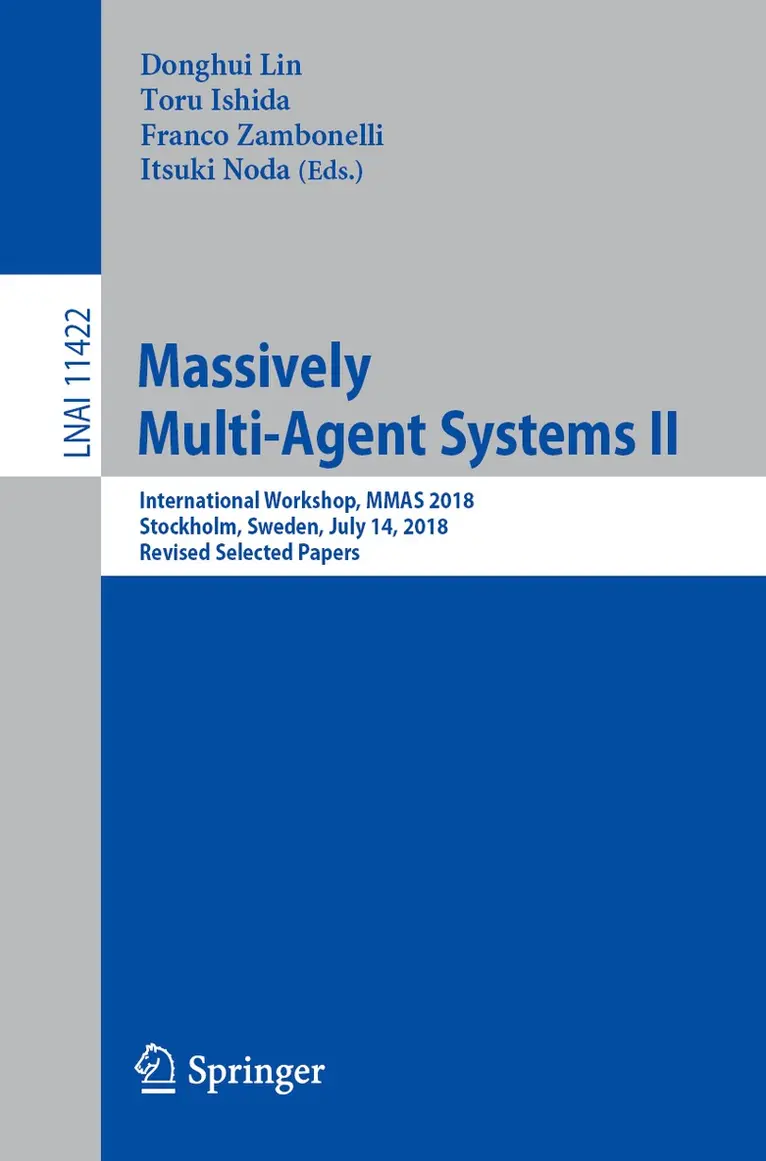
Massively Multi-Agent Systems II
International Workshop, MMAS 2018, Stockholm, Sweden, July 14, 2018, Revised Selected Papers
Av Donghui Lin, Toru Ishida m. fl.
Häftad, 2019
567 kr
Lägg i varukorg
This book contains revised selected and invited papers presented at the International Workshop on Massively Multi-Agent Systems, MMAS 2018, held in Stockholm, Sweden, in July 2018.The 7 revised full papers presented were carefully reviewed and selected for inclusion in this volume. Also included …
Massively Multi-Agent Systems II
International Workshop, MMAS 2018, Stockholm, Sweden, July 14, 2018, Revised Selected Papers
Av Itsuki Noda, Franco Zambonelli m. fl.
E-bok, 2019
739 kr
Lägg i varukorg
This book contains revised selected and invited papers presented at the International Workshop on Massively Multi-Agent Systems, MMAS 2018, held in Stockholm, Sweden, in July 2018. The 7 revised full papers presented were carefully reviewed and selected for inclusion in this volume. Also included …
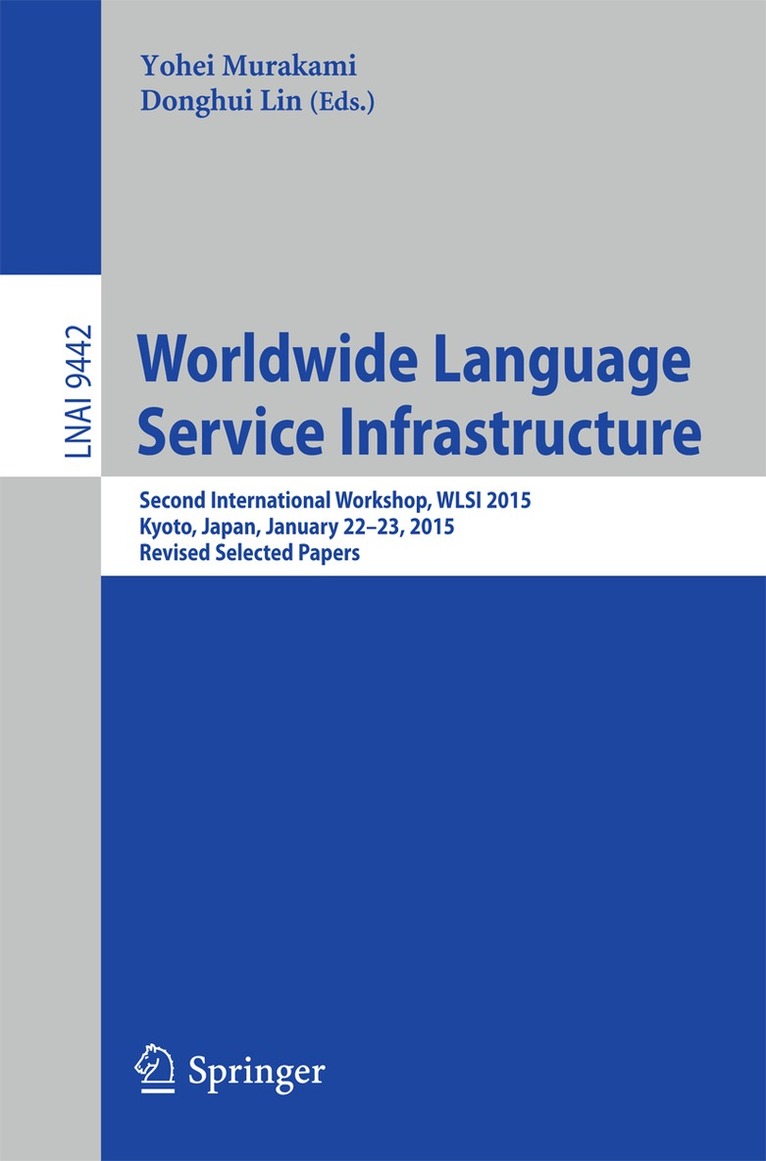
Worldwide Language Service Infrastructure
Second International Workshop, WLSI 2015, Kyoto, Japan, January 22-23, 2015. Revised Selected Papers
Av Yohei Murakami, Donghui Lin
Häftad, 2016
567 kr
Lägg i varukorg
This book constitutes the refereed post-workshopproceedings of the Second International Workshop on Worldwide Language ServiceInfrastructure, WLSI 2015, held in Kyoto, Japan, in January 2015.The 4 full papers included in this volume and presentedtogether with 2 short papers and 8 invited papers, …
Worldwide Language Service Infrastructure
Second International Workshop, WLSI 2015, Kyoto, Japan, January 22-23, 2015. Revised Selected Papers
Av Donghui Lin, Yohei Murakami
E-bok, 2016
739 kr
Lägg i varukorg
This book constitutes the refereed post-workshopproceedings of the Second International Workshop on Worldwide Language ServiceInfrastructure, WLSI 2015, held in Kyoto, Japan, in January 2015. The 4 full papers included in this volume and presentedtogether with 2 short papers and 8 invited papers, …
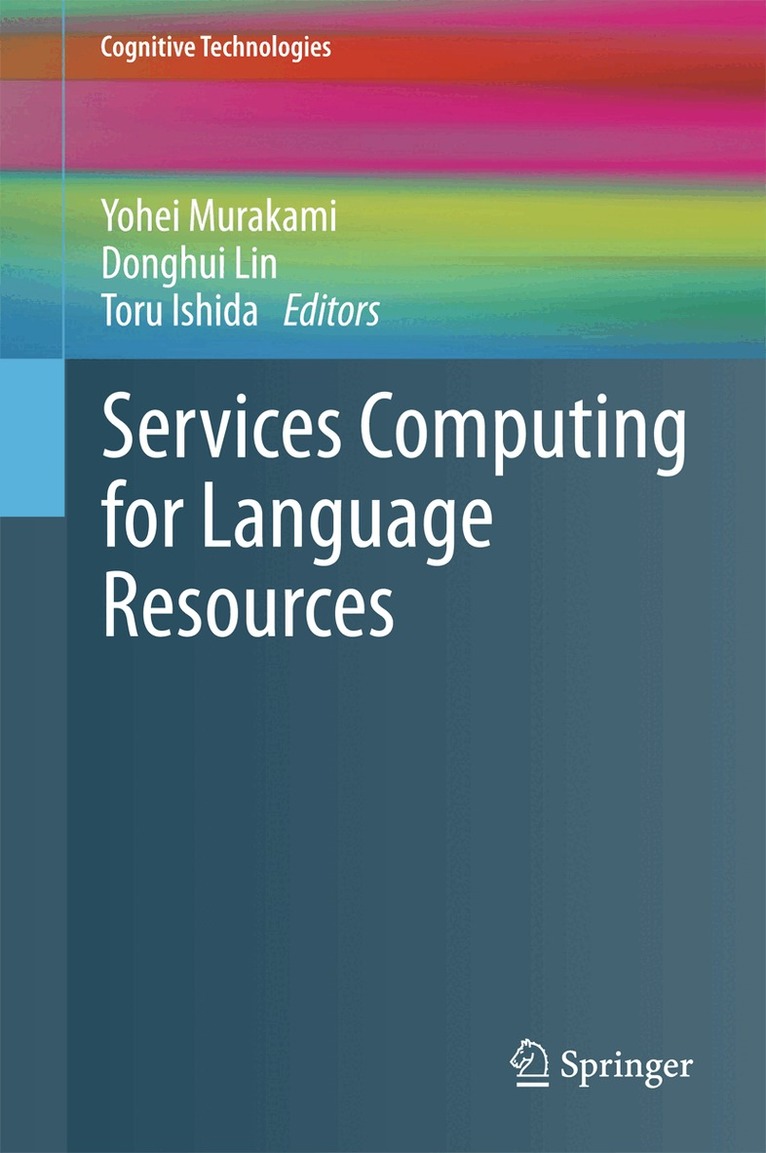
Services Computing for Language Resources
Av Yohei Murakami, Donghui Lin m. fl.
Inbunden, 2018
550 kr
Lägg i varukorg
Describing the technologies to combine language resources flexibly as web services, this book provides valuable case studies for those who work in services computing, language resources, human–computer interaction (HCI), computer-supported cooperative work (CSCW), and service science. The authors …
Services Computing for Language Resources
Av Toru Ishida, Donghui Lin m. fl.
E-bok, 2018
739 kr
Lägg i varukorg
Describing the technologies to combine language resources flexibly as web services, this book provides valuable case studies for those who work in services computing, language resources, human–computer interaction (HCI), computer-supported cooperative work (CSCW), and service science. The authors …
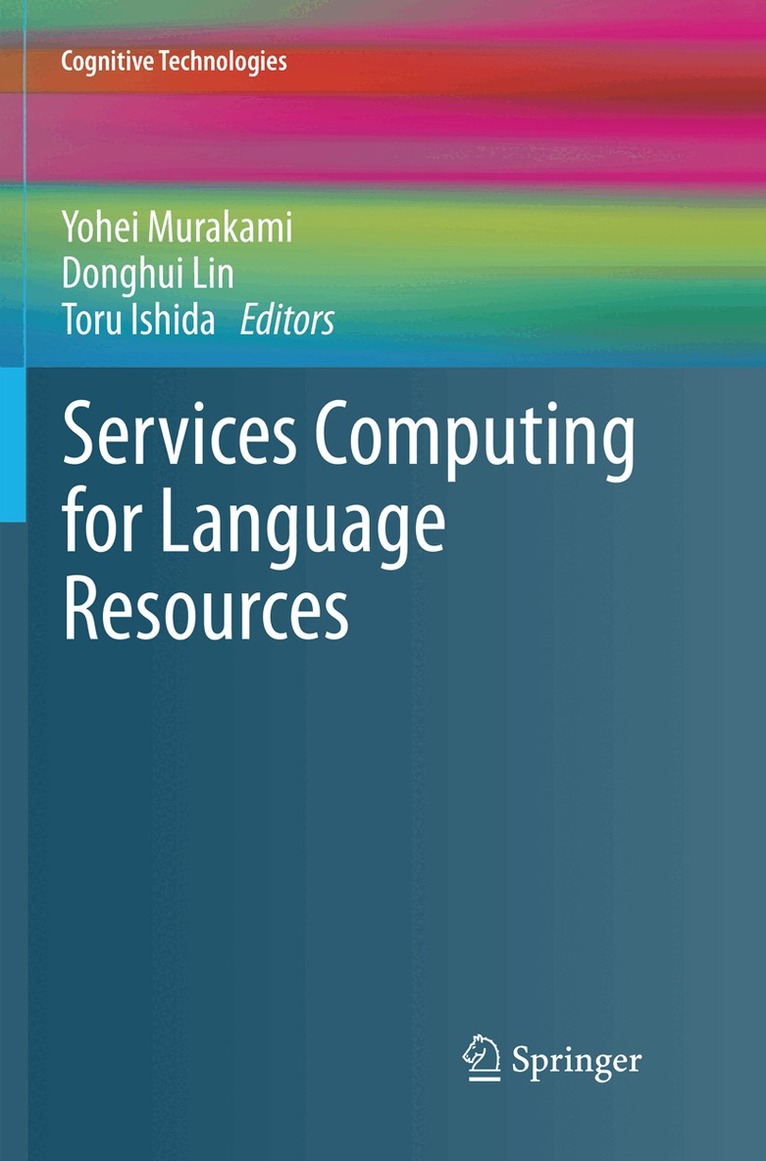
Services Computing for Language Resources
Av Yohei Murakami, Donghui Lin m. fl.
Häftad, 2018
567 kr
Lägg i varukorg
Describing the technologies to combine language resources flexibly as web services, this book provides valuable case studies for those who work in services computing, language resources, human–computer interaction (HCI), computer-supported cooperative work (CSCW), and service science. The authors …