Doris Sommer - Böcker
Visar alla böcker från författaren Doris Sommer. Handla med fri frakt och snabb leverans.
12 produkter
12 produkter
349 kr
Tillfälligt slut
Nationalisms and Sexualities departs from social scientific paradigms that treat nation and sexuality as discrete and autonomous entities. Its contributors respond instead to issues that redefine what is presently considered "the political:" the formation of sexual, gendered, racial, and/or class identities and it relation to the formation of national identities, and vice-versa; and the ways colonialism and postcolonialism, as well as technologies of representation, have contributed to the consolidations of national and sexual identities.
Del 8 - Latin American Literature and Culture
Foundational Fictions
The National Romances of Latin America
Häftad, Engelska, 1993
747 kr
Skickas inom 3-6 vardagar
National consolidation and romantic novels go hand in hand in Latin America. "Foundational Fictions" shows how 19th century patriotism and heterosexual passion historically depend on one another to engender productive citizens.
412 kr
Skickas inom 7-10 vardagar
Pre-Texts is a methodology developed by Doris Sommer for education professionals to stimulate close reading and critical-thinking skills by making art based on challenging texts. This book is a manual of sorts. Presented in both English and Spanish, it gathers vivid descriptions and images of dozens of different Pre-Texts activities held across the globe, in person and in online forums, with groups diverse in age, background, and native language. Pre-Texts International features testimonials from both facilitators and participants, who describe in detail the planning, procedures, and activities they carried out and attest to the methodology’s efficacy and adaptability in a wide range of contexts.
621 kr
Skickas inom 3-6 vardagar
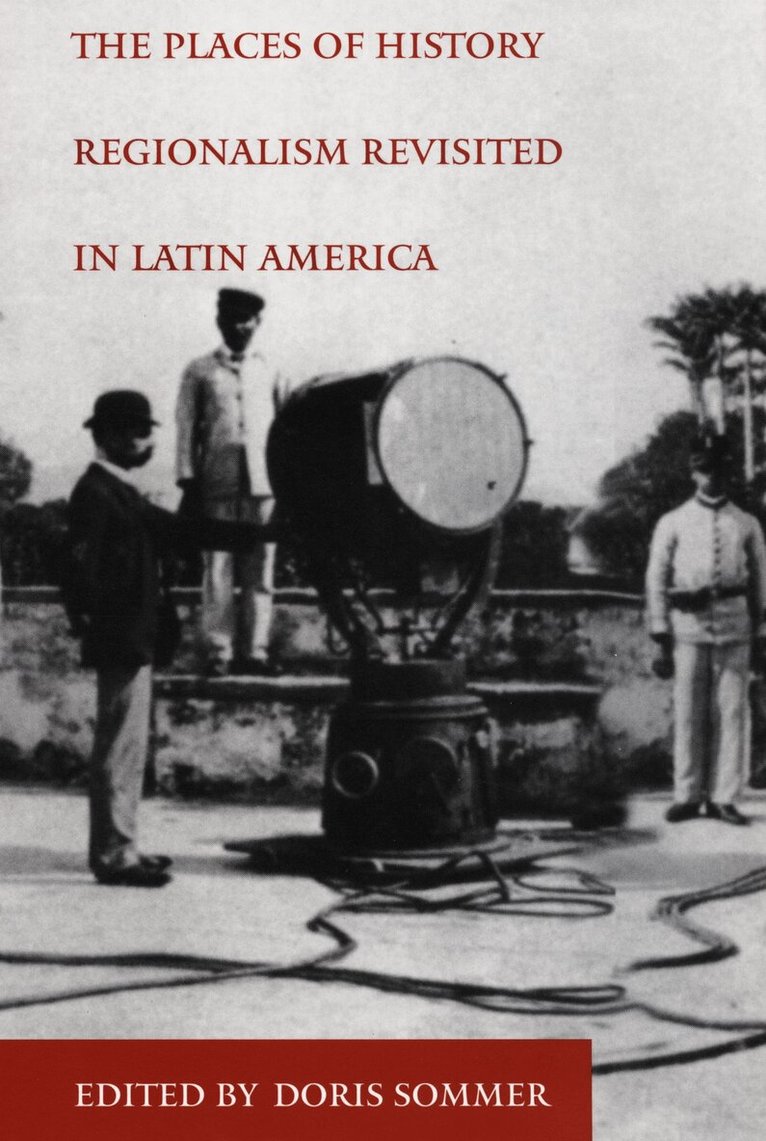
Responding to the pressures of current theoretical trends toward models of cultural globalization, the essays collected here bring a historical focus to literary studies. They suggest that only by exploring the particularities of regional historical cultures can the multiple meanings of American identities be understood. Representing a broad range of contemporary criticism, this volume features many short essays by the most well-known and respected Latin Americanists, each devoting attention to specific matters of history. The topics range from Incan architecture to Chicano and Nuyorican habitats; from turn of the century Argentine criminology to Caribbean homophobia; from the rhetorics of independence and dictatorship to Mexican ambivalence about opera and Brazil’s move beyond monarchy; and from the precarious survival of Spanish language in Latin America to its paradoxical legacy of enlightenment in the Philippines. Originally published as a special issue of Modern Language Quarterly (June 1996), this expanded edition includes a new introduction by Doris Sommer and a new essay by Vincente Rafael. Viewed together, these essays reveal a cultural richness that is sure to interest literary scholars and Latin Americanists alike.Contributors. Carlos J. Alonso, Antonio BenÍtez-Rojo, John Beverley, Debra A. Castillo, Arcadio Diaz-QuiÑones, Juan Flores, Mary M. Gaylord, JosÉ LimÓn, Josefina Ludmer, Francine Masiello, Antonio Mazzotti, Walter D. Mignolo, Sylvia Molloy, Mary Louise Pratt, Vincente Rafael, Julio Ramos, Susana Rotker, Roberto Schwarz, Diana Taylor, Nancy Vogeley
1 190 kr
Skickas inom 7-10 vardagar
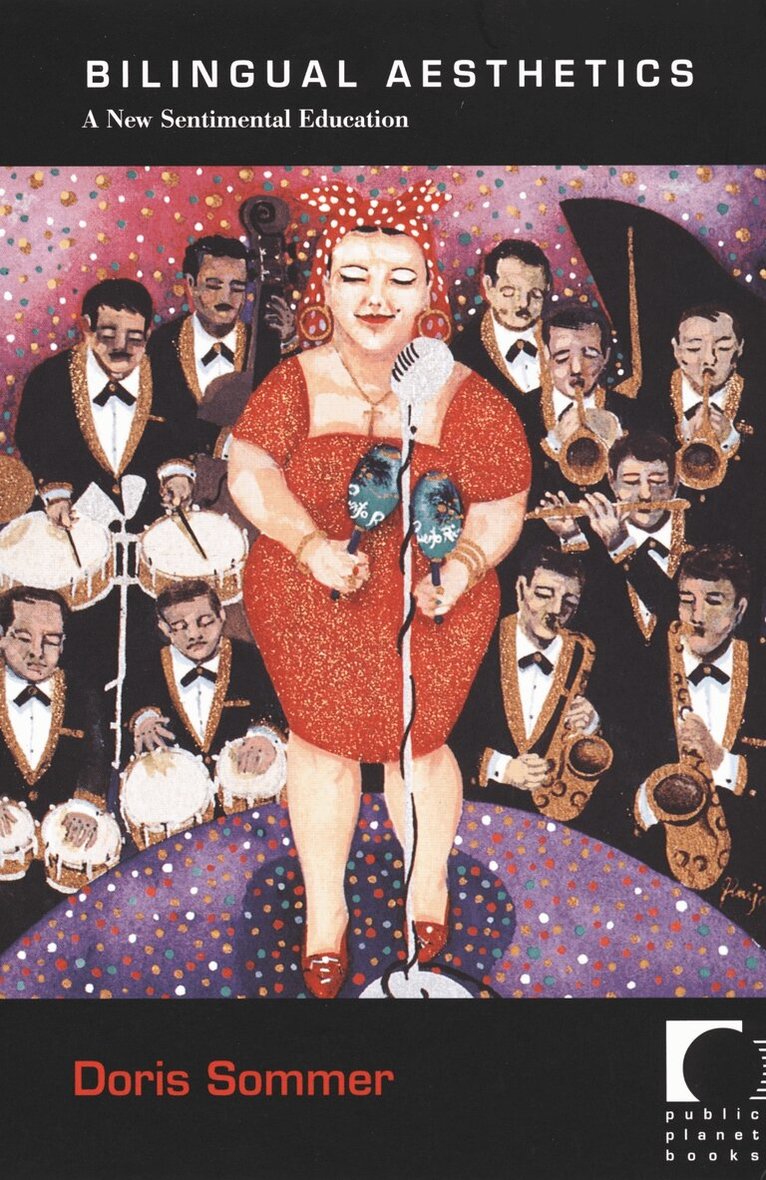
Knowing a second language entails some unease; it requires a willingness to make mistakes and work through misunderstandings. The renowned literary scholar Doris Sommer argues that feeling funny is good for you, and for society. In Bilingual Aesthetics Sommer invites readers to make mischief with meaning, to play games with language, and to allow errors to stimulate new ways of thinking. Today’s global world has outgrown any one-to-one correlation between a people and a language; liberal democracies can either encourage difference or stifle it through exclusionary policies. Bilingual Aesthetics is Sommer’s passionate call for citizens and officials to cultivate difference and to realize that the precarious points of contact resulting from mismatches between languages, codes, and cultures are the lifeblood of democracy, as well as the stimulus for aesthetics and philosophy.Sommer encourages readers to entertain the creative possibilities inherent in multilingualism. With her characteristic wit and love of language, she focuses on humor-particularly bilingual jokes-as the place where tensions between and within cultures are played out. She draws on thinking about humor and language by a range of philosophers and others, including Sigmund Freud, Immanuel Kant, Ludwig Wittgenstein, Hannah Arendt, and Mikhail Bakhtin. In declaring the merits of allowing for crossed signals, Sommer sends a clear message: Making room for more than one language is about value added, not about remediation. It is an expression of love for a contingent and changing world.
362 kr
Skickas inom 7-10 vardagar
Knowing a second language entails some unease; it requires a willingness to make mistakes and work through misunderstandings. The renowned literary scholar Doris Sommer argues that feeling funny is good for you, and for society. In Bilingual Aesthetics Sommer invites readers to make mischief with meaning, to play games with language, and to allow errors to stimulate new ways of thinking. Today’s global world has outgrown any one-to-one correlation between a people and a language; liberal democracies can either encourage difference or stifle it through exclusionary policies. Bilingual Aesthetics is Sommer’s passionate call for citizens and officials to cultivate difference and to realize that the precarious points of contact resulting from mismatches between languages, codes, and cultures are the lifeblood of democracy, as well as the stimulus for aesthetics and philosophy.Sommer encourages readers to entertain the creative possibilities inherent in multilingualism. With her characteristic wit and love of language, she focuses on humor-particularly bilingual jokes-as the place where tensions between and within cultures are played out. She draws on thinking about humor and language by a range of philosophers and others, including Sigmund Freud, Immanuel Kant, Ludwig Wittgenstein, Hannah Arendt, and Mikhail Bakhtin. In declaring the merits of allowing for crossed signals, Sommer sends a clear message: Making room for more than one language is about value added, not about remediation. It is an expression of love for a contingent and changing world.
415 kr
Skickas inom 7-10 vardagar
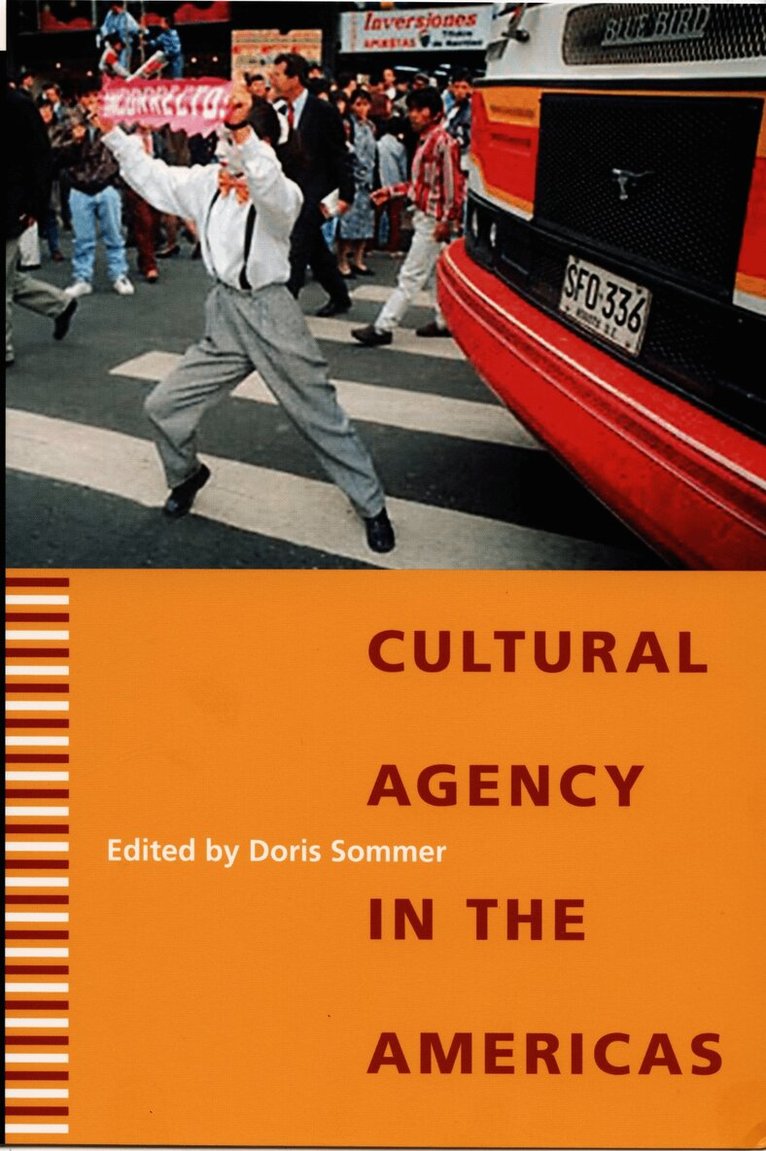
“Cultural agency” refers to a range of creative activities that contribute to society, including pedagogy, research, activism, and the arts. Focusing on the connections between creativity and social change in the Americas, this collection encourages scholars to become cultural agents by reflecting on exemplary cases and thereby making them available as inspirations for more constructive theory and more innovative practice. Creativity supports democracy because artistic, administrative, and interpretive experiments need margins of freedom that defy monolithic or authoritarian regimes. The ingenious ways in which people pry open dead-ends of even apparently intractable structures suggest that cultural studies as we know it has too often gotten stuck in critique. Intellectual responsibility can get beyond denunciation by acknowledging and nurturing the resourcefulness of common and uncommon agents. Based in North and South America, scholars from fields including anthropology, performance studies, history, literature, and communications studies explore specific variations of cultural agency across Latin America. Contributors reflect, for example, on the paradoxical programming and reception of a state-controlled Cuban radio station that connects listeners at home and abroad; on the intricacies of indigenous protests in Brazil; and the formulation of cultural policies in cosmopolitan Mexico City. One contributor notes that trauma theory targets individual victims when it should address collective memory as it is worked through in performance and ritual; another examines how Mapuche leaders in Argentina perceived the pitfalls of ethnic essentialism and developed new ways to intervene in local government. Whether suggesting modes of cultural agency, tracking exemplary instances of it, or cautioning against potential missteps, the essays in this book encourage attentiveness to, and the multiplication of, the many extraordinary instantiations of cultural resourcefulness and creativity throughout Latin America and beyond.Contributors. Arturo Arias, Claudia Briones, NÉstor GarcÍa Canclini, Denise Corte, Juan Carlos Godenzzi, Charles R. Hale, Ariana HernÁndez-Reguant, Claudio Lomnitz, JesÚs MartÍn Barbero, J. Lorand Matory, Rosamel MillamÁn, Diane M. Nelson, Mary Louise Pratt, Alcida Rita Ramos, Doris Sommer, Diana Taylor, Santiago Villaveces
1 118 kr
Skickas inom 7-10 vardagar
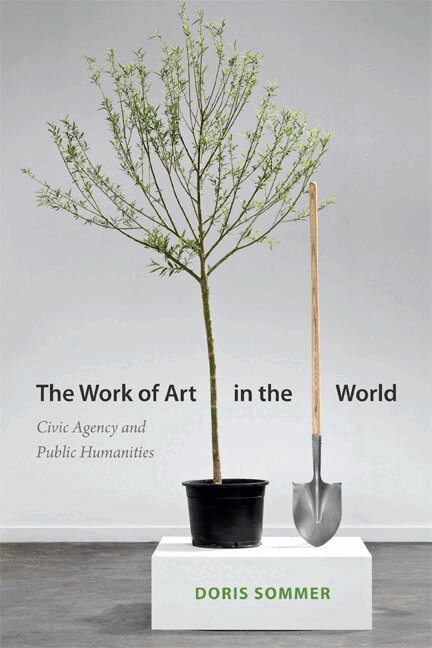
Celebrating art and interpretation that take on social challenges, Doris Sommer steers the humanities back to engagement with the world. The reformist projects that focus her attention develop momentum and meaning as they circulate through society to inspire faith in the possible. Among the cases that she covers are top-down initiatives of political leaders, such as those launched by Antanas Mockus, former mayor of BogotÁ, Colombia, and also bottom-up movements like the Theatre of the Oppressed created by the Brazilian director, writer, and educator Augusto Boal. Alleging that we are all cultural agents, Sommer also takes herself to task and creates Pre-Texts, an international arts-literacy project that translates high literary theory through popular creative practices. The Work of Art in the World is informed by many writers and theorists. Foremost among them is the eighteenth-century German poet and philosopher Friedrich Schiller, who remains an eloquent defender of art-making and humanistic interpretation in the construction of political freedom. Schiller's thinking runs throughout Sommer's modern-day call for citizens to collaborate in the endless co-creation of a more just and more beautiful world.
278 kr
Skickas inom 7-10 vardagar
Celebrating art and interpretation that take on social challenges, Doris Sommer steers the humanities back to engagement with the world. The reformist projects that focus her attention develop momentum and meaning as they circulate through society to inspire faith in the possible. Among the cases that she covers are top-down initiatives of political leaders, such as those launched by Antanas Mockus, former mayor of BogotÁ, Colombia, and also bottom-up movements like the Theatre of the Oppressed created by the Brazilian director, writer, and educator Augusto Boal. Alleging that we are all cultural agents, Sommer also takes herself to task and creates Pre-Texts, an international arts-literacy project that translates high literary theory through popular creative practices. The Work of Art in the World is informed by many writers and theorists. Foremost among them is the eighteenth-century German poet and philosopher Friedrich Schiller, who remains an eloquent defender of art-making and humanistic interpretation in the construction of political freedom. Schiller's thinking runs throughout Sommer's modern-day call for citizens to collaborate in the endless co-creation of a more just and more beautiful world.
2 088 kr
Skickas inom 10-15 vardagar
Originally published in 1992, Nationalisms and Sexualities addresses questions of how notions of identity are shaped by discussions of nationalism and sexuality. The book looks at a variety of disciplinary and theoretical perspectives, on a wide range of geographical regions and historical moments. The volume departs from social scientific paradigms that treat nation and sexuality as discrete and autonomous entities. Its contributors respond instead to emerging issues that redefine the horizons of what is globally considered today as "the political": how the formation of sexual, gendered, racial, and/or class identities have contributed to the formation of sexual, gendered, racial, and/or class identities, and vice versa; how technologies of representation play a role in the constitution of national and sexual identities; how colonialism and postcolonialism have altered consolidations of national and sexual identities.
495 kr
Skickas inom 10-15 vardagar
Originally published in 1992, Nationalisms and Sexualities addresses questions of how notions of identity are shaped by discussions of nationalism and sexuality. The book looks at a variety of disciplinary and theoretical perspectives, on a wide range of geographical regions and historical moments. The volume departs from social scientific paradigms that treat nation and sexuality as discrete and autonomous entities. Its contributors respond instead to emerging issues that redefine the horizons of what is globally considered today as "the political": how the formation of sexual, gendered, racial, and/or class identities have contributed to the formation of sexual, gendered, racial, and/or class identities, and vice versa; how technologies of representation play a role in the constitution of national and sexual identities; how colonialism and postcolonialism have altered consolidations of national and sexual identities.
616 kr
Skickas inom 10-15 vardagar
Sommer asserts that many people normally live that is, think, feel, create, reason, persuade, laugh in more than one language. She claims that traditional scholarship (1 - aesthetics, 2 - language and philosophy, 3 - psychoanalysis, and 4 - politics) cannot see or hear more than one language at a time, and her goal is to create a new field - bilingual arts and aesthetics, which examines the aesthetic product which is produced by bilingual diasporic communities. Sommer invites distinguished writers to examine the fundamental difference it makes to play games between languages. These essays bring home challenging observations of postmodernism (multiple identities, the fragility of meaning, the risks of communication) with the grace and intelligence of seasoned players. The focus of this volume is the Americas, but examples and theoretical proposals come from Europe, too. There, the issue of traditional regional language rights makes points of contact with indigenous rights in the Americas. In both areas, the issue offers another level of complexity to the migrant and cosmopolitan character of local societies in a global economy.