Edmund T. Hamann – författare
Visar alla böcker från författaren Edmund T. Hamann. Handla med fri frakt och snabb leverans.
10 produkter
10 produkter
E-bok
PDF, Engelska, 2003993 kr
Läs direkt efter köp
This is the tale of the origin, emergence, and transformation of an unorthodox binational partnership, the Georgia Project, that brought a Mexican university to aid a Georgia school district that suddenly found itself hosting thousands of Latino newcomers. It is also the tale of educational leaders evolving understandings of what they needed to do.This book tells the particular story of the Georgia Project, a partnership initiated between leading citizens, a school district, and a Mexican university to help Dalton, Georgia, the Carpet Capital of the World as it suddenly found itself host to the first majority Latino school district in Georgia. The book focuses on the evolving understandings of six early leders of this initiative and their resultant actions. It tries to carefully situate these particular actors within the larger swirl of conflicting scripts and public sphere messages regarding who Latino newcomers are, what they want and merited, and how the community should respond.
E-bok
PDF, Engelska, 2001497 kr
Läs direkt efter köp
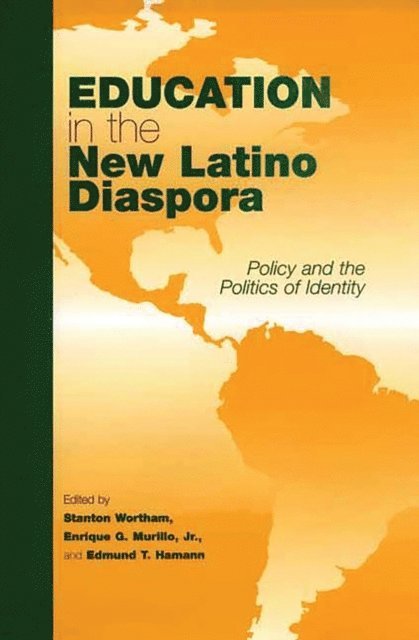
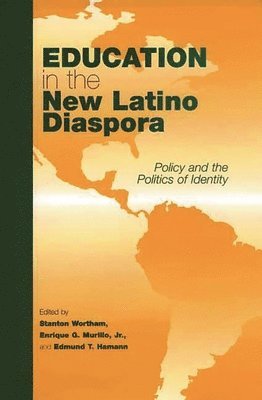
The authors describe a new demographic phenomenon: the settlement of Latino families in areas of the United States where previously there has been little Latino presence.This New Latino Diaspora places pressures on host communities, both to develop conceptualizations of Latino newcomers and to provide needed services.These pressures are particularly felt in schools; in some New Latino Diaspora locations the percentage of Latino students in local public schools has risen from zero to 30 or even 50 percent in less than a decade.Latino newcomers, of course, bring their own language and their own cultural conceptions of parenting, education,inter-ethnic relations and the like.Through case studies of Latino Diaspora communities in Georgia, North Carolina, Maine, Colorado, Illinois, and Indiana, the eleven chapters in this volume describe what happens when host community conceptions of and policies toward newcomer Latinos meet Latinos' own conceptions. The chapters focus particularly on the processes of educational policy formation and implementation, processes through which host communities and newcomer Latinos struggle to define themselves and to meet the educational needs and opportunities brought by new Latino students.Most schools in the New Latino Diaspora are unsure about what to do with Latino children, and their emergent responses are alternately cruel, uninformed, contradictory, and inspirational.By describing how the challenges of accommodating the New Latino Diaspora are shared across many sites the authors hope to inspire others to develop more sensitive ways of serving Latino Diaspora children and families.
Häftad, Engelska, 2024
389 kr
Skickas inom 5-8 vardagar
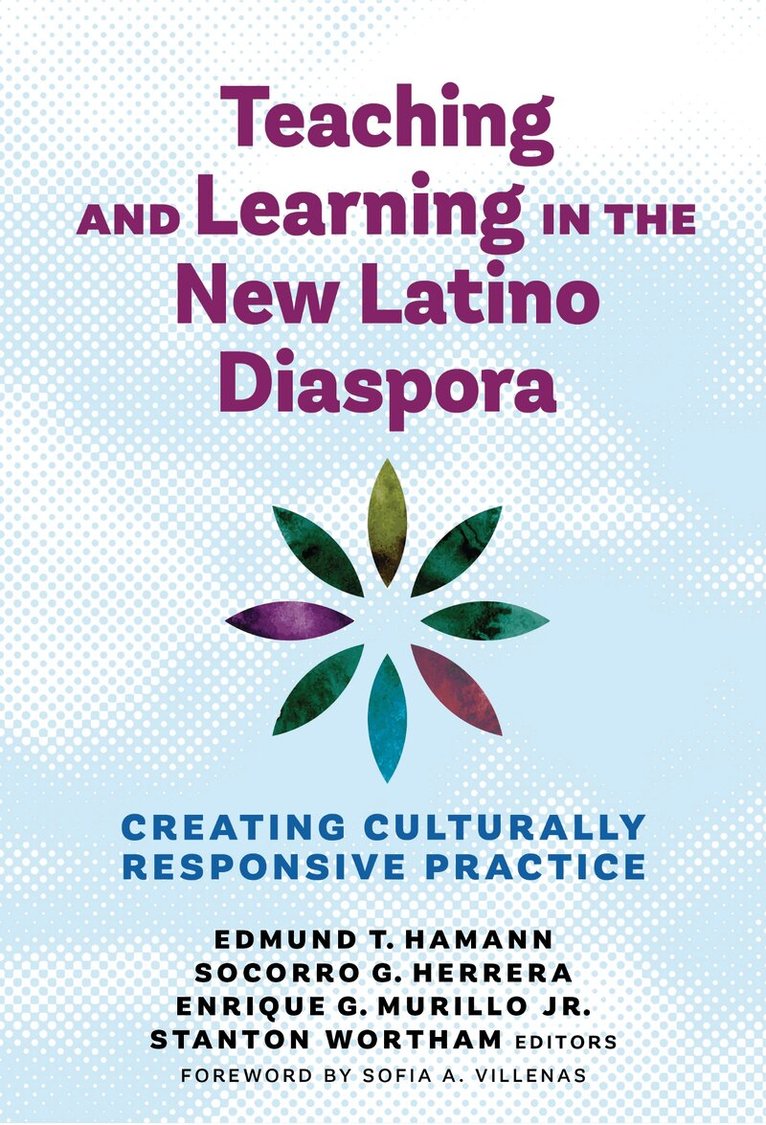
This volume does more than document an educational dynamic that impacts Latino populations across the United States; it also connects educational challenges to concrete plans for how those problems can be resolved. Both experienced and new scholars describe strategies and outline policies to support academic success, affirm identity and belonging, and show how educational institutions can be transformed to better serve Latino constituencies in a post-pandemic and post-Trump world. Examples from elementary education to higher education supply familiar points of entry, but also challenge readers to explore scenarios and strategies that they have not previously considered. Each chapter begins with empirical documentation of an educational problem involving Latino populations where their presence is relatively new, and goes on to outline how that problem can be resolved. The text includes depictions of thoughtful parent-teacher partnerships, what authentically welcoming college campuses might look like, how high school literature classes could include more Latino authors, and much more.Book Features:Includes detailed examples of practice to assist teachers and school leaders in restructuring their classrooms and programs to better serve Latino students.Describes settings and scenarios from across the United States that will be familiar to those teaching, leading, or preparing to do so.Focuses on the new diaspora as distinct from states with traditionally large Latino populations.Argues that lagging educational outcomes are not inevitable and that inclusion, engagement, and success are possible and worth striving for.Contributors include Vanessa Anthony-Stevens, Scott Beck, Lisa Dorner, Amanda Morales, Sophia Rodriguez, and Jessica Sierk.
Inbunden, Engelska, 2024
1 181 kr
Skickas inom 5-8 vardagar
This volume does more than document an educational dynamic that impacts Latino populations across the United States; it also connects educational challenges to concrete plans for how those problems can be resolved. Both experienced and new scholars describe strategies and outline policies to support academic success, affirm identity and belonging, and show how educational institutions can be transformed to better serve Latino constituencies in a post-pandemic and post-Trump world. Examples from elementary education to higher education supply familiar points of entry, but also challenge readers to explore scenarios and strategies that they have not previously considered. Each chapter begins with empirical documentation of an educational problem involving Latino populations where their presence is relatively new, and goes on to outline how that problem can be resolved. The text includes depictions of thoughtful parent-teacher partnerships, what authentically welcoming college campuses might look like, how high school literature classes could include more Latino authors, and much more. Book Features:Includes detailed examples of practice to assist teachers and school leaders in restructuring their classrooms and programs to better serve Latino students.Describes settings and scenarios from across the United States that will be familiar to those teaching, leading, or preparing to do so.Focuses on the new diaspora as distinct from states with traditionally large Latino populations.Argues that lagging educational outcomes are not inevitable and that inclusion, engagement, and success are possible and worth striving for.
Inbunden, Engelska, 2001
1 011 kr
Skickas inom 10-15 vardagar
The authors describe a new demographic phenomenon: the settlement of Latino families in areas of the United States where previously there has been little Latino presence.This New Latino Diaspora places pressures on host communities, both to develop conceptualizations of Latino newcomers and to provide needed services.These pressures are particularly felt in schools; in some New Latino Diaspora locations the percentage of Latino students in local public schools has risen from zero to 30 or even 50 percent in less than a decade.Latino newcomers, of course, bring their own language and their own cultural conceptions of parenting, education,inter-ethnic relations and the like.Through case studies of Latino Diaspora communities in Georgia, North Carolina, Maine, Colorado, Illinois, and Indiana, the eleven chapters in this volume describe what happens when host community conceptions of and policies toward newcomer Latinos meet Latinos' own conceptions. The chapters focus particularly on the processes of educational policy formation and implementation, processes through which host communities and newcomer Latinos struggle to define themselves and to meet the educational needs and opportunities brought by new Latino students.Most schools in the New Latino Diaspora are unsure about what to do with Latino children, and their emergent responses are alternately cruel, uninformed, contradictory, and inspirational.By describing how the challenges of accommodating the New Latino Diaspora are shared across many sites the authors hope to inspire others to develop more sensitive ways of serving Latino Diaspora children and families.
Häftad, Engelska, 2001
475 kr
Skickas inom 10-15 vardagar
The authors describe a new demographic phenomenon: the settlement of Latino families in areas of the United States where previously there has been little Latino presence.This New Latino Diaspora places pressures on host communities, both to develop conceptualizations of Latino newcomers and to provide needed services.These pressures are particularly felt in schools; in some New Latino Diaspora locations the percentage of Latino students in local public schools has risen from zero to 30 or even 50 percent in less than a decade.Latino newcomers, of course, bring their own language and their own cultural conceptions of parenting, education,inter-ethnic relations and the like.Through case studies of Latino Diaspora communities in Georgia, North Carolina, Maine, Colorado, Illinois, and Indiana, the eleven chapters in this volume describe what happens when host community conceptions of and policies toward newcomer Latinos meet Latinos' own conceptions. The chapters focus particularly on the processes of educational policy formation and implementation, processes through which host communities and newcomer Latinos struggle to define themselves and to meet the educational needs and opportunities brought by new Latino students.Most schools in the New Latino Diaspora are unsure about what to do with Latino children, and their emergent responses are alternately cruel, uninformed, contradictory, and inspirational.By describing how the challenges of accommodating the New Latino Diaspora are shared across many sites the authors hope to inspire others to develop more sensitive ways of serving Latino Diaspora children and families.
Häftad, Engelska, 2015
667 kr
Skickas inom 5-8 vardagar
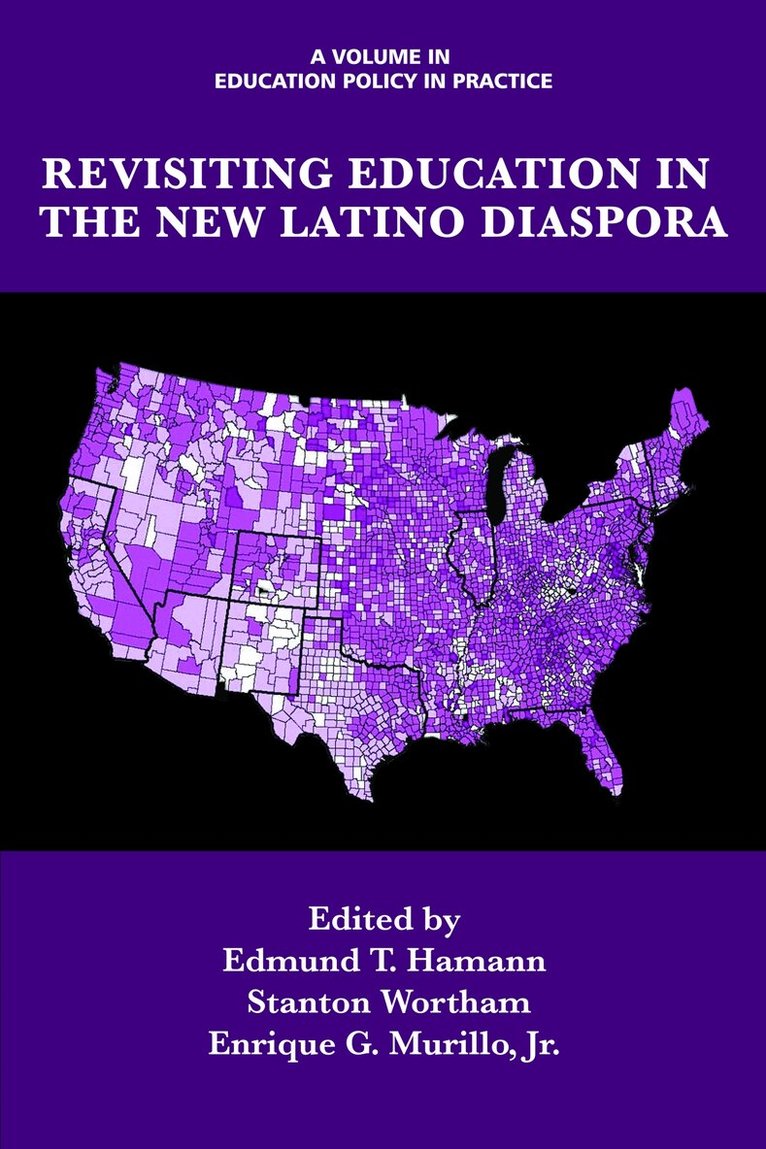
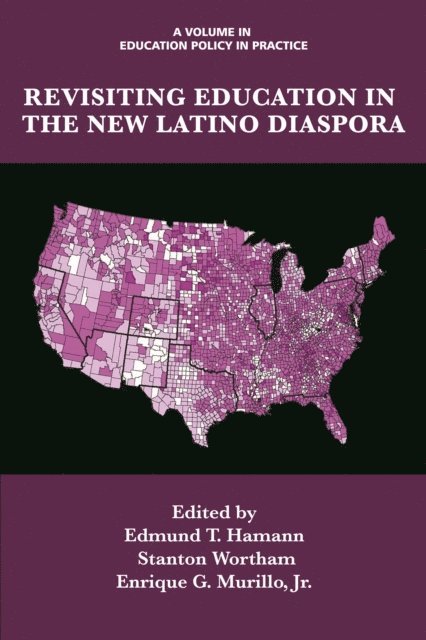
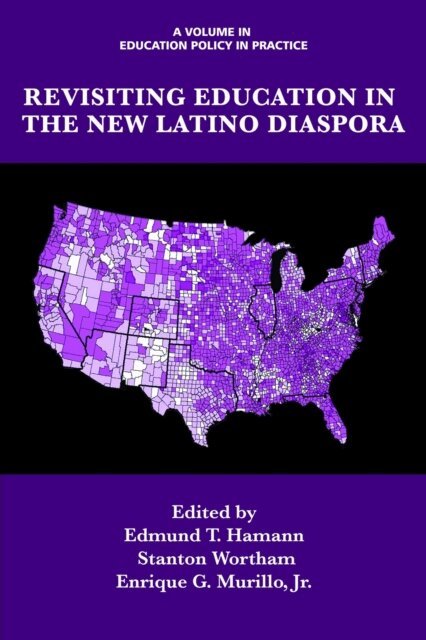
For most of US history, most of America’s Latino population has lived in nine states—California, Arizona, New Mexico, Colorado, Texas, Illinois, Florida, New Jersey, and New York. It follows that most education research that considered the experiences of Latino families with US schools came from these same states. But in the last 30 years Latinos have been resettling across the US, attending schools, and creating new patterns of inter-ethnic interaction in educational settings. Much of this interaction with this New Latino Diaspora has been initially tentative and improvisational, but too often it has left intact the patterns of lower educational success that have prevailed in the traditional Latino diaspora.Revisiting Education in the New Latino Diaspora is an extensive update, with all new material, of the groundbreaking volume Education in the New Latino Diaspora (Ablex Publishing) that these same editors produced in 2002. This volume consciously includes a number of junior scholars (e.g., C. Allen Lynn, Soria Colomer, Amanda Morales, Rebecca Lowenhaupt, Adam Sawyer) and more established ones (Frances Contreras, Jason Irizarry, Socorro Herrera, Linda Harklau) as it considers empirical cases from Washington State to Georgia, from the Mid-Atlantic to the Great Plains, where rural, suburban, and urban communities start their second or third decades of responding to a previously unprecedented growth in newcomer Latino populations. With excuses of surprise and improvisational strategies less persuasive as Latino newcomer populations become less new, this volume considers the persistence, the anomie, and pragmatism of Latino newcomers on the one hand, with the variously enlightened, paternalistic, dismissive, and xenophobic responses of educators and education systems on the other. With foci as personal as accounts of growing up as an adoptee in a mixed race family and the testimonio of a ‘successful’ undocumented college graduate to the macro scale of examining state-level education policies and with an age range from early childhood education to the university level, this volume insists that the worlds of education research and migration studies can both gain from considering the educational responses in the last two decades to the ‘newish’ Latino presence in the 41 U.S. states that have not long been the home to large, wellestablished Latino populations, but that now enroll 2.5 million Latino students in K-12 alone.
Inbunden, Engelska, 2015
1 128 kr
Skickas inom 5-8 vardagar
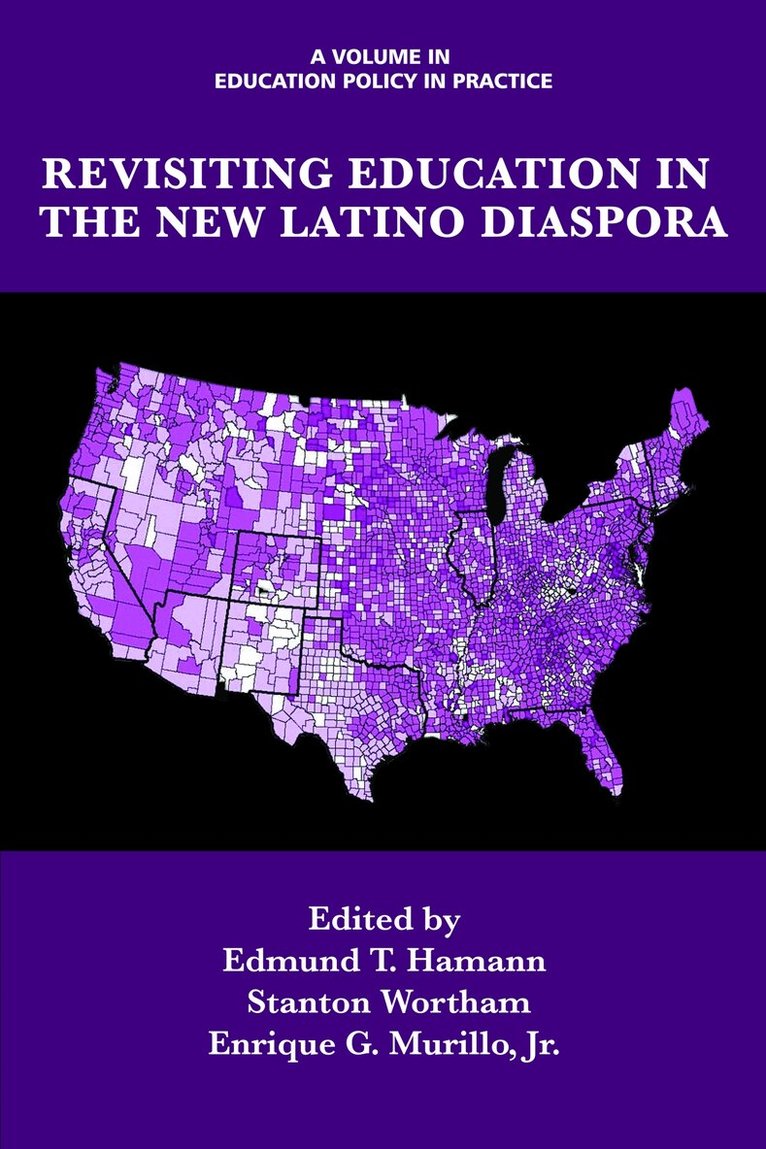
For most of US history, most of America’s Latino population has lived in nine states—California, Arizona, New Mexico, Colorado, Texas, Illinois, Florida, New Jersey, and New York. It follows that most education research that considered the experiences of Latino families with US schools came from these same states. But in the last 30 years Latinos have been resettling across the US, attending schools, and creating new patterns of inter-ethnic interaction in educational settings. Much of this interaction with this New Latino Diaspora has been initially tentative and improvisational, but too often it has left intact the patterns of lower educational success that have prevailed in the traditional Latino diaspora.Revisiting Education in the New Latino Diaspora is an extensive update, with all new material, of the groundbreaking volume Education in the New Latino Diaspora (Ablex Publishing) that these same editors produced in 2002. This volume consciously includes a number of junior scholars (e.g., C. Allen Lynn, Soria Colomer, Amanda Morales, Rebecca Lowenhaupt, Adam Sawyer) and more established ones (Frances Contreras, Jason Irizarry, Socorro Herrera, Linda Harklau) as it considers empirical cases from Washington State to Georgia, from the Mid-Atlantic to the Great Plains, where rural, suburban, and urban communities start their second or third decades of responding to a previously unprecedented growth in newcomer Latino populations. With excuses of surprise and improvisational strategies less persuasive as Latino newcomer populations become less new, this volume considers the persistence, the anomie, and pragmatism of Latino newcomers on the one hand, with the variously enlightened, paternalistic, dismissive, and xenophobic responses of educators and education systems on the other. With foci as personal as accounts of growing up as an adoptee in a mixed race family and the testimonio of a ‘successful’ undocumented college graduate to the macro scale of examining state-level education policies and with an age range from early childhood education to the university level, this volume insists that the worlds of education research and migration studies can both gain from considering the educational responses in the last two decades to the ‘newish’ Latino presence in the 41 U.S. states that have not long been the home to large, wellestablished Latino populations, but that now enroll 2.5 million Latino students in K-12 alone.
E-bok
Engelska, 2015468 kr
Läs direkt efter köp
For most of US history, most of America's Latino population has lived in nine states-California, Arizona, New Mexico, Colorado, Texas, Illinois, Florida, New Jersey, and New York. It follows that most education research that considered the experiences of Latino families with US schools came from these same states. But in the last 30 years Latinos have been resettling across the US, attending schools, and creating new patterns of inter-ethnic interaction in educational settings. Much of this interaction with this New Latino Diaspora has been initially tentative and improvisational, but too often it has left intact the patterns of lower educational success that have prevailed in the traditional Latino diaspora.Revisiting Education in the New Latino Diaspora is an extensive update, with all new material, of the groundbreaking volume Education in the New Latino Diaspora (Ablex Publishing) that these same editors produced in 2002. This volume consciously includes a number of junior scholars (e.g., C. Allen Lynn, Soria Colomer, Amanda Morales, Rebecca Lowenhaupt, Adam Sawyer) and more established ones (Frances Contreras, Jason Irizarry, Socorro Herrera, Linda Harklau) as it considers empirical cases from Washington State to Georgia, from the Mid-Atlantic to the Great Plains, where rural, suburban, and urban communities start their second or third decades of responding to a previously unprecedented growth in newcomer Latino populations. With excuses of surprise and improvisational strategies less persuasive as Latino newcomer populations become less new, this volume considers the persistence, the anomie, and pragmatism of Latino newcomers on the one hand, with the variously enlightened, paternalistic, dismissive, and xenophobic responses of educators and education systems on the other. With foci as personal as accounts of growing up as an adoptee in a mixed race family and the testimonio of a 'successful' undocumented college graduate to the macro scale of examining state-level education policies and with an age range from early childhood education to the university level, this volume insists that the worlds of education research and migration studies can both gain from considering the educational responses in the last two decades to the 'newish' Latino presence in the 41 U.S. states that have not long been the home to large, wellestablished Latino populations, but that now enroll 2.5 million Latino students in K-12 alone.
E-bok
Engelska, 2015696 kr
Läs direkt efter köp
For most of US history, most of America's Latino population has lived in nine states-California, Arizona, New Mexico, Colorado, Texas, Illinois, Florida, New Jersey, and New York. It follows that most education research that considered the experiences of Latino families with US schools came from these same states. But in the last 30 years Latinos have been resettling across the US, attending schools, and creating new patterns of inter-ethnic interaction in educational settings. Much of this interaction with this New Latino Diaspora has been initially tentative and improvisational, but too often it has left intact the patterns of lower educational success that have prevailed in the traditional Latino diaspora.Revisiting Education in the New Latino Diaspora is an extensive update, with all new material, of the groundbreaking volume Education in the New Latino Diaspora (Ablex Publishing) that these same editors produced in 2002. This volume consciously includes a number of junior scholars (e.g., C. Allen Lynn, Soria Colomer, Amanda Morales, Rebecca Lowenhaupt, Adam Sawyer) and more established ones (Frances Contreras, Jason Irizarry, Socorro Herrera, Linda Harklau) as it considers empirical cases from Washington State to Georgia, from the Mid-Atlantic to the Great Plains, where rural, suburban, and urban communities start their second or third decades of responding to a previously unprecedented growth in newcomer Latino populations. With excuses of surprise and improvisational strategies less persuasive as Latino newcomer populations become less new, this volume considers the persistence, the anomie, and pragmatism of Latino newcomers on the one hand, with the variously enlightened, paternalistic, dismissive, and xenophobic responses of educators and education systems on the other. With foci as personal as accounts of growing up as an adoptee in a mixed race family and the testimonio of a 'successful' undocumented college graduate to the macro scale of examining state-level education policies and with an age range from early childhood education to the university level, this volume insists that the worlds of education research and migration studies can both gain from considering the educational responses in the last two decades to the 'newish' Latino presence in the 41 U.S. states that have not long been the home to large, wellestablished Latino populations, but that now enroll 2.5 million Latino students in K-12 alone.