Enrique G. Murillo – författare
Visar alla böcker från författaren Enrique G. Murillo. Handla med fri frakt och snabb leverans.
4 produkter
4 produkter
Inbunden, Engelska, 2007
943 kr
Skickas inom 10-15 vardagar
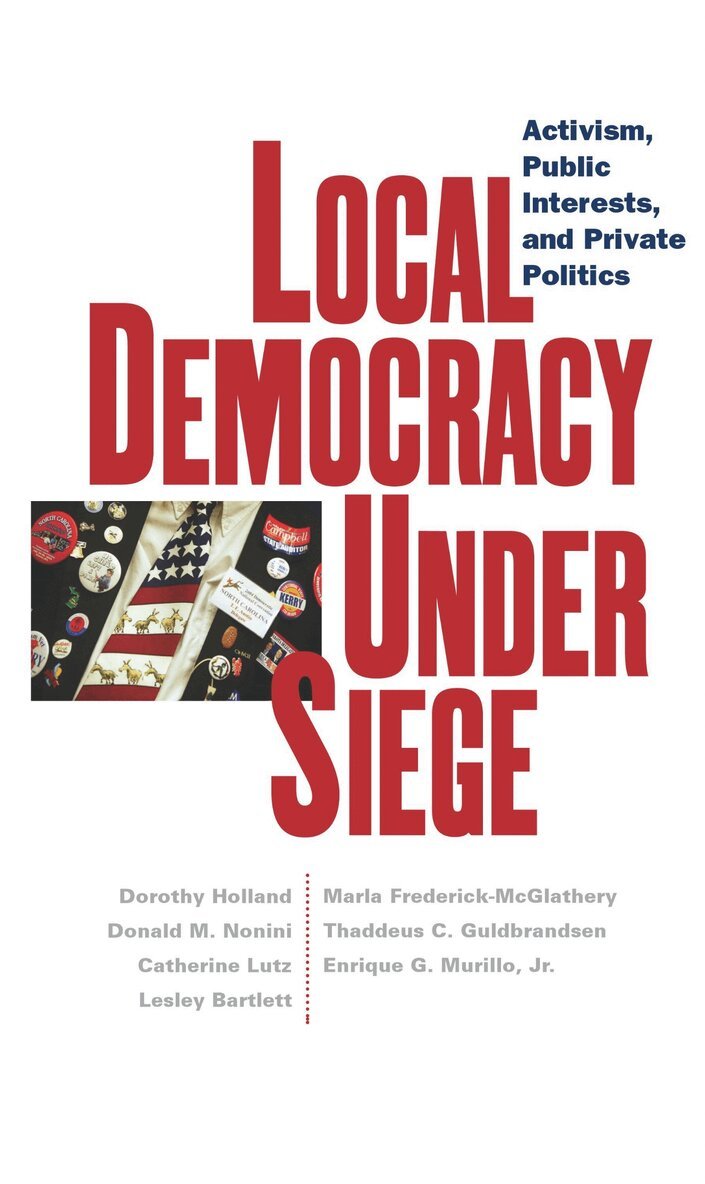
2007 Society for the Anthropology of North America (SANA) Book AwardComplete List of Authors:Dorothy Holland, Donald M. Nonini, Catherine Lutz, Lesley Bartlett, Marla Frederick-McGlathery, Thaddeus C. Guldbrandsen, and Enrique G. Murillo, Jr.What is the state of democracy at the turn of the twenty-first century? To answer this question, seven scholars lived for a year in five North Carolina communities. They observed public meetings of all sorts, had informal and formal interviews with people, and listened as people conversed with each other at bus stops and barbershops, soccer games and workplaces. Their collaborative ethnography allows us to understand how diverse members of a community not just the elite think about and experience "politics" in ways that include much more than merely voting.This book illustrates how the social and economic changes of the last three decades have made some new routes to active democratic participation possible while making others more difficult. Local Democracy Under Siege suggests how we can account for the current limitations of U.S. democracy and how remedies can be created that ensure more meaningful participation by a greater range of people. Complete List of Authors (pictured)From Left to Right, bottom row: Enrique Murillo, Jr., Thaddeus Guldbrandsen, Marla Frederick-McGlathery.Top row: Dorothy Holland, Catherine Lutz, Lesley Bartlett, and Don Nonini.
Häftad, Engelska, 2007
414 kr
Skickas inom 5-8 vardagar
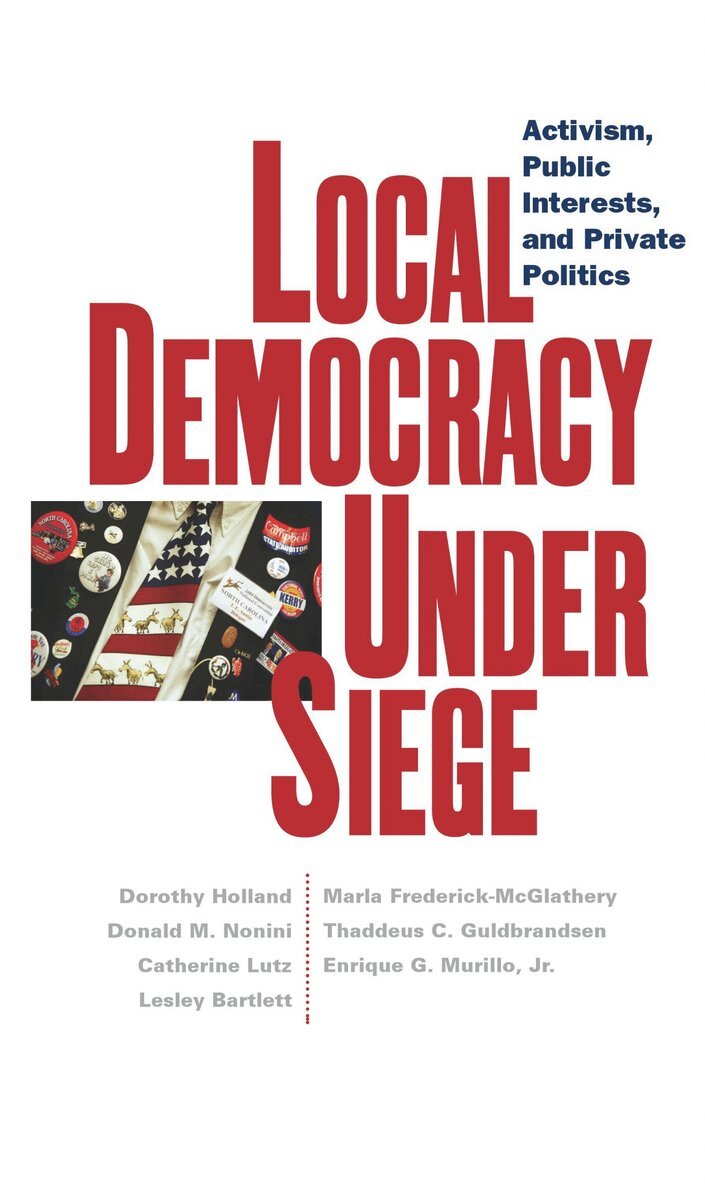
2007 Society for the Anthropology of North America (SANA) Book AwardComplete List of Authors:Dorothy Holland, Donald M. Nonini, Catherine Lutz, Lesley Bartlett, Marla Frederick-McGlathery, Thaddeus C. Guldbrandsen, and Enrique G. Murillo, Jr.What is the state of democracy at the turn of the twenty-first century? To answer this question, seven scholars lived for a year in five North Carolina communities. They observed public meetings of all sorts, had informal and formal interviews with people, and listened as people conversed with each other at bus stops and barbershops, soccer games and workplaces. Their collaborative ethnography allows us to understand how diverse members of a community not just the elite think about and experience "politics" in ways that include much more than merely voting.This book illustrates how the social and economic changes of the last three decades have made some new routes to active democratic participation possible while making others more difficult. Local Democracy Under Siege suggests how we can account for the current limitations of U.S. democracy and how remedies can be created that ensure more meaningful participation by a greater range of people. Complete List of Authors (pictured)From Left to Right, bottom row: Enrique Murillo, Jr., Thaddeus Guldbrandsen, Marla Frederick-McGlathery.Top row: Dorothy Holland, Catherine Lutz, Lesley Bartlett, and Don Nonini.
E-bok
Engelska, 2015468 kr
Läs direkt efter köp
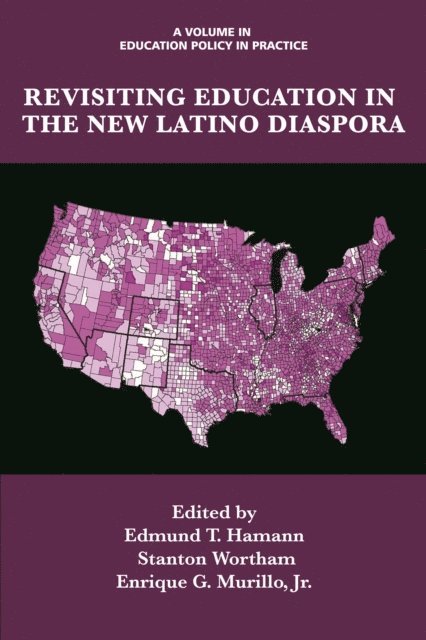
For most of US history, most of America's Latino population has lived in nine states-California, Arizona, New Mexico, Colorado, Texas, Illinois, Florida, New Jersey, and New York. It follows that most education research that considered the experiences of Latino families with US schools came from these same states. But in the last 30 years Latinos have been resettling across the US, attending schools, and creating new patterns of inter-ethnic interaction in educational settings. Much of this interaction with this New Latino Diaspora has been initially tentative and improvisational, but too often it has left intact the patterns of lower educational success that have prevailed in the traditional Latino diaspora.Revisiting Education in the New Latino Diaspora is an extensive update, with all new material, of the groundbreaking volume Education in the New Latino Diaspora (Ablex Publishing) that these same editors produced in 2002. This volume consciously includes a number of junior scholars (e.g., C. Allen Lynn, Soria Colomer, Amanda Morales, Rebecca Lowenhaupt, Adam Sawyer) and more established ones (Frances Contreras, Jason Irizarry, Socorro Herrera, Linda Harklau) as it considers empirical cases from Washington State to Georgia, from the Mid-Atlantic to the Great Plains, where rural, suburban, and urban communities start their second or third decades of responding to a previously unprecedented growth in newcomer Latino populations. With excuses of surprise and improvisational strategies less persuasive as Latino newcomer populations become less new, this volume considers the persistence, the anomie, and pragmatism of Latino newcomers on the one hand, with the variously enlightened, paternalistic, dismissive, and xenophobic responses of educators and education systems on the other. With foci as personal as accounts of growing up as an adoptee in a mixed race family and the testimonio of a 'successful' undocumented college graduate to the macro scale of examining state-level education policies and with an age range from early childhood education to the university level, this volume insists that the worlds of education research and migration studies can both gain from considering the educational responses in the last two decades to the 'newish' Latino presence in the 41 U.S. states that have not long been the home to large, wellestablished Latino populations, but that now enroll 2.5 million Latino students in K-12 alone.
E-bok
Engelska, 2015696 kr
Läs direkt efter köp
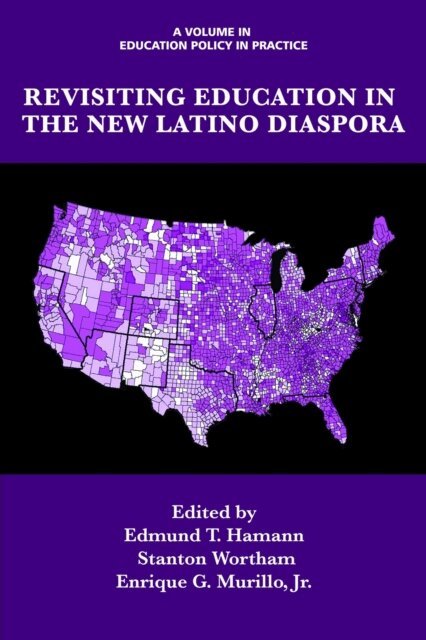
For most of US history, most of America's Latino population has lived in nine states-California, Arizona, New Mexico, Colorado, Texas, Illinois, Florida, New Jersey, and New York. It follows that most education research that considered the experiences of Latino families with US schools came from these same states. But in the last 30 years Latinos have been resettling across the US, attending schools, and creating new patterns of inter-ethnic interaction in educational settings. Much of this interaction with this New Latino Diaspora has been initially tentative and improvisational, but too often it has left intact the patterns of lower educational success that have prevailed in the traditional Latino diaspora.Revisiting Education in the New Latino Diaspora is an extensive update, with all new material, of the groundbreaking volume Education in the New Latino Diaspora (Ablex Publishing) that these same editors produced in 2002. This volume consciously includes a number of junior scholars (e.g., C. Allen Lynn, Soria Colomer, Amanda Morales, Rebecca Lowenhaupt, Adam Sawyer) and more established ones (Frances Contreras, Jason Irizarry, Socorro Herrera, Linda Harklau) as it considers empirical cases from Washington State to Georgia, from the Mid-Atlantic to the Great Plains, where rural, suburban, and urban communities start their second or third decades of responding to a previously unprecedented growth in newcomer Latino populations. With excuses of surprise and improvisational strategies less persuasive as Latino newcomer populations become less new, this volume considers the persistence, the anomie, and pragmatism of Latino newcomers on the one hand, with the variously enlightened, paternalistic, dismissive, and xenophobic responses of educators and education systems on the other. With foci as personal as accounts of growing up as an adoptee in a mixed race family and the testimonio of a 'successful' undocumented college graduate to the macro scale of examining state-level education policies and with an age range from early childhood education to the university level, this volume insists that the worlds of education research and migration studies can both gain from considering the educational responses in the last two decades to the 'newish' Latino presence in the 41 U.S. states that have not long been the home to large, wellestablished Latino populations, but that now enroll 2.5 million Latino students in K-12 alone.