Eduard Hovy – författare
1 091 kr
Skickas inom 10-15 vardagar
1 367 kr
Läs direkt efter köp
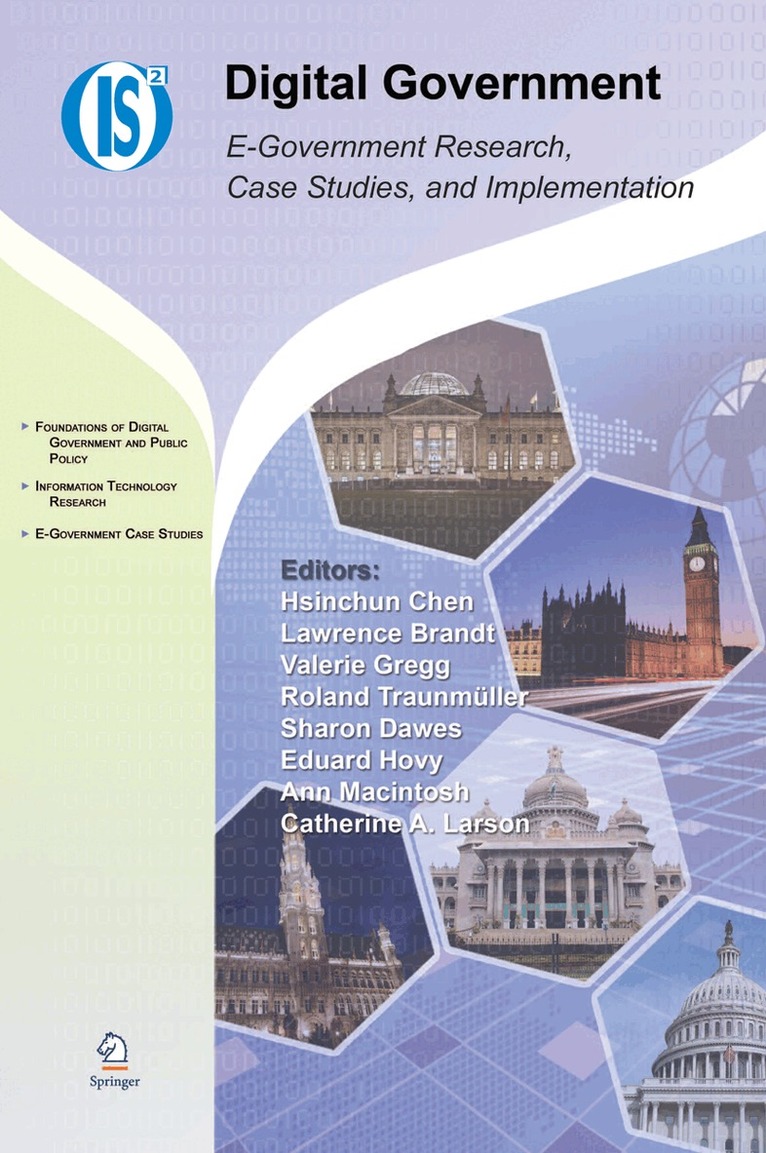
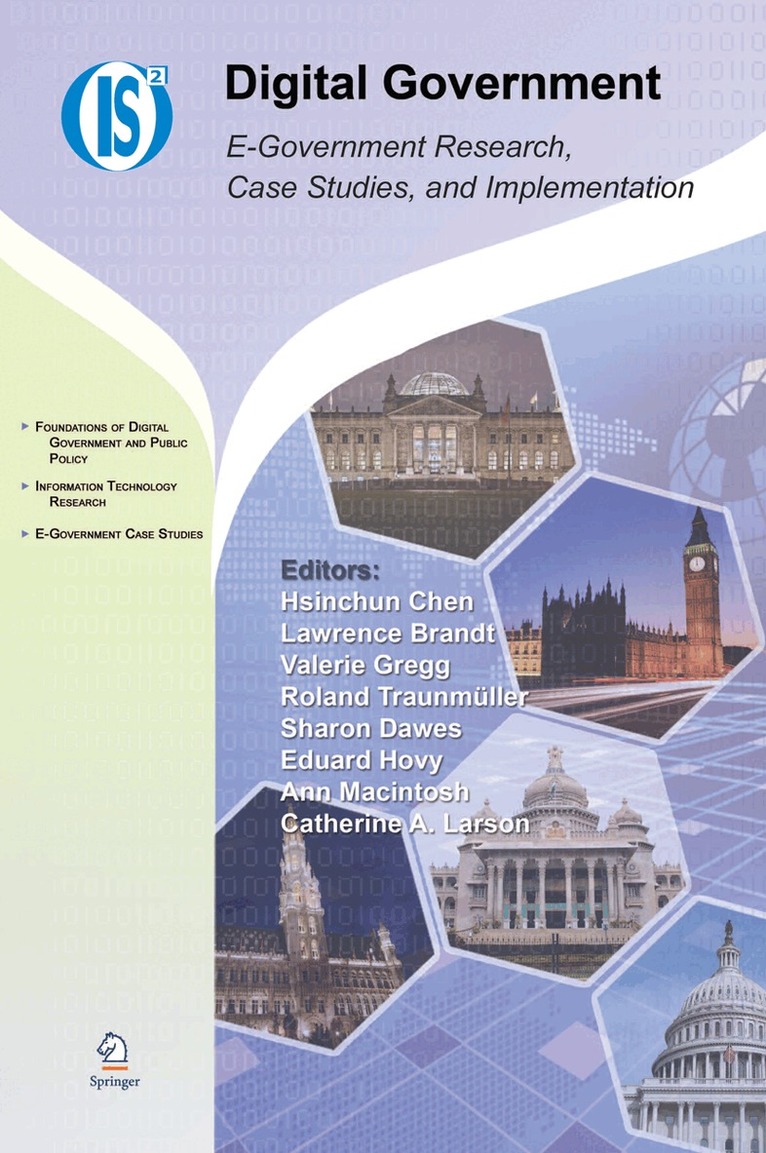
New information technologies are being applied swiftly to all levels of government service: local, county, regional and even national and international. Information technology (IT) is being used to improve data management and data sharing, planning and decision support, service delivery, and more. Application areas affected by government mandates to improve e-government service include healthcare and safety; law enforcement, security, and justice; education; land use; and many others. DIGITAL GOVERNMENT: E-Government Research, Case Studies, and Implementation provides the field with a definitive, interdisciplinary, and understandable review of recent IT and related research of particular importance to digital government. The book also includes explorations of current and future policy implications, and case studies of successful applications in a variety of government settings.

933 kr
Skickas inom 7-10 vardagar
975 kr
Läs direkt efter köp
Digital Government
E-Government Research, Case Studies, and Implementation
1 306 kr
Skickas inom 10-15 vardagar
708 kr
Läs direkt efter köp
565 kr
Skickas inom 10-15 vardagar
565 kr
Skickas inom 10-15 vardagar
548 kr
Skickas inom 10-15 vardagar
687 kr
Läs direkt efter köp
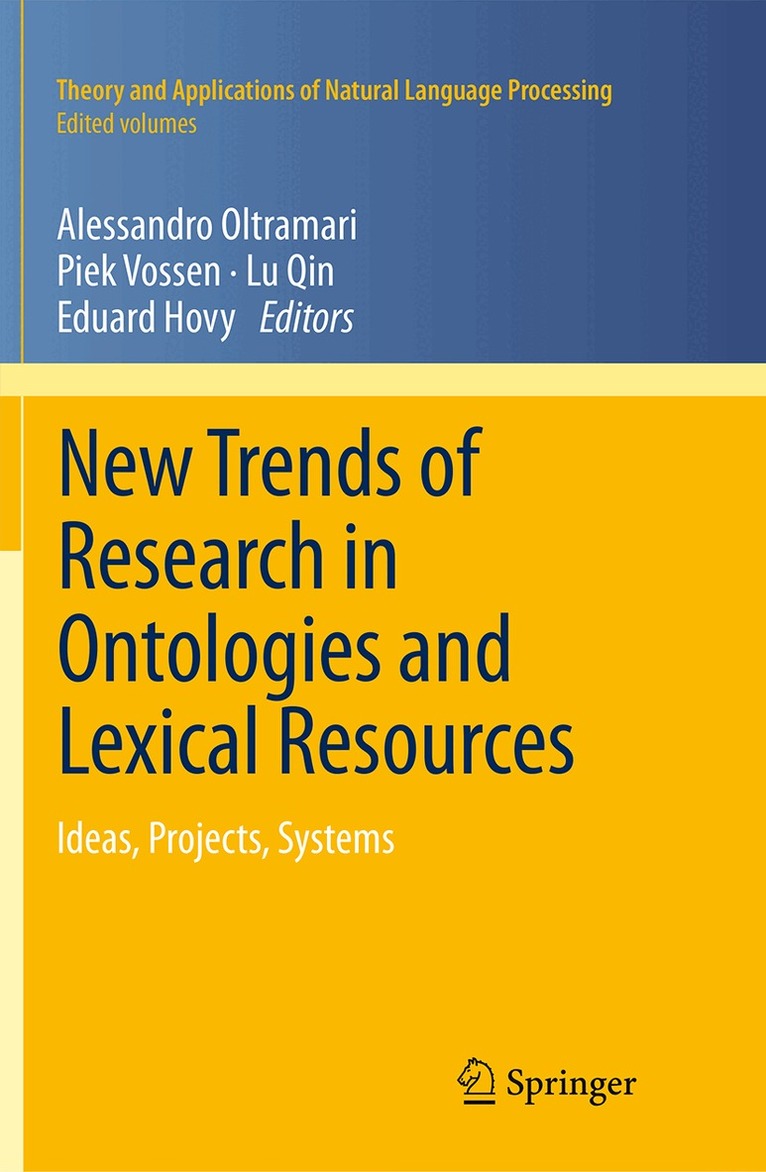
In order to exchange knowledge, humans need to share a common lexicon of words as well as
to access the world models underlying that lexicon. What is a natural process for a human turns out to be an extremely hard task for a machine: computers can’t represent knowledge as effectively as humans do, which hampers, for example, meaning disambiguation and communication. Applied ontologies and NLP have been developed to face these challenges. Integrating ontologies with (possibly multilingual) lexical resources is an essential requirement to make human language understandable by machines, and also to enable interoperability and computability across information systems and, ultimately, in the Web.
This book explores recent advances in the integration of ontologies and lexical resources, including questions such as building the required infrastructure (e.g., the Semantic Web) and different formalisms, methods and platforms for eliciting, analyzing and encoding knowledge contents (e.g., multimedia, emotions, events, etc.). The contributors look towards next-generation technologies, shifting the focus from the state of the art to the future of Ontologies and Lexical Resources. This work will be of interest to research scientists, graduate students, and professionals in the fields of knowledge engineering, computational linguistics, and semantic technologies.
548 kr
Skickas inom 10-15 vardagar