Edward A. Wasserman - Böcker
Visar alla böcker från författaren Edward A. Wasserman. Handla med fri frakt och snabb leverans.
8 produkter
8 produkter
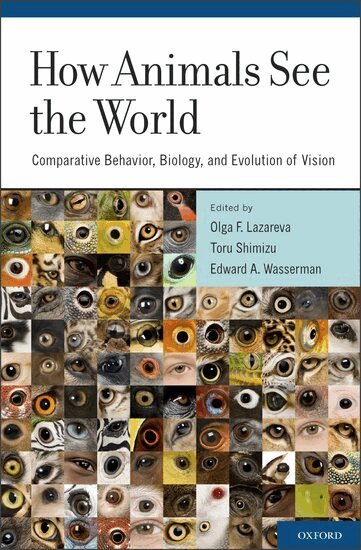
How Animals See the World
Comparative Behavior, Biology, and Evolution of Vision
Inbunden, Engelska, 2012
2 427 kr
Skickas inom 5-8 vardagar
The visual world of animals is highly diverse and often very different from the world that we humans take for granted. This book provides an extensive review of the latest behavioral and neurobiological research on animal vision, highlighting fascinating species similarities and differences in visual processing. It contains 26 chapters written by world-leading experts about a variety of species including: honeybees, spiders, fish, birds, and primates. The chapters are divided into six sections: Perceptual grouping and segmentation, Object perception and object recognition, Motion perception, Visual attention, Different dimensions of visual perception, and Evolution of the visual system. An exhaustive work in range and depth, How Animals See the World will be a valuable resource for advanced students and researchers in areas of cognitive psychology, perception and cognitive neuroscience, as well as researchers in the visual sciences.
1 164 kr
Skickas inom 5-8 vardagar
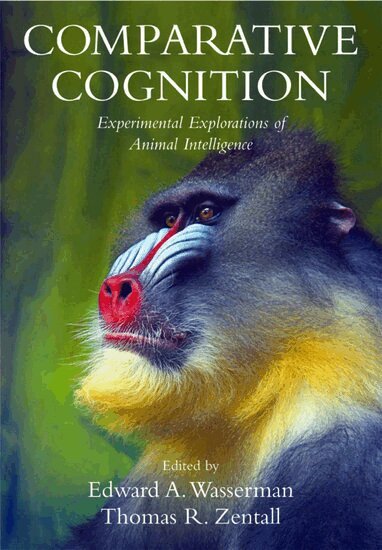
In 1978, Hulse, Fowler, and Honig published Cognitive Processes in Animal Behavior, an edited volume that was a landmark in the scientific study of animal intelligence. It liberated interest in complex learning and cognition from the grasp of the rigid theoretical structures of behaviorism that had prevailed during the previous four decades, and as a result, the field of comparative cognition was born. At long last, the study of the cognitive capacities of animals other than humans emerged as a worthwhile scientific enterprise. No less rigorous than purely behavioristic investigations, studies of animal intelligence spanned such wide-ranging topics as perception, spatial learning and memory, timing and numerical competence, categorization and conceptualization, problem solving, rule learning, and creativity. During the ensuing 25 years, the field of comparative cognition has thrived and grown, and public interest in it has risen to unprecedented levels. In their quest to understand the nature and mechanisms of intelligence, researchers have studied animals from bees to chimpanzees. Sessions on comparative cognition have become common at meetings of the major societies for psychology and neuroscience, and in fact, research in comparative cognition has increased so much that a separate society, the Comparative Cognition Society, has been formed to bring it together. This volume celebrates comparative cognition's first quarter century with a state-of-the-art collection of chapters covering the broad realm of the scientific study of animal intelligence. Comparative Cognition will be an invaluable resource for students and professional researchers in all areas of psychology and neuroscience.
2 724 kr
Skickas inom 5-8 vardagar
In the past decade, the field of comparative cognition has grown and thrived. No less rigorous than purely behavioristic investigations, examinations of animal intelligence are useful for scientists and psychologists alike in their quest to understand the nature and mechanisms of intelligence. Extensive field research of various species has yielded exciting new areas of research, integrating findings from psychology, behavioral ecology, and ethology in a unique and wide-ranging synthesis of theory and research on animal cognition. This updated edition of The Oxford Handbook of Comparative Cognition contains sections on perception and illusion, attention and search, memory processes, spatial cognition, conceptualization and categorization, problem solving and behavioral flexibility, and social cognition processes. The authors have incorporated new findings and new theoretical approaches that reflect the current state of the field, including findings in primate tool usage, pattern learning, and counting. This comprehensive volume will be a must-read for students and scientists who are curious about the state the modern science of comparative cognition.
1 601 kr
Skickas inom 7-10 vardagar
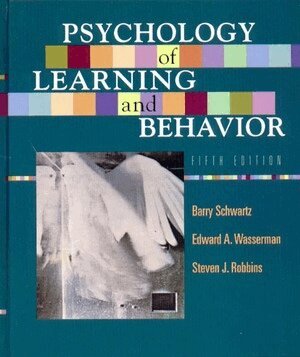
Barry Schwartz, StevenRobbins, and new coauthor Edward Wasserman offer students an engagingintroduction to the basic principles of Pavlovian conditioning, operantconditioning, and comparative cognition. The text’s critical approachexposes students to the unresolved problems and controversiessurrounding behavior theory and encourages them to interpret thematerial and make connections between theories and real-lifesituations. With several hundred new references, a new emphasis oncomparative cognition, and expanded treatment of neuroscience and theneural basis of learning, the Fifth Edition sets the standard in itscoverage of contemporary theory and research.
520 kr
Skickas inom 10-15 vardagar
This volume presents the views and findings of behaviorally and biologically oriented investigators invited to participate in The University of Iowa's biennial learning and memory symposium. While chapters vary in their scope and depth of coverage, they are all amply referenced so that researchers, teachers, and students can obtain background information appropriate to their respective needs.
968 kr
Skickas inom 7-10 vardagar
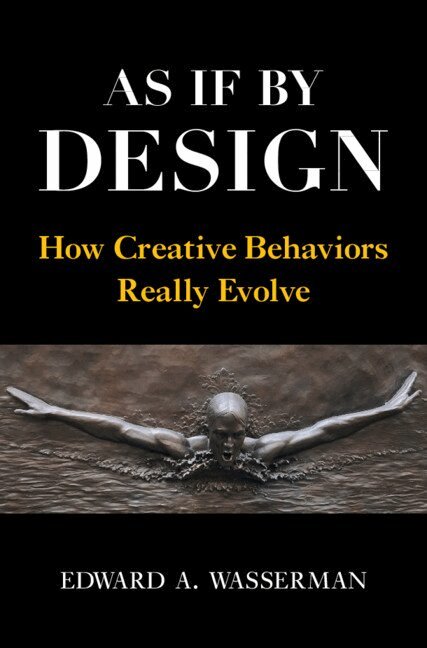
The eureka moment is a myth. It is an altogether naïve and fanciful account of human progress. Innovations emerge from a much less mysterious combination of historical, circumstantial, and accidental influences. This book explores the origin and evolution of several important behavioral innovations including the high five, the Heimlich maneuver, the butterfly stroke, the moonwalk, and the Iowa caucus. Such creations' striking suitability to the situation and the moment appear ingeniously designed with foresight. However, more often than not, they actually arise 'as if by design.' Based on investigations into the histories of a wide range of innovations, Edward A. Wasserman reveals the nature of behavioral creativity. What surfaces is a fascinating web of causation involving three main factors: context, consequence, and coincidence. Focusing on the process rather than the product of innovation elevates behavior to the very center of the creative human endeavor.
360 kr
Skickas inom 7-10 vardagar
The eureka moment is a myth. It is an altogether naïve and fanciful account of human progress. Innovations emerge from a much less mysterious combination of historical, circumstantial, and accidental influences. This book explores the origin and evolution of several important behavioral innovations including the high five, the Heimlich maneuver, the butterfly stroke, the moonwalk, and the Iowa caucus. Such creations' striking suitability to the situation and the moment appear ingeniously designed with foresight. However, more often than not, they actually arise 'as if by design.' Based on investigations into the histories of a wide range of innovations, Edward A. Wasserman reveals the nature of behavioral creativity. What surfaces is a fascinating web of causation involving three main factors: context, consequence, and coincidence. Focusing on the process rather than the product of innovation elevates behavior to the very center of the creative human endeavor.
705 kr
Skickas inom 10-15 vardagar
This volume presents the views and findings of behaviorally and biologically oriented investigators invited to participate in The University of Iowa's biennial learning and memory symposium. While chapters vary in their scope and depth of coverage, they are all amply referenced so that researchers, teachers, and students can obtain background information appropriate to their respective needs.