Edward W. Hill – författare
Visar alla böcker från författaren . Handla med fri frakt och snabb leverans.
4 produkter
4 produkter
Inbunden, Engelska, 1990
3 244 kr
Skickas inom 3-6 vardagar
The recession and concerns over industrial competitiveness in the 1980s generated public concern with job retention and creation, leading to state and local programs designed to stimulate local economic development. As a new, rapidly growing field, local economic development literature proliferated, but has not provided a comprehensive source for the field. Several questions are of particular concern: What are the major financing mechanisms for economic development? How do they actually work? How does one evaluate their effectiveness? Financing Economic Development is a comprehensive resource which describes the major mechanisms available for financing economic development. The chapters describe financing tools or programs in some detail; provide one or more examples of how they work; classify the tool according to various approaches; and come to an evaluative conclusion about the utility and effectiveness of the mechanism for economic development. A documentation of institutional innovation by state and local government, this volume shows how governments--across the United Statesùare working with private sector financiers, thereby allowing private intermediaries to invest in new enterprises. With contributions by highly qualified practitioners and academics, this volume is appropriate for professionals as well as for upper division undergraduate and graduate students in urban studies, public administration, and policy studies. "The book provides useful information by presenting a considerable number of institutional arrangements and showing the immense variety of approaches to economic development on the state and local level. The latter aspect is particularly fascinating for readers from countries with a less fragmented government than the United States." --Journal of Evolutionary Economics "Although there have been a plethora of publications on economic development, this book is a useful addition to the body of literature on the subject. The book provides some useful examples and case studies of private-sector participation, which, of course, is the goal of most economic development programs." --Government Finance Review
Häftad, Engelska, 1990
2 355 kr
Skickas inom 3-6 vardagar
The recession and concerns over industrial competitiveness in the 1980s generated public concern with job retention and creation, leading to state and local programs designed to stimulate local economic development. As a new, rapidly growing field, local economic development literature proliferated, but has not provided a comprehensive source for the field. Several questions are of particular concern: What are the major financing mechanisms for economic development? How do they actually work? How does one evaluate their effectiveness? Financing Economic Development is a comprehensive resource which describes the major mechanisms available for financing economic development. The chapters describe financing tools or programs in some detail; provide one or more examples of how they work; classify the tool according to various approaches; and come to an evaluative conclusion about the utility and effectiveness of the mechanism for economic development. A documentation of institutional innovation by state and local government, this volume shows how governments--across the United Statesùare working with private sector financiers, thereby allowing private intermediaries to invest in new enterprises. With contributions by highly qualified practitioners and academics, this volume is appropriate for professionals as well as for upper division undergraduate and graduate students in urban studies, public administration, and policy studies. "The book provides useful information by presenting a considerable number of institutional arrangements and showing the immense variety of approaches to economic development on the state and local level. The latter aspect is particularly fascinating for readers from countries with a less fragmented government than the United States." --Journal of Evolutionary Economics "Although there have been a plethora of publications on economic development, this book is a useful addition to the body of literature on the subject. The book provides some useful examples and case studies of private-sector participation, which, of course, is the goal of most economic development programs." --Government Finance Review
Häftad, Engelska, 1992
479 kr
Skickas inom 10-15 vardagar
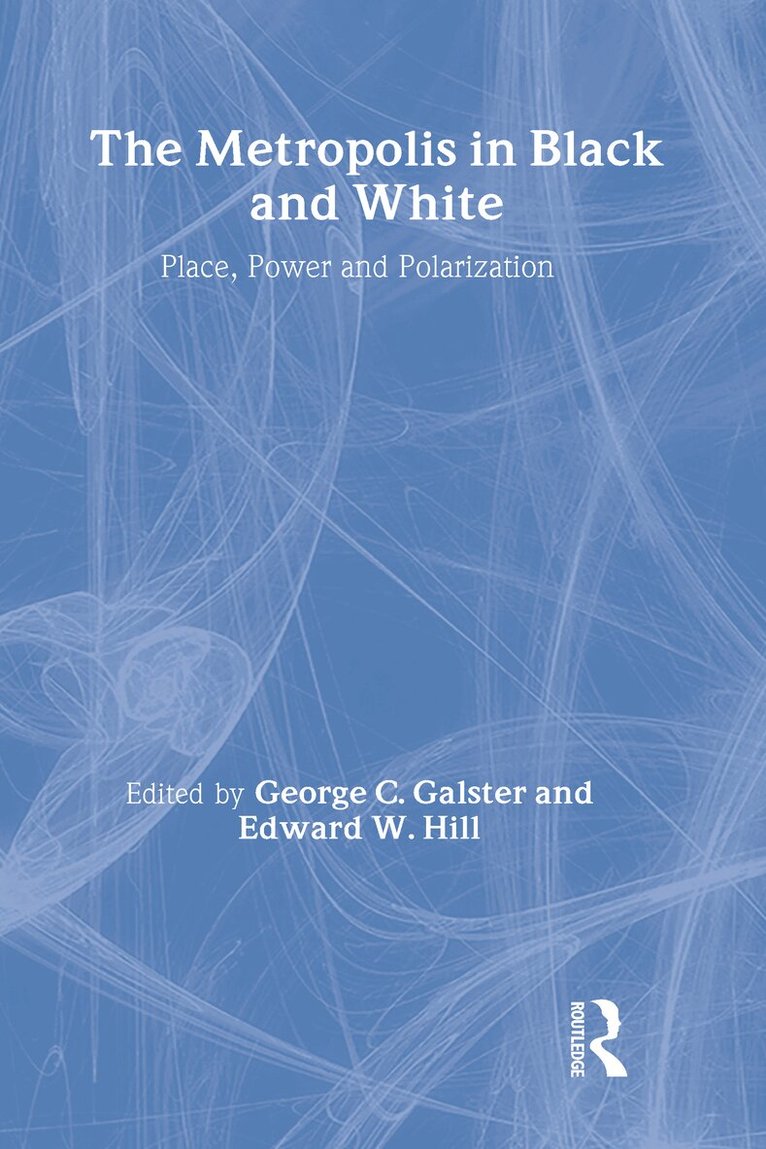
The Metropolis in Black and White highlights a stark fact: America's metropolitan areas are more polarized along racial lines than at any time since the mid-1960s. Though urban areas have become multicultural, the editors argue that black-white racial differences will outlast ethnic differences in metropolitan America and that the race issue in most urban areas is perceived as a black-white one. Galster and Hill perceive that the theme of place, power, and polarization is most powerful when blacks and whites are contrasted. African Americans, on average, are the poorest, most segregated, most disadvantaged urban racial (or ethnic) group, because they are deeply entangled in the web of interrelationships connecting place, power, and polarization. Since these interrelationships form a comprehensive set of social structures that oppress African Americans, they can be judged to be racist at their core. Race, not merely class, continues to play a pivotal role in shaping urban African Americans. In clear analyses, the contributors examine employment, income, the underclass, education, housing, health and mortality, political participation, and racial politics. Intertwined themes of spatial isolation, political empowerment, and racial disparities-place, power, and polarization-guide the analyses. Thisis a vital text for courses in urban affairs, American studies, economics, geography, sociology, political science, urban planning, and racial and ethnic studies. In clear analyses, the contributors examine employment, income, the underclass, education, housing, health and mortality, political participation, and racial politics. Intertwined themes of spatial isolation, political empowerment, and racial disparities-place, power, and polarization-guide the analyses. This is a vital text for courses in urban affairs, American studies, economics, geography, sociology, political science, urban planning, and racial and ethnic studies.
Inbunden, Engelska, 1992
1 099 kr
Tillfälligt slut
The Metropolis in Black and White highlights a stark fact: America's metropolitan areas are more polarized along racial lines than at any time since the mid-1960s. Though urban areas have become multicultural, the editors argue that black-white racial differences will outlast ethnic differences in metropolitan America and that the race issue in most urban areas is perceived as a black-white one. Galster and Hill perceive that the theme of place, power, and polarization is most powerful when blacks and whites are contrasted. African Americans, on average, are the poorest, most segregated, most disadvantaged urban racial (or ethnic) group, because they are deeply entangled in the web of interrelationships connecting place, power, and polarization. Since these interrelationships form a comprehensive set of social structures that oppress African Americans, they can be judged to be racist at their core. Race, not merely class, continues to play a pivotal role in shaping urban African Americans. In clear analyses, the contributors examine employment, income, the underclass, education, housing, health and mortality, political participation, and racial politics. Intertwined themes of spatial isolation, political empowerment, and racial disparities-place, power, and polarization-guide the analyses. Thisis a vital text for courses in urban affairs, American studies, economics, geography, sociology, political science, urban planning, and racial and ethnic studies. In clear analyses, the contributors examine employment, income, the underclass, education, housing, health and mortality, political participation, and racial politics. Intertwined themes of spatial isolation, political empowerment, and racial disparities-place, power, and polarization-guide the analyses. This is a vital text for courses in urban affairs, American studies, economics, geography, sociology, political science, urban planning, and racial and ethnic studies.