Egidio Astesiano – författare
Visar alla böcker från författaren Egidio Astesiano. Handla med fri frakt och snabb leverans.
8 produkter
8 produkter
Häftad, Engelska, 2003
562 kr
Skickas inom 10-15 vardagar
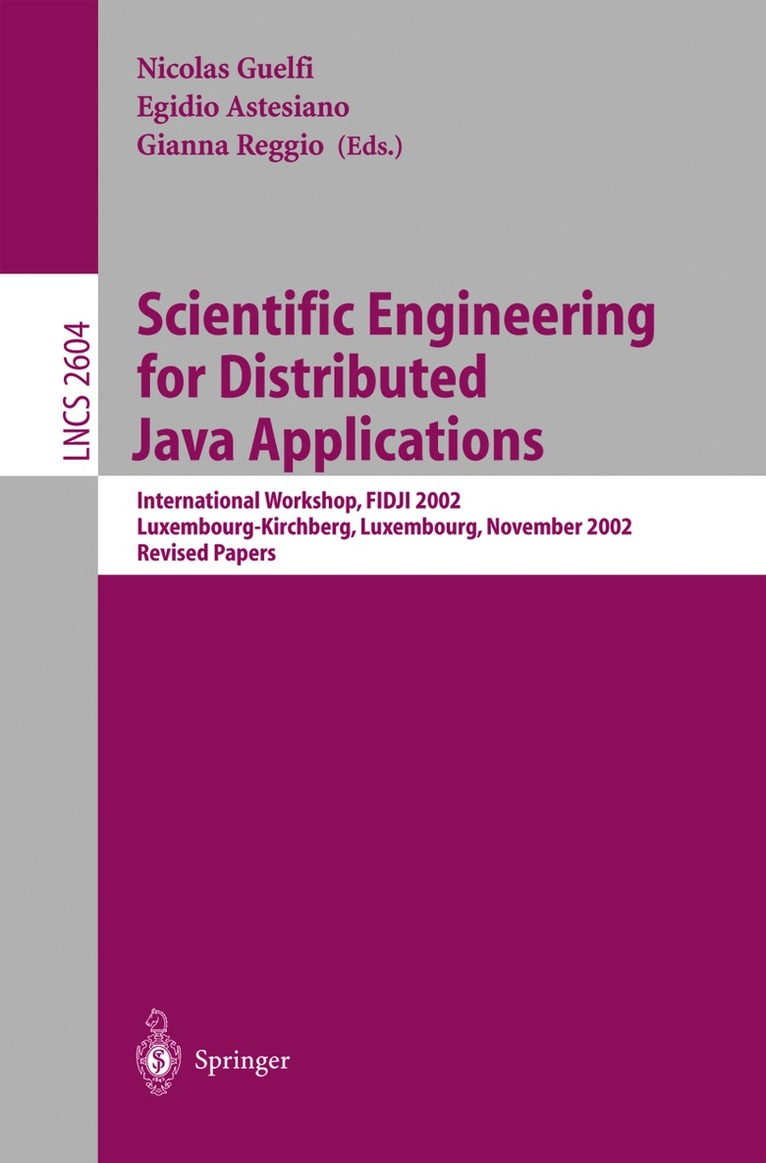
FIDJI 2002 was an international forum for researchers and practitioners in- rested in the advances in, and applications of, software engineering for distri- ted application development. Concerning the technologies, the workshop focused on “Java-related” technologies. It was an opportunity to present and observe the latest research, results, and ideas in these areas. All papers submitted to this workshop were reviewed by at least two members of the International Program Committee. Acceptance was based primarily on the originality and contribution. We selected for these postworkshop proceedings 16 papers amongst 33 submitted, two tutorials, and two keynotes. FIDJI 2002 was aimed at promoting a scienti?c approach to software engin- ring. The scope of the workshop included the following topics: – design of distributed Java applications – Java-related technologies – software and system architecture engineering and development methodo- gies – development methodologies for UML – development methodologies for reliable distributed systems – component-based development methodologies – management of evolutions/iterations in the analysis, design, implementation, and test phases – dependability support during system lifecycle – managing inconsistencies during application development – atomicity and exception handling in system development – software architectures, frameworks, and design patterns for developing d- tributed systems – integration of formal techniques in the development process – formal analysis and grounding of modeling notation and techniques (e. g.
Häftad, Engelska, 2004
562 kr
Skickas inom 10-15 vardagar
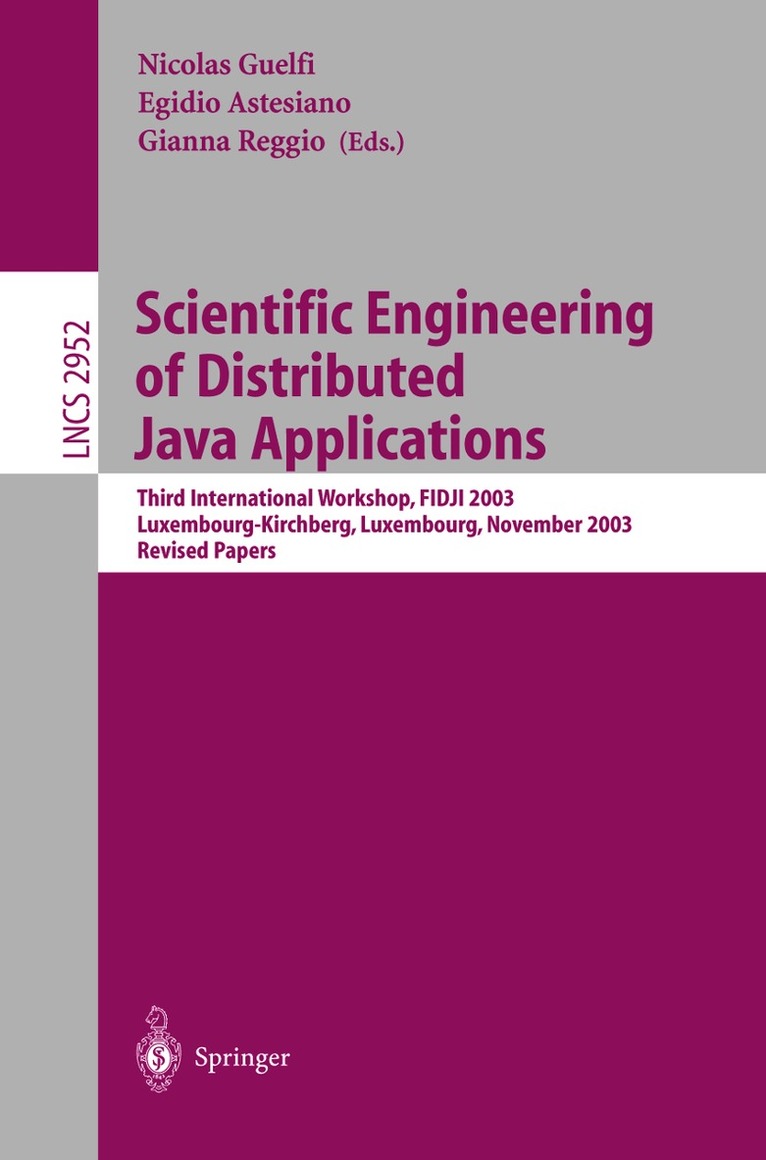
FIDJI 2003 was an international forum for researchers and practitioners in- rested in the advances in, and applications of, software engineering for distri- ted applicationdevelopment. Concerningthe technologies,the workshopfocused on “Java-related” technologies. It was an opportunity to present and observe the latest research, results, and ideas in these areas. Allpaperssubmittedtothisworkshopwerereviewedbyatleasttwomembers of the International Program Committee. Acceptance was based primarily on originality and contribution. We selected, for these post-workshop proceedings, 14 papers, amongst 29 submitted, two tutorials, and one keynote talk. FIDJI2003aimedatpromotingascienti?capproachtosoftwareengineering. The scope of the workshop included the following topics: – design of distributed Java applications – Java-related technologies – software and system architecture engineering and development methodo- gies – development methodologies for UML – development methodologies for reliable distributed systems – component-based development methodologies – managementofevolutions/iterationsintheanalysis,design,implementation, and test phases – dependability support during system life-cycles – managing inconsistencies during application development – atomicity and exception handling in system development – software architectures, frameworks, and design patterns for developing d- tributed systems – integration of formal techniques in the development process – formal analysis and grounding of modeling notation and techniques (e. g. , UML, metamodeling) – supporting the security requirements of distributed applications in the - velopment process – refactoring methods – industrial and academic case studies – development and analysis tools Theorganization of such a workshop represents an important amount of work.
E-bok
PDF, Engelska, 2004734 kr
Läs direkt efter köp
FIDJI 2003 was an international forum for researchers and practitioners in- rested in the advances in, and applications of, software engineering for distri- ted applicationdevelopment. Concerningthe technologies,the workshopfocused on “Java-related” technologies. It was an opportunity to present and observe the latest research, results, and ideas in these areas. Allpaperssubmittedtothisworkshopwerereviewedbyatleasttwomembers of the International Program Committee. Acceptance was based primarily on originality and contribution. We selected, for these post-workshop proceedings, 14 papers, amongst 29 submitted, two tutorials, and one keynote talk. FIDJI2003aimedatpromotingascienti?capproachtosoftwareengineering. The scope of the workshop included the following topics: – design of distributed Java applications – Java-related technologies – software and system architecture engineering and development methodo- gies – development methodologies for UML – development methodologies for reliable distributed systems – component-based development methodologies – managementofevolutions/iterationsintheanalysis,design,implementation, and test phases – dependability support during system life-cycles – managing inconsistencies during application development – atomicity and exception handling in system development – software architectures, frameworks, and design patterns for developing d- tributed systems – integration of formal techniques in the development process – formal analysis and grounding of modeling notation and techniques (e. g. , UML, metamodeling) – supporting the security requirements of distributed applications in the - velopment process – refactoring methods – industrial and academic case studies – development and analysis tools Theorganization of such a workshop represents an important amount of work.
E-bok
PDF, Engelska, 2003734 kr
Läs direkt efter köp
FIDJI 2002 was an international forum for researchers and practitioners in- rested in the advances in, and applications of, software engineering for distri- ted application development. Concerning the technologies, the workshop focused on “Java-related” technologies. It was an opportunity to present and observe the latest research, results, and ideas in these areas. All papers submitted to this workshop were reviewed by at least two members of the International Program Committee. Acceptance was based primarily on the originality and contribution. We selected for these postworkshop proceedings 16 papers amongst 33 submitted, two tutorials, and two keynotes. FIDJI 2002 was aimed at promoting a scienti?c approach to software engin- ring. The scope of the workshop included the following topics: – design of distributed Java applications – Java-related technologies – software and system architecture engineering and development methodo- gies – development methodologies for UML – development methodologies for reliable distributed systems – component-based development methodologies – management of evolutions/iterations in the analysis, design, implementation, and test phases – dependability support during system lifecycle – managing inconsistencies during application development – atomicity and exception handling in system development – software architectures, frameworks, and design patterns for developing d- tributed systems – integration of formal techniques in the development process – formal analysis and grounding of modeling notation and techniques (e. g.
Häftad, Engelska, 1995
562 kr
Skickas inom 10-15 vardagar
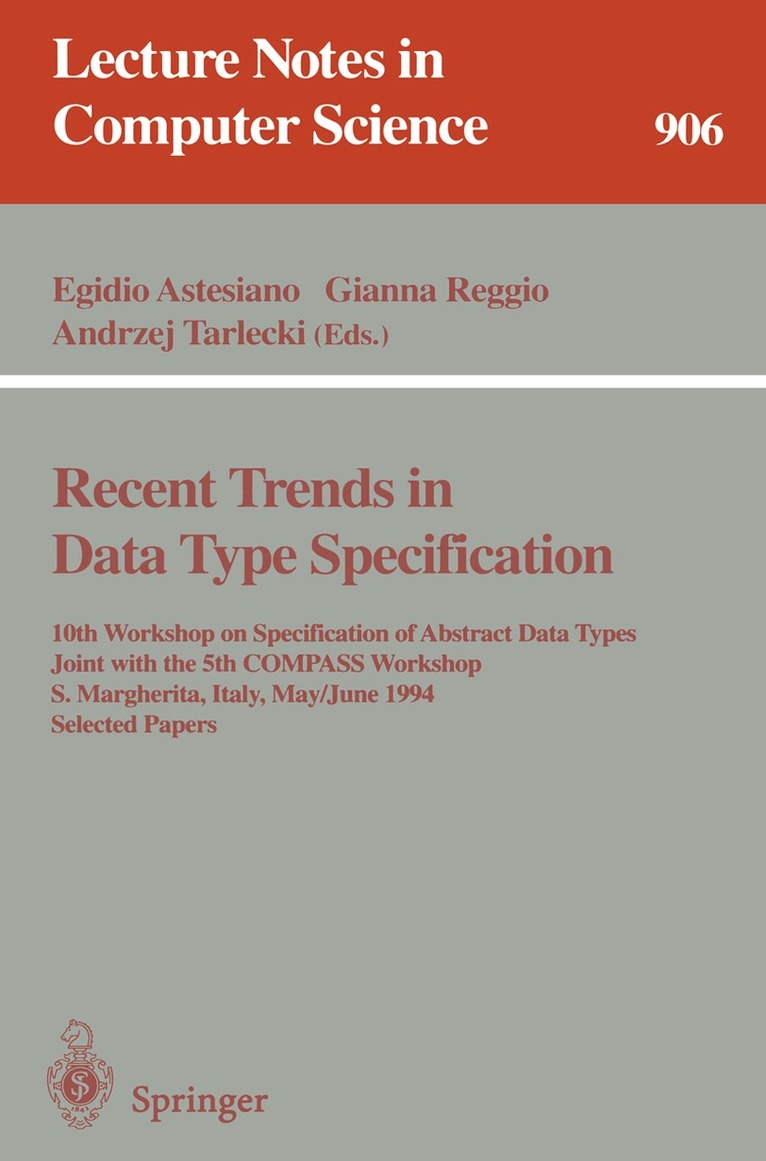
This volume comprises the invited surveys and revised versions of the submitted papers selected for presentation at the 10th Workshop on Specification of Abstract Data Types, held jointly with the 4th COMPASS Workshop in S. Margherita, Italy in June 1994.The volume gives a comprehensive state-of-the-art report of the research activities: besides classical algebraic techniques, other relevant topics are investigated, such as formalisms based on general logics and category theory, type systems for specification languages and new structures for modelling dynamic systems. In addition to four surveys by prominent leaders in the area and 23 papers presenting original research, the book contains an annotated bibliography covering all contributions to the ten editions of the workshop.
562 kr
Skickas inom 10-15 vardagar
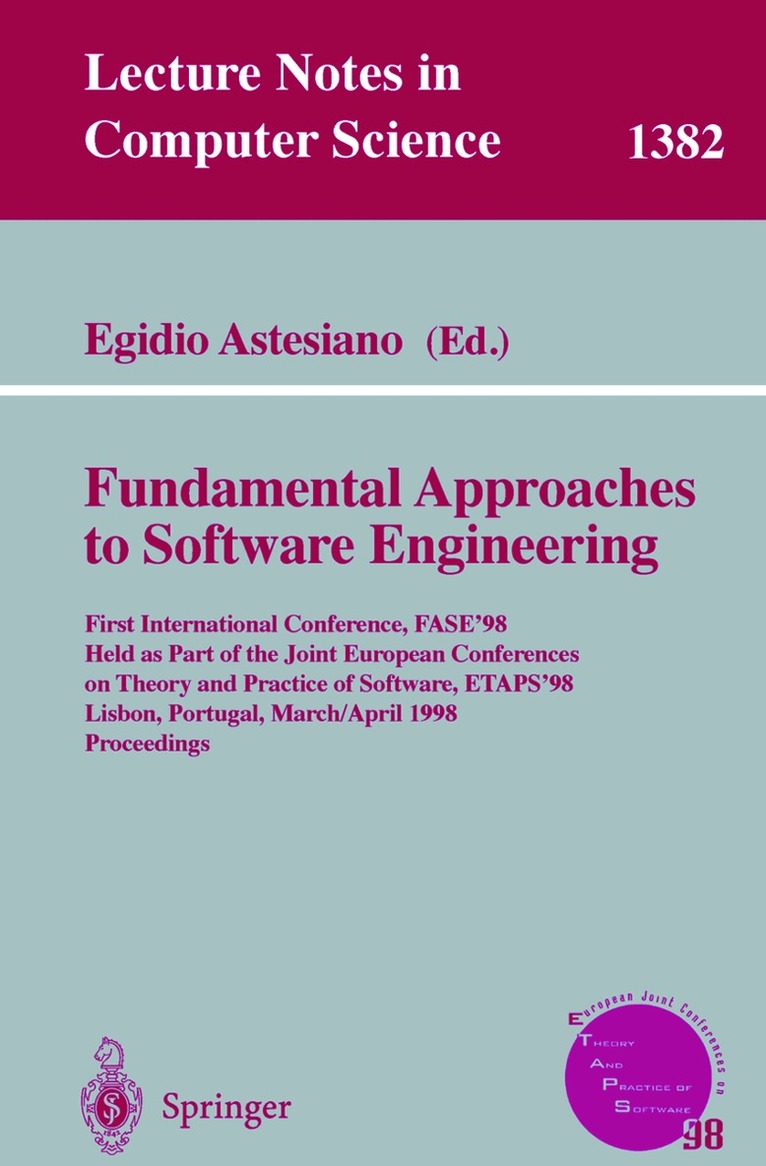
This book constitutes the refereed proceedings of the First International Conference on Fundamental Approaches to Software Engineering, FASE'98, held as part of the Joint European Conferences on Theory and Practice of Software, ETAPS'98, held in Lisbon, Portugal, in March/April 1998.Besides two invited presentations and three system demonstrations, this volume presents 18 revised full papers selected from a total of 59 submissions. Among the various fundamental software engineering issues addressed are formal methods, specification languages, refinement, object-oriented modeling, software architectures, statecharts, model checking, etc.
E-bok
PDF, Engelska, 2012734 kr
Läs direkt efter köp
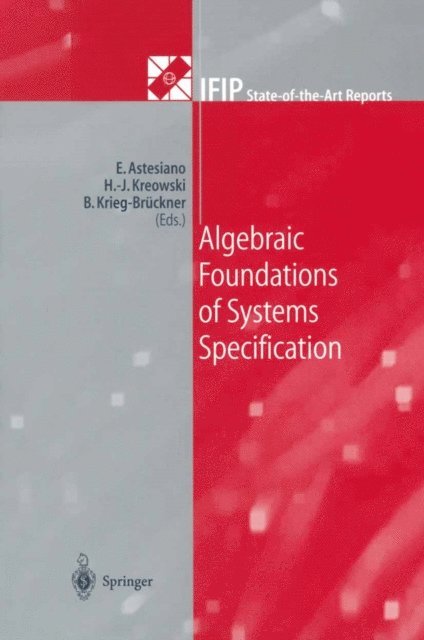
The aim of software engineering is the provision and investigation of methods for the development of software systems of high quality with correctness as a key issue. A system is called correct if it does what one wants, if it meets the requirements. To achieve and to guarantee correct systems, the need of formal methods with rigorous semantics and the possibility of verification is widely accepted. Algebraic specification is a software engineering approach of this perspective. When Liskov and Zilles, Guttag and the ADJ-group with Goguen, Thatch er, Wagner and Wright introduced the basic ideas of algebraic specification in the mid seventies in the U. S. A. and Canada, they initiated a very successful and still flourishing new area. In the late seventies, algebraic specification became a major research topic also in many European countries. Originally, the algebraic framework was intended for the mathematical foundation of ab stract data types and the formal development of first-order applicative pro grams. Meanwhile, the range of applications has been extended to the precise specification of complete software systems, the uniform definition of syntax and semantics of programming languages, and to the stepwise development of correct systems from the requirement definitions to the running programs. The activities in the last 25 years have led to an abundance of concepts, methods, approaches, theories, languages and tools, which are mathemati cally founded in universal algebra, category theory and logic.
Häftad, Engelska, 2011
562 kr
Skickas inom 10-15 vardagar
The aim of software engineering is the provision and investigation of methods for the development of software systems of high quality with correctness as a key issue. A system is called correct if it does what one wants, if it meets the requirements. To achieve and to guarantee correct systems, the need of formal methods with rigorous semantics and the possibility of verification is widely accepted. Algebraic specification is a software engineering approach of this perspective. When Liskov and Zilles, Guttag and the ADJ-group with Goguen, Thatch er, Wagner and Wright introduced the basic ideas of algebraic specification in the mid seventies in the U. S. A. and Canada, they initiated a very successful and still flourishing new area. In the late seventies, algebraic specification became a major research topic also in many European countries. Originally, the algebraic framework was intended for the mathematical foundation of ab stract data types and the formal development of first-order applicative pro grams. Meanwhile, the range of applications has been extended to the precise specification of complete software systems, the uniform definition of syntax and semantics of programming languages, and to the stepwise development of correct systems from the requirement definitions to the running programs. The activities in the last 25 years have led to an abundance of concepts, methods, approaches, theories, languages and tools, which are mathemati cally founded in universal algebra, category theory and logic.