Elena Fiddian-Qasmiyeh – författare
1 422 kr
Läs direkt efter köp
1 422 kr
Läs direkt efter köp
492 kr
Skickas inom 5-8 vardagar
1 910 kr
Skickas inom 5-8 vardagar
693 kr
Skickas inom 10-15 vardagar
2 185 kr
Skickas inom 10-15 vardagar
778 kr
Skickas inom 10-15 vardagar
442 kr
Skickas inom 5-8 vardagar
487 kr
Läs direkt efter köp
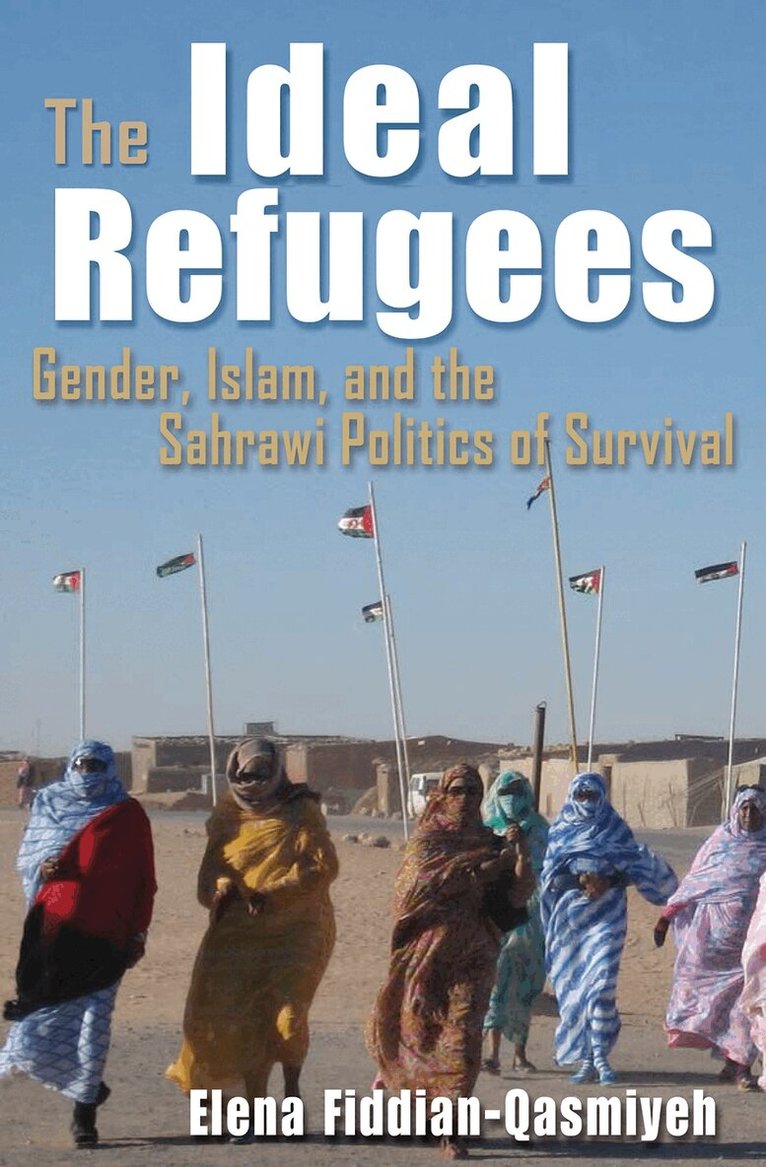
Refugee camps are typically perceived as militarized and patriarchalspaces, and yet the Sahrawi refugee camps and their inhabitantshave consistently been represented as ideal in nature: uniquelysecular and democratic spaces, and characterized by genderequality. Drawing on extensive research with and about Sahrawirefugees in Algeria, Cuba, Spain, South Africa, and Syria, Fiddian-Qasmiyeh explores how, why, and to what effect such idealizeddepictions have been projected onto the international arena.
880 kr
Läs direkt efter köp
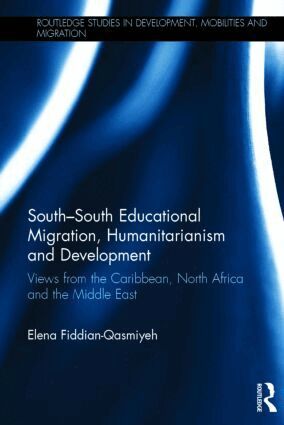
This ground-breaking book is one of the first to analyse the important phenomenon of South-South educational migration for refugees. It focuses particularly on South-South scholarship programmes in Cuba and Libya, which have granted free education to children, adolescents and young adults from two of the world’s most protracted refugee situations: Sahrawis and Palestinians.
Through in-depth multi-sited fieldwork conducted with and about Sahrawi and Palestinian refugee students in Cuba and Libya, and following their return to the desert-based Sahrawi refugee camps in Algeria and the urban Palestinian refugee camps in Lebanon, this highly pertinent study brings refugees’ views and voices to the forefront and sheds a unique light on their understandings of self-sufficiency, humanitarianism and hospitality. It critically assesses the impact of diverse policies designed to maximise self-sufficiency and to reduce both brain drain and ongoing dependency upon Northern aid providers, exploring the extent to which South-South scholarship systems have challenged the power imbalances that typically characterise North to South development models. Finally, this very timely study discusses the impact of the Arab Spring on Libya’s support mechanisms for Sahrawi and Palestinian refugees, and considers the changing nature of Cuba’s educational model in light of major ongoing political, ideological and economic shifts in the island state, asking whether there is a future for such alternative programmes and initiatives.
This book will be a valuable resource for students, researchers and practitioners in the areas of migration studies, refugee studies, comparative education, development and humanitarian studies, international relations, and regional studies (Latin America, Middle East, and North Africa).
880 kr
Läs direkt efter köp
This ground-breaking book is one of the first to analyse the important phenomenon of South-South educational migration for refugees. It focuses particularly on South-South scholarship programmes in Cuba and Libya, which have granted free education to children, adolescents and young adults from two of the world’s most protracted refugee situations: Sahrawis and Palestinians.
Through in-depth multi-sited fieldwork conducted with and about Sahrawi and Palestinian refugee students in Cuba and Libya, and following their return to the desert-based Sahrawi refugee camps in Algeria and the urban Palestinian refugee camps in Lebanon, this highly pertinent study brings refugees’ views and voices to the forefront and sheds a unique light on their understandings of self-sufficiency, humanitarianism and hospitality. It critically assesses the impact of diverse policies designed to maximise self-sufficiency and to reduce both brain drain and ongoing dependency upon Northern aid providers, exploring the extent to which South-South scholarship systems have challenged the power imbalances that typically characterise North to South development models. Finally, this very timely study discusses the impact of the Arab Spring on Libya’s support mechanisms for Sahrawi and Palestinian refugees, and considers the changing nature of Cuba’s educational model in light of major ongoing political, ideological and economic shifts in the island state, asking whether there is a future for such alternative programmes and initiatives.
This book will be a valuable resource for students, researchers and practitioners in the areas of migration studies, refugee studies, comparative education, development and humanitarian studies, international relations, and regional studies (Latin America, Middle East, and North Africa).
1 631 kr
Skickas inom 10-15 vardagar
1 519 kr
Läs direkt efter köp
3 299 kr
Skickas inom 10-15 vardagar
795 kr
Läs direkt efter köp
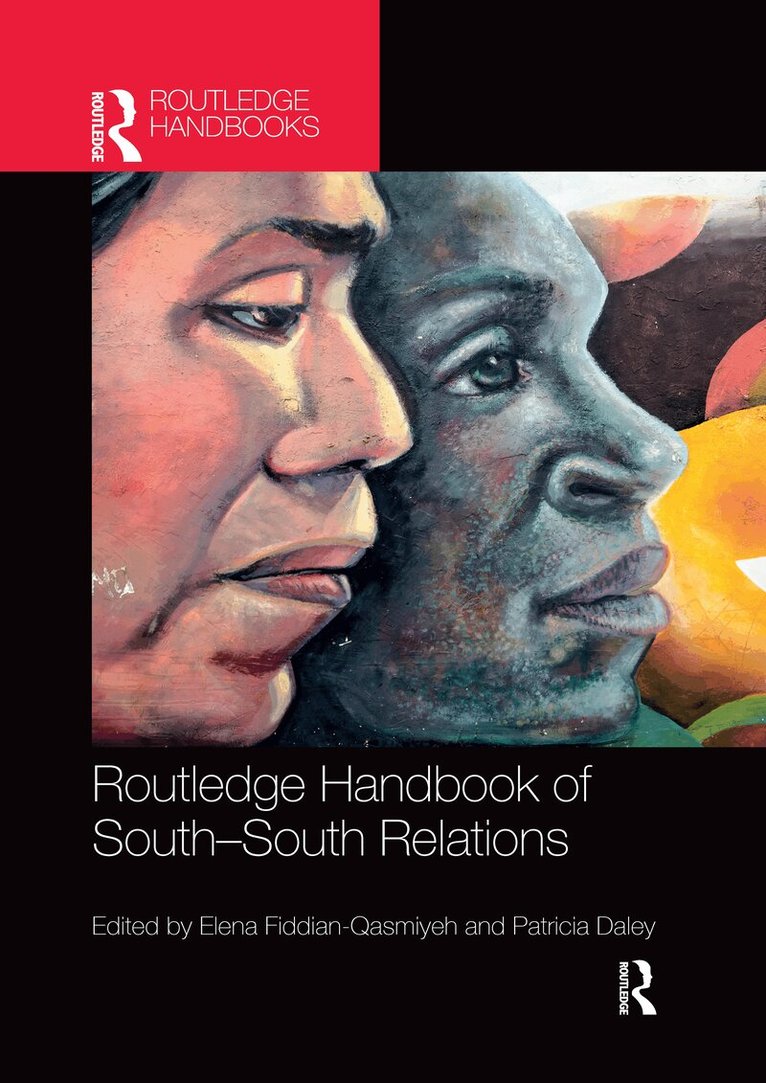
South-South cooperation is becoming ever more important to states, policy-makers and academics. Many Northern states, international agencies and NGOs are promoting South-South partnerships as a means of ‘sharing the burden’ in funding and undertaking development, assistance and protection activities, often in response to increased political and financial pressures on their own aid budgets. However, the mainstreaming of Southern-led initiatives by UN agencies and Northern states is paradoxical in many ways, especially because the development of a South-South cooperation paradigm was originally conceptualised as a necessary way to overcome the exploitative nature of North-South relations in the era of decolonisation.
This handbook critically explores diverse ways of defining ‘the South’ and of conceptualising and engaging with ‘South-South relations.’ Through 30 state-of-the-art reviews of key academic and policy debates, the handbook evaluates past, present and future opportunities and challenges of South-South cooperation, and lays out research agendas for the next 5-10 years. The book covers key models of cooperation (including internationalism, Pan-Arabism and Pan-Africanism), diverse modes of South-South connection, exchange and support (including South-South aid, transnational activism, and migration), and responses to displacement, violence and conflict (including Southern-led humanitarianism, peace-building and conflict resolution). In so doing, the handbook reflects on decolonial, postcolonial and anticolonial theories and methodologies, exploring urgent questions regarding the nature and implications of conducting research in and about the global South, and of applying a ‘Southern lens’ to a wide range of encounters, processes and dynamics across the global South and global North alike.
This handbook will be of great interest to scholars and post-graduate students in anthropology, area studies, cultural studies, development studies, history, geography, international relations, politics, postcolonial studies and sociology.
795 kr
Läs direkt efter köp
South-South cooperation is becoming ever more important to states, policy-makers and academics. Many Northern states, international agencies and NGOs are promoting South-South partnerships as a means of ‘sharing the burden’ in funding and undertaking development, assistance and protection activities, often in response to increased political and financial pressures on their own aid budgets. However, the mainstreaming of Southern-led initiatives by UN agencies and Northern states is paradoxical in many ways, especially because the development of a South-South cooperation paradigm was originally conceptualised as a necessary way to overcome the exploitative nature of North-South relations in the era of decolonisation.
This handbook critically explores diverse ways of defining ‘the South’ and of conceptualising and engaging with ‘South-South relations.’ Through 30 state-of-the-art reviews of key academic and policy debates, the handbook evaluates past, present and future opportunities and challenges of South-South cooperation, and lays out research agendas for the next 5-10 years. The book covers key models of cooperation (including internationalism, Pan-Arabism and Pan-Africanism), diverse modes of South-South connection, exchange and support (including South-South aid, transnational activism, and migration), and responses to displacement, violence and conflict (including Southern-led humanitarianism, peace-building and conflict resolution). In so doing, the handbook reflects on decolonial, postcolonial and anticolonial theories and methodologies, exploring urgent questions regarding the nature and implications of conducting research in and about the global South, and of applying a ‘Southern lens’ to a wide range of encounters, processes and dynamics across the global South and global North alike.
This handbook will be of great interest to scholars and post-graduate students in anthropology, area studies, cultural studies, development studies, history, geography, international relations, politics, postcolonial studies and sociology.
1 198 kr
Skickas inom 10-15 vardagar
182 kr
Skickas inom 5-8 vardagar