
Elizabeth Quintero – författare
Visar alla böcker från författaren Elizabeth Quintero. Handla med fri frakt och snabb leverans.
3 produkter
3 produkter
Del 54 - Rethinking Childhood
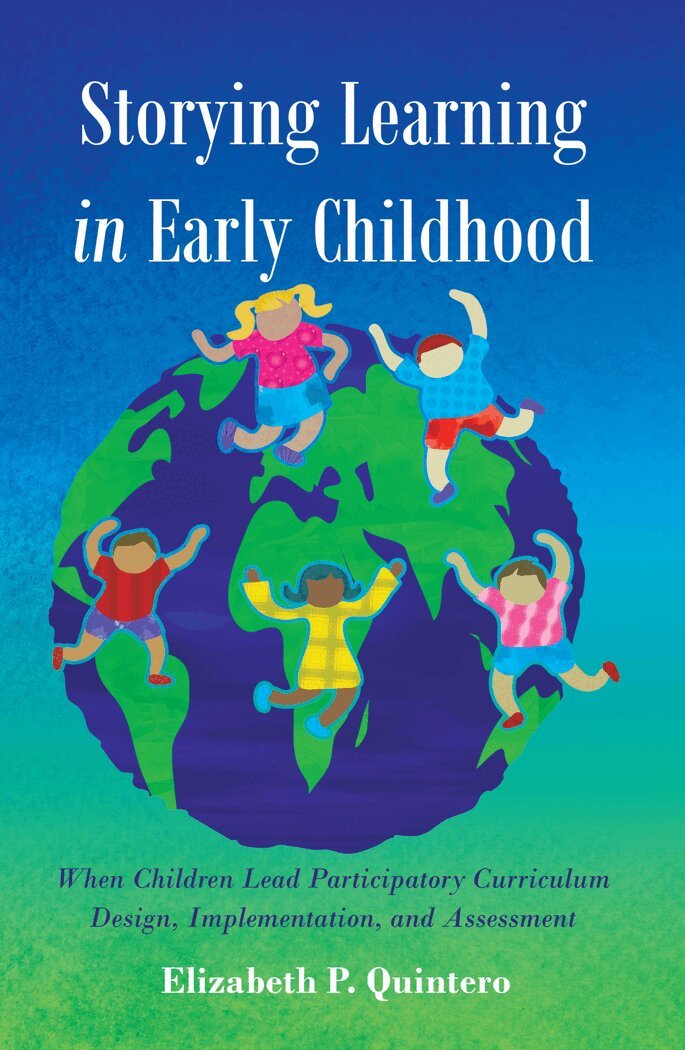
Storying Learning in Early Childhood
When Children Lead Participatory Curriculum Design, Implementation, and Assessment
Häftad, Engelska, 2015
425 kr
Skickas inom 5-8 vardagar
Storying Learning in Early Childhood documents philosophical, research, and critical questions about notions of childrens’ experiences and learning potential that heavily influence the profession. Critically created, child-centered curriculum and assessment collaborations focus on contexts of homes, schools, and communities. This book brings into focus policy issues, economic issues, and political realities that affect us all as we engage in curriculum and assessment. Patterns of findings under the foci of critical, responsive curriculum and authentic assessment for all children have illustrated new questions, provoked new trajectories of informants, and reiterated connections to dynamic issues in early childhood internationally. The work involved in curriculum and assessment points to international discussions about what is «quality» in early care and education and who has the power to decide. These international dynamics highlight the inevitable connections among programs for young children, policies, and politics. Further consideration regarding multiple histories, strengths, and needs of young children also illustrate little-discussed refugees and migrating people around the world – and their children – who are growing and experiencing life wherever they are living in a variety of situations with or without support.
E-bok
PDF, Engelska, 20091 545 kr
Läs direkt efter köp
Wisdom and activism come to us sometimes in the smallest and most unexpected ways through soft, previously silenced, yet passionate voices. Critical theory, critical literacy, and related approaches to learning about the world and many forms of knowledge can be a potentially effective way to address complexities of our changing world society. Critical pedagogists and other postmodern scholars speak often of the importance of educators taking on the risk and responsibility of being intellectual participants. By attending to both the sense of opposition and the sense of engaged participation intellectuals can explore the possibilities for action.This book reports on qualitative research following educators-including parents, community elders and teachers using critical literacy-in several countries and documents the ways the educators use various funds of knowledge (Moll et al., 2005) for self-advocacy. It modestly attempts to address the funds of knowledge of educators (families and community members) in a variety of contexts from a variety of cultures, continents, and situations of living.Thus, this book is for all of us striving to make connections with migrating people through our work-educators, researchers, community activists, classroom teachers, family advocates, and readers interested in the changing dynamics of societies.
Del 54 - Rethinking Childhood
Storying Learning in Early Childhood
When Children Lead Participatory Curriculum Design, Implementation, and Assessment
Inbunden, Engelska, 2015
1 198 kr
Tillfälligt slut
Storying Learning in Early Childhood documents philosophical, research, and critical questions about notions of childrens’ experiences and learning potential that heavily influence the profession. Critically created, child-centered curriculum and assessment collaborations focus on contexts of homes, schools, and communities. This book brings into focus policy issues, economic issues, and political realities that affect us all as we engage in curriculum and assessment. Patterns of findings under the foci of critical, responsive curriculum and authentic assessment for all children have illustrated new questions, provoked new trajectories of informants, and reiterated connections to dynamic issues in early childhood internationally. The work involved in curriculum and assessment points to international discussions about what is «quality» in early care and education and who has the power to decide. These international dynamics highlight the inevitable connections among programs for young children, policies, and politics. Further consideration regarding multiple histories, strengths, and needs of young children also illustrate little-discussed refugees and migrating people around the world – and their children – who are growing and experiencing life wherever they are living in a variety of situations with or without support.