Elize Massard da Fonseca - Böcker
Visar alla böcker från författaren Elize Massard da Fonseca. Handla med fri frakt och snabb leverans.
3 produkter
3 produkter
487 kr
Skickas inom 7-10 vardagar
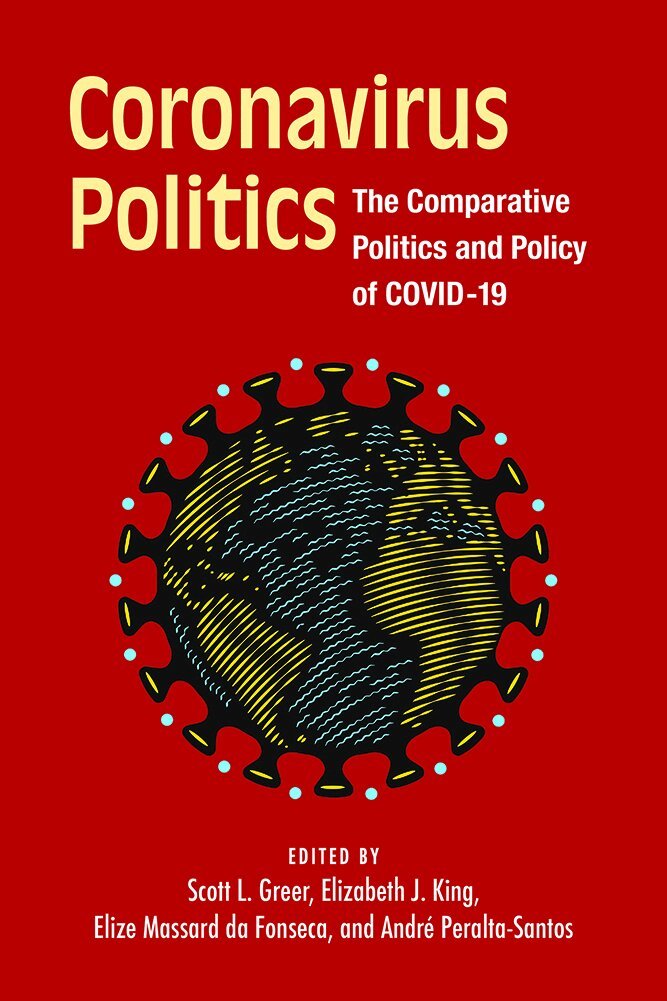
COVID-19 is the most significant global crisis of any of our lifetimes. The numbers have been stupefying, whether of infection and mortality, the scale of public health measures, or the economic consequences of shutdown. Coronavirus Politics identifies key threads in the global comparative discussion that continue to shed light on COVID-19 and shape debates about what it means for scholarship in health and comparative politics. Editors Scott L. Greer, Elizabeth J. King, Elize Massard da Fonseca, and André Peralta-Santos bring together over 30 authors versed in politics and the health issues in order to understand the health policy decisions, the public health interventions, the social policy decisions, their interactions, and the reasons. The book’s coverage is global, with a wide range of key and exemplary countries, and contains a mixture of comparative, thematic, and templated country studies. All go beyond reporting and monitoring to develop explanations that draw on the authors' expertise while engaging in structured conversations across the book.
Vaccination Politics
The Comparative Politics and Policy of COVID-19 Vaccination
Häftad, Engelska, 2027
804 kr
Kommande
COVID-19 vaccines were a historic triumph, with less than a year between the initial identification of the microbe and effective vaccines being administered. They were also a public administration challenge, demanding that governments of the world procure and administer billions of doses in widely different contexts. In many countries they were intensely polarizing, catalyzing a rise in anti-vaccination politics.Vaccination Politics brings together public health and political science expertise for a global, systematic comparison of vaccination politics. The authors look at 32 countries’ experiences, from Austria to Malawi and the United States to Hong Kong, to understand how trust, wealth, pharmaceutical industries, regulators, international organizations, and health systems succeeded or failed at acquiring vaccines and vaccinating citizens. It shows how different governments and populations navigated challenges. Global inequality, political trust, contestation over health system priorities, and opportunistic politicians all played roles in shaping the subsequent politics of health and vaccination around the world. A conclusion brings together lessons for policy and key issues for further research. While the next pandemic is unknown to us today, the response to it will be shaped by the positive and negative legacies of COVID-19 vaccination politics.
Del 26 - SpringerBriefs in Political Science
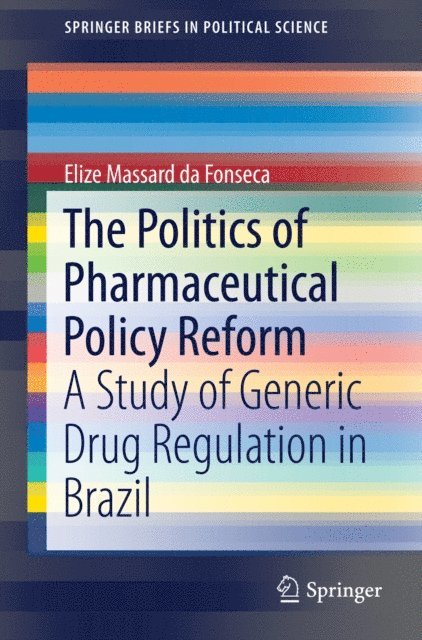
Politics of Pharmaceutical Policy Reform
A Study of Generic Drug Regulation in Brazil
Häftad, Engelska, 2014
536 kr
Skickas inom 10-15 vardagar
Brazil is renowned worldwide for its remarkable reforms in pharmaceutical regulation, which have enhanced access to essential medicines while lowering drug costs. This book innovates by analysing the generic drug reform in Brazil, demonstrating that pharmaceutical regulation is only partially influenced by non-state actors. Little is known about the institutional antecedents and policy process that channeled this regulatory reform. This is particularly intriguing because a regulatory shift in the pharmaceutical sector requires the participation of a number of stakeholders and interest groups in the policy process. Fonseca examines the generic drug reform’s causes and consequences. No study has approached the generic drug regulation in Brazil from this perspective. The Politics of Pharmaceutical Policy Reform: A Study of Generic Drug Regulation in Brazil, explores the following: · The politics of pharmaceutical regulation in Brazil over the last 25 years.· The political negotiations to approve the Generic Drug Act, which involved a hard-to-reach agreement between the pharmaceutical industry (national and multinational), the Ministry of Health, and Congress· The controversial decisions to regulate packaging and pharmaceutical equivalence.· The surprising success of Brazilian pharmaceutical firms, which became market champions in a sector largely dominated by multinational firms.· Comparative lessons from the Brazilian case for the political construction of regulatory standards to regulate generic drugs and its effects on global health. This book will interest political scientists and health policy scholars concerned with the political conflicts in the pharmaceutical sector. It argues against well-established approaches to regulatory capture such as control of the regulatory process by interest groups and policy diffusion. It can be used as evidence for graduate courses in public policy, health policy and political science. Because Brazil is one of the largest markets for pharmaceuticals in the world, business leaders and consultancy firms would also be interested.