Emily Ng – författare
Visar alla böcker från författaren Emily Ng. Handla med fri frakt och snabb leverans.
5 produkter
5 produkter
Inbunden, Engelska, 2020
1 083 kr
Skickas inom 5-8 vardagar
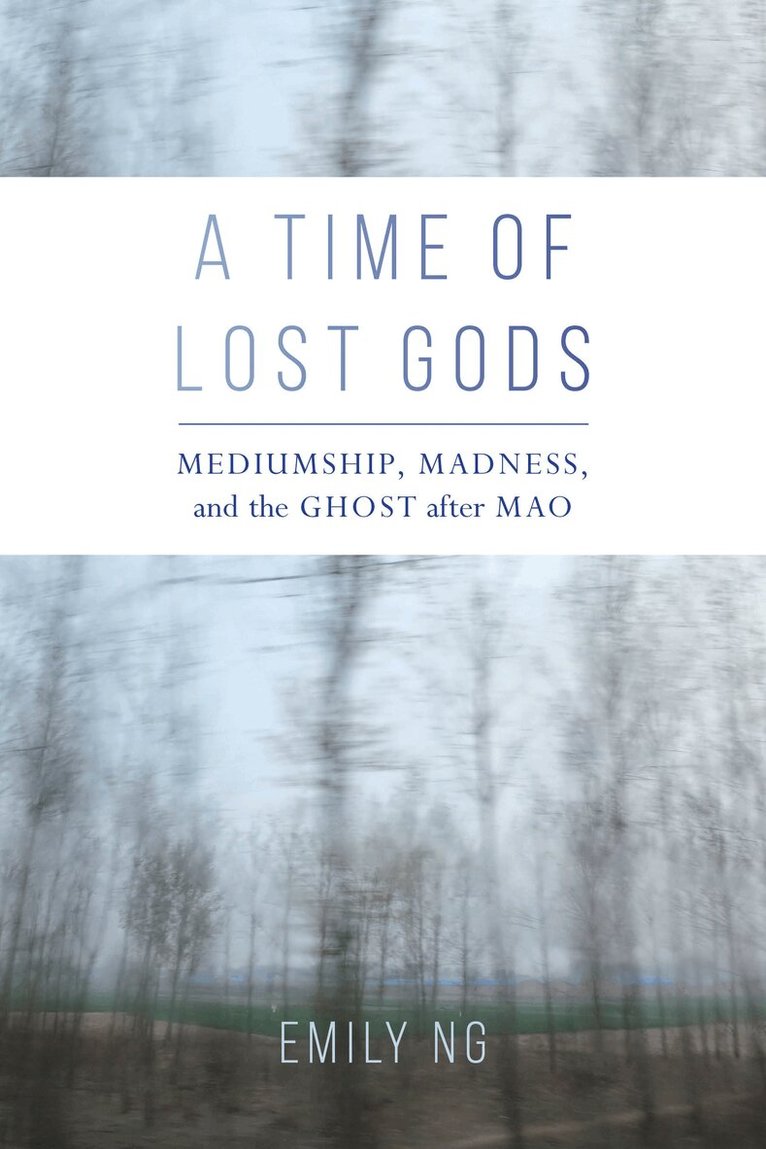
Traversing visible and invisible realms, A Time of Lost Gods attends to profound rereadings of politics, religion, and madness in the cosmic accounts of spirit mediumship. Drawing on research across a temple, a psychiatric unit, and the home altars of spirit mediums in a rural county of China’s Central Plain, it asks: What ghostly forms emerge after the death of Mao and the so-called end of history?The story of religion in China since the market reforms of the late 1970s is often told through its destruction under Mao and relative flourishing thereafter. Here, those who engage in mediumship offer a different history of the present. They approach Mao’s reign not simply as an earthly secular rule, but an exceptional interval of divine sovereignty, after which the cosmos collapsed into chaos. Caught between a fading era and an ever-receding horizon, those “left behind” by labor outmigration refigure the evacuated hometown as an ethical-spiritual center to come, amidst a proliferation of madness-inducing spirits. Following pronouncements of China’s rise, and in the wake of what Chinese intellectuals termed semicolonialism, the stories here tell of spirit mediums, patients, and psychiatrists caught in a shared dilemma, in a time when gods have lost their way.
Häftad, Engelska, 2020
294 kr
Skickas inom 5-8 vardagar
Traversing visible and invisible realms, A Time of Lost Gods attends to profound rereadings of politics, religion, and madness in the cosmic accounts of spirit mediumship. Drawing on research across a temple, a psychiatric unit, and the home altars of spirit mediums in a rural county of China’s Central Plain, it asks: What ghostly forms emerge after the death of Mao and the so-called end of history?The story of religion in China since the market reforms of the late 1970s is often told through its destruction under Mao and relative flourishing thereafter. Here, those who engage in mediumship offer a different history of the present. They approach Mao’s reign not simply as an earthly secular rule, but an exceptional interval of divine sovereignty, after which the cosmos collapsed into chaos. Caught between a fading era and an ever-receding horizon, those “left behind” by labor outmigration refigure the evacuated hometown as an ethical-spiritual center to come, amidst a proliferation of madness-inducing spirits. Following pronouncements of China’s rise, and in the wake of what Chinese intellectuals termed semicolonialism, the stories here tell of spirit mediums, patients, and psychiatrists caught in a shared dilemma, in a time when gods have lost their way.
Inbunden, Engelska, 2023
1 446 kr
Skickas inom 10-15 vardagar
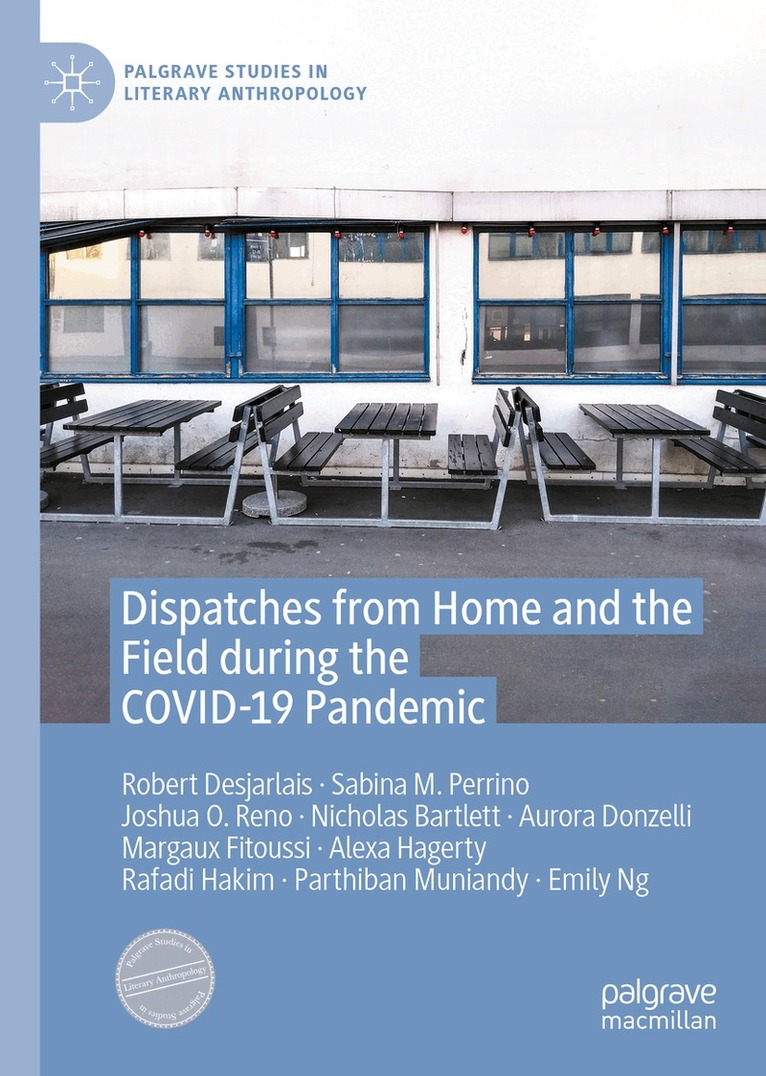
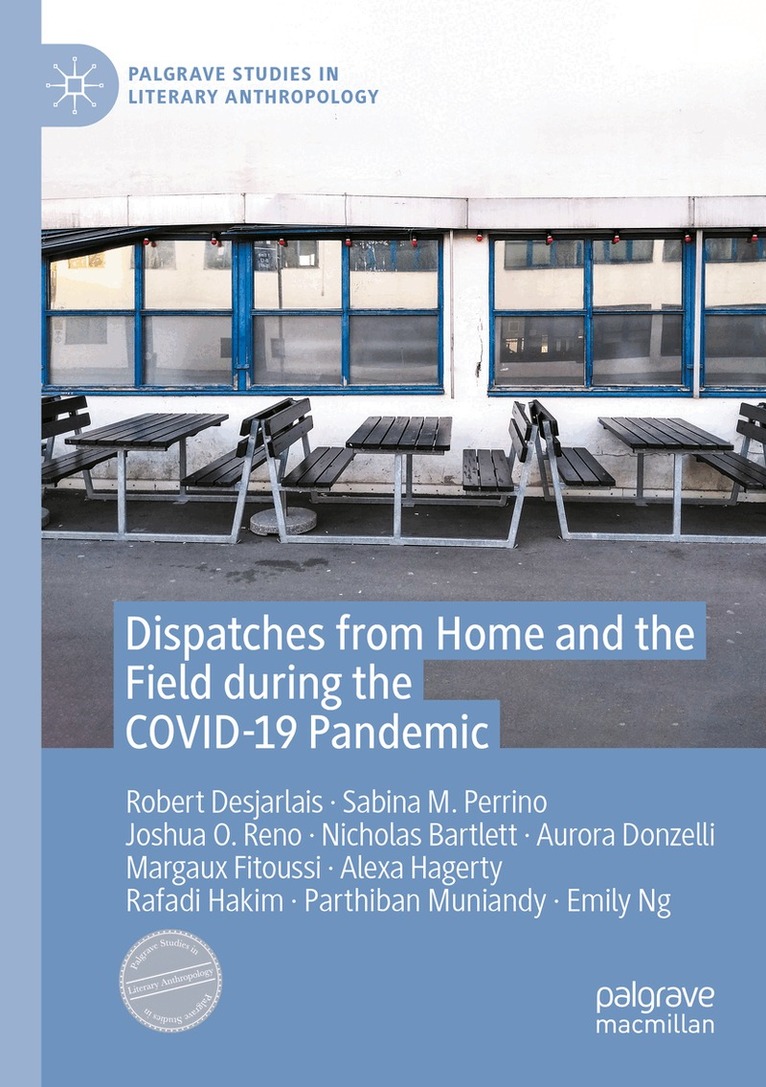
This volume, written in a readable and enticing style, is based on a simple premise, which was to have several exceptional ethnographers write about their experiences in an evocative way in real time during the COVID-19 pandemic. Rather than an edited volume with dedicated chapters, this book thus offers a new format wherein authors write several, distinct dispatches, each short and compact, allowing each writer's perspectives and stories to grow, in tandem with the pandemic itself, over the course of the book. Leaving behind the trope of the lonely anthropologist, these authors come together to form a collective of ethnographers to ask important questions, such as: What does it mean to live and write amid an unfolding and unstoppable global health and economic crisis? What are the intensities of the everyday? How do the isolated find connection in the face of catastrophe? Such first-person reflections touch on a plurality of themes brought on by the pandemic, forces and dynamics of pressing concern to many, such as contagion, safety, health inequalities, societal injustices, loss and separation, displacement, phantasmal imaginings and possibilities, the uncertain arts of calculating risk and protection, limits on movement and travel, and the biopolitical operations of sovereign powers. The various writings—spun from diverse situations and global locations—proceed within a temporal flow, starting in March 2020, with the first alerts and cases of viral infection, and then move on to various currents of caution, concern, infection, despair, hope, and connection that have unfolded since those early days. The writings then move into 2021, with events and moods associated with the global distribution of potentially effective vaccines and the promise and hope these immunizations bring. The written record of these multiform dispatches involves traces of a series of lives, as the authors of those lives tried to make do, and write, in trying times. A timely ethnography of an event that has changed all our lives, this book is critical reading for students and researchers of medical anthropology, sociocultural anthropology, contemporary anthropological theory, and ethnographic writing.
E-bok
Engelska, 20231 687 kr
Läs direkt efter köp
This volume, written in a readable and enticing style, is based on a simple premise, which was to have several exceptional ethnographers write about their experiences in an evocative way in real time during the COVID-19 pandemic. Rather than an edited volume with dedicated chapters, this book thus offers a new format wherein authors write several, distinct dispatches, each short and compact, allowing each writer''s perspectives and stories to grow, in tandem with the pandemic itself, over the course of the book. Leaving behind the trope of the lonely anthropologist, these authors come together to form a collective of ethnographers to ask important questions, such as: What does it mean to live and write amid an unfolding and unstoppable global health and economic crisis? What are the intensities of the everyday? How do the isolated find connection in the face of catastrophe?
Such first-person reflections touch on a plurality of themes brought on by the pandemic, forces and dynamics of pressing concern to many, such as contagion, safety, health inequalities, societal injustices, loss and separation, displacement, phantasmal imaginings and possibilities, the uncertain arts of calculating risk and protection, limits on movement and travel, and the biopolitical operations of sovereign powers. The various writings—spun from diverse situations and global locations—proceed within a temporal flow, starting in March 2020, with the first alerts and cases of viral infection, and then move on to various currents of caution, concern, infection, despair, hope, and connection that have unfolded since those early days. The writings then move into 2021, with events and moods associated with the global distribution of potentially effective vaccines and the promise and hope these immunizations bring. The written record of these multiform dispatches involves traces of a series of lives, as the authors of those lives tried to make do, and write, in trying times.
A timely ethnography of an event that has changed all our lives, this book is critical reading for students and researchers of medical anthropology, sociocultural anthropology, contemporary anthropological theory, and ethnographic writing.
Häftad, Engelska, 2024
1 446 kr
Skickas inom 10-15 vardagar
This volume, written in a readable and enticing style, is based on a simple premise, which was to have several exceptional ethnographers write about their experiences in an evocative way in real time during the COVID-19 pandemic. Rather than an edited volume with dedicated chapters, this book thus offers a new format wherein authors write several, distinct dispatches, each short and compact, allowing each writer's perspectives and stories to grow, in tandem with the pandemic itself, over the course of the book. Leaving behind the trope of the lonely anthropologist, these authors come together to form a collective of ethnographers to ask important questions, such as: What does it mean to live and write amid an unfolding and unstoppable global health and economic crisis? What are the intensities of the everyday? How do the isolated find connection in the face of catastrophe? Such first-person reflections touch on a plurality of themes brought on by the pandemic, forces and dynamics of pressing concern to many, such as contagion, safety, health inequalities, societal injustices, loss and separation, displacement, phantasmal imaginings and possibilities, the uncertain arts of calculating risk and protection, limits on movement and travel, and the biopolitical operations of sovereign powers. The various writings—spun from diverse situations and global locations—proceed within a temporal flow, starting in March 2020, with the first alerts and cases of viral infection, and then move on to various currents of caution, concern, infection, despair, hope, and connection that have unfolded since those early days. The writings then move into 2021, with events and moods associated with the global distribution of potentially effective vaccines and the promise and hope these immunizations bring. The written record of these multiform dispatches involves traces of a series of lives, as the authors of those lives tried to make do, and write, in trying times. A timely ethnography of an event that has changed all our lives, this book is critical reading for students and researchers of medical anthropology, sociocultural anthropology, contemporary anthropological theory, and ethnographic writing.