Enrique Ortega-Rivas - Böcker
Visar alla böcker från författaren Enrique Ortega-Rivas. Handla med fri frakt och snabb leverans.
8 produkter
8 produkter
2 107 kr
Skickas inom 10-15 vardagar
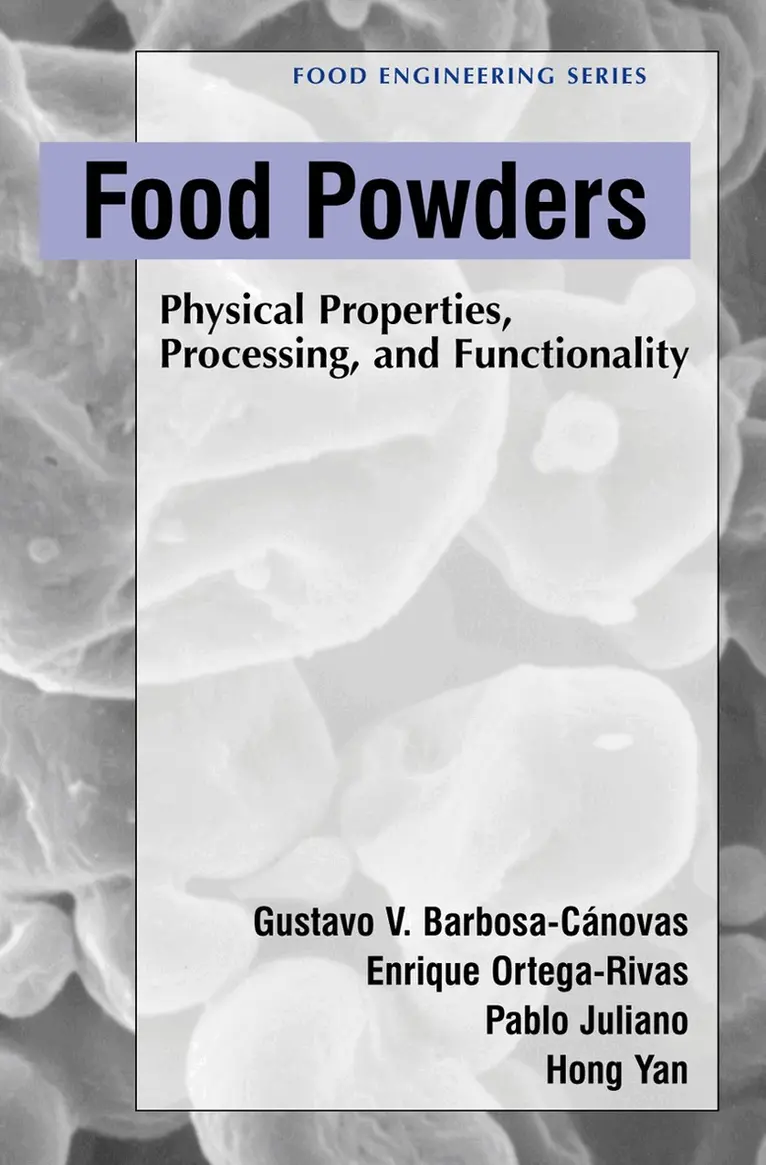
Food Powders is the first book that addresses key aspects of food powder technology. It is a comprehensive review on the characterization of ingredients, semi-processed and finished products when they are in a powdered form. It includes the description of different industrial unit operations such as drying, grinding, mixing, agglomeration, and encapsulation that supply food powders of different composition and microstructure. It also includes several analytical tools to characterize food powders by their particle size, size distribution, physical properties, and functionality. Written from an engineering perspective, the book is designed and developed as a useful reference for individuals in both the food industry and academia interested in an organized and updated review. It is a valuable addition to the food powder technology literature and promotes additional interest in advancing food powders research, development, education and implementation.
930 kr
Skickas inom 10-15 vardagar
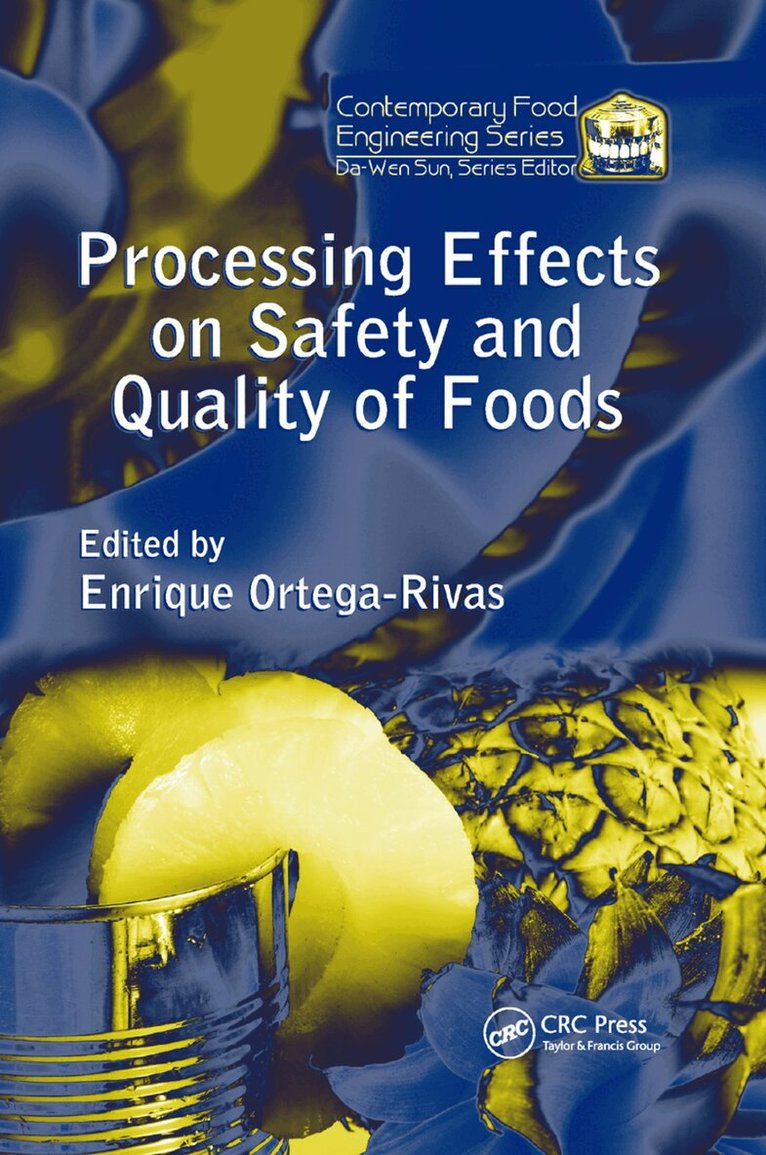
Covers a Host of Groundbreaking TechniquesThermal processing is known to effectively control microbial populations in food, but the procedure also has a downside―it can break down the biochemical composition of foods, resulting in a marked loss of sensory and nutritional quality. Processing Effects on Safety and Quality of Foods delineates three decades of advances made in processing techniques that produce microbiologically safe foods, while maintaining their sensory and nutritive properties. Addresses the Entire Food Processing IndustryWith an international team of more than 35 renowned contributors, this book presents evaluation techniques that yield reliable estimations of microbiological, physicochemical, nutritive, and sensory characteristics. Each chapter discusses the processing effects of relevant technologies and includes the basics of microbial kinetics, sensory evaluation, and the perception of food quality. A sampling of the techniques covered: Hermetically sealed containersAcrylamide formationDried foodsIrradiated foodsPressure-assisted thermal processingPulsed electric field processing Processing Effects on Safety and Quality of Foods addresses the entire food processing industry, including food modeling, optimization, and proper design of manufacturing plants. It is the first of its kind―a single, sound reference that explores all of the different aspects involved in evaluating processing effects in food safety and quality.
1 553 kr
Skickas inom 10-15 vardagar
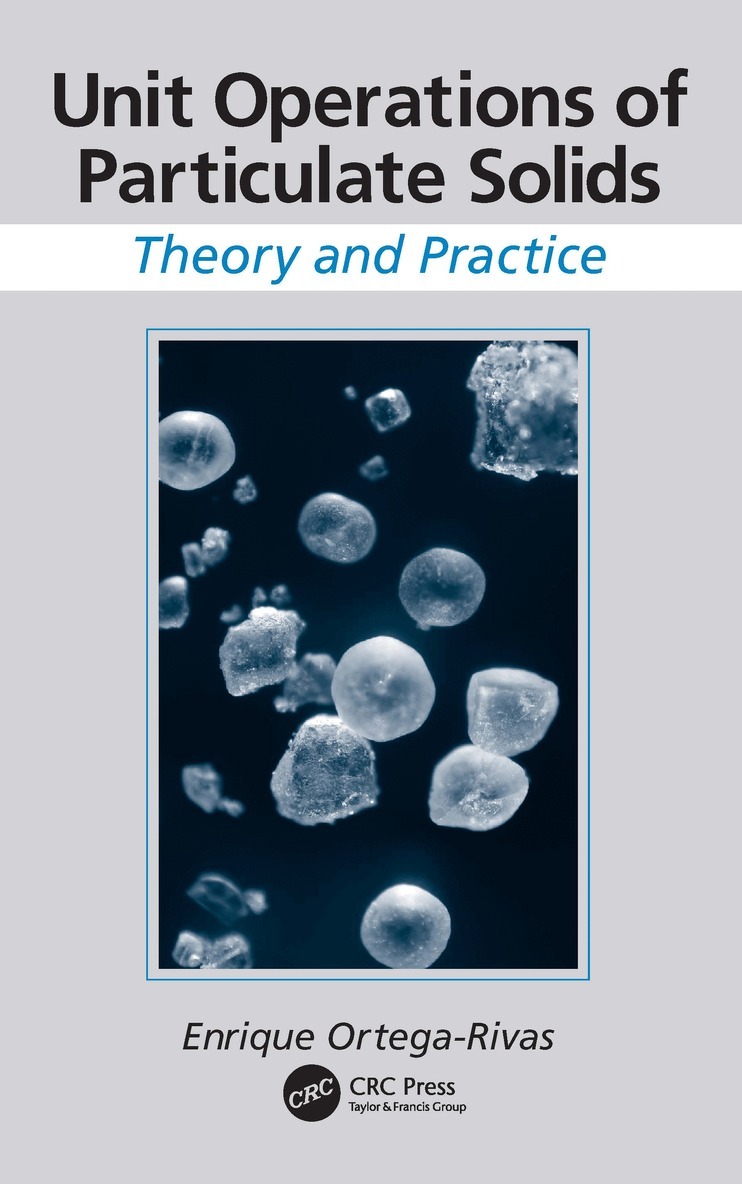
Suitable for practicing engineers and engineers in training, Unit Operations of Particulate Solids: Theory and Practice presents the unit operations in chemical engineering that involve the handling and processing of particulate solids. The first part of the book analyzes primary and secondary properties of particles and particulate systems, focusing on their characterization and the effects on selection and design of silos and conveyors. Covering the main industrial operations of dry solids processing, the second part offers insight into the operation principles of the most important technologies that handle dry solids in bulk. With an emphasis on two-phase and multiphase flow, the final part describes all of the relevant systems in industrial processes that combine two different components of the state of matter as well as technologies for separating phases by purely mechanical means.Through clear explanations of theoretical principles and practical laboratory exercises, this book provides an understanding of the behavior of powders and pulverized systems. It also helps readers develop skills for operating, optimizing, and innovating particle processing technologies and machinery in order to carry out industrial operations, such as centrifugation, filtration, and membrane separations.
3 403 kr
Skickas inom 10-15 vardagar
Covers a Host of Groundbreaking TechniquesThermal processing is known to effectively control microbial populations in food, but the procedure also has a downside―it can break down the biochemical composition of foods, resulting in a marked loss of sensory and nutritional quality. Processing Effects on Safety and Quality of Foods delineates three decades of advances made in processing techniques that produce microbiologically safe foods, while maintaining their sensory and nutritive properties. Addresses the Entire Food Processing IndustryWith an international team of more than 35 renowned contributors, this book presents evaluation techniques that yield reliable estimations of microbiological, physicochemical, nutritive, and sensory characteristics. Each chapter discusses the processing effects of relevant technologies and includes the basics of microbial kinetics, sensory evaluation, and the perception of food quality. A sampling of the techniques covered: Hermetically sealed containersAcrylamide formationDried foodsIrradiated foodsPressure-assisted thermal processingPulsed electric field processing Processing Effects on Safety and Quality of Foods addresses the entire food processing industry, including food modeling, optimization, and proper design of manufacturing plants. It is the first of its kind―a single, sound reference that explores all of the different aspects involved in evaluating processing effects in food safety and quality.
3 669 kr
Skickas inom 10-15 vardagar
Suitable for practicing engineers and engineers in training, Unit Operations of Particulate Solids: Theory and Practice presents the unit operations in chemical engineering that involve the handling and processing of particulate solids. The first part of the book analyzes primary and secondary properties of particles and particulate systems, focusing on their characterization and the effects on selection and design of silos and conveyors. Covering the main industrial operations of dry solids processing, the second part offers insight into the operation principles of the most important technologies that handle dry solids in bulk. With an emphasis on two-phase and multiphase flow, the final part describes all of the relevant systems in industrial processes that combine two different components of the state of matter as well as technologies for separating phases by purely mechanical means.Through clear explanations of theoretical principles and practical laboratory exercises, this book provides an understanding of the behavior of powders and pulverized systems. It also helps readers develop skills for operating, optimizing, and innovating particle processing technologies and machinery in order to carry out industrial operations, such as centrifugation, filtration, and membrane separations.
1 385 kr
Skickas inom 10-15 vardagar
Food Powders is the first book that addresses key aspects of food powder technology. It is a comprehensive review on the characterization of ingredients, semi-processed and finished products when they are in a powdered form. It includes the description of different industrial unit operations such as drying, grinding, mixing, agglomeration, and encapsulation that supply food powders of different composition and microstructure. It also includes several analytical tools to characterize food powders by their particle size, size distribution, physical properties, and functionality. Written from an engineering perspective, the book is designed and developed as a useful reference for individuals in both the food industry and academia interested in an organized and updated review. It is a valuable addition to the food powder technology literature and promotes additional interest in advancing food powders research, development, education and implementation.
1 067 kr
Skickas inom 10-15 vardagar
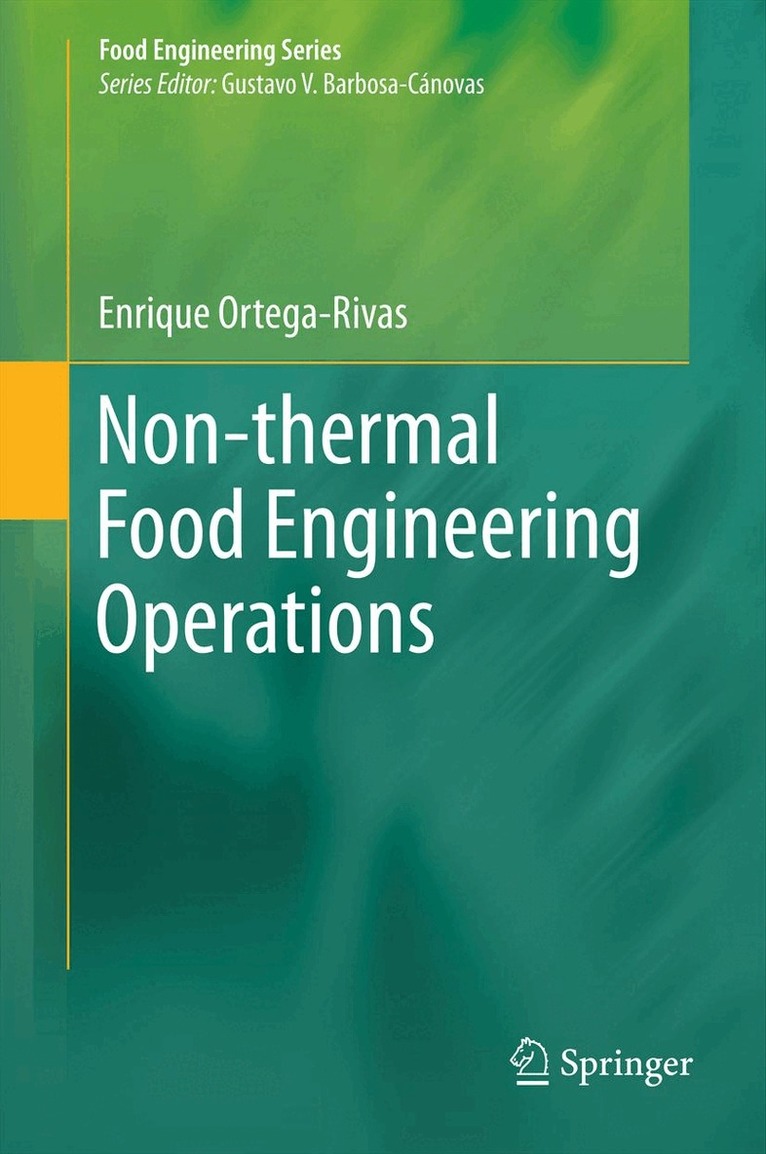
A number of food engineering operations, in which heat is not used as a preserving factor, have been employed and are applied for preparation (cleaning, sorting, etc.), conversion (milling, agglomeration, etc.) or preservation (irradiation, high pressure processing, pulsed electric fields, etc.) purposes in the food industry. This book presents a comprehensive treatise of all normally used food engineering operations that are carried out at room (or ambient) conditions, whether they are aimed at producing microbiologically safe foods with minimum alteration to sensory and nutritive properties, or they constitute routine preparative or transformation operations. The book is written for both undergraduate and graduate students, as well as for educators and practicing food process engineers. It reviews theoretical concepts, analyzes their use in operating variables of equipment, and discusses in detail different applications in diverse food processes.
990 kr
Skickas inom 10-15 vardagar
A number of food engineering operations, in which heat is not used as a preserving factor, have been employed and are applied for preparation (cleaning, sorting, etc.), conversion (milling, agglomeration, etc.) or preservation (irradiation, high pressure processing, pulsed electric fields, etc.) purposes in the food industry. This book presents a comprehensive treatise of all normally used food engineering operations that are carried out at room (or ambient) conditions, whether they are aimed at producing microbiologically safe foods with minimum alteration to sensory and nutritive properties, or they constitute routine preparative or transformation operations. The book is written for both undergraduate and graduate students, as well as for educators and practicing food process engineers. It reviews theoretical concepts, analyzes their use in operating variables of equipment, and discusses in detail different applications in diverse food processes.