Eric Cancès – författare
Visar alla böcker från författaren Eric Cancès. Handla med fri frakt och snabb leverans.
6 produkter
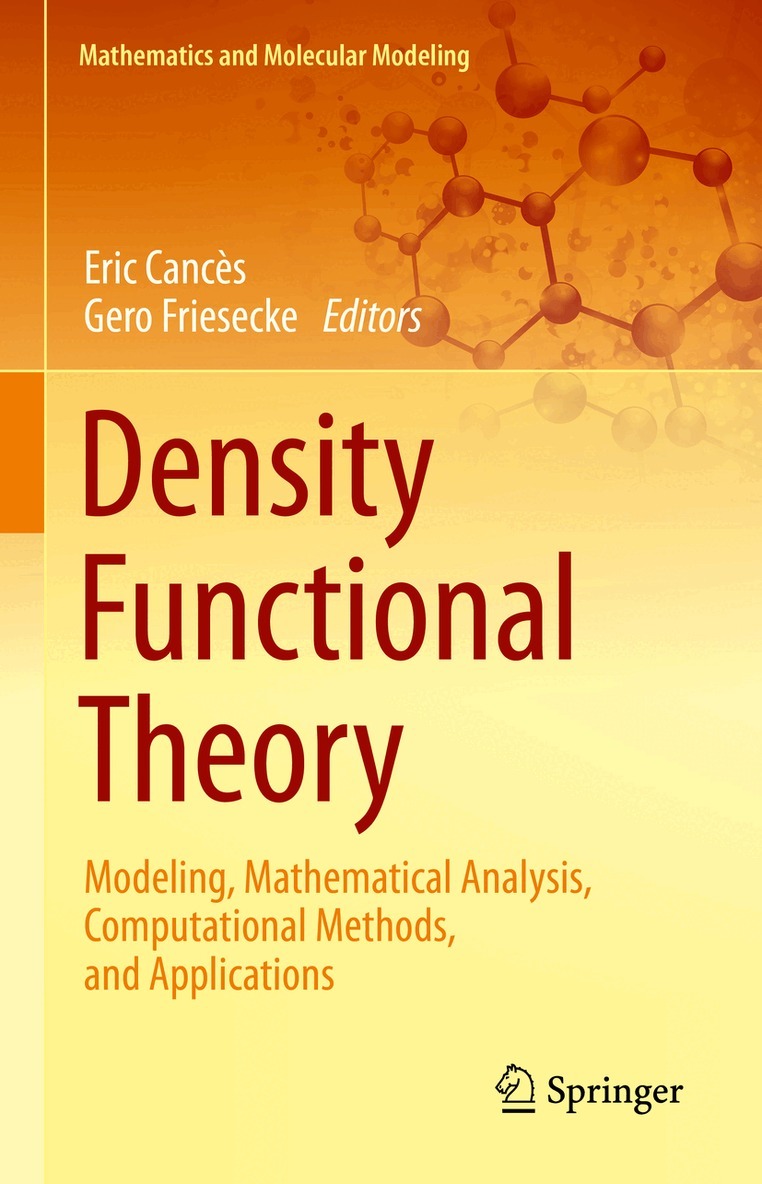
Density Functional Theory
Modeling, Mathematical Analysis, Computational Methods, and Applications
Av Eric Cancès, Gero Friesecke
Inbunden, 2023
1853 kr
Lägg i varukorg
Density functional theory (DFT) provides the most widely used models for simulating molecules and materials based on the fundamental laws of quantum mechanics. It plays a central role in a huge spectrum of applications in chemistry, physics, and materials science.Quantum mechanics describes a …
Density Functional Theory
Modeling, Mathematical Analysis, Computational Methods, and Applications
Av Gero Friesecke, Eric Cances
E-bok, 2023
2384 kr
Lägg i varukorg
Density functional theory (DFT) provides the most widely used models for simulating molecules and materials based on the fundamental laws of quantum mechanics. It plays a central role in a huge spectrum of applications in chemistry, physics, and materials science. Quantum mechanics describes a …
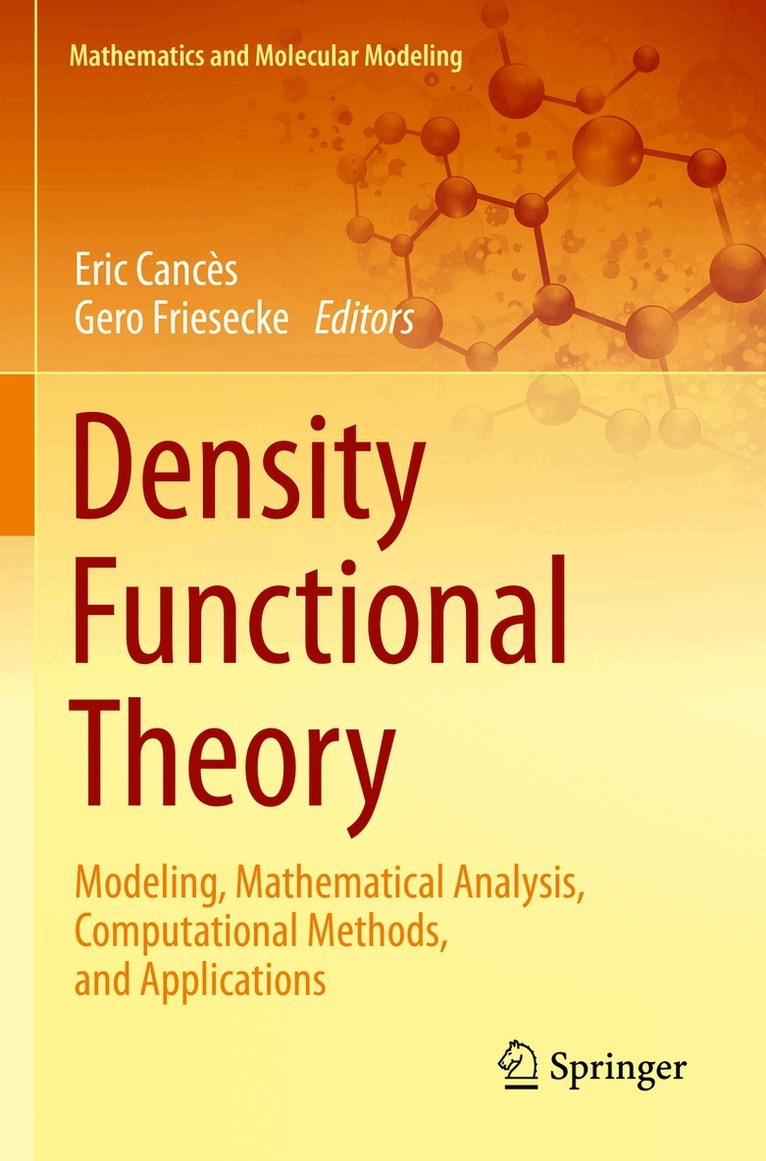
Density Functional Theory
Modeling, Mathematical Analysis, Computational Methods, and Applications
Av Eric Cancès, Gero Friesecke
Häftad, 2024
1853 kr
Lägg i varukorg
Density functional theory (DFT) provides the most widely used models for simulating molecules and materials based on the fundamental laws of quantum mechanics. It plays a central role in a huge spectrum of applications in chemistry, physics, and materials science.Quantum mechanics describes a …
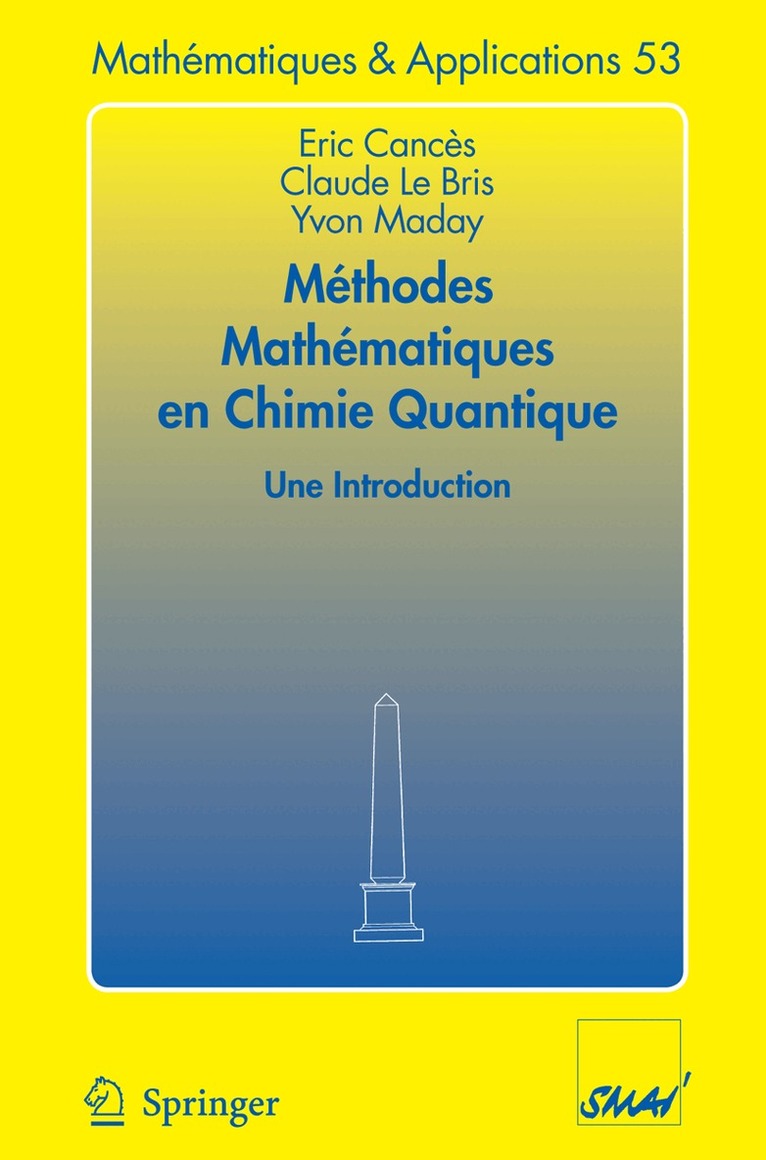
Méthodes mathématiques en chimie quantique. Une introduction
Av Eric Cances, Claude Le Bris m. fl.
Häftad, 2006
824 kr
Lägg i varukorg
Ce cours est une introduction à la modélisation mathématique et à l'analyse numérique pour la chimie moléculaire quantique, un champ peu connu des mathématiciens et pourtant riche en sujets d'investigation. Le point de vue choisi est celui du mathématicien appliqué. Le cours est construit de …
Méthodes mathématiques en chimie quantique. Une introduction
Av Yvon Maday, Claude Le Bris m. fl.
E-bok, 2006
848 kr
Lägg i varukorg
Ce cours est une introduction à la modélisation mathématique et à l''analyse numérique pour la chimie moléculaire quantique, un champ peu connu des mathématiciens et pourtant riche en sujets d''investigation. Le point de vue choisi est celui du mathématicien appliqué. Le cours est construit de …