Erik Schokkaert - Böcker
Visar alla böcker från författaren Erik Schokkaert. Handla med fri frakt och snabb leverans.
7 produkter
7 produkter
Empirical Social Choice
Questionnaire-Experimental Studies on Distributive Justice
Inbunden, Engelska, 2011
810 kr
Skickas inom 7-10 vardagar
Since Aristotle, many different theories of distributive justice have been proposed, by philosophers as well as social scientists. The typical approach within social choice theory is to assess these theories in an axiomatic way - most of the time the reader is confronted with abstract reasoning and logical deductions. This book shows that empirical insights are necessary if one wants to apply any theory of justice in the real world. It does so by confronting the main theories of distributive justice with data from (mostly) questionnaire experiments. The book starts with an extensive discussion on why empirical social choice makes sense and how it should be done. It then presents various experimental results relating to theories of distributive justice, including the Rawlsian equity axiom, Harsanyi's version of utilitarianism, utilitarianism with a floor, responsibility-sensitive egalitarianism, the claims problem and fairness in health.
1 018 kr
Skickas inom 7-10 vardagar
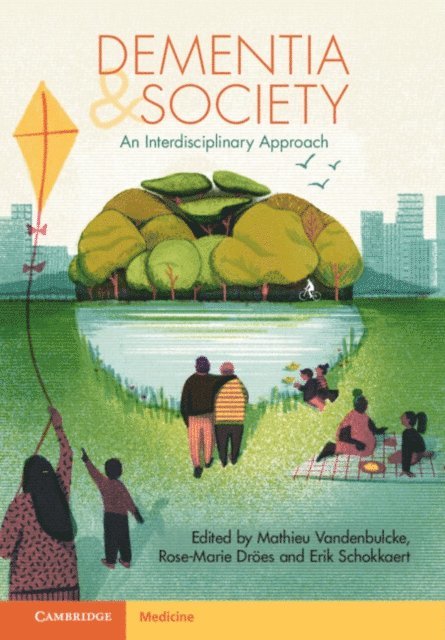
Dementia is increasingly being recognised as a public health priority and poses one of the largest challenges we face as a society. At the same time, there is a growing awareness that the quest for a cure for Alzheimer's disease and other causes of dementia needs to be complemented by efforts to improve the lives of people with dementia. To gain a better understanding of dementia and of how to organize dementia care, there is a need to bring together insights from many different disciplines. Filling this knowledge gap, this book provides an integrated view on dementia resulting from extensive discussions between world experts from different fields, including medicine, social psychology, nursing, economics and literary studies. Working towards a development of integrative policies focused on social inclusion and quality of life, Dementia and Society reminds the reader that a better future for persons with dementia is a collective responsibility.
263 kr
Skickas inom 10-15 vardagar
This title was first published in 2001. Ethical considerations play a key role in both the theoretical and practical functioning of the welfare state. The contributors to this book examine these ethical issues, and demonstrate how value judgements must be integrated into any analysis of social security reform.
817 kr
Skickas inom 10-15 vardagar
This title was first published in 2001. Ethical considerations play a key role in both the theoretical and practical functioning of the welfare state. The contributors to this book examine these ethical issues, and demonstrate how value judgements must be integrated into any analysis of social security reform.
903 kr
Skickas inom 10-15 vardagar
What constitutes a good life? For most people, well-being involves more than a high income or material prosperity alone. Many non-material aspects, such as health, family life, living environment, job quality and the meaningful use of time are at least as important. Together, these factors also influence the degree to which people are satisfied with their lives, and help to determine how happy they feel.This book argues that happiness and life satisfaction do not form a good basis for measuring well-being, and proposes an alternative method that not only considers the various aspects of well-being, but also the fact that people have their own views on what is important in life.Not limited just to theory, the book also presents a large-scale, representative survey involving more than 3000 adults from over 2000 Belgian families, which charted the various aspects of the individual well-being of Belgians. Focusing on the unequal distribution of these various aspects of well-being within families, the survey showed that some Belgians are more likely to suffer from cumulative deprivation in multiple dimensions. Based on this innovative study, the book describes which people in society are worst off – and these are not necessarily only people on low incomes or those who feel unhappy – and proposes that policymakers prioritise these individuals.
903 kr
Skickas inom 10-15 vardagar
What constitutes a good life? For most people, well-being involves more than a high income or material prosperity alone. Many non-material aspects, such as health, family life, living environment, job quality and the meaningful use of time are at least as important. Together, these factors also influence the degree to which people are satisfied with their lives, and help to determine how happy they feel.This book argues that happiness and life satisfaction do not form a good basis for measuring well-being, and proposes an alternative method that not only considers the various aspects of well-being, but also the fact that people have their own views on what is important in life.Not limited just to theory, the book also presents a large-scale, representative survey involving more than 3000 adults from over 2000 Belgian families, which charted the various aspects of the individual well-being of Belgians. Focusing on the unequal distribution of these various aspects of well-being within families, the survey showed that some Belgians are more likely to suffer from cumulative deprivation in multiple dimensions. Based on this innovative study, the book describes which people in society are worst off – and these are not necessarily only people on low incomes or those who feel unhappy – and proposes that policymakers prioritise these individuals.
576 kr
Skickas inom 5-8 vardagar
‘A Truly Golden Handbook, No Less Instructive than Delightful, by the Most Learned and Distinguished Professors of the Renowned University of Leuven.’ 500 Years Utopia. What would the ideal society of the future look like? In 1516, the eminent English humanist Thomas More tried his hand at imagining a perfect society on a distant island. His Utopia was published in the Flemish town of Leuven, home of a university that was established almost a century earlier. 500 years later, scholars of this university revisit More’s best-known work and reflect on the ideal society of the future, using the scientific insights of today, including perspectives which More could never have imagined. What will our cities look like a hundred years from now? How will stem cell research and 3D printing change the world? Will we be able to cure all diseases? Will we be traveling to other planets? Will computers take over? Or will humanity find a way to improve the quality of life for everyone and feed a growing world population? In A Truly Golden Handbook, more than fifty KU Leuven scholars share their science-based utopian dreams. From the creation of spare organs, artificial intelligence and the genetic future, to global governance, ecological sustainability and pathways to more equality, this visionary book offers a broad interdisciplinary look at the world of tomorrow. Contributors: All contributions were written by academics of KU Leuven. Conny Aerts, Ivo Aertsen, Marc Boogaerts, Geert Bouckaert, René Bouwen, Frederik Ceyssens, Stephan Claes, Katrijn Clémer, Sara Coemans, Goele Cornelissen, Marc Craps, Joep Crompvoets, Lieven De Cauter, Ortwin de Graef, Jan De Lepeleire, Dorien De Man, Bart De Moor, Koen Devriendt, Rudi D’Hooge, Thomas D’Hooghe, Philip Dutré, Jan Elen, Liesbet Geris, Gerard Govers, Styn Grieten, Karin Hannes, Ann Heylighen, Hilde Heynen, Rianne Janssen, Rudy Lauwereins, Koen Lemmens, Peter Lievens, Katlijn Malfliet, Jan Masschelein, Terrence Merrigan, Yves Moreau, Bart Muys, Marten Ovaere, Jan Rongé, Erik Schokkaert, Frans Schuit, Maarten Simons, Manuel Sintubin, Stéphane Symons, Rik Torfs, Chantal Van Audenhove, Kenneth Van den Bergh, André Van de Putte, Hilde Van Esch, Inge Vanfraechem, Ine Van Hoyweghen, Geertrui Van Overwalle, Peter Van Puyvelde, Arne van Stiphout, An Verburgh, Peter Vermeersch, Johan Wagemans, Lode Walgrave.