Eva Cancik-Kirschbaum – författare
1 447 kr
Kommande
563 kr
Kommande
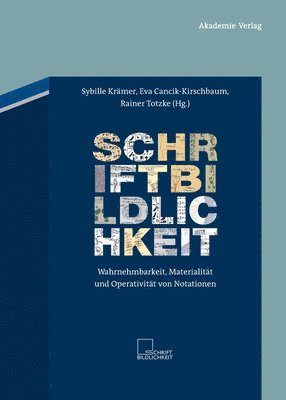
Schriftbildlichkeit
Wahrnehmbarkeit, Materialität Und Operativität Von Notationen
1 030 kr
Skickas inom 5-8 vardagar
2 261 kr
Skickas inom 5-8 vardagar
2 609 kr
Läs direkt efter köp
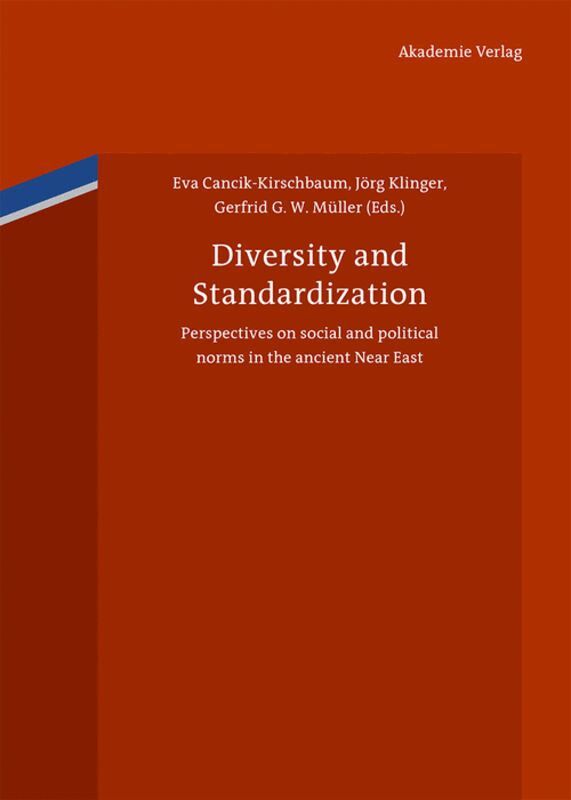
The ancient Near East is a construct defined by present-day scientific investigations, a construct whose temporal and spatial boundaries are fuzzy, constantly shifting under the weight of new empirical data and increasingly sophisticated analytical methods. Its objects of investigation, even those that have resided in museum collections for generations, are in flux, as the profound cultural, geographical, ethnic and social diversity of the ancient Near East threatens to drown out any points of commonality. Yet it is these points of commonality that draw us inevitably to questions of Diversity and Standardization as categories for cross-cultural and trans-historical analysis. As we look across the variegated horizons of antiquity, do these categories have any real analytical power? For instance, the introduction of a new system of measurement or bookkeeping technique or even the imposition of a standardized repertoire of pottery forms on a more-or-less subject population are all examples of the real power of processes of standardization to stabilize territorial political entities. The problem must be posed for the ancient Near East at an even more fundamental level, however: what role do concepts, methods of standardization and, more generally, sign systems play in the reconfiguration and reconstitution of cultural, political, religious, scientific and social spaces? This volume results from a symposium under the aegis of the TOPOI Research Cluster (a trans-disciplinary research center devoted to the investigation of the interdependencies between space and knowledge in the ancient world) that brought together leading archaeologists, philologists, historians and linguists in order to investigate concrete historical examples that speak to questions of Diversity and Standardization in the ancient Near East.
1 226 kr
Läs direkt efter köp
Lange Zeit galt Schrift als aufgeschriebene mündliche Sprache. Doch was geschieht, wenn eine mathematische Gleichung gelöst und Musik mit Noten komponiert wird, wenn ein Autor an seinem Text feilt, die Konkrete Poesie ein Schriftspiel entfaltet, der genetische Code als Buchstabenfolge sequenziert wird, der Kabbalist Buchstaben permutiert oder der Informatiker ein Computerprogramm schreibt? Schriften sind mehr als Aufschreibsysteme für Gesprochenes; stets bergen sie lautsprachenneutrale Aspekte. Der Begriff "Schriftbildlichkeit" zielt auf einen Perspektivenwechsel: die Überwindung eines phonographisch reduzierten und eurozentrisch verengten Schriftkonzeptes. Jenseits der Dichotomie von Sprache und Bild vereinigen sich in Schriften diskursive und ikonische Merkmale – und das gilt für alphabetische wie nichtalphabetische Schriften. Schriften eröffnen Experimentierräume der kognitiven wie der ästhetischen Erfahrung. In den Beiträgen dieses programmatischen Eröffnungsbandes der neuen Buchreihe "Schriftbildlichkeit" werden explorative und kreative Leistungen von Schriften im Wechselverhältnis ihrer Sichtbarkeit und Handhabbarkeit in wissenschaftlichen und künstlerischen, in alltäglichen, spielerischen und religiösen Schriftpraktiken zutage gefördert.
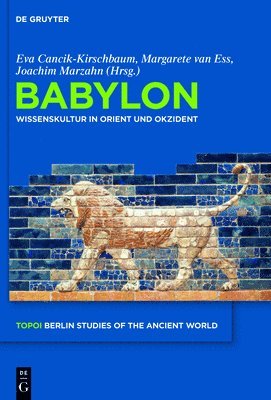
Babylon
1 612 kr
Skickas inom 5-8 vardagar
Die Assyrer
153 kr
Skickas inom 3-6 vardagar
266 kr
Skickas inom 3-6 vardagar
838 kr
Skickas inom 3-6 vardagar
509 kr
Tillfälligt slut