Fabien Lotte – författare
1 616 kr
Skickas inom 10-15 vardagar
2 140 kr
Läs direkt efter köp
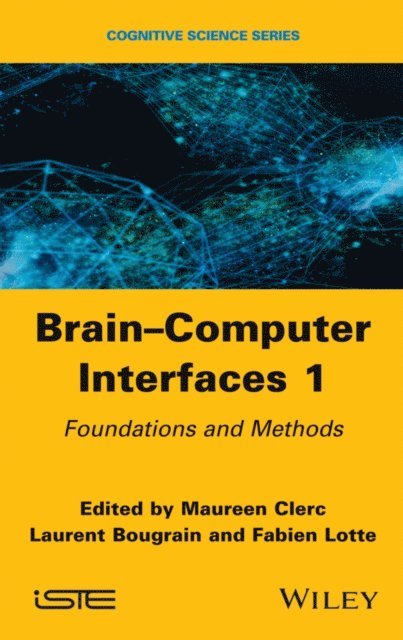
Brain–computer interfaces (BCI) are devices which measure brain activity and translate it into messages or commands, thereby opening up many investigation and application possibilities. This book provides keys for understanding and designing these multi-disciplinary interfaces, which require many fields of expertise such as neuroscience, statistics, informatics and psychology.
This first volume, Methods and Perspectives, presents all the basic knowledge underlying the working principles of BCI. It opens with the anatomical and physiological organization of the brain, followed by the brain activity involved in BCI, and following with information extraction, which involves signal processing and machine learning methods. BCI usage is then described, from the angle of human learning and human-machine interfaces.
The basic notions developed in this reference book are intended to be accessible to all readers interested in BCI, whatever their background. More advanced material is also offered, for readers who want to expand their knowledge in disciplinary fields underlying BCI.
This first volume will be followed by a second volume, entitled Technology and Applications.
2 122 kr
Läs direkt efter köp
Brain–computer interfaces (BCI) are devices which measure brain activity and translate it into messages or commands, thereby opening up many investigation and application possibilities. This book provides keys for understanding and designing these multi-disciplinary interfaces, which require many fields of expertise such as neuroscience, statistics, informatics and psychology.
This first volume, Methods and Perspectives, presents all the basic knowledge underlying the working principles of BCI. It opens with the anatomical and physiological organization of the brain, followed by the brain activity involved in BCI, and following with information extraction, which involves signal processing and machine learning methods. BCI usage is then described, from the angle of human learning and human-machine interfaces.
The basic notions developed in this reference book are intended to be accessible to all readers interested in BCI, whatever their background. More advanced material is also offered, for readers who want to expand their knowledge in disciplinary fields underlying BCI.
This first volume will be followed by a second volume, entitled Technology and Applications.
2 185 kr
Läs direkt efter köp
Brain–computer interfaces (BCI) are devices which measure brain activity and translate it into messages or commands, thereby opening up many possibilities for investigation and application. This book provides keys for understanding and designing these multi-disciplinary interfaces, which require many fields of expertise such as neuroscience, statistics, informatics and psychology.
This second volume, Technology and Applications, is focused on the field of BCI from the perspective of its end users, such as those with disabilities to practitioners. Covering clinical applications and the field of video games, the book then goes on to explore user needs which drive the design and development of BCI. The software used for their design, primarily OpenViBE, is explained step by step, before a discussion on the use of BCI from ethical, philosophical and social perspectives.
The basic notions developed in this reference book are intended to be accessible to all readers interested in BCI, whatever their background. More advanced material is also offered, for readers who want to expand their knowledge in disciplinary fields underlying BCI.
2 185 kr
Läs direkt efter köp
Brain–computer interfaces (BCI) are devices which measure brain activity and translate it into messages or commands, thereby opening up many possibilities for investigation and application. This book provides keys for understanding and designing these multi-disciplinary interfaces, which require many fields of expertise such as neuroscience, statistics, informatics and psychology.
This second volume, Technology and Applications, is focused on the field of BCI from the perspective of its end users, such as those with disabilities to practitioners. Covering clinical applications and the field of video games, the book then goes on to explore user needs which drive the design and development of BCI. The software used for their design, primarily OpenViBE, is explained step by step, before a discussion on the use of BCI from ethical, philosophical and social perspectives.
The basic notions developed in this reference book are intended to be accessible to all readers interested in BCI, whatever their background. More advanced material is also offered, for readers who want to expand their knowledge in disciplinary fields underlying BCI.
1 938 kr
Läs direkt efter köp
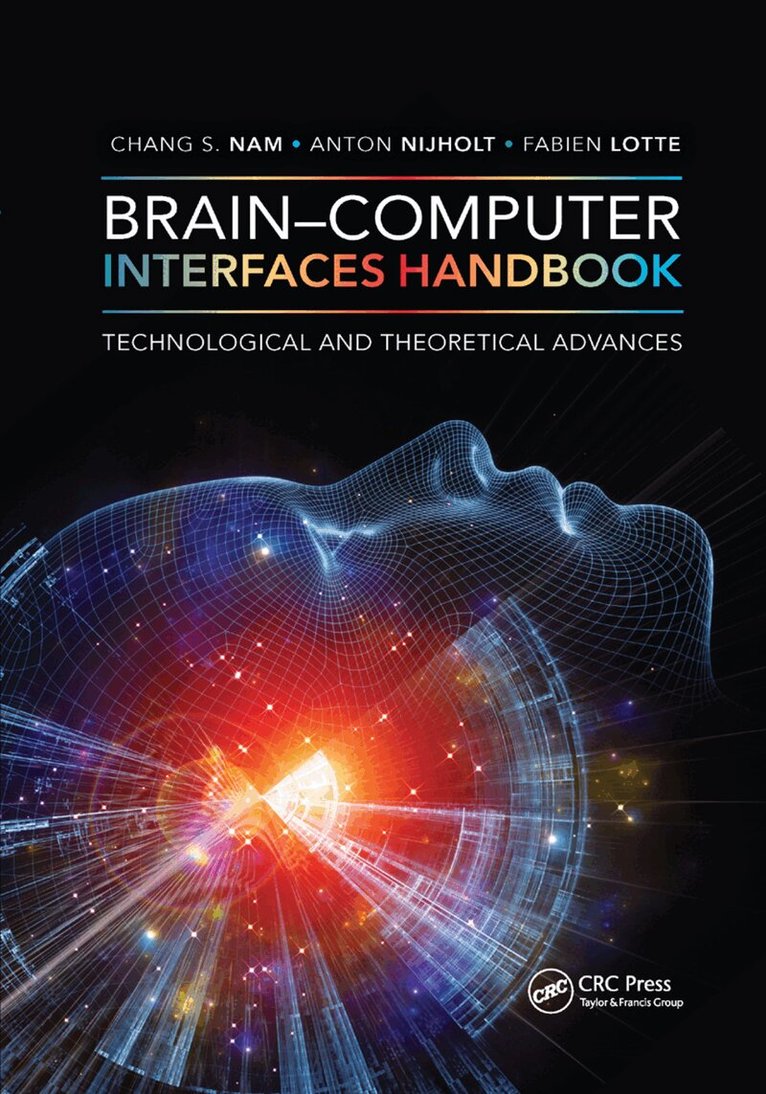
Brain–Computer Interfaces Handbook: Technological and Theoretical Advances provides a tutorial and an overview of the rich and multi-faceted world of Brain–Computer Interfaces (BCIs). The authors supply readers with a contemporary presentation of fundamentals, theories, and diverse applications of BCI, creating a valuable resource for anyone involved with the improvement of people’s lives by replacing, restoring, improving, supplementing or enhancing natural output from the central nervous system. It is a useful guide for readers interested in understanding how neural bases for cognitive and sensory functions, such as seeing, hearing, and remembering, relate to real-world technologies. More precisely, this handbook details clinical, therapeutic and human-computer interfaces applications of BCI and various aspects of human cognition and behavior such as perception, affect, and action. It overviews the different methods and techniques used in acquiring and pre-processing brain signals, extracting features, and classifying users’ mental states and intentions. Various theories, models, and empirical findings regarding the ways in which the human brain interfaces with external systems and environments using BCI are also explored. The handbook concludes by engaging ethical considerations, open questions, and challenges that continue to face brain–computer interface research.
Features an in-depth look at the different methods and techniques used in acquiring and pre-processing brain signals, extracting features, and classifying the user''s intention
Covers various theories, models, and empirical findings regarding ways in which the human brain can interface with the systems or external environments
Presents applications of BCI technology to understand various aspects of human cognition and behavior such as perception, affect, action, and more
Includes clinical trials and individual case studies of the experimental therapeutic applications of BCI
Provides human factors and human-computer interface concerns in the design, development, and evaluation of BCIs
Overall, this handbook provides a synopsis of key technological and theoretical advances that are directly applicable to brain–computer interfacing technologies and can be readily understood and applied by individuals with no formal training in BCI research and development.
1 921 kr
Läs direkt efter köp
Brain–Computer Interfaces Handbook: Technological and Theoretical Advances provides a tutorial and an overview of the rich and multi-faceted world of Brain–Computer Interfaces (BCIs). The authors supply readers with a contemporary presentation of fundamentals, theories, and diverse applications of BCI, creating a valuable resource for anyone involved with the improvement of people’s lives by replacing, restoring, improving, supplementing or enhancing natural output from the central nervous system. It is a useful guide for readers interested in understanding how neural bases for cognitive and sensory functions, such as seeing, hearing, and remembering, relate to real-world technologies. More precisely, this handbook details clinical, therapeutic and human-computer interfaces applications of BCI and various aspects of human cognition and behavior such as perception, affect, and action. It overviews the different methods and techniques used in acquiring and pre-processing brain signals, extracting features, and classifying users’ mental states and intentions. Various theories, models, and empirical findings regarding the ways in which the human brain interfaces with external systems and environments using BCI are also explored. The handbook concludes by engaging ethical considerations, open questions, and challenges that continue to face brain–computer interface research.
Features an in-depth look at the different methods and techniques used in acquiring and pre-processing brain signals, extracting features, and classifying the user''s intention
Covers various theories, models, and empirical findings regarding ways in which the human brain can interface with the systems or external environments
Presents applications of BCI technology to understand various aspects of human cognition and behavior such as perception, affect, action, and more
Includes clinical trials and individual case studies of the experimental therapeutic applications of BCI
Provides human factors and human-computer interface concerns in the design, development, and evaluation of BCIs
Overall, this handbook provides a synopsis of key technological and theoretical advances that are directly applicable to brain–computer interfacing technologies and can be readily understood and applied by individuals with no formal training in BCI research and development.
3 826 kr
Skickas inom 10-15 vardagar
1 841 kr
Skickas inom 5-8 vardagar
1 896 kr
Skickas inom 5-8 vardagar
600 kr
Kommande