Farhan Karim - Böcker
Visar alla böcker från författaren Farhan Karim. Handla med fri frakt och snabb leverans.
5 produkter
5 produkter
690 kr
Skickas inom 10-15 vardagar
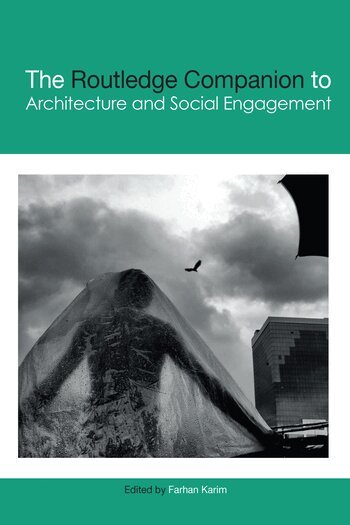
Socially engaged architecture is a broad and emerging architectural genre that promises to redefine architecture from a market-driven profession to a mix of social business, altruism, and activism that intends to eradicate poverty, resolve social exclusion, and construct an egalitarian global society. The Routledge Companion to Architecture and Social Engagement offers a critical enquiry of socially engaged architecture’s current context characterized by socio-economic inequity, climate change, war, increasing global poverty, microfinance, the evolving notion of professionalism, the changing conception of public, and finally the growing academic interest in re-visioning the social role of architecture. Organized around case studies from the United States, Brazil, Venezuela, the United Kingdom, South Africa, Rwanda, Burkina Faso, Nigeria, Nepal, Pakistan, Iran, Thailand, Germany, Australia, Taiwan, and Japan the book documents the most important recent developments in the field. By examining diverse working methods and philosophies of socially engaged architecture, the handbook shows how socially engaged architecture is entangled in the global politics of poverty, reconstruction of the public sphere, changing role of the state, charity, and neoliberal urbanism. The book presents debates around the issue of whether architecture actually empowers the participators and alleviates socio-economic exclusion or if it instead indirectly sustains an exploitive capitalism. Bringing together a range of theories and case studies, this companion offers a platform to facilitate future lines of inquiry in education, research, and practice.
3 280 kr
Skickas inom 10-15 vardagar
Socially engaged architecture is a broad and emerging architectural genre that promises to redefine architecture from a market-driven profession to a mix of social business, altruism, and activism that intends to eradicate poverty, resolve social exclusion, and construct an egalitarian global society. The Routledge Companion to Architecture and Social Engagement offers a critical enquiry of socially engaged architecture’s current context characterized by socio-economic inequity, climate change, war, increasing global poverty, microfinance, the evolving notion of professionalism, the changing conception of public, and finally the growing academic interest in re-visioning the social role of architecture. Organized around case studies from the United States, Brazil, Venezuela, the United Kingdom, South Africa, Rwanda, Burkina Faso, Nigeria, Nepal, Pakistan, Iran, Thailand, Germany, Australia, Taiwan, and Japan the book documents the most important recent developments in the field. By examining diverse working methods and philosophies of socially engaged architecture, the handbook shows how socially engaged architecture is entangled in the global politics of poverty, reconstruction of the public sphere, changing role of the state, charity, and neoliberal urbanism. The book presents debates around the issue of whether architecture actually empowers the participators and alleviates socio-economic exclusion or if it instead indirectly sustains an exploitive capitalism. Bringing together a range of theories and case studies, this companion offers a platform to facilitate future lines of inquiry in education, research, and practice.
2 085 kr
Skickas inom 3-6 vardagar
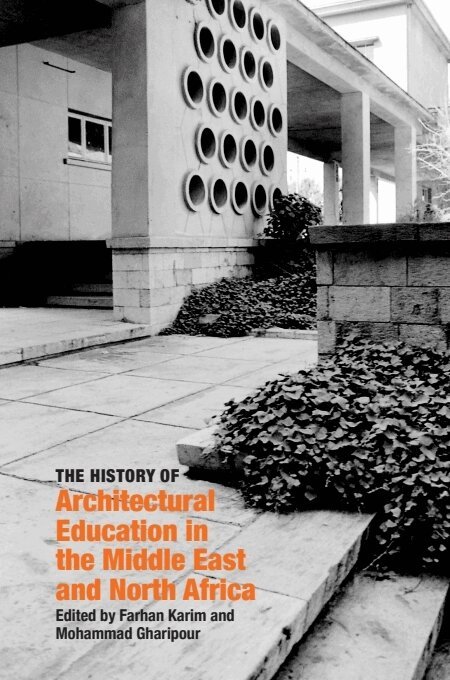
The History of Architectural Education in the Middle East and North Africa explores the varied socio-political landscapes within which different architectural programs and schools were established across Middle Eastern and North African countries. It addresses a significant gap in our understanding of the diverse strategies and paths through which architectural pedagogy underwent institutionalization and standardization during nineteenth and twentieth centuries. This process of modernization was greatly influenced by rapidly evolving socio-economic conditions and the interests of the real estate market. Concurrently, architectural educators and institutions responded to public demands for more inclusive urban environments, shaping the social ambitions and expectations of emerging modern cities. Karim and Gharipour present an interconnected and parallel history of these institutions through a series of case studies. They argue that architectural pedagogy and its stakeholders didn't solely shape the technical discourse of the building industry. Instead, their activism and advocacy collectively ignited epistemological debates concerning the perception of modern urban society and its direction.
306 kr
Kommande
The History of Architectural Education in the Middle East and North Africa explores the varied socio-political landscapes within which different architectural programs and schools were established across the region. It addresses a significant gap in our understanding of the diverse strategies and paths through which architectural pedagogy underwent institutionalisation and standardisation during the 19th and 20th centuries. This process of modernisation was greatly influenced by rapidly evolving socio-economic conditions and the interests of the real estate market. Concurrently, architectural educators and institutions responded to public demands for more inclusive urban environments, shaping the social ambitions and expectations of emerging modern cities.Karim and Gharipour present an interconnected and parallel history of these institutions through a series of case studies. They argue that architectural pedagogy and its stakeholders didn't solely shape the technical discourse of the building industry. Instead, their activism and advocacy collectively ignited epistemological debates concerning the perception of modern urban society and its direction.
442 kr
Skickas inom 3-6 vardagar