Fernando Collantes - Böcker
Visar alla böcker från författaren Fernando Collantes. Handla med fri frakt och snabb leverans.
5 produkter
5 produkter
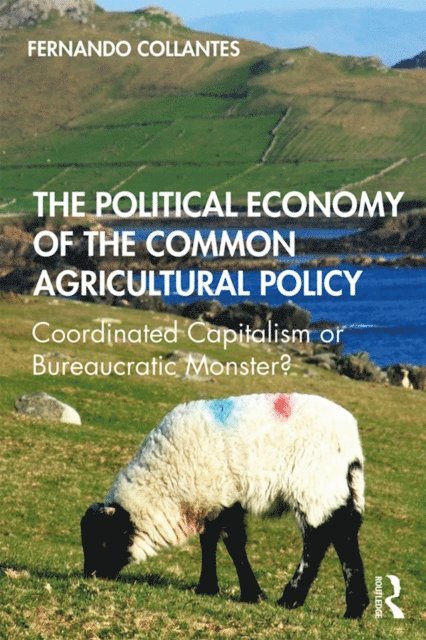
Political Economy of the Common Agricultural Policy
Coordinated Capitalism or Bureaucratic Monster?
Häftad, Engelska, 2020
712 kr
Skickas inom 10-15 vardagar
What is the balance of the European Union’s Common Agricultural Policy more than half a century after its birth? Does it illustrate the virtues of the European model of coordinated capitalism, as opposed to US-style liberal capitalism? Or is it an incoherent set of instruments that exert diverse negative impacts and, like Frankenstein’s monster, seems to have escaped the control of its designers?The Political Economy of the Common Agricultural Policy does not criticize the CAP from the liberal standpoint that views most public interventions in the economy as bad for efficiency and welfare. The CAP has been costly to Europeans, both as consumers and as taxpayers, and has also generated a number of negative impacts upon third countries, but these costs and impacts have been more moderate than is suggested. This book proposes that the issue with the CAP is not a generic problem of coordinating capitalism but, instead, a more specific problem of low-quality coordination. The text argues that profound reform of the European Union’s institutions and policies is required to counter the rapid rise of a more Eurosceptical state of mind but – in the case of agricultural policy – history casts serious doubts on the capacity of the European network of agriculture-related politicians to lead such a reform.This key work is essential reading for researchers, graduate students, and master’s level docents of the Common Agricultural Policy and – more broadly – European Union policy and reform.
Political Economy of the Common Agricultural Policy
Coordinated Capitalism or Bureaucratic Monster?
Inbunden, Engelska, 2020
2 088 kr
Skickas inom 10-15 vardagar
What is the balance of the European Union’s Common Agricultural Policy more than half a century after its birth? Does it illustrate the virtues of the European model of coordinated capitalism, as opposed to US-style liberal capitalism? Or is it an incoherent set of instruments that exert diverse negative impacts and, like Frankenstein’s monster, seems to have escaped the control of its designers?The Political Economy of the Common Agricultural Policy does not criticize the CAP from the liberal standpoint that views most public interventions in the economy as bad for efficiency and welfare. The CAP has been costly to Europeans, both as consumers and as taxpayers, and has also generated a number of negative impacts upon third countries, but these costs and impacts have been more moderate than is suggested. This book proposes that the issue with the CAP is not a generic problem of coordinating capitalism but, instead, a more specific problem of low-quality coordination. The text argues that profound reform of the European Union’s institutions and policies is required to counter the rapid rise of a more Eurosceptical state of mind but – in the case of agricultural policy – history casts serious doubts on the capacity of the European network of agriculture-related politicians to lead such a reform.This key work is essential reading for researchers, graduate students, and master’s level docents of the Common Agricultural Policy and – more broadly – European Union policy and reform.
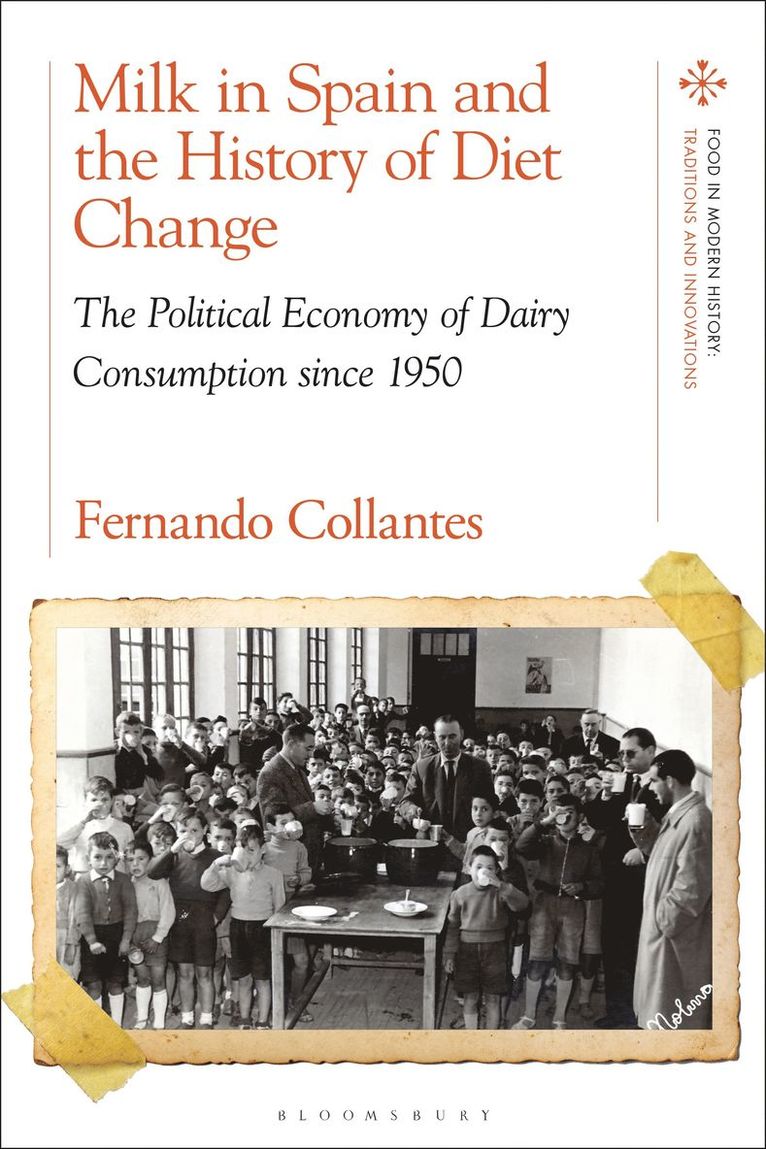
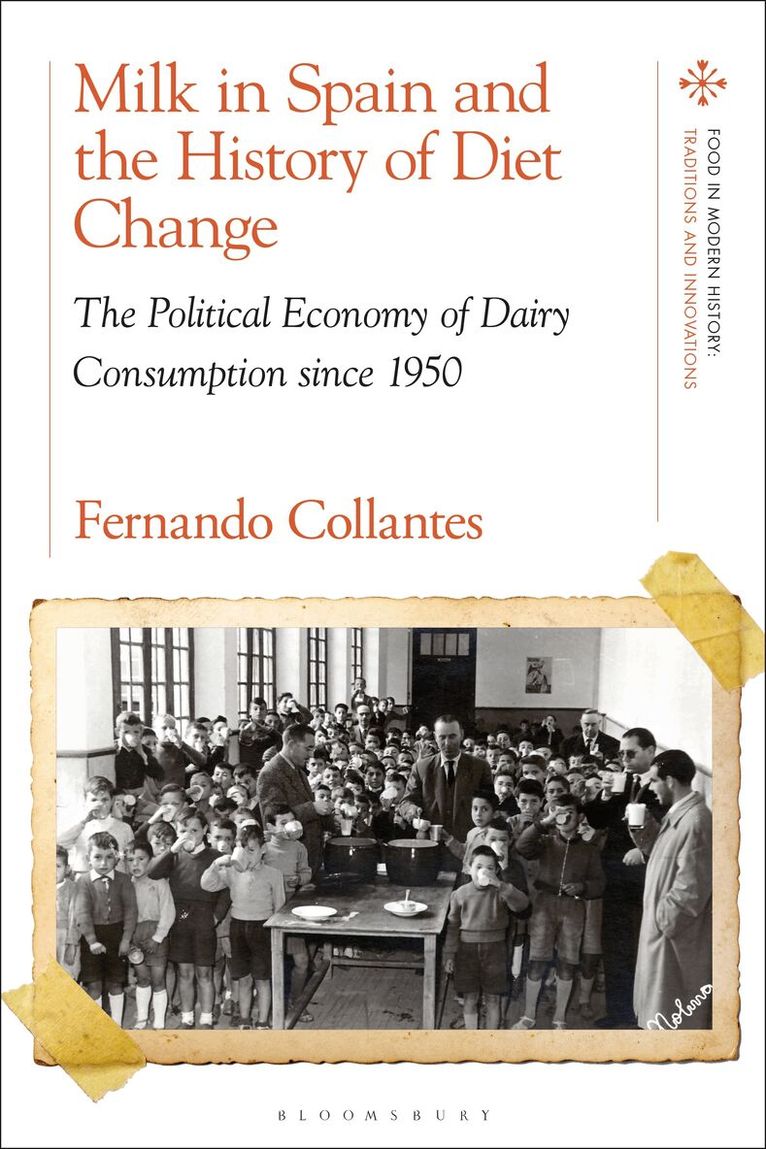
Milk in Spain and the History of Diet Change
The Political Economy of Dairy Consumption since 1950
Inbunden, Engelska, 2024
1 177 kr
Skickas inom 10-15 vardagar
In barely three generations the Spanish diet has changed beyond recognition. The traditional concerns around nutritional health and scarcity have been mostly left behind, but they have given way to new problems linked to excess. In this book Fernando Collantes shows how the dairy industry has been central to this societal shift. From widespread calcium deficiency in the 1950s to the more recent, and controversial, turn to highly processed foods, it provides a recent history of diet change in Spain. Probing the reasons behind why this shift has occurred, and how, it shows that when it comes to food society, politics, economics and the law are intrinsically linked.Taking the reader beyond the world of food, Milk in Spain and the History of Diet Change combines qualitative and quantitative methods to position diet change within the broader debate on consumer society and ‘the good life’. Contrasting two models of food consumption, it shows that unless public policy takes the challenge of affluence seriously, the food system can become an obstacle to a better society.
Milk in Spain and the History of Diet Change
The Political Economy of Dairy Consumption since 1950
Häftad, Engelska, 2026
499 kr
Kommande
In barely three generations the Spanish diet has changed beyond recognition. The traditional concerns around nutritional health and scarcity have been mostly left behind, but they have given way to new problems linked to excess. In this book Fernando Collantes shows how the dairy industry has been central to this societal shift. From widespread calcium deficiency in the 1950s to the more recent, and controversial, turn to highly processed foods, it provides a recent history of diet change in Spain. Probing the reasons behind why this shift has occurred, and how, it shows that when it comes to food society, politics, economics and the law are intrinsically linked.Taking the reader beyond the world of food, Milk in Spain and the History of Diet Change combines qualitative and quantitative methods to position diet change within the broader debate on consumer society and ‘the good life’. Contrasting two models of food consumption, it shows that unless public policy takes the challenge of affluence seriously, the food system can become an obstacle to a better society.
Consumer Society and the Economists
Consumption and Well-Being in the History of Economic Thought
Inbunden, Engelska, 2025
1 314 kr
Skickas inom 10-15 vardagar
Is consumer society a vehicle for progress? Or is it a detour leading us away from the path to the good life? To what extent is consumer society a relevant object of analysis, after all? Today, these questions are central to the debate on the dynamics of capitalism and their impact on human well-being. Yet they are by no means exclusive to our time. This book traces the history of economic thought on consumer society from the late eighteenth century to the present day. It explores the ambivalence of classical political economists and Marx towards the world of consumption. It narrates the making of an intellectual battlefield between rival views of consumer society during the period 1870-1945 and the head-on clash that took place between those views during the decades after the Second World War. How these debates reemerged following the end of the Cold War and the Global Financial Crisis is also covered.This is the story of how economists debated consumer society and how that debate was shaped by another fundamental discussion: how economists should conduct their research and what kind of relationships they should maintain with other social sciences and the humanities. It will be relevant to students and researchers interested in the history of economic thought and political economy.