Fernando Lozano Gomez – författare
Visar alla böcker från författaren . Handla med fri frakt och snabb leverans.
2 produkter
2 produkter
E-bok
PDF, Engelska, 2015586 kr
Läs direkt efter köp
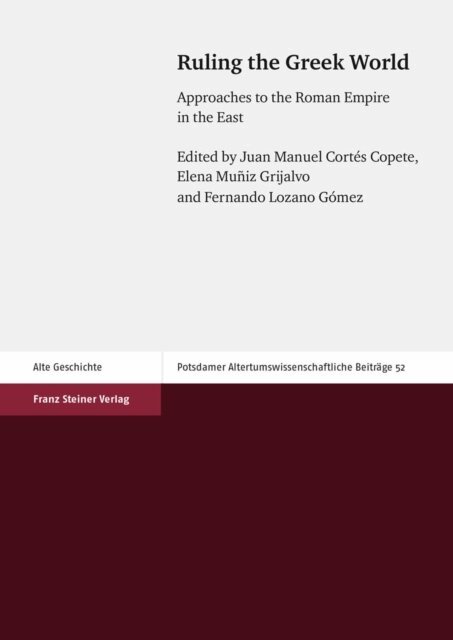
This e-book analyses the procedures, ideas and realities that allowed the people from the Greek East to become a part of the Roman Empire, while both preserving and redeveloping their cultural identity. The volume assesses this complex process both in the traditional Greek cities of the provinces of Achaea and Asia as well as in other areas that had been deeply hellenised for centuries, as the Near East. A common point of departure of the different essays is the notion that granting the Greeks a privileged position within the Roman Empire as a tribute to their civilisation was as possible an option as that of "e;barbarisation"e;, i.e. the substitution of Greek cultural identity by the Roman one. Between the respect and conservation of political and cultural structures, and their total annihilation and substitution by new realities of undeniable Roman stamp, there existed a wide spectrum of political possibilities with strong cultural and religious undertones. In creating those new options, which Rome either opted for, refused, or transformed, the political and cultural activity of the Greeks themselves, and in particular the oligarchs who ruled the cities in the Mediterranean East, played an important role. This volume attempts to analyse all those new possibilities.
Del 25 - Impact of Empire
Empire and Religion
Religious Change in Greek Cities under Roman Rule
Inbunden, Engelska, 2017
1 951 kr
Skickas inom 5-8 vardagar
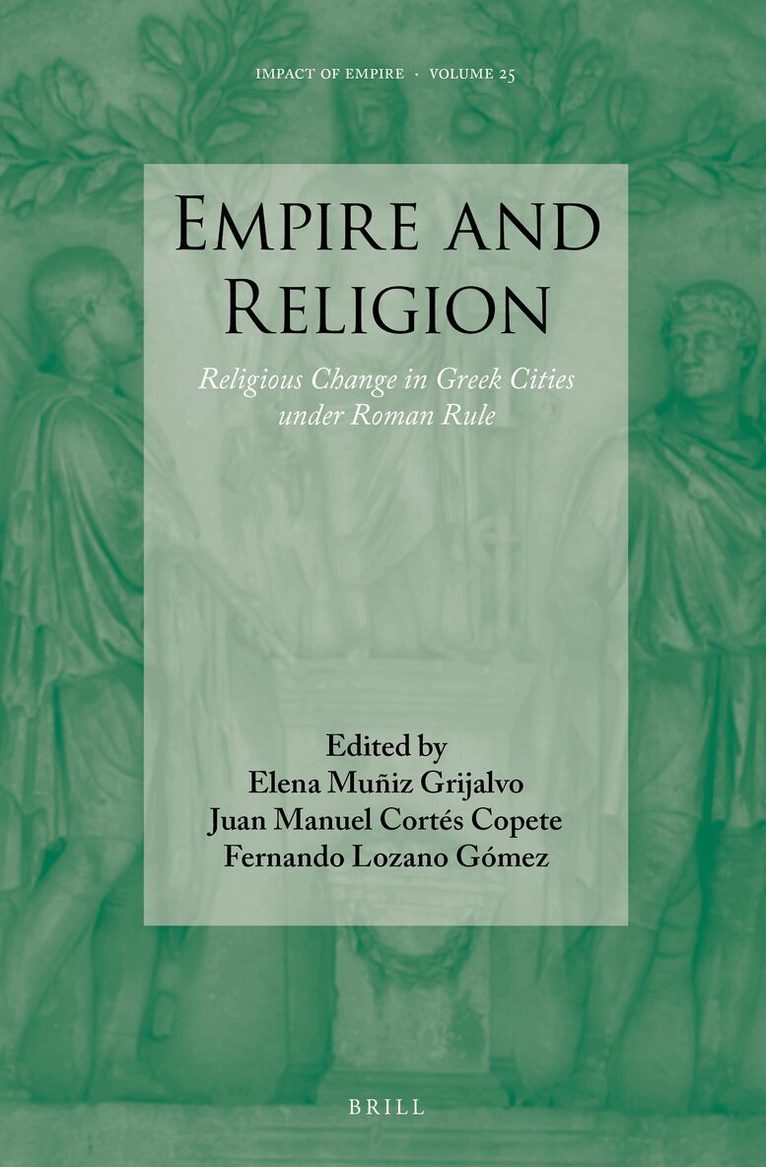
This volume explores the nature of religious change in the Greek-speaking cities of the Roman Empire. Emphasis is put on those developments that apparently were not the direct result of Roman actions: the intensification of idiosyncratically Greek features in the religious life of the cities (Heller, Muñiz, Camia); the active role of a new kind of Hellenism in the design of imperial religious policies (Gordillo, Galimberti, Rosillo-López); or the locally different responses to central religious initiatives, and the influence of those local responses in other imperial contexts (Cortés, Melfi, Lozano, Rizakis). All the chapters try to suggest that religion in the Greek cities of the empire was both conservative and innovative, and that the ‘Roman factor’ helps to explain this apparent paradox.