Firat Oruc - Böcker
Visar alla böcker från författaren Firat Oruc. Handla med fri frakt och snabb leverans.
4 produkter
4 produkter
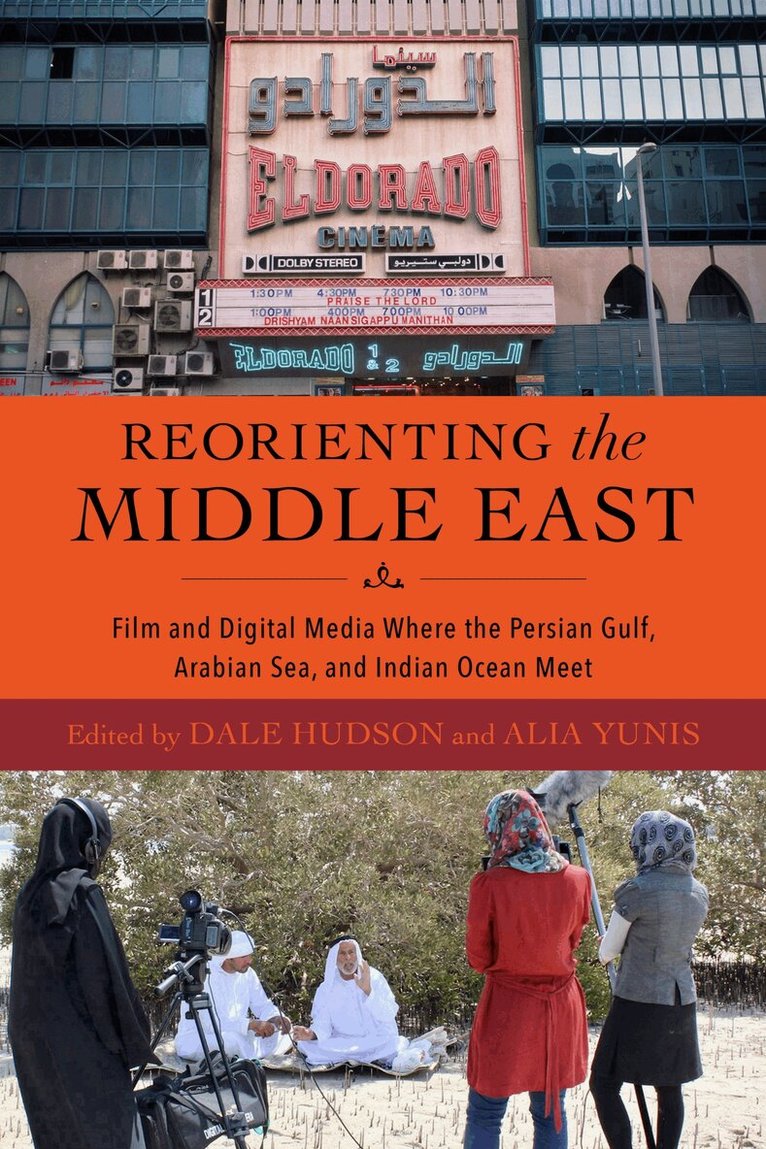
Reorienting the Middle East
Film and Digital Media Where the Persian Gulf, Arabian Sea, and Indian Ocean Meet
Inbunden, Engelska, 2024
982 kr
Skickas inom 7-10 vardagar
Stories of desert landscapes, cutting-edge production facilities, and lavish festivals often dominate narratives about film and digital media on the Arabian Peninsula. However, there is a more complicated history that reflects long-standing interconnections between the Persian Gulf, Arabian Sea, and Indian Ocean. Just as these waters are fluid spaces, so too is the flow of film and digital media between cultures in East Africa, Europe, North Africa, South Asia, Southwest Asia, and Southeast Asia.Reorienting the Middle East examines past and contemporary aspects of film and digital media in the Gulf that might not otherwise be apparent in dominant frameworks. Contributors consider oil companies that brought film exhibition to this area in the 1930s, the first Indian film produced on the Arabian Peninsula in the late 1970s, blackness in Iranian films, the role of Western funding in reshaping stories, Dubai's emergence in global film production, uses of online platforms for performance art, the development of film festivals and cinemas, and short films made by citizens and migrants that turn a lens on racism, sexism, national identity, and other rarely discussed social issues.Reorienting the Middle East offers new methods to analyze the often-neglected littoral spaces between nation-states and regions and to understand the role of film and digital media in shaping dialogue between area studies and film and media studies. Readers will find new pathways to rethink the limitations of dominant categories and frameworks in both fields.
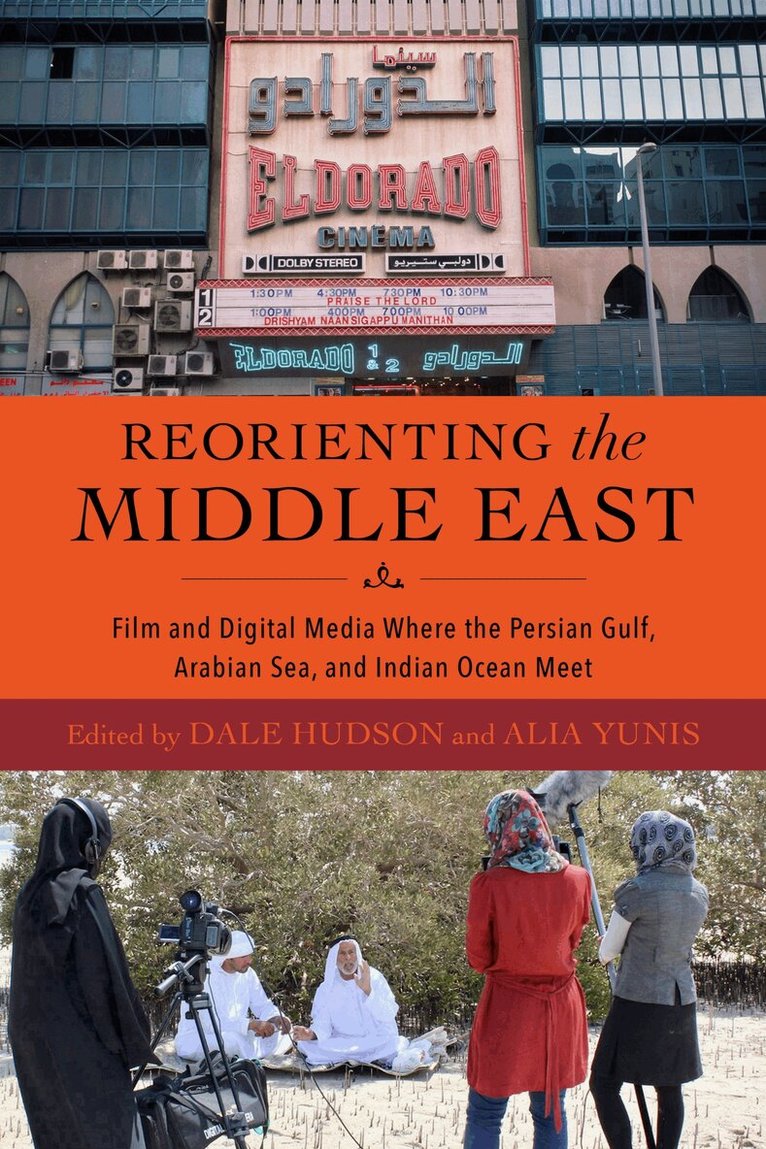
Reorienting the Middle East
Film and Digital Media Where the Persian Gulf, Arabian Sea, and Indian Ocean Meet
Häftad, Engelska, 2024
481 kr
Skickas inom 7-10 vardagar
Stories of desert landscapes, cutting-edge production facilities, and lavish festivals often dominate narratives about film and digital media on the Arabian Peninsula. However, there is a more complicated history that reflects long-standing interconnections between the Persian Gulf, Arabian Sea, and Indian Ocean. Just as these waters are fluid spaces, so too is the flow of film and digital media between cultures in East Africa, Europe, North Africa, South Asia, Southwest Asia, and Southeast Asia.Reorienting the Middle East examines past and contemporary aspects of film and digital media in the Gulf that might not otherwise be apparent in dominant frameworks. Contributors consider oil companies that brought film exhibition to this area in the 1930s, the first Indian film produced on the Arabian Peninsula in the late 1970s, blackness in Iranian films, the role of Western funding in reshaping stories, Dubai's emergence in global film production, uses of online platforms for performance art, the development of film festivals and cinemas, and short films made by citizens and migrants that turn a lens on racism, sexism, national identity, and other rarely discussed social issues.Reorienting the Middle East offers new methods to analyze the often-neglected littoral spaces between nation-states and regions and to understand the role of film and digital media in shaping dialogue between area studies and film and media studies. Readers will find new pathways to rethink the limitations of dominant categories and frameworks in both fields.
174 kr
Skickas inom 7-10 vardagar
Contributors to this special issue explore world literatures of the Indian Ocean as a site for studying mobile networks of capital and labor as well as diasporic movements generated by European imperial expansion and its aftermath. These circularities shape both identities and the cultural interactions that arise from them and that connect places and peoples. In doing so, the authors bring Indian Ocean Studies into conversation with ongoing efforts to globalize literary historiography.
322 kr
Skickas inom 7-10 vardagar
Within some policy circles, at the heart of these conflicts lies a fundamental incompatibility between different ethno-linguistic and religious communities; it is held that these divisions impede any form of political resolution or social cohesion. Yet, despite this galvanised public focus on pluralism and 'minorities' within the turbulent Middle East, there has been limited scholarship exploring these tensions. Sites of Pluralism fills this significant gap, going beyond a narrow focus on minority politics to examine the larger canvas of community spheres in the Middle East. Through eight case studies from esteemed experts in law, education, history, architecture, anthropology and political science, this multi-disciplinary volume offers a critical view of the Middle East's diverse, pluralistic fabric: how it has evolved throughout history; how it influences current political, economic and social dynamics; and what possibilities it offers for the future.