Francesco Calderoni – författare
Visar alla böcker från författaren Francesco Calderoni. Handla med fri frakt och snabb leverans.
20 produkter
UN Convention against Transnational Organized Crime
A Commentary
Av Bettina Weier, Joseph Lelliott m. fl.
E-bok, 2023
2952 kr
Lägg i varukorg
This book offers a comprehensive, article-by-article legal commentary on the United Nations Convention Against Transnational Organized Crime and its Protocols on trafficking in persons, smuggling of migrants, and trafficking in firearms and ammunition.The Convention- often referred to by the …
UN Convention against Transnational Organized Crime
A Commentary
Av Bettina Weier, Joseph Lelliott m. fl.
E-bok, 2023
2952 kr
Lägg i varukorg
This book offers a comprehensive, article-by-article legal commentary on the United Nations Convention Against Transnational Organized Crime and its Protocols on trafficking in persons, smuggling of migrants, and trafficking in firearms and ammunition.The Convention- often referred to by the …
UN Convention against Transnational Organized Crime
A Commentary
Av Andreas Schloenhardt, Francesco Calderoni m. fl.
Inbunden, 2023
3754 kr
Lägg i varukorg
This book offers a comprehensive, article-by-article legal commentary on the United Nations Convention Against Transnational Organized Crime and its Protocols on trafficking in persons, smuggling of migrants, and trafficking in firearms and ammunition.The Convention- often referred to by the …
Criminal Markets and Mafia Proceeds
Av Ernesto Savona, Francesco Calderoni
Häftad, 2020
691 kr
Lägg i varukorg
This book estimates the proceeds of crime and mafia revenues for different criminal markets such as sexual exploitation, drugs, illicit cigarettes, loan sharking, extortion racketeering, counterfeiting, illicit firearms, illegal gambling and illicit waste management. It is the first time that …
Criminal Markets and Mafia Proceeds
Av Ernesto Savona, Francesco Calderoni
Inbunden, 2014
2512 kr
Lägg i varukorg
This book estimates the proceeds of crime and mafia revenues for different criminal markets such as sexual exploitation, drugs, illicit cigarettes, loan sharking, extortion racketeering, counterfeiting, illicit firearms, illegal gambling and illicit waste management. It is the first time that …
Criminal Markets and Mafia Proceeds
Av Francesco Calderoni, Ernesto Savona
E-bok, 2016
814 kr
Lägg i varukorg
This book estimates the proceeds of crime and mafia revenues for different criminal markets such as sexual exploitation, drugs, illicit cigarettes, loan sharking, extortion racketeering, counterfeiting, illicit firearms, illegal gambling and illicit waste management. It is the first time that …
Criminal Markets and Mafia Proceeds
Av Francesco Calderoni, Ernesto Savona
E-bok, 2016
796 kr
Lägg i varukorg
This book estimates the proceeds of crime and mafia revenues for different criminal markets such as sexual exploitation, drugs, illicit cigarettes, loan sharking, extortion racketeering, counterfeiting, illicit firearms, illegal gambling and illicit waste management. It is the first time that …
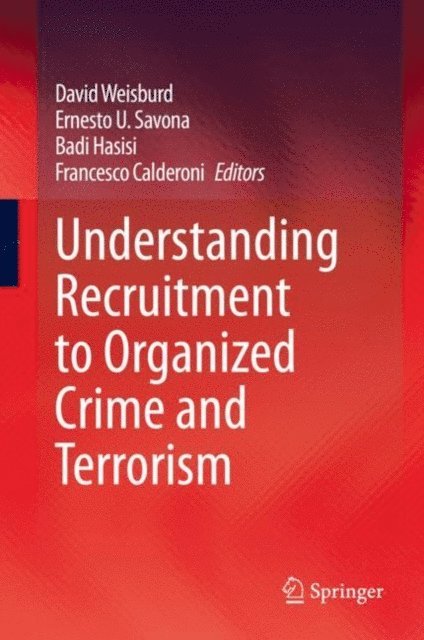
Understanding Recruitment to Organized Crime and Terrorism
Av David Weisburd, Ernesto U. Savona m. fl.
Inbunden, 2020
1425 kr
Lägg i varukorg
This volume provides insights on how recruitment patterns develop for two related types of criminal networks: organized crime and terrorism. It specifically explores the social, situational, psychological, and economic drivers of recruitment. Although organized crime networks and terrorism networks …
Understanding Recruitment to Organized Crime and Terrorism
Av Francesco Calderoni, Badi Hasisi m. fl.
E-bok, 2020
1785 kr
Lägg i varukorg
This volume provides insights on how recruitment patterns develop for two related types of criminal networks: organized crime and terrorism. It specifically explores the social, situational, psychological, and economic drivers of recruitment. Although organized crime networks and terrorism networks …
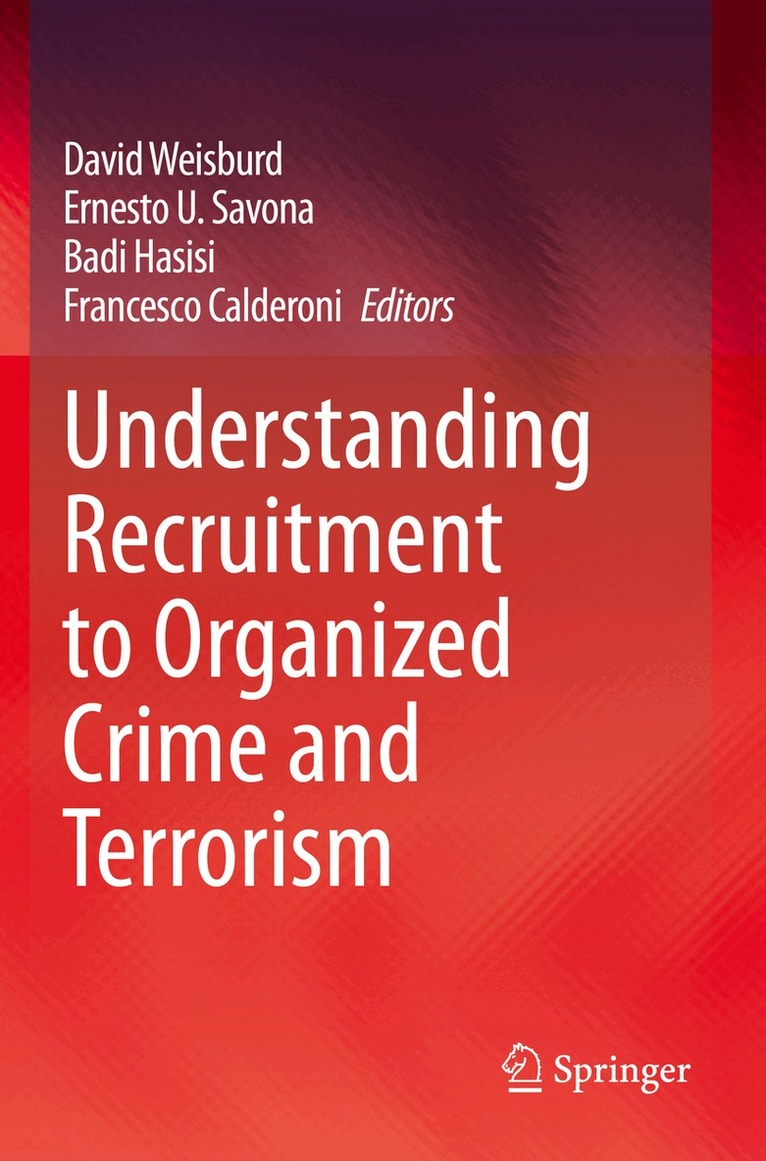
Understanding Recruitment to Organized Crime and Terrorism
Av David Weisburd, Ernesto U. Savona m. fl.
Häftad, 2021
1425 kr
Lägg i varukorg
This volume provides insights on how recruitment patterns develop for two related types of criminal networks: organized crime and terrorism. It specifically explores the social, situational, psychological, and economic drivers of recruitment. Although organized crime networks and terrorism networks …
Organized Crime, Corruption and Crime Prevention
Essays in Honor of Ernesto U. Savona
Av Stefano Caneppele, Francesco Calderoni
Inbunden, 2013
1098 kr
Lägg i varukorg
This volume collects new contributions to research on mafias, organized crime, money laundering, and other forms of complex crimes, gathering some of the most authoritative and well-known scholars in the field. The chapters for this volume are original peices written in honor of the retirement …
Organized Crime, Corruption and Crime Prevention
Essays in Honor of Ernesto U. Savona
Av Francesco Calderoni, Stefano Caneppele
E-bok, 2013
1459 kr
Lägg i varukorg
This volume collects new contributions to research on mafias, organized crime, money laundering, and other forms of complex crimes, gathering some of the most authoritative and well-known scholars in the field. The chapters for this volume are original peices written in honor of the retirement …
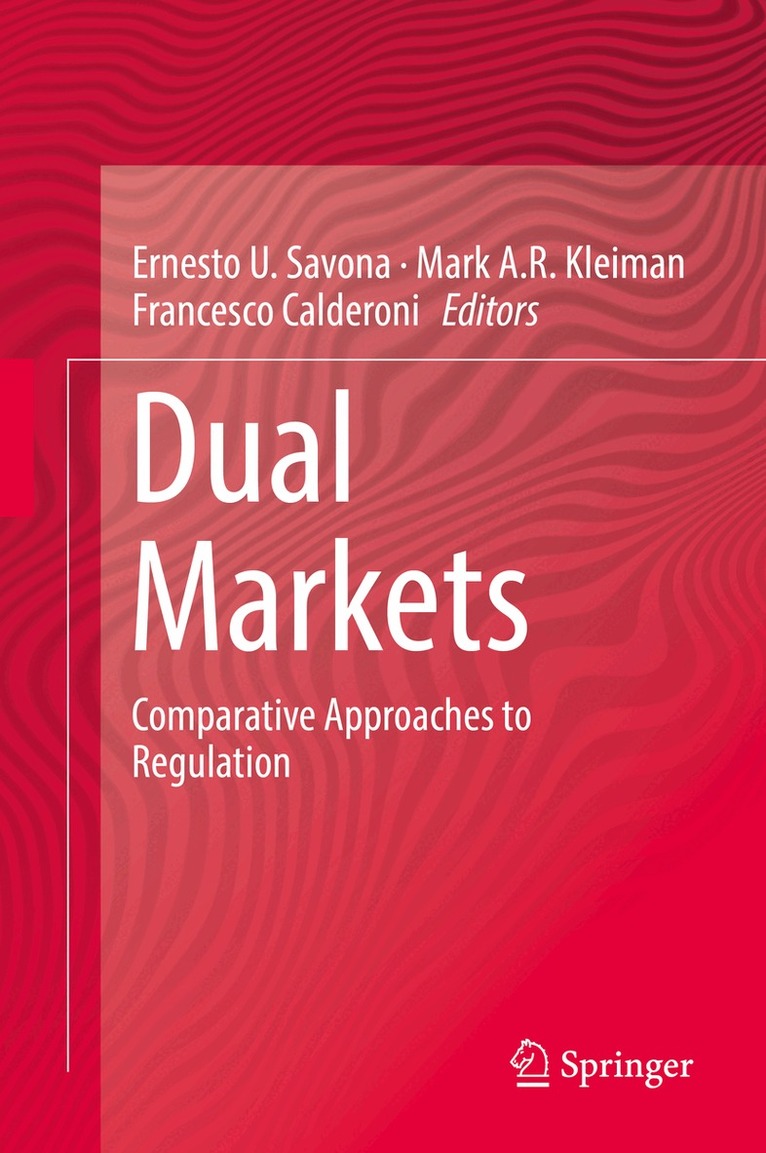
Dual Markets
Comparative Approaches to Regulation
Av Ernesto U. Savona, Mark A.R. Kleiman m. fl.
Inbunden, 2017
1512 kr
Lägg i varukorg
This comprehensive volume analyzes dual markets for regulated substances and services, and aims to provide a framework for their effective regulation. A “dual market” refers to the existence of both a legal and an illegal market for a regulated product or service (for example, prescription drugs). …
Dual Markets
Comparative Approaches to Regulation
Av Francesco Calderoni, Mark A.R. Kleiman m. fl.
E-bok, 2017
1942 kr
Lägg i varukorg
This comprehensive volume analyzes dual markets for regulated substances and services, and aims to provide a framework for their effective regulation. A “dual market” refers to the existence of both a legal and an illegal market for a regulated product or service (for example, prescription drugs). …
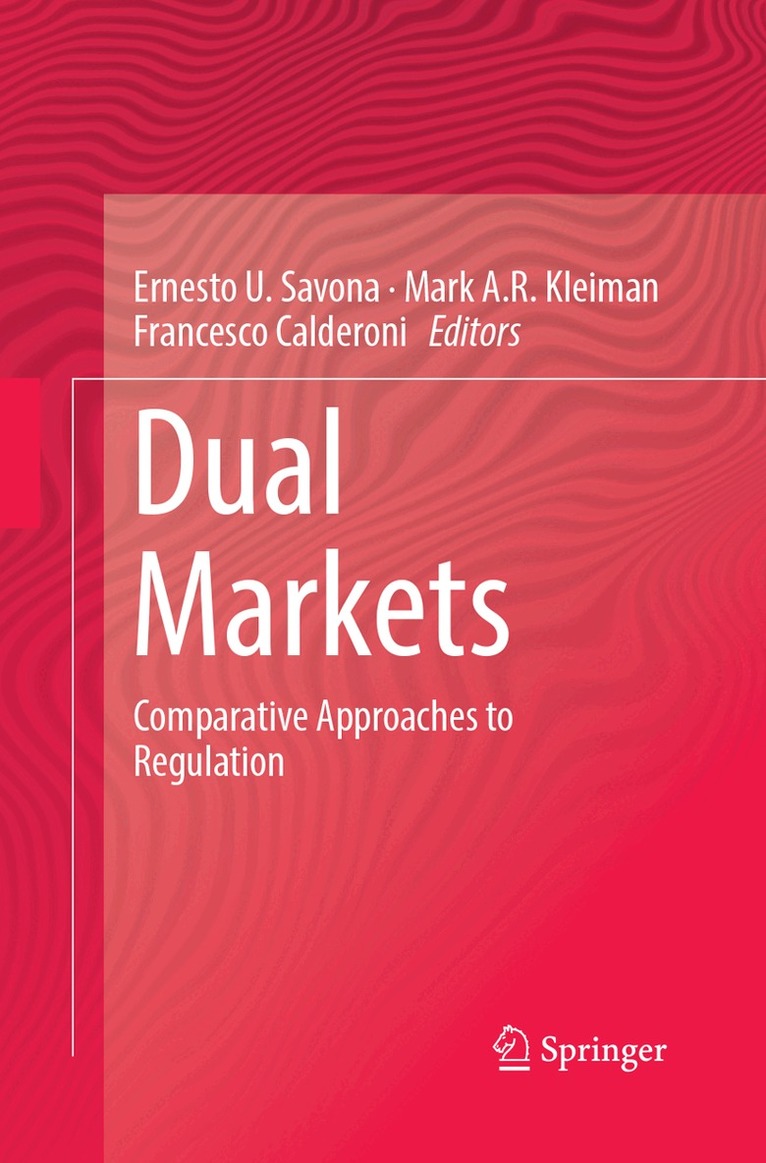
Dual Markets
Comparative Approaches to Regulation
Av Ernesto U. Savona, Mark A.R. Kleiman m. fl.
Häftad, 2018
1512 kr
Lägg i varukorg
This comprehensive volume analyzes dual markets for regulated substances and services, and aims to provide a framework for their effective regulation. A “dual market” refers to the existence of both a legal and an illegal market for a regulated product or service (for example, prescription drugs). …
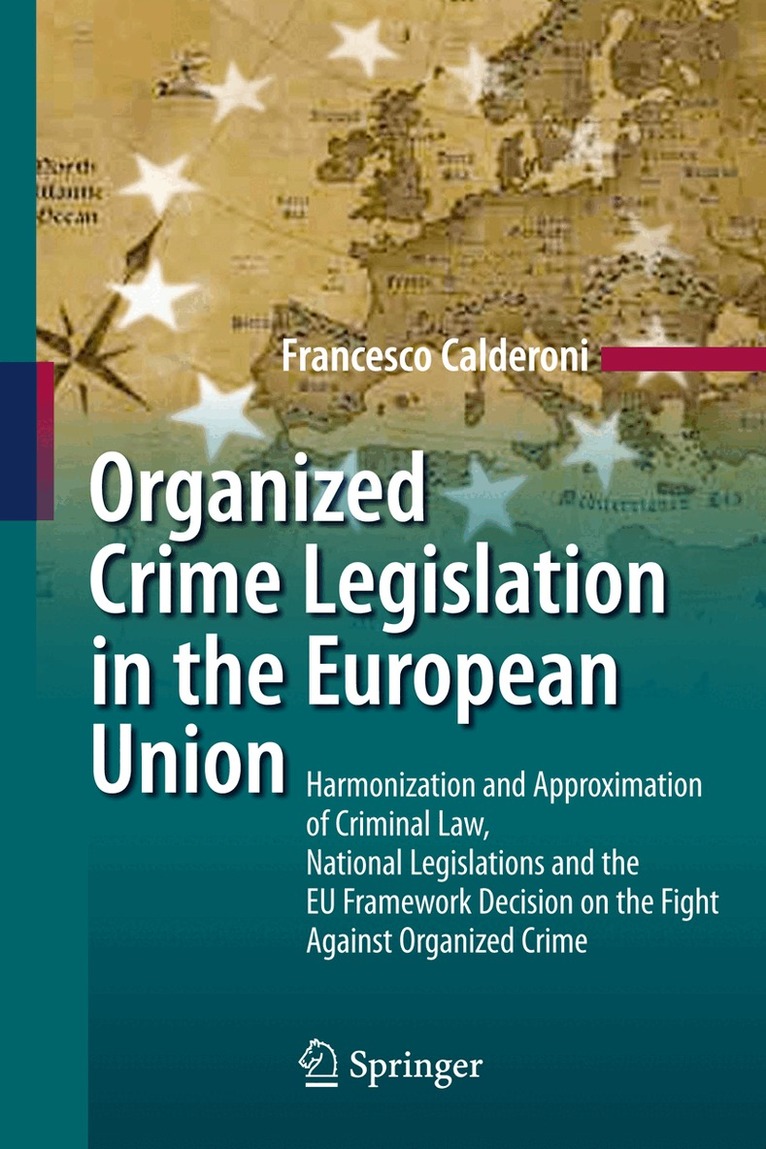
Organized Crime Legislation in the European Union
Harmonization and Approximation of Criminal Law, National Legislations and the EU Framework Decision on the Fight Against Organized Crime
Inbunden, 2010
1010 kr
Lägg i varukorg
Just a few months after the entry into force of the EU Framework Decision on the fight against organized crime, this book provides an unprecedented analysis of the national and European legislation on organized crime. The book provides a critical examination of the European policies and legal …
Organized Crime Legislation in the European Union
Harmonization and Approximation of Criminal Law, National Legislations and the EU Framework Decision on the Fight Against Organized Crime
E-bok, 2010
1342 kr
Lägg i varukorg
Just a few months after the entry into force of the EU Framework Decision on the fight against organized crime, this book provides an unprecedented analysis of the national and European legislation on organized crime. The book provides a critical examination of the European policies and legal …
Organized Crime Legislation in the European Union
Harmonization and Approximation of Criminal Law, National Legislations and the EU Framework Decision on the Fight Against Organized Crime
Häftad, 2014
1010 kr
Lägg i varukorg
Just a few months after the entry into force of the EU Framework Decision on the fight against organized crime, this book provides an unprecedented analysis of the national and European legislation on organized crime. The book provides a critical examination of the European policies and legal …
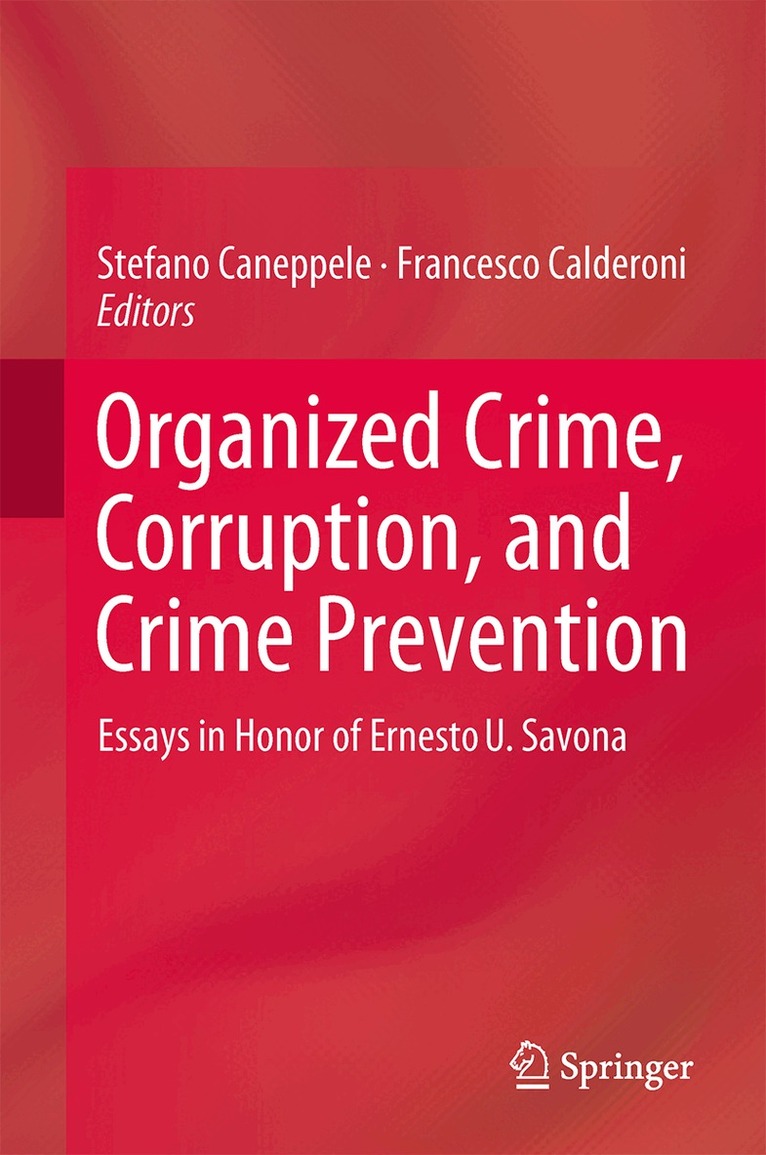
Organized Crime, Corruption and Crime Prevention
Essays in Honor of Ernesto U. Savona
Av Stefano Caneppele, Francesco Calderoni
Häftad, 2016
1481 kr
Tillfälligt slut
This volume collects new contributions to research on mafias, organized crime, money laundering, and other forms of complex crimes, gathering some of the most authoritative and well-known scholars in the field. The chapters for this volume are original peices written in honor of the retirement …