Francis Barker – författare
Visar alla böcker från författaren Francis Barker. Handla med fri frakt och snabb leverans.
9 produkter
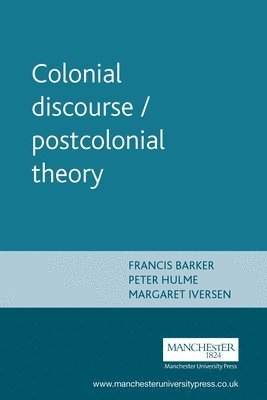
Colonial discourse / postcolonial theory
Av Francis Barker, Peter Hulme m. fl.
Häftad, 1996
427 kr
Lägg i varukorg
The issues of colonialism and imperialism have recently come to the forefront of thinking in the humanities. Disciplines such as history, literature and anthropology are taking stock of their extensive and usually unacknowledged legacy of Empire. At the same time, contemporary cultural theory has …
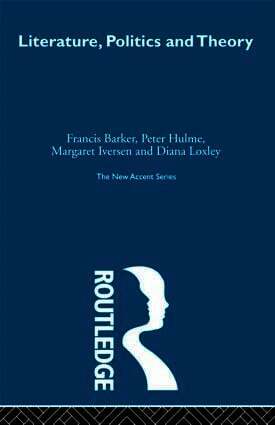
Literature Politics & Theory
Av Francis Barker, Peter Hulme m. fl.
Inbunden, 2002
4872 kr
Lägg i varukorg
First Published in 2002. Modes and categories inherited from the past no longer seem to fit the reality experienced by a new generation. ‘New Accents’ is intended as a positive response to the initiative offered by such a situation. Each volume in the series will seek to encourage rather than …
Literature Politics & Theory
Av Francis Barker, Peter Hulme m. fl.
Häftad, 2013
863 kr
Lägg i varukorg
First Published in 2002. Modes and categories inherited from the past no longer seem to fit the reality experienced by a new generation. ‘New Accents’ is intended as a positive response to the initiative offered by such a situation. Each volume in the series will seek to encourage rather than …
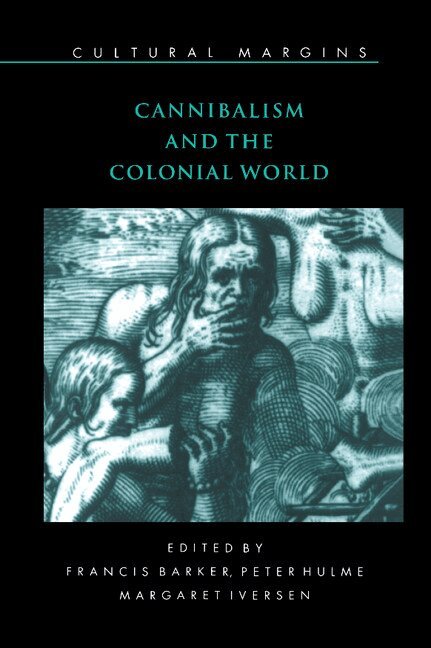
Cannibalism and the Colonial World
Av Francis Barker, Peter Hulme m. fl.
Inbunden, 1998
1747 kr
Lägg i varukorg
In Cannibalism and the Colonial World, published in 1998, an international team of specialists from a variety of disciplines - anthropology, literature, art history - discusses the historical and cultural significance of western fascination with the topic of cannibalism. Addressing the image as it …
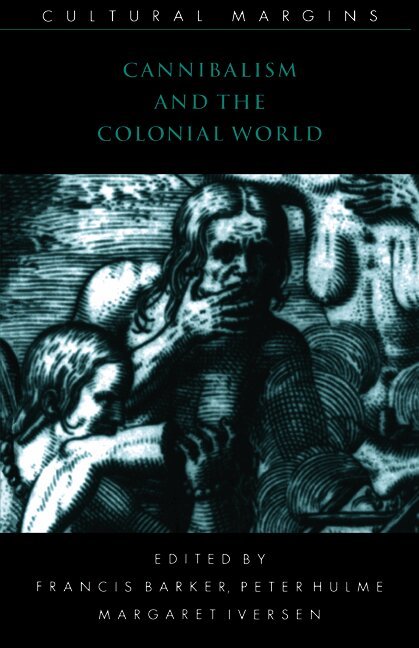
Cannibalism and the Colonial World
Av Francis Barker, Peter Hulme m. fl.
Häftad, 1998
823 kr
Lägg i varukorg
In Cannibalism and the Colonial World, published in 1998, an international team of specialists from a variety of disciplines - anthropology, literature, art history - discusses the historical and cultural significance of western fascination with the topic of cannibalism. Addressing the image as it …
Literature Politics & Theory
Av Diana Loxley, Margaret Iversen m. fl.
E-bok, 2013
1016 kr
Lägg i varukorg
First Published in 2002. Modes and categories inherited from the past no longer seem to fit the reality experienced by a new generation. ‘New Accents’ is intended as a positive response to the initiative offered by such a situation. Each volume in the series will seek to encourage rather than …
Literature Politics & Theory
Av Diana Loxley, Margaret Iversen m. fl.
E-bok, 2013
1016 kr
Lägg i varukorg
First Published in 2002. Modes and categories inherited from the past no longer seem to fit the reality experienced by a new generation. ‘New Accents’ is intended as a positive response to the initiative offered by such a situation. Each volume in the series will seek to encourage rather than …
Tremulous Private Body
Essays on Subjection
Häftad, 1995
338 kr
Tillfälligt slut
This ambitious and immensely readable study helped establish Francis Barker's reputation on both sides of the Atlantic,. Now available in paperback with a revised preface from the author, The Tremulous Private Body studies several seventeenth-century texts to document the birth of the modern, …
The Tremulous Private Body
Essays on Subjection
Inbunden, 1995
1059 kr
Tillfälligt slut
An ambitious study of literary, aesthetic, and philosophical authors on the modern subject versus the modern body