Francoise Massardier-Kenney – författare
294 kr
Läs direkt efter köp
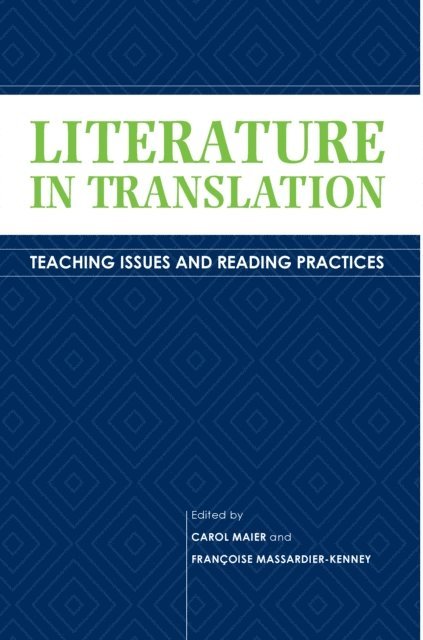
In the last several decades, literary works from around the world have made their way onto the reading lists of American university and college courses in an increasingly wide variety of disciplines. This is a cause for rejoicing. Through works in translation, students in our mostly monolingual society are at last becoming acquainted with the multilingual and multicultural world in which they will live and work. Many instructors have expanded their reach to teach texts that originate from across the globe. Unfortunately, literature in English translation is frequently taught as if it had been written in English, and students are not made familiar with the cultural, linguistic, and literary context in which that literature was produced. As a result, they submit what they read to their own cultural expectations; they do not read in translation and do not reap the benefits of intercultural communication.
Here a true challenge arises for an instructor. Books in translation seldom contain introductory information about the mediation that translation implies or the stakes involved in the transfer of cultural information. Instructors are often left to find their own material about the author or the culture of the source text. Lacking the appropriate pedagogical tools, they struggle to provide information about either the original work or about translation itself, and they might feel uneasy about teaching material for which they lack adequate preparation. Consequently, they restrict themselves to well-known works in translation or works from other countries originally written in English.
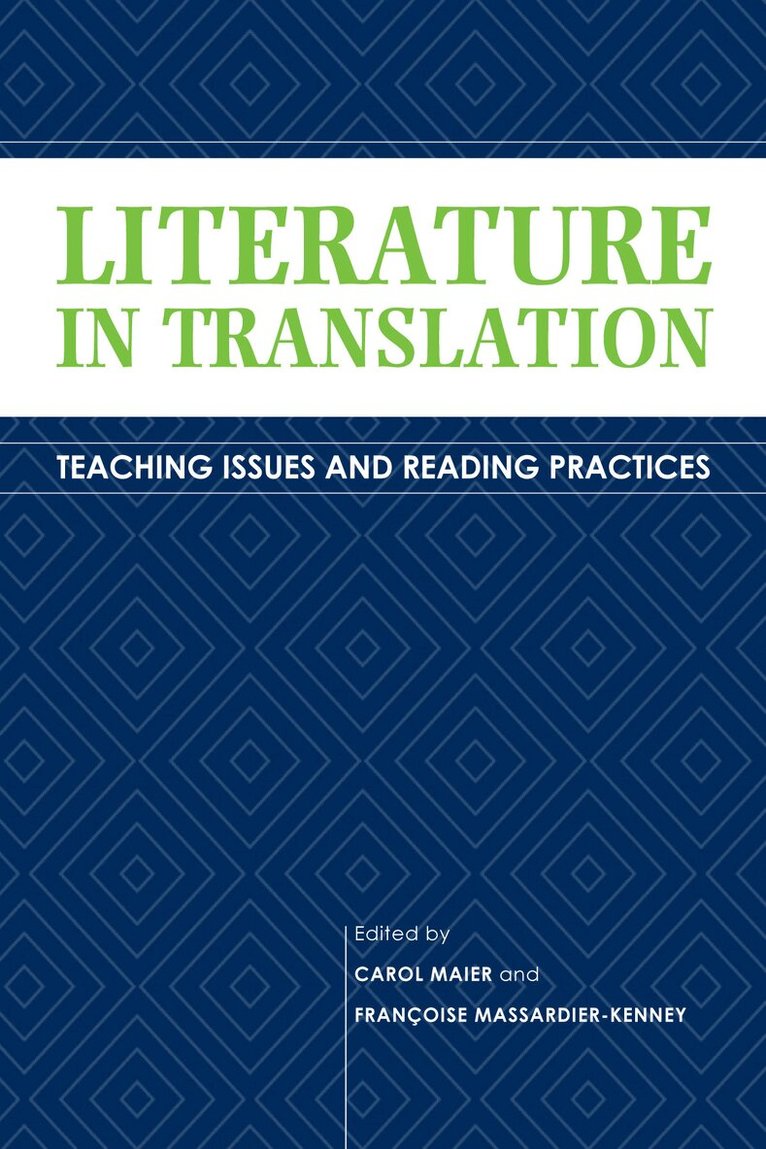
Literature in Translation: Teaching Issues and Reading Practices squarely addresses this pedagogical lack. The book’s sixteen essays provide for instructors a context in which to teach works from a variety of languages and cultures in ways that highlight the effects of linguistic and cultural transfers.
294 kr
Läs direkt efter köp
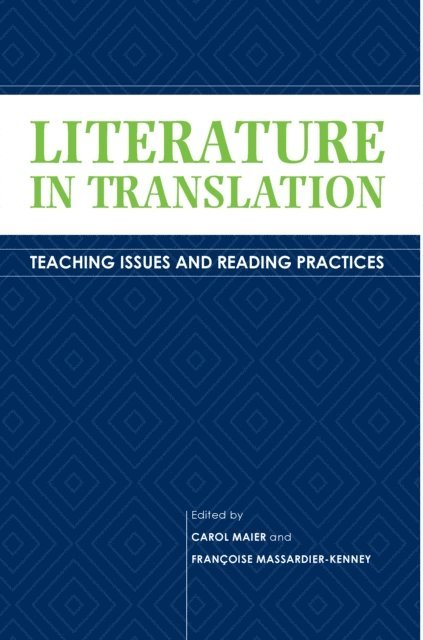
In the last several decades, literary works from around the world have made their way onto the reading lists of American university and college courses in an increasingly wide variety of disciplines. This is a cause for rejoicing. Through works in translation, students in our mostly monolingual society are at last becoming acquainted with the multilingual and multicultural world in which they will live and work. Many instructors have expanded their reach to teach texts that originate from across the globe. Unfortunately, literature in English translation is frequently taught as if it had been written in English, and students are not made familiar with the cultural, linguistic, and literary context in which that literature was produced. As a result, they submit what they read to their own cultural expectations; they do not read in translation and do not reap the benefits of intercultural communication.
Here a true challenge arises for an instructor. Books in translation seldom contain introductory information about the mediation that translation implies or the stakes involved in the transfer of cultural information. Instructors are often left to find their own material about the author or the culture of the source text. Lacking the appropriate pedagogical tools, they struggle to provide information about either the original work or about translation itself, and they might feel uneasy about teaching material for which they lack adequate preparation. Consequently, they restrict themselves to well-known works in translation or works from other countries originally written in English.
Literature in Translation: Teaching Issues and Reading Practices squarely addresses this pedagogical lack. The book’s sixteen essays provide for instructors a context in which to teach works from a variety of languages and cultures in ways that highlight the effects of linguistic and cultural transfers.
331 kr
Läs direkt efter köp
The second volume of this revised and expanded edition of Translating Slavery
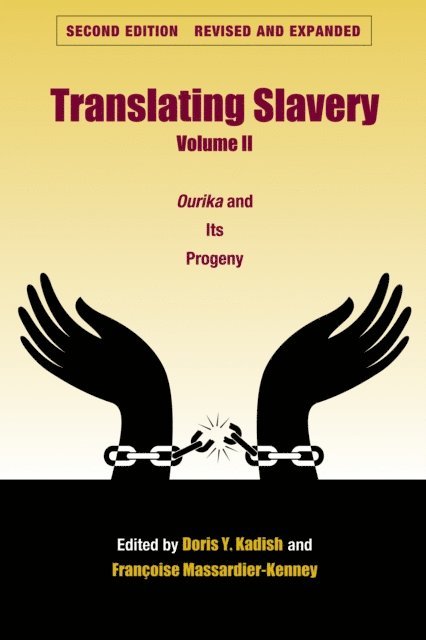
Translating Slavery explores the complex interrelationships that exist between translation, gender, and race by focusing on antislavery writing by or about French women in the French revolutionary period. Now in two volumes, Translating Slavery closely examines what happens when translators translate literary works that address issues of gender and race. The volumes explore the theoretical, linguistic, and literary complexities involved when white writers, especially women, took up their pens to denounce the injustices to which blacks were subjected under slavery.
Volume 1, Gender and Race in French Abolitionist Writing, 1780–1830, highlights key issues in the theory and practice of translation by providing essays on the factors involved in translating gender and race, as well as works in translation.
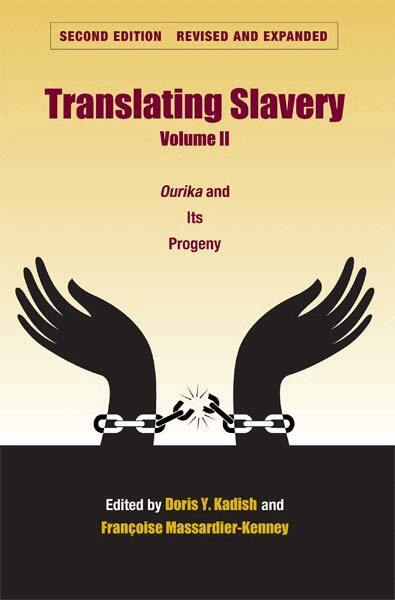
Volume 2, Ourika and Its Progeny, contains the original translation of Claire de Duras’s Ourika as well as a series of original critical essays by twenty-first-century scholars. First published anonymously in 1823, Ourika signifies an important shift from nineteenth-century notions of race, nationality, and kinship toward the identity politics of today. Editors Kadish and Massardier-Kenney and their contributors review the impact of the novel and abolitionist narrative, poetry, and theater in the context of translation studies.
This revised and expanded edition of Translating Slavery will appeal to scholars and students interested in race and gender studies, French literature and history, comparative literature, and translation studies.
331 kr
Läs direkt efter köp
The second volume of this revised and expanded edition of Translating Slavery
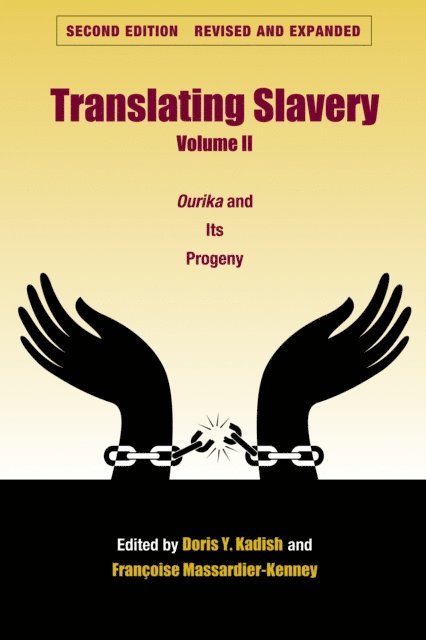
Translating Slavery explores the complex interrelationships that exist between translation, gender, and race by focusing on antislavery writing by or about French women in the French revolutionary period. Now in two volumes, Translating Slavery closely examines what happens when translators translate literary works that address issues of gender and race. The volumes explore the theoretical, linguistic, and literary complexities involved when white writers, especially women, took up their pens to denounce the injustices to which blacks were subjected under slavery.
Volume 1, Gender and Race in French Abolitionist Writing, 1780–1830, highlights key issues in the theory and practice of translation by providing essays on the factors involved in translating gender and race, as well as works in translation.
Volume 2, Ourika and Its Progeny, contains the original translation of Claire de Duras’s Ourika as well as a series of original critical essays by twenty-first-century scholars. First published anonymously in 1823, Ourika signifies an important shift from nineteenth-century notions of race, nationality, and kinship toward the identity politics of today. Editors Kadish and Massardier-Kenney and their contributors review the impact of the novel and abolitionist narrative, poetry, and theater in the context of translation studies.
This revised and expanded edition of Translating Slavery will appeal to scholars and students interested in race and gender studies, French literature and history, comparative literature, and translation studies.
683 kr
Läs direkt efter köp
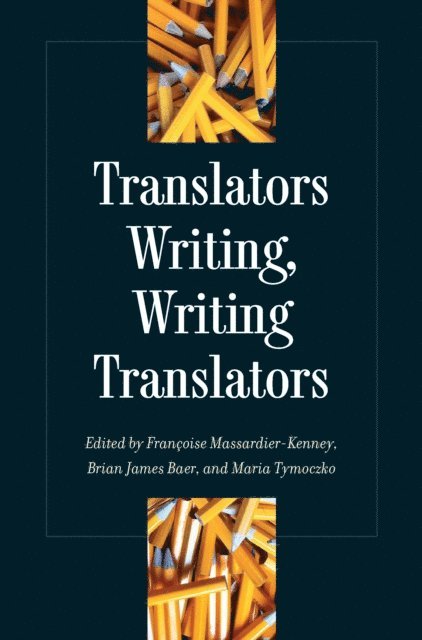
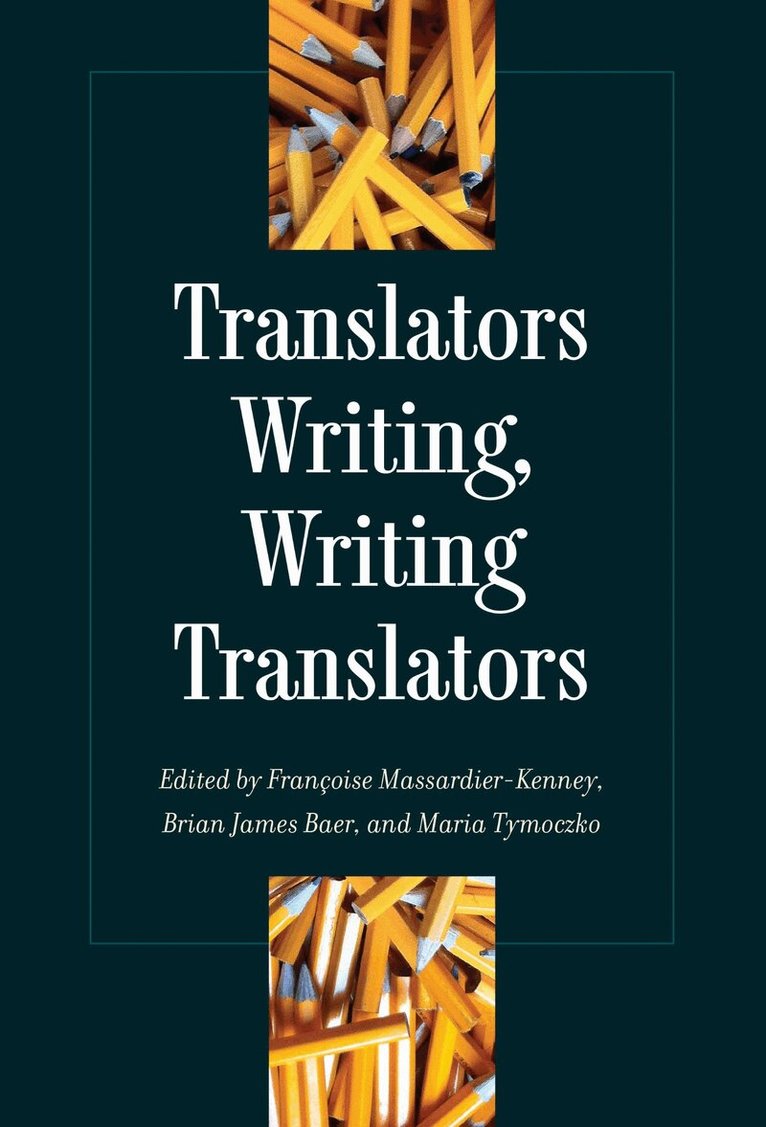
Translators Writing, Writing Translators is a collection of essays by some of the leading scholar-practitioners working in the field of translation studies. Inspired by the work of distinguished translator and theorist Carol Maier, the contributors reflect, in a variety of forms—from biographical essays to studies of fictional translators to reflective commentary on translation projects and collaborations—on the complex, constantly evolving relationship of theory and practice as embodied in the writing of translators and in the concept of translation as writing.
The fact that most scholars in translation studies are also practitioners is one of the unique and defining aspects of the discipline. Nonetheless, the field has long been distinguished by a separation of translation theory and practice evidenced by suspicion among practitioners regarding the relevance of translation theory and reluctance by theoreticians to incorporate translation practice into their theoretical writings. Maier’s pioneering work stands out as a particularly influential and provocative attempt to rethink and deconstruct the opposition of theory to practice. For Maier, translation theory becomes a site for the investigation of the translator’s personal and professional investments in a foreign author, and the translation itself becomes an embodiment of a host of theoretical concerns. Considering the translator’s biography and credentials is another defining feature of Maier’s work that is discussed in the essays of this volume.
The combination of the theoretical and the practical makes this collection of interest to a broad array of readers, from scholars and students of translation studies and world literature, to translation practitioners, and as to general readers interested in questions of translation and cross-cultural communication. Rosemary Arrojo, Peter Bush, Ronald Christ, Suzanne Jill Levine, Christi Merrill, Noël Valis, Lawrence Venuti, and Kelly Washbourne are just a few of the scholar-practitioners contributing to this volume. The introduction by Brian James Baer, Françoise Massardier-Kenney, and Maria Tymoczko offers an overview of the central concerns of Maier’s work as a writing translator and a translator who writes.
683 kr
Läs direkt efter köp
Translators Writing, Writing Translators is a collection of essays by some of the leading scholar-practitioners working in the field of translation studies. Inspired by the work of distinguished translator and theorist Carol Maier, the contributors reflect, in a variety of forms—from biographical essays to studies of fictional translators to reflective commentary on translation projects and collaborations—on the complex, constantly evolving relationship of theory and practice as embodied in the writing of translators and in the concept of translation as writing.
The fact that most scholars in translation studies are also practitioners is one of the unique and defining aspects of the discipline. Nonetheless, the field has long been distinguished by a separation of translation theory and practice evidenced by suspicion among practitioners regarding the relevance of translation theory and reluctance by theoreticians to incorporate translation practice into their theoretical writings. Maier’s pioneering work stands out as a particularly influential and provocative attempt to rethink and deconstruct the opposition of theory to practice. For Maier, translation theory becomes a site for the investigation of the translator’s personal and professional investments in a foreign author, and the translation itself becomes an embodiment of a host of theoretical concerns. Considering the translator’s biography and credentials is another defining feature of Maier’s work that is discussed in the essays of this volume.
The combination of the theoretical and the practical makes this collection of interest to a broad array of readers, from scholars and students of translation studies and world literature, to translation practitioners, and as to general readers interested in questions of translation and cross-cultural communication. Rosemary Arrojo, Peter Bush, Ronald Christ, Suzanne Jill Levine, Christi Merrill, Noël Valis, Lawrence Venuti, and Kelly Washbourne are just a few of the scholar-practitioners contributing to this volume. The introduction by Brian James Baer, Françoise Massardier-Kenney, and Maria Tymoczko offers an overview of the central concerns of Maier’s work as a writing translator and a translator who writes.
2 180 kr
Läs direkt efter köp