Frank Coulson – författare
Visar alla böcker från författaren Frank Coulson. Handla med fri frakt och snabb leverans.
5 produkter
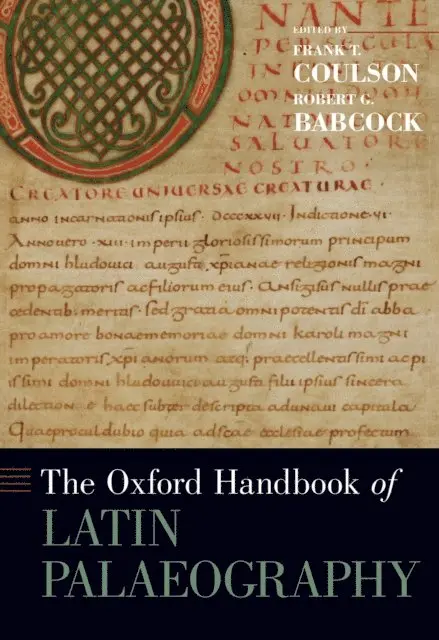
Oxford Handbook of Latin Palaeography
Av Robert Babcock, Frank Coulson
E-bok, 2020
696 kr
Lägg i varukorg
Latin books are among the most numerous surviving artifacts of the Late Antique, Mediaeval, and Renaissance periods in European history; written in a variety of formats and scripts, they preserve the literary, philosophical, scientific, and religious heritage of the West. The Oxford Handbook of …
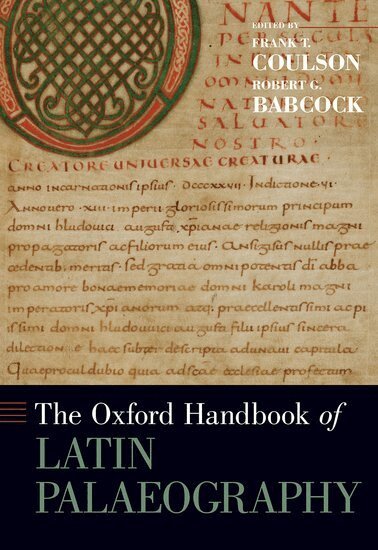
The Oxford Handbook of Latin Palaeography
Av Frank Coulson, Robert Babcock
Inbunden, 2021
3803 kr
Lägg i varukorg
Latin books are among the most numerous surviving artifacts of the Late Antique, Mediaeval, and Renaissance periods in European history; written in a variety of formats and scripts, they preserve the literary, philosophical, scientific, and religious heritage of the West. The Oxford Handbook of …
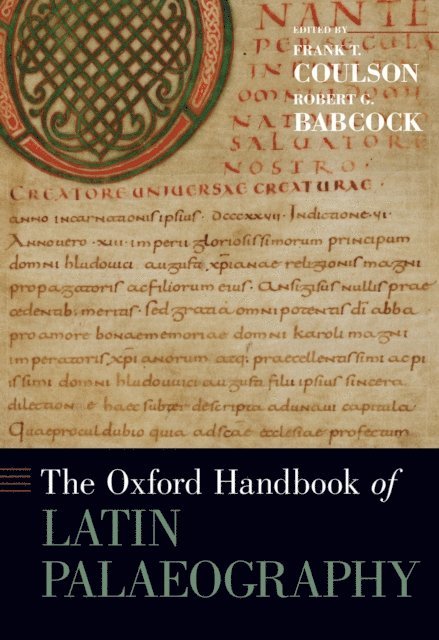
Oxford Handbook of Latin Palaeography
Av Robert Babcock, Frank Coulson
E-bok, 2020
696 kr
Lägg i varukorg
Latin books are among the most numerous surviving artifacts of the Late Antique, Mediaeval, and Renaissance periods in European history; written in a variety of formats and scripts, they preserve the literary, philosophical, scientific, and religious heritage of the West. The Oxford Handbook of …
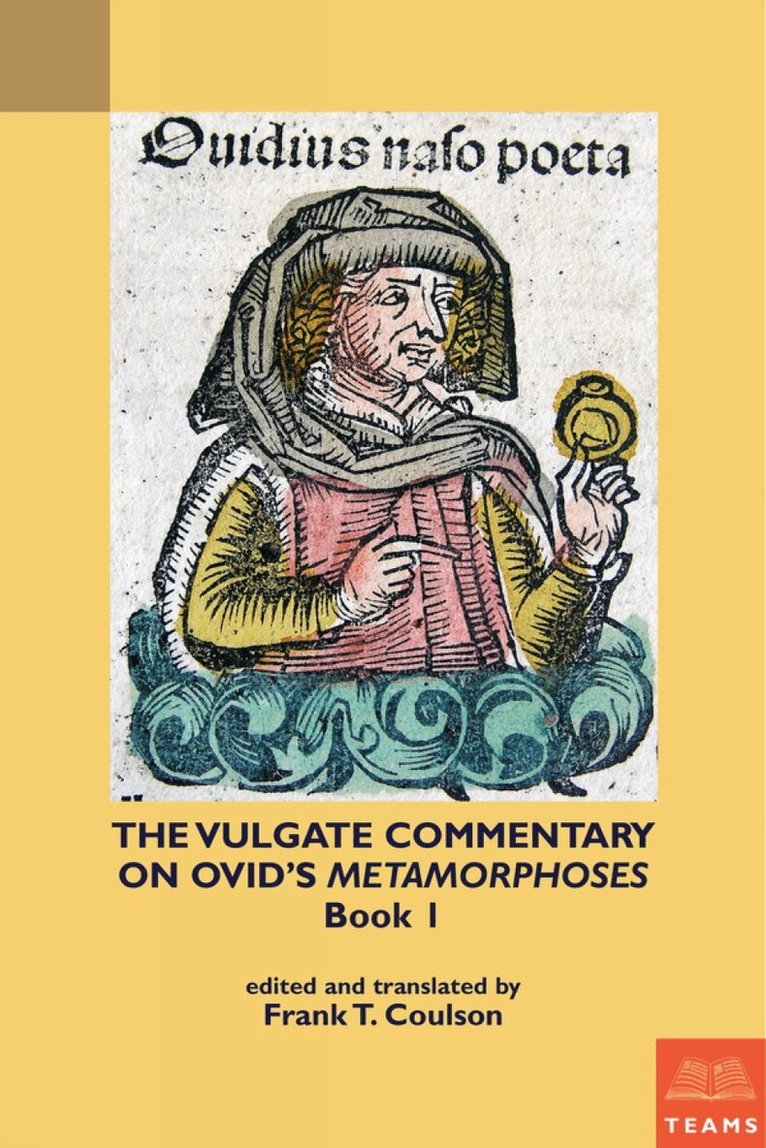
Vulgate Commentary on Ovid's Metamorphoses
Book 1
Av Medieval Institute Publications, Frank Coulson
Häftad, 2015
460 kr
Lägg i varukorg
Composed around 1250 by an unknown author in the region of Orléans, the Vulgate Commentary on Ovid's Metamorphoses is the most widely disseminated and reproduced medieval work on Ovid's epic compendium of classical mythology and materialist philosophy. This commentary both preserves the rich store …
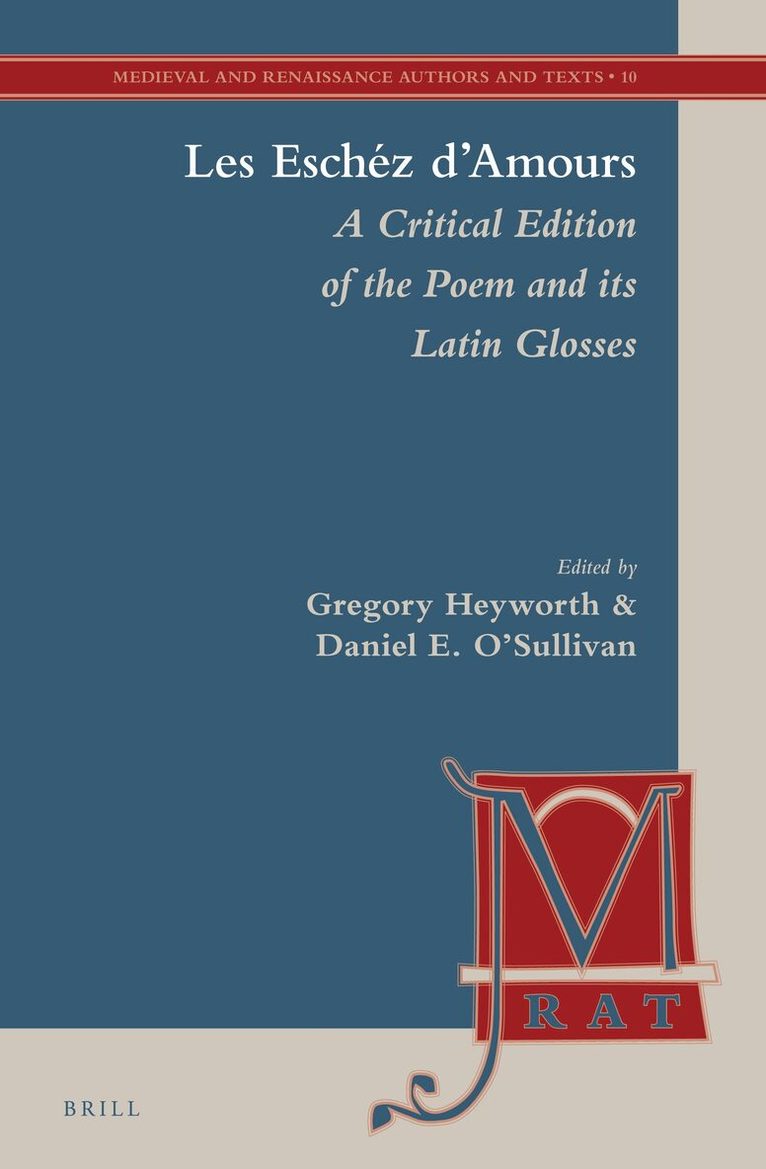
Les Eschéz d'Amours
A Critical Edition of the Poem and its Latin Glosses
Av Gregory Heyworth, Daniel E. O'sullivan m. fl.
Inbunden, 2013
4799 kr
Lägg i varukorg
Les Eschéz d’Amours may be the last great medieval allegory to find its way into a modern edition. In the tradition of the Roman de la Rose, the Eschéz surveys matters of love, politics, economics, music, medicine, and chess through the lens of classical and Scholastic learning. In addition to the …