Gary Lorden – författare
Visar alla böcker från författaren Gary Lorden. Handla med fri frakt och snabb leverans.
3 produkter
3 produkter
E-bok
Engelska, 200799 kr
Läs direkt efter köp
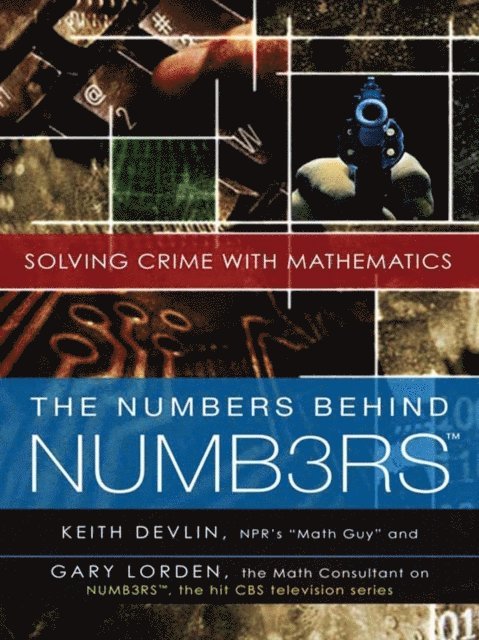
The companion to the hit CBS crime series Numb3rs presents the fascinating way mathematics is used to fight real-life crime Using the popular CBS prime-time TV crime series Numb3rs as a springboard, Keith Devlin (known to millions of NPR listeners as the Math Guy on NPR''s Weekend Edition with Scott Simon) and Gary Lorden (the principal math advisor to Numb3rs) explain real-life mathematical techniques used by the FBI and other law enforcement agencies to catch and convict criminals. From forensics to counterterrorism, the Riemann hypothesis to image enhancement, solving murders to beating casinos, Devlin and Lorden present compelling cases that illustrate how advanced mathematics can be used in state-of-the-art criminal investigations.
E-bok
PDF, Engelska, 20121 069 kr
Läs direkt efter köp
This book is based upon lecture notes developed by Jack Kiefer for a course in statistical inference he taught at Cornell University. The notes were distributed to the class in lieu of a textbook, and the problems were used for homework assignments. Relying only on modest prerequisites of probability theory and cal culus, Kiefer''s approach to a first course in statistics is to present the central ideas of the modem mathematical theory with a minimum of fuss and formality. He is able to do this by using a rich mixture of examples, pictures, and math ematical derivations to complement a clear and logical discussion of the important ideas in plain English. The straightforwardness of Kiefer''s presentation is remarkable in view of the sophistication and depth of his examination of the major theme: How should an intelligent person formulate a statistical problem and choose a statistical procedure to apply to it? Kiefer''s view, in the same spirit as Neyman and Wald, is that one should try to assess the consequences of a statistical choice in some quan titative (frequentist) formulation and ought to choose a course of action that is verifiably optimal (or nearly so) without regard to the perceived "attractiveness" of certain dogmas and methods.
Häftad, Engelska, 2011
867 kr
Skickas inom 10-15 vardagar
This book is based upon lecture notes developed by Jack Kiefer for a course in statistical inference he taught at Cornell University. The notes were distributed to the class in lieu of a textbook, and the problems were used for homework assignments. Relying only on modest prerequisites of probability theory and cal culus, Kiefer's approach to a first course in statistics is to present the central ideas of the modem mathematical theory with a minimum of fuss and formality. He is able to do this by using a rich mixture of examples, pictures, and math ematical derivations to complement a clear and logical discussion of the important ideas in plain English. The straightforwardness of Kiefer's presentation is remarkable in view of the sophistication and depth of his examination of the major theme: How should an intelligent person formulate a statistical problem and choose a statistical procedure to apply to it? Kiefer's view, in the same spirit as Neyman and Wald, is that one should try to assess the consequences of a statistical choice in some quan titative (frequentist) formulation and ought to choose a course of action that is verifiably optimal (or nearly so) without regard to the perceived "attractiveness" of certain dogmas and methods.