Gavin Oxburgh - Böcker
Visar alla böcker från författaren Gavin Oxburgh. Handla med fri frakt och snabb leverans.
6 produkter
6 produkter
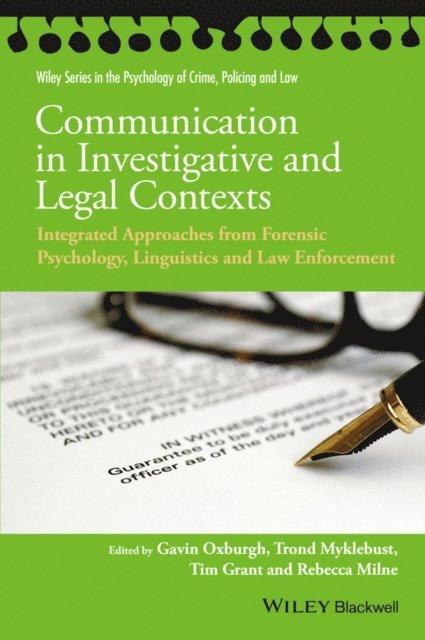
Communication in Investigative and Legal Contexts
Integrated Approaches from Forensic Psychology, Linguistics and Law Enforcement
Häftad, Engelska, 2015
514 kr
Skickas inom 7-10 vardagar
Communication in Investigative and Legal ContextsDespite a number of research studies, there remain significant differences of opinion among psychologists, linguists and other practitioners on how best to describe particular types of questions and communicate most effectively in forensic contexts. Communication in Investigative and Legal Contexts brings clarity to the subject by providing readers with in-depth coverage of the complex area of communication in forensic settings, for example during investigative interviewing of victims, witnesses and suspects/high-interest groups, during discourse in courtrooms, and via legal intermediaries and interpreters. Drawing on knowledge from forensic psychology, linguistics and law enforcement worldwide, the text is unique in bridging the gap between these fields in a definitive guide to best practice, with chapters written by teams bringing together expertise and specialties from each field. Part of the Wiley Series in the Psychology of Crime, Policing and Law, the book is also linked to the International Investigative Interviewing Research Group (iIIRG), a worldwide network of interviewing professionals working with international bodies committed to improving investigative interviewing and ensuring all improvements are underpinned by a robust evidence base. Contributors are sourced from North America, Europe, and Asia Pacific, ensuring International relevance.
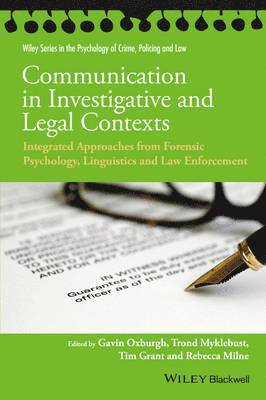
Communication in Investigative and Legal Contexts
Integrated Approaches from Forensic Psychology, Linguistics and Law Enforcement
Inbunden, Engelska, 2015
1 095 kr
Skickas inom 7-10 vardagar
Communication in Investigative and Legal ContextsDespite a number of research studies, there remain significant differences of opinion among psychologists, linguists and other practitioners on how best to describe particular types of questions and communicate most effectively in forensic contexts. Communication in Investigative and Legal Contexts brings clarity to the subject by providing readers with in-depth coverage of the complex area of communication in forensic settings, for example during investigative interviewing of victims, witnesses and suspects/high-interest groups, during discourse in courtrooms, and via legal intermediaries and interpreters. Drawing on knowledge from forensic psychology, linguistics and law enforcement worldwide, the text is unique in bridging the gap between these fields in a definitive guide to best practice, with chapters written by teams bringing together expertise and specialties from each field. Part of the Wiley Series in the Psychology of Crime, Policing and Law, the book is also linked to the International Investigative Interviewing Research Group (iIIRG), a worldwide network of interviewing professionals working with international bodies committed to improving investigative interviewing and ensuring all improvements are underpinned by a robust evidence base. Contributors are sourced from North America, Europe, and Asia Pacific, ensuring International relevance.
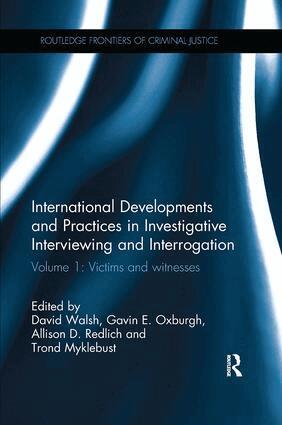
International Developments and Practices in Investigative Interviewing and Interrogation
Volume 1: Victims and witnesses
Häftad, Engelska, 2017
671 kr
Skickas inom 10-15 vardagar
Techniques in the investigative interviewing and interrogation of victims, witnesses and suspects of crime vary around the world, according to a country’s individual legal system, religion and culture. Whereas some countries have developed certain interview protocols for witnesses (such as the ABE Guidelines and the NICHD protocol when interviewing children) and the PEACE model of interviewing suspects, other countries continue to use physical coercion and other questionable tactics to elicit information. Until now, there has been very little empirical information about the overall interview and interrogation practices in non-western countries, especially the Middle and Far East. This book addresses this gap, bringing together international experts from over 25 countries and providing in-depth coverage of the various interview and interrogation techniques used across the globe. Volume 1 focuses on the interviewing of victims and witnesses, aiming to provide the necessary information for an understanding of how law enforcement agencies around the world gain valuable information from victims and witnesses in criminal cases. Together, the chapters that make up this volume and the accompanying volume on interviewing suspects, draw on specific national case studies and practices, examine contemporary challenges and identify best practice to enable readers to develop an international, as well as a comparative, perspective of developments worldwide in this important area of criminal investigation.This book will be an essential resource for academics and students engaged in the study of policing, criminal investigation, forensic psychology and criminal law. It will also be of great interest to practitioners, legal professionals and policymakers around the world.
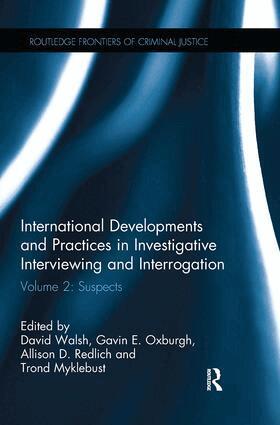
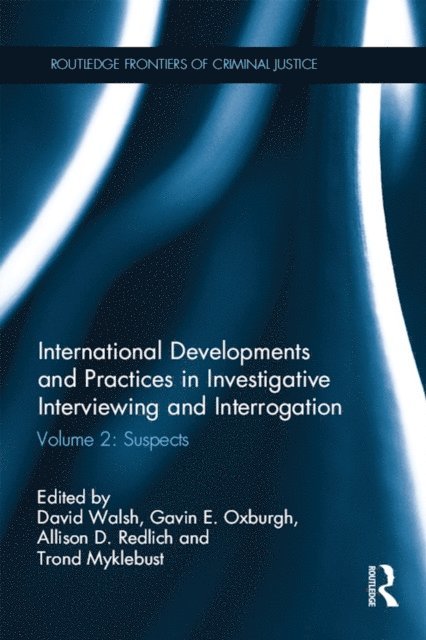
International Developments and Practices in Investigative Interviewing and Interrogation
Volume 2: Suspects
Häftad, Engelska, 2017
753 kr
Skickas inom 10-15 vardagar
Techniques in the investigative interviewing and interrogation of victims, witnesses and suspects of crime vary around the world, according to a country’s individual legal system, religion and culture. Whereas some countries have developed certain interview protocols for witnesses (such as the ABE Guidelines and the NICHD protocol when interviewing children) and the PEACE model of interviewing suspects, other countries continue to use physical coercion and other questionable tactics to elicit information. Until now, there has been very little empirical information about the overall interview and interrogation practices in non-western countries, especially the Middle and Far East. This book addresses this gap, bringing together international experts from over 25 countries and providing in-depth coverage of the various interview and interrogation techniques used across the globe. Volume 2 focuses on the interviewing of crime suspects, aiming to provide the necessary information for an understanding of how law enforcement agencies around the world gain valuable information from suspects in criminal cases. Together, the chapters that make up this volume and the accompanying volume on interviewing witnesses and victims, draw on specific national case studies and practices, examine contemporary challenges and identify best practice to enable readers to develop an international, as well as a comparative, perspective of developments worldwide in this important area of criminal investigation.This book will be an essential resource for academics and students engaged in the study of policing, criminal investigation, forensic psychology and criminal law. It will also be of great interest to practitioners, legal professionals and policymakers around the world.
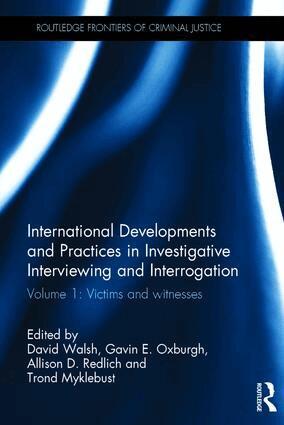
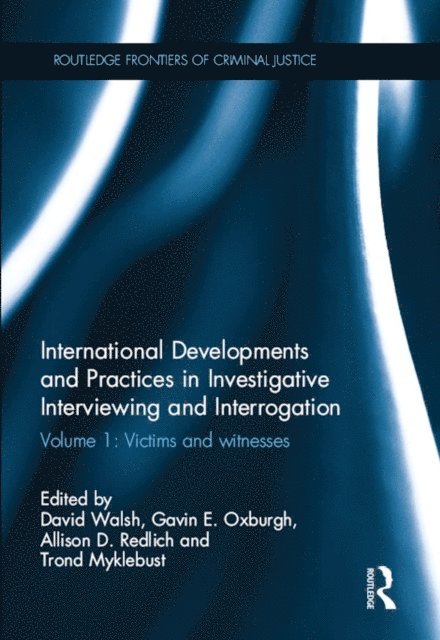
International Developments and Practices in Investigative Interviewing and Interrogation
Volume 1: Victims and witnesses
Inbunden, Engelska, 2015
2 095 kr
Skickas inom 10-15 vardagar
Techniques in the investigative interviewing and interrogation of victims, witnesses and suspects of crime vary around the world, according to a country’s individual legal system, religion and culture. Whereas some countries have developed certain interview protocols for witnesses (such as the ABE Guidelines and the NICHD protocol when interviewing children) and the PEACE model of interviewing suspects, other countries continue to use physical coercion and other questionable tactics to elicit information. Until now, there has been very little empirical information about the overall interview and interrogation practices in non-western countries, especially the Middle and Far East. This book addresses this gap, bringing together international experts from over 25 countries and providing in-depth coverage of the various interview and interrogation techniques used across the globe. Volume 1 focuses on the interviewing of victims and witnesses, aiming to provide the necessary information for an understanding of how law enforcement agencies around the world gain valuable information from victims and witnesses in criminal cases. Together, the chapters that make up this volume and the accompanying volume on interviewing suspects, draw on specific national case studies and practices, examine contemporary challenges and identify best practice to enable readers to develop an international, as well as a comparative, perspective of developments worldwide in this important area of criminal investigation.This book will be an essential resource for academics and students engaged in the study of policing, criminal investigation, forensic psychology and criminal law. It will also be of great interest to practitioners, legal professionals and policymakers around the world.
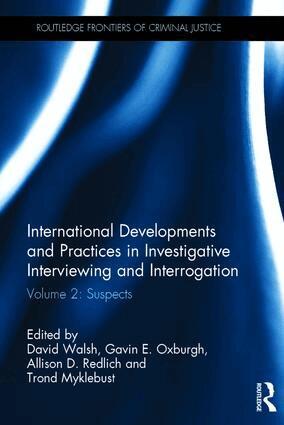
International Developments and Practices in Investigative Interviewing and Interrogation
Volume 2: Suspects
Inbunden, Engelska, 2015
2 095 kr
Skickas inom 10-15 vardagar
Techniques in the investigative interviewing and interrogation of victims, witnesses and suspects of crime vary around the world, according to a country’s individual legal system, religion and culture. Whereas some countries have developed certain interview protocols for witnesses (such as the ABE Guidelines and the NICHD protocol when interviewing children) and the PEACE model of interviewing suspects, other countries continue to use physical coercion and other questionable tactics to elicit information. Until now, there has been very little empirical information about the overall interview and interrogation practices in non-western countries, especially the Middle and Far East. This book addresses this gap, bringing together international experts from over 25 countries and providing in-depth coverage of the various interview and interrogation techniques used across the globe. Volume 2 focuses on the interviewing of crime suspects, aiming to provide the necessary information for an understanding of how law enforcement agencies around the world gain valuable information from suspects in criminal cases. Together, the chapters that make up this volume and the accompanying volume on interviewing witnesses and victims, draw on specific national case studies and practices, examine contemporary challenges and identify best practice to enable readers to develop an international, as well as a comparative, perspective of developments worldwide in this important area of criminal investigation.This book will be an essential resource for academics and students engaged in the study of policing, criminal investigation, forensic psychology and criminal law. It will also be of great interest to practitioners, legal professionals and policymakers around the world.