Rebecca Milne - Böcker
Visar alla böcker från författaren Rebecca Milne. Handla med fri frakt och snabb leverans.
13 produkter
13 produkter
831 kr
Skickas inom 5-8 vardagar
Witness Identification provides an up-to-date review on identifying crime perpetrators based on psychological theory and research. Applying psychology to the area of criminal identification, the authors make reference to relevant legislation such as the PACE Codes of Practice as they explore the psychology involved in identification.This insightful and practical title will inform anyone interested in this area. The authors outline the psychological information relevant to constructing and delivering identification parades, such as the point of view of the suspect and witness or victim, how witnesses remember, and the factors likely to affect the accuracy of person descriptions. They also consider the effects of stereotypes and expectancies on identification performance, as well as a discussion of the technologies involved in identification procedure. The book includes a chapter on how to assist people who are deemed vulnerable in order to elicit accurate identification evidence. It also looks at other methods of identification in addition to face identification, such as methods to identify a person's voice and gait.By providing an overview of legislation and guidelines to conducting identity parades alongside a psychological underpinning, this book is a valuable resource to anyone whose work involves identification procedures, as well as students of psychology, law and police studies.
626 kr
Skickas inom 10-15 vardagar
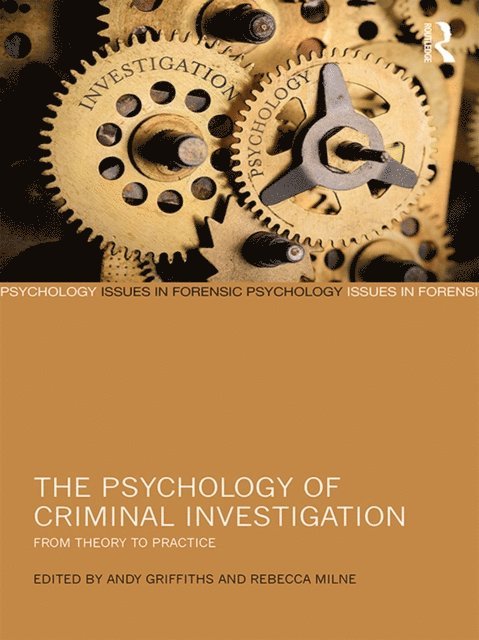
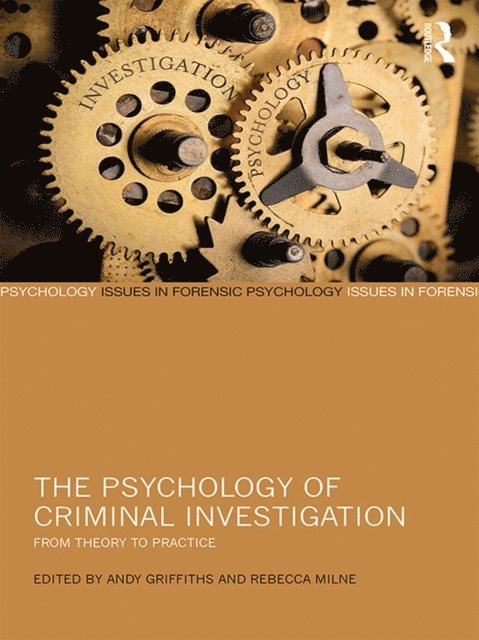
The contribution of psychological research to the prevention of miscarriages of justice and the development of effective investigative techniques is now established to a point where law enforcement agencies in numerous countries either employ psychologists as part of their staff, or work in cooperation with academic institutions. The application of psychology to investigation is particularly effective when academics and practitioners work together. This book brings together leading experts to discuss the application of psychology to criminal investigation.This book offers an overview of models of investigation from a psychological and practical view point, covering topics such as investigative decision making, the presentation of evidence, witness testimony, the detection of deception, interviewing suspects and evidence-based police training. It is essential reading for students, researchers and practitioners engaged with police practice, investigation and forensic psychology.
2 588 kr
Skickas inom 7-10 vardagar
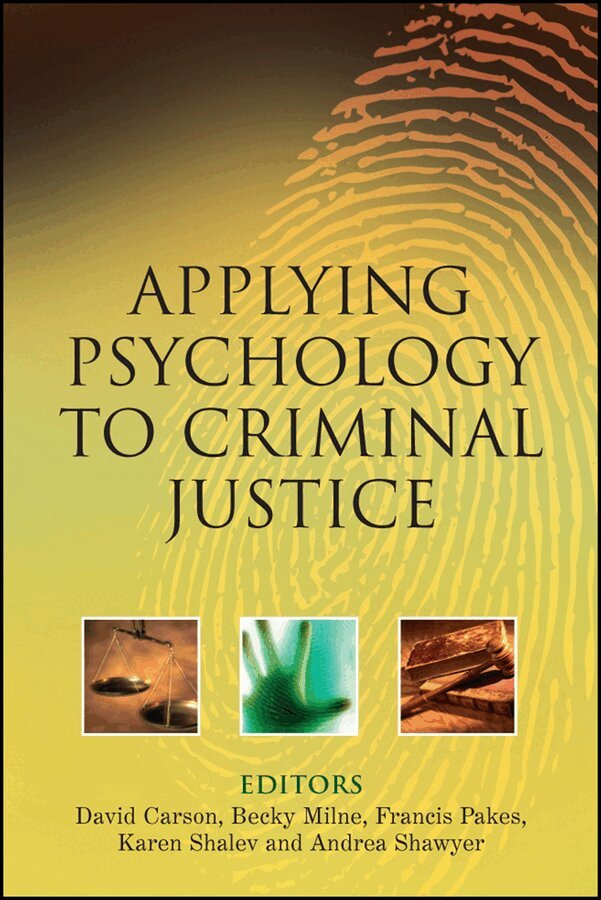
Few things should go together better than psychology and law - and few things are getting together less successfully. Edited by four psychologists and a lawyer, and drawing on contributions from Europe, the USA and Australia, Applying Psychology to Criminal Justice argues that psychology should be applied more widely within the criminal justice system. Contributors develop the case for successfully applying psychology to justice by providing a rich range of applicable examples for development now and in the future. Readers are encouraged to challenge the limited ambition and imagination of psychology and law by examining how insights in areas such as offender cognition and decision-making under pressure might inform future investigation and analysis.
Del 11 - Wiley Series in Psychology of Crime, Policing and Law
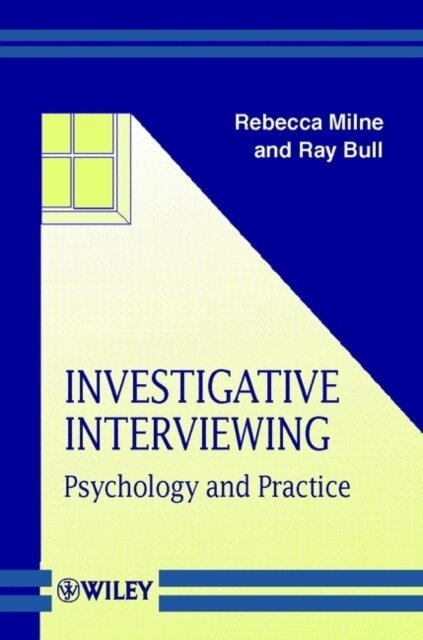
Investigative Interviewing
Psychology and Practice
Häftad, Engelska, 1999
521 kr
Tillfälligt slut
Well-informed and skilled interviewing is a key factor in dealingwith suspects, victims and witnesses. Experienced police andinvestigators know this from their own practice, and there is now asubstantial body of research and theory in psychology whichsupports this practice and can guide both training and thedevelopment of investigative work. The purpose of this book is toprovide a concise and clearly written guide to the psychologicalconcepts and research-based knowledge that can support and guideinvestigative interviewing. It deals in particular with:* good basic practice and methods for investigativeinterviewing* how to deal with false confessions and unreliable or incompletewitness information* the special problems of interviewing children and othervulnerable people* the process of interviewing suspects, victims, witnesses,complainants and colleaguesThis book will be of interest and value to a wide range ofprofessionals involved in training and practice in the police orother agencies, as well as social workers,lawyers, psychologistsand psychiatrists involved in forensic work. "The strength of thisbook lies in its relevance for both practice and research ininvestigative interviewing, not only in Britain butinternationally. Based on psychological theory and research, itprovides practitioners with a wealth of information and specificguidelines to help improve their interviewing skills. Researchersare challenged to address some of the, as yet, unansweredquestions." Janet Jackson, Netherlands Institute for the Study ofCriminality and Law Enforcement, Leiden, The Netherlands This bookis published in the Wiley Series in the Psychology of Crime,Policing and Law Series Editors: professor Professor Graham DaviesUniversity of Leicester, UK, and Professor Ray Bull University ofPortsmouth, UK
2 253 kr
Kommande
Miscarriages of justice and their causes are an endemic part of criminal justice systems the world over. This book offers a broad and systematic introduction to the study of miscarriages of justice by defining them and examining the dimensions, forms, and scale of the problem. The work examines the causes in detail with reference to key cases while also exploring official and unofficial responses. It presents an evaluation of varied perspectives on recognising and rectifying miscarriages of justice, and considers debates concerning Innocence projects, family campaigns and technical fault in the justice process versus innocence as desirable mechanisms for scrutinising justice flaws. The book’s discussion of how specific cases and campaigns have acted as drivers for change in relation to policy, practice and legislation aims to minimize future miscarriages of justice. The final chapters of the book apply a comparative approach, comparing the experiences of England and Wales to those of the United States, Canada, Australia and New Zealand and France, thus providing an international perspective on the subject.This book will be an essential reference for students, researchers, practitioners and policy-makers working in the area of criminal justice.
558 kr
Kommande
Miscarriages of justice and their causes are an endemic part of criminal justice systems the world over. This book offers a broad and systematic introduction to the study of miscarriages of justice by defining them and examining the dimensions, forms, and scale of the problem. The work examines the causes in detail with reference to key cases while also exploring official and unofficial responses. It presents an evaluation of varied perspectives on recognising and rectifying miscarriages of justice, and considers debates concerning Innocence projects, family campaigns and technical fault in the justice process versus innocence as desirable mechanisms for scrutinising justice flaws. The book’s discussion of how specific cases and campaigns have acted as drivers for change in relation to policy, practice and legislation aims to minimize future miscarriages of justice. The final chapters of the book apply a comparative approach, comparing the experiences of England and Wales to those of the United States, Canada, Australia and New Zealand and France, thus providing an international perspective on the subject.This book will be an essential reference for students, researchers, practitioners and policy-makers working in the area of criminal justice.
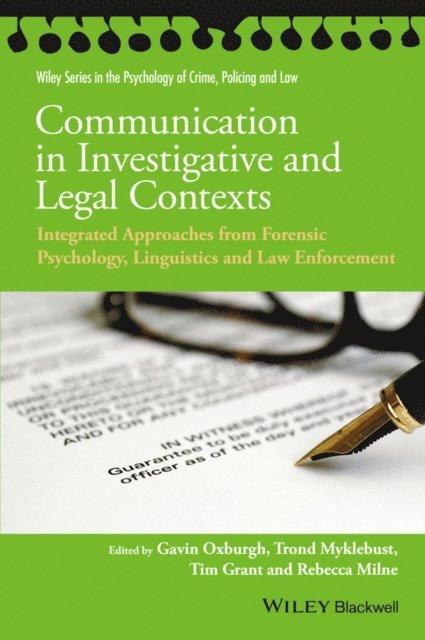
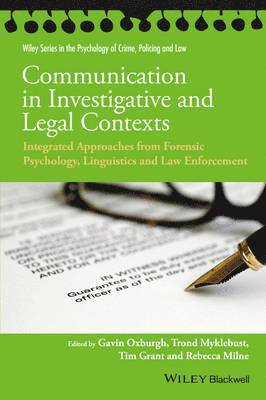
Communication in Investigative and Legal Contexts
Integrated Approaches from Forensic Psychology, Linguistics and Law Enforcement
Häftad, Engelska, 2015
514 kr
Skickas inom 7-10 vardagar
Communication in Investigative and Legal ContextsDespite a number of research studies, there remain significant differences of opinion among psychologists, linguists and other practitioners on how best to describe particular types of questions and communicate most effectively in forensic contexts. Communication in Investigative and Legal Contexts brings clarity to the subject by providing readers with in-depth coverage of the complex area of communication in forensic settings, for example during investigative interviewing of victims, witnesses and suspects/high-interest groups, during discourse in courtrooms, and via legal intermediaries and interpreters. Drawing on knowledge from forensic psychology, linguistics and law enforcement worldwide, the text is unique in bridging the gap between these fields in a definitive guide to best practice, with chapters written by teams bringing together expertise and specialties from each field. Part of the Wiley Series in the Psychology of Crime, Policing and Law, the book is also linked to the International Investigative Interviewing Research Group (iIIRG), a worldwide network of interviewing professionals working with international bodies committed to improving investigative interviewing and ensuring all improvements are underpinned by a robust evidence base. Contributors are sourced from North America, Europe, and Asia Pacific, ensuring International relevance.
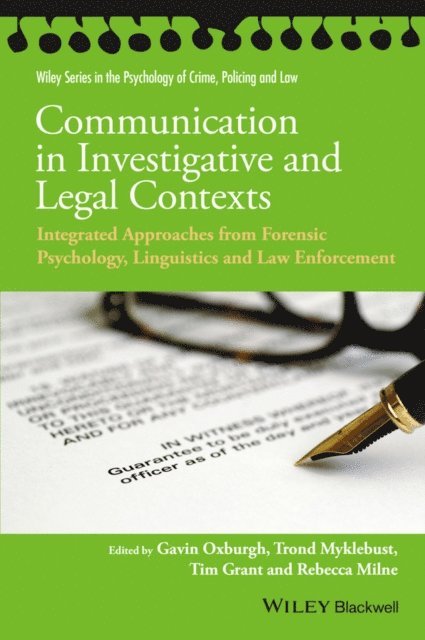
Communication in Investigative and Legal Contexts
Integrated Approaches from Forensic Psychology, Linguistics and Law Enforcement
Inbunden, Engelska, 2015
1 095 kr
Skickas inom 7-10 vardagar
Communication in Investigative and Legal ContextsDespite a number of research studies, there remain significant differences of opinion among psychologists, linguists and other practitioners on how best to describe particular types of questions and communicate most effectively in forensic contexts. Communication in Investigative and Legal Contexts brings clarity to the subject by providing readers with in-depth coverage of the complex area of communication in forensic settings, for example during investigative interviewing of victims, witnesses and suspects/high-interest groups, during discourse in courtrooms, and via legal intermediaries and interpreters. Drawing on knowledge from forensic psychology, linguistics and law enforcement worldwide, the text is unique in bridging the gap between these fields in a definitive guide to best practice, with chapters written by teams bringing together expertise and specialties from each field. Part of the Wiley Series in the Psychology of Crime, Policing and Law, the book is also linked to the International Investigative Interviewing Research Group (iIIRG), a worldwide network of interviewing professionals working with international bodies committed to improving investigative interviewing and ensuring all improvements are underpinned by a robust evidence base. Contributors are sourced from North America, Europe, and Asia Pacific, ensuring International relevance.
641 kr
Skickas inom 7-10 vardagar
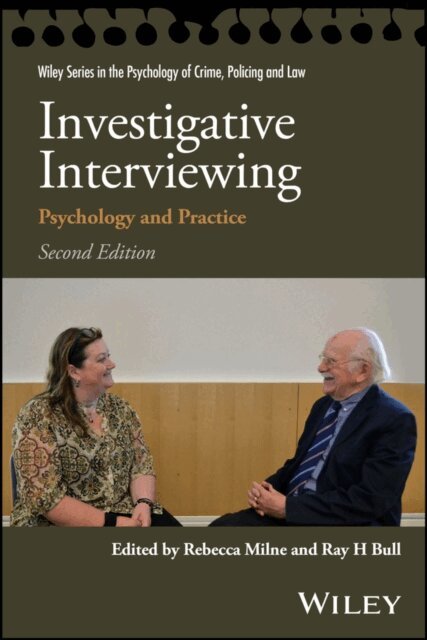
“Professors Milne and Bull have produced an updated magnus opus of the science of investigative interviewing. It is not only an indispensable substitute for the cruelty of torture and coercion in solving crime, as this volume demonstrates, it is also a much more effective way of establishing the truth and assigning responsibility, which is the only legitimate object of criminal investigations.”—JUAN E. MENDEZ, Former UN Special Rapporteur on Torture (2010-2016) “Investigative Interviewing: Psychology and Practice (1999) was nothing short of the clearest, most comprehensive approach on how to effectively interview in a criminal context while adhering to the highest possible ethical principles. Milne and Bull are back with a new edition of their landmark text, updating it to include, as contributors, many of the scholars who have been influenced by the original. This edition is sure to inspire another generation of practitioners and researchers to pursue truth and justice in investigative interviews.”—CHRISTOPHER E. KELLY, PhD, Professor of Criminal Justice, Saint Joseph’s University (USA), Co-Director, International Investigative Interviewing Research Group “This second edition of Investigative Interviewing: Psychology and Practice is a rare achievement. The Editors have brought together a stellar group of contributors to create more than a textbook: it’s a bridge between research and the realities of investigative work. This is a vital resource for anyone committed to ethical and effective investigations: one that informs, challenges and ultimately helps improve the way investigations are conducted.”—PAULO BARBOSA MARQUES, Inspector, Polícia Judiciária Become a well-informed and skilled investigative interviewer In the newly revised second edition of Investigative Interviewing: Psychology and Practice, a team of distinguished forensic psychologists and practitioners deliver an up-to-date and practical guide to the psychological concepts and evidence-based research that underpin and inform investigative interviewing. The editors have included works that examine the foundational skills and processes that make up the ethical interviewing of witnesses, victims, and those suspected of crime. Each chapter is written by a group of contributors who are leaders in their field. Readers will also find: A thorough introduction to the principles of memory formation and their implications for investigative interviewingComprehensive explorations of the cognitive interview, and examination concerning how to help those who are deemed vulnerable, with complex needs, to give reliable informationPractical discussions of how to manage conversations, detect truth/deceit, and develop rapport-based interpersonal techniquesFulsome treatments of how to convince members of an investigative organisation to adopt the techniques and strategies discussed in the book.Perfect for aspiring and practicing professionals engaged in the interviewing of participants in the criminal justice and investigation processes, Investigative Interviewing: Psychology and Practice will also benefit solicitors, barristers, social workers, and judges with an interest in the art and science of interviewing.
1 921 kr
Skickas inom 10-15 vardagar
The contribution of psychological research to the prevention of miscarriages of justice and the development of effective investigative techniques is now established to a point where law enforcement agencies in numerous countries either employ psychologists as part of their staff, or work in cooperation with academic institutions. The application of psychology to investigation is particularly effective when academics and practitioners work together. This book brings together leading experts to discuss the application of psychology to criminal investigation.This book offers an overview of models of investigation from a psychological and practical view point, covering topics such as investigative decision making, the presentation of evidence, witness testimony, the detection of deception, interviewing suspects and evidence-based police training. It is essential reading for students, researchers and practitioners engaged with police practice, investigation and forensic psychology.
163 kr
Skickas inom 5-8 vardagar
1 111 kr
Skickas inom 7-10 vardagar
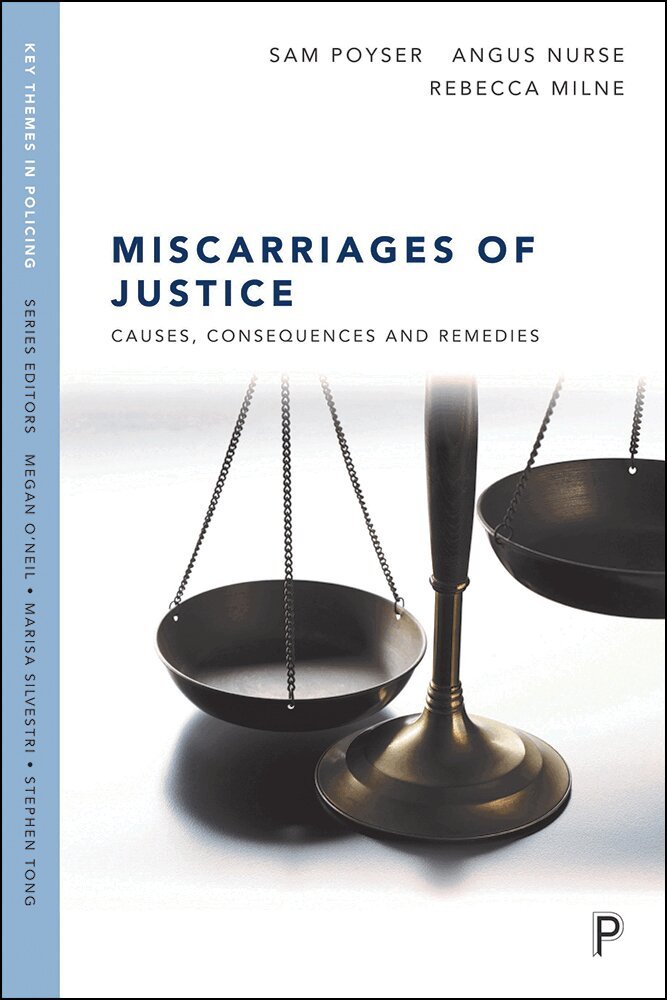
Miscarriages of justice occur far more frequently than we realise and have the power to ruin people’s lives. It is crucial for criminal justice practitioners to understand them, given significant developments in recent years in law and police codes of practice.This text, part of the Key themes in policing textbook series, is written by three highly experienced authors with expertise in the fields of criminal investigation, forensic psychology and law and provides an up-to-date and comprehensive analysis of miscarriages of justice. They highlight difficulties in defining miscarriages of justice, examine their dimensions, forms, scale and impact and explore key cases and their causes. Discussing informal and formal remedies against miscarriages of justice, such as campaigns and the role of the media and the Court of Appeal and the Criminal Cases Review Commission (CCRC), they highlight criticism of the activities and decision-making of the latter and examine changes to police investigation in this area.Designed to incorporate ‘evidence-based policing’, each chapter provides questions reflecting on the issues raised in the text and suggestions for further reading.
349 kr
Skickas inom 7-10 vardagar
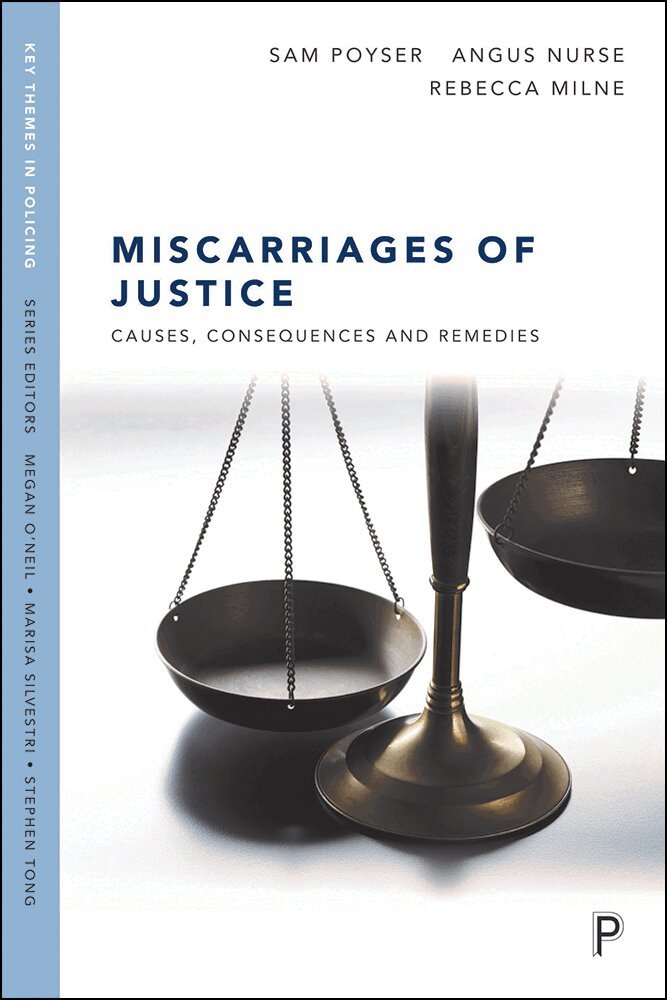
Miscarriages of justice occur far more frequently than we realise and have the power to ruin people’s lives. It is crucial for criminal justice practitioners to understand them, given significant developments in recent years in law and police codes of practice.This text, part of the Key themes in policing textbook series, is written by three highly experienced authors with expertise in the fields of criminal investigation, forensic psychology and law and provides an up-to-date and comprehensive analysis of miscarriages of justice. They highlight difficulties in defining miscarriages of justice, examine their dimensions, forms, scale and impact and explore key cases and their causes. Discussing informal and formal remedies against miscarriages of justice, such as campaigns and the role of the media and the Court of Appeal and the Criminal Cases Review Commission (CCRC), they highlight criticism of the activities and decision-making of the latter and examine changes to police investigation in this area.Designed to incorporate ‘evidence-based policing’, each chapter provides questions reflecting on the issues raised in the text and suggestions for further reading.