• Fri frakt över 249 kr
  • •
  • Snabba leveranser
  • •
  • Billiga böcker
Kundservice

Du är på sajten för privatpersoner.

Företag, bibliotek eller offentlig verksamhet?

Du handlar på classic.bokus.com, där alla dina funktioner finns intakta.
Till classic.bokus.com
Bokus logotyp. Gå till startsidan.
  • Erbjudanden
  • Nyheter
  • Student
  • Topplistor
  • Barn & ungdom
  • Bokus Play
  • E-böcker
  • Pocketböcker
  • Spel & pussel

10% rabatt på allt med kod: NYSTART10 →

Sidfot

Mina sidor

    Hjälp

    • Kundservice
    • Vanliga frågor och svar
    • Frakt och leverans
    • Retur vid ångerrätt
    • Reklamera vara
    • Betalning
    • Köpvillkor
    • Allmänna villkor
    • Information om webbplatsens tillgänglighet

    Om Bokus

    • Om oss
    • Pressrum
    • För studenter
    • För företag
    • För bibliotek och offentlig verksamhet
    • För leverantörer
    • Hållbarhet

    Populärt

    • Aktuella erbjudanden
    • Presentkort
    • Studentlitteratur
    • Nya böcker
    • Topplistor
    • Signerade böcker
    • Engelska böcker

    Inspiration

    • Boktips
    • BookTok
    • Populära bokserier
    • Barnbokskaraktärer
    • Populära författare
    Logotyp för Bokus
    Följ oss på Facebook (extern länk)Följ oss på Instagram (extern länk)Följ oss på YouTube (extern länk)Följ oss på TikTok (extern länk)
    bokus @ CookiesAnpassa cookiesIntegritetspolicyKöpvillkor
    Till Citymail hemsida (extern länk)Till Budbee hemsida (extern länk)Till Postnord hemsida (extern länk)Till Schenker hemsida (extern länk)Till Early Bird hemsida (extern länk)Till Walleys hemsida (extern länk)
    1. Juridik
    2. Särskilda rättsområden
    3. Straffrätt: process och brott
    4. Straffprocessrätt

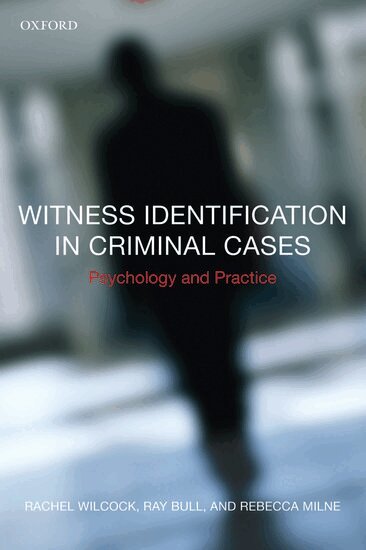
    Witness Identification in Criminal Cases

    Psychology and Practice

    AvRachel Wilcock,Ray Bull

    Häftad, Engelska, 2008

    977 kr

    Beställningsvara. Skickas inom 5-8 vardagar. Fri frakt över 249 kr.

    Beskrivning

    Witness Identification provides an up-to-date review on identifying crime perpetrators based on psychological theory and research. Applying psychology to the area of criminal identification, the authors make reference to relevant legislation such as the PACE Codes of Practice as they explore the psychology involved in identification.This insightful and practical title will inform anyone interested in this area. The authors outline the psychological information relevant to constructing and delivering identification parades, such as the point of view of the suspect and witness or victim, how witnesses remember, and the factors likely to affect the accuracy of person descriptions. They also consider the effects of stereotypes and expectancies on identification performance, as well as a discussion of the technologies involved in identification procedure. The book includes a chapter on how to assist people who are deemed vulnerable in order to elicit accurate identification evidence. It also looks at other methods of identification in addition to face identification, such as methods to identify a person's voice and gait.By providing an overview of legislation and guidelines to conducting identity parades alongside a psychological underpinning, this book is a valuable resource to anyone whose work involves identification procedures, as well as students of psychology, law and police studies.

    Produktinformation

    • Utgivningsdatum:2008-09-11
    • Mått:156 x 233 x 13 mm
    • Vikt:356 g
    • Format:Häftad
    • Språk:Engelska
    • Antal sidor:222
    • Förlag:OUP OXFORD
    • ISBN:9780199216932

    Utforska kategorier

    • Straffprocessrätt inom Juridik
    • Arbetspsykologi inom Psykologi och pedagogik
    • Brottslighet och kriminologi inom Samhälle och politik

    Mer om författaren

    Rachel Wilcock is a Senior Lecturer at London South Bank University and teaches in the area of forensic psychology. Eyewitness identification is her major research interest and she works with a number of police forces across England and Wales. She has published widely in several peer reviewed journals and presented at a number of national and international conferences on the subject of identification procedures. Ray Bull is Professor of Forensic Psychology at the University of Leicester. His major research topic is police investigative procedures. Professor Bull was part of the team commissioned by the Home Office to write Achieving Best Evidence in Criminal Proceedings: Guidance for Vulnerable or Intimidated Witnesses, Including Children (ABE). Professor Bull has advised a number of police forces on investigative procedures, and has testified as an Expert Witness in a number of trials, several of which involved witness identification. In 2005 he received a Commendation from the London Metropolitan Police for his assistance in a complex rape investigation. He has authored and co-authored a large number of papers in research journals and has co-authored and co-edited many books including Investigative Interviewing: Psychology and Practice.Rebecca Milne is a Principal Lecturer at the Institute of Criminal Justice Studies, University of Portsmouth. She has trained a wide range of professions including police officers in witness interviewing issues, and has performed consultancy work in the UK and abroad. Dr Milne is the Academic Lead of the ACPO Investigative Interviewing Strategic Steering Group and is chair of the associated research sub-committee. She was part the team who wrote a national training package to support Achieving Best Evidence and is currently part of team writing the Achieving Best Evidence: Part 2 document. She is a chartered Forensic Psychologist and an Associate Fellow of the British Psychological Society and an Associate Editor of the International Journal of Police Science and Management.

    Innehållsförteckning

    • 1. Introduction ; 2. Perception, memory, and recognition involved in witness identification ; 3. Giving person descriptions and the effect of this on the identification process ; 4. Factors Affecting the Accuracy of Eyewitness Identifications ; 5. Identification by voice or by gait ; 6. The effects of expectations and stereotypes on identification ; 7. Recommendations for conducting identification parades ; 8. Assisting vulnerable witnesses ; 9. New innovations: Applying psychological science to the real world ; 10. Where we are now, and where do we want to go?