George A. Reisch – författare
Visar alla böcker från författaren George A. Reisch. Handla med fri frakt och snabb leverans.
19 produkter
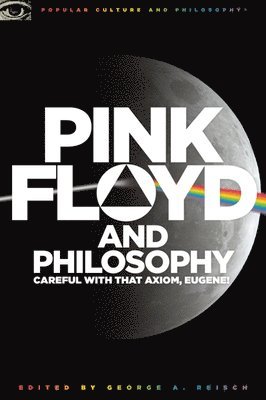
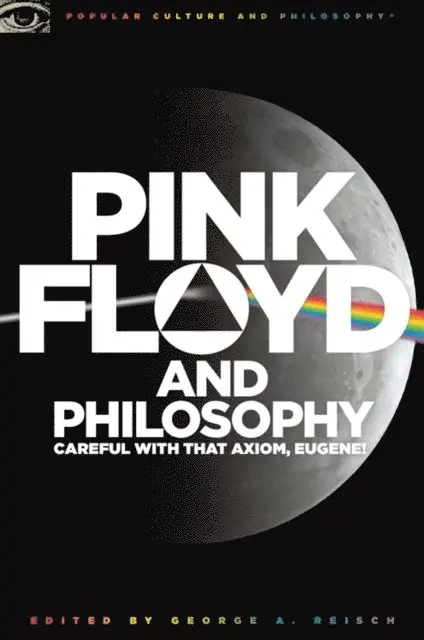
Pink Floyd and Philosophy
Careful with that Axiom, Eugene!
Häftad, 2008
282 kr
Lägg i varukorg
Pink Floyd’s sound and light shows in the 1960s defined psychedelia, but their later recordings combined rock, orchestral music, literature, and philosophy. Dark Side of the Moon and The Wall ignored pop music’s usual strictures to focus on themes of madness, despair, brutality, and alienation. …
How the Cold War Transformed Philosophy of Science
To the Icy Slopes of Logic
Häftad, 2005
716 kr
Lägg i varukorg
This intriguing and ground-breaking book is the first in-depth study of the development of philosophy of science in the United States during the Cold War. It documents the political vitality of logical empiricism and Otto Neurath's Unity of Science Movement when these projects emigrated to the US …
How the Cold War Transformed Philosophy of Science
To the Icy Slopes of Logic
Inbunden, 2005
1482 kr
Lägg i varukorg
This intriguing and ground-breaking book is the first in-depth study of the development of philosophy of science in the United States during the Cold War. It documents the political vitality of logical empiricism and Otto Neurath's Unity of Science Movement when these projects emigrated to the US …
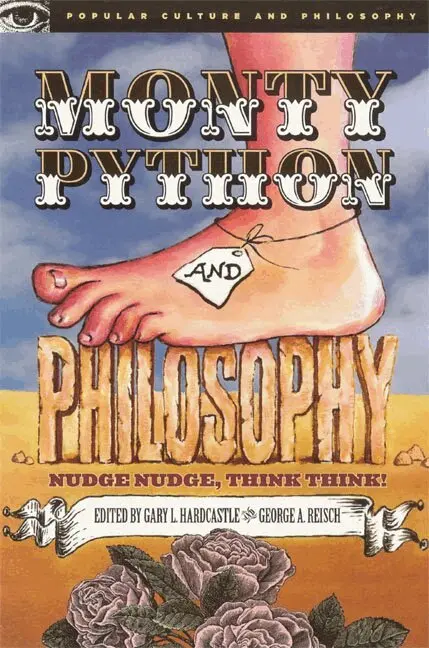
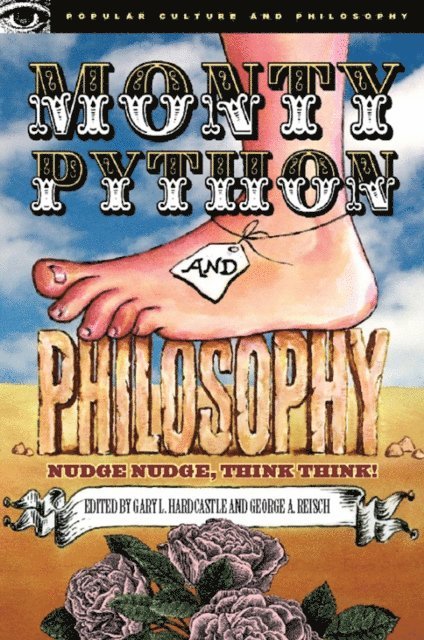
Monty Python and Philosophy
Nudge Nudge, Think Think!
Av Gary L. Hardcastle, George A. Reisch m. fl.
Häftad, 2006
282 kr
Lägg i varukorg
From the 1970s cult TV show, Monty Python’s Flying Circus, to the current hit musical Spamalot, the Monty Python comedy troupe has been at the center of popular culture and entertainment. The Pythons John Cleese, Graham Chapman, Eric Idle, Terry Jones, Michael Palin, and Terry Gilliam are …
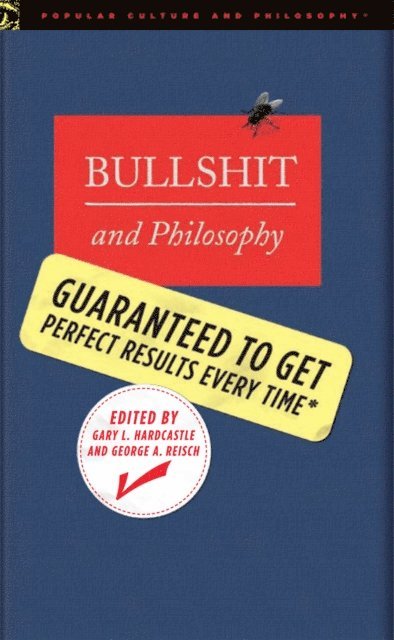
Bullshit and Philosophy
Guaranteed to Get Perfect Results Every Time
Av Gary L. Hardcastle, George A. Reisch
Häftad, 2006
176 kr
Lägg i varukorg
Popular interest in bullshit and its near relative, truthiness is at an all-time high, but the subject has a rich philosophical history, with Hobbes, Locke, Hume, and Kant all weighing in on the matter. Here, contemporary philosophers reflect on bullshit from epistemological, ethical, …
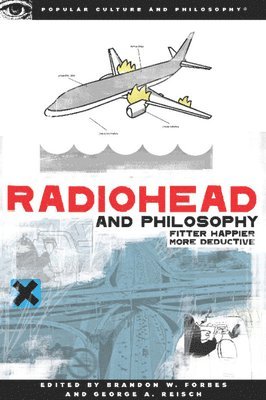
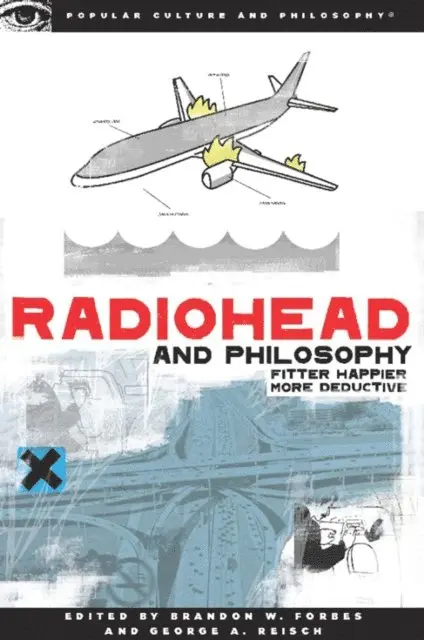
Radiohead and Philosophy
Fitter Happier More Deductive
Av Brandon W. Forbes, George A. Reisch
Häftad, 2009
282 kr
Lägg i varukorg
Since their breakthrough hit "Creep" in 1993, Radiohead has continued to make waves throughout popular and political culture with its views about the Bush presidency (its 2003 album was titled Hail to the Thief), its anti-corporatism, its pioneering efforts to produce ecologically sound road tours, …
Monty Python and Philosophy
Nudge Nudge, Think Think!
Av William Irwin, George A. Reisch m. fl.
E-bok, 2006
239 kr
Lägg i varukorg
From the 1970s cult TV show, Monty Python’s Flying Circus, to the current hit musical Spamalot, the Monty Python comedy troupe has been at the center of popular culture and entertainment. The Pythons John Cleese, Graham Chapman, Eric Idle, Terry Jones, Michael Palin, and Terry Gilliam are …
Radiohead and Philosophy
Fitter Happier More Deductive
Av George A. Reisch, Brandon W. Forbes
E-bok, 2009
239 kr
Lägg i varukorg
Since their breakthrough hit "Creep" in 1993, Radiohead has continued to make waves throughout popular and political culture with its views about the Bush presidency (its 2003 album was titled Hail to the Thief ), its anti-corporatism, its pioneering efforts to produce ecologically sound road …
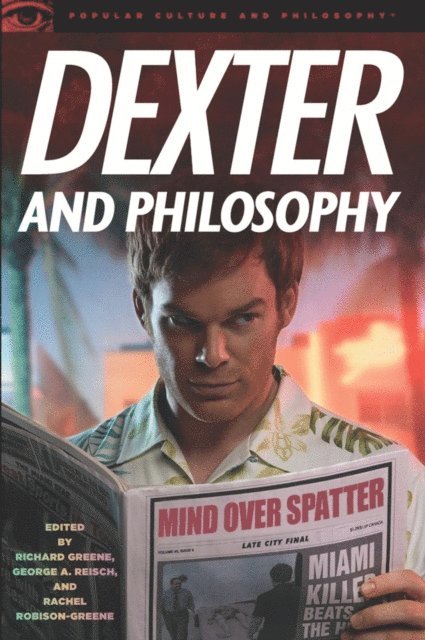
Dexter and Philosophy
Mind over Spatter
Av Richard Greene, George A. Reisch m. fl.
Häftad, 2011
282 kr
Lägg i varukorg
What explains the huge popular following for Dexter, currently the most-watched show on cable, which sympathetically depicts a serial killer driven by a cruel compulsion to brutally slay one victim after another? Although Dexter Morgan kills only killers, he is not a vigilante animated by a sense …
Dexter and Philosophy
Mind over Spatter
Av Rachel Robison, George A. Reisch m. fl.
E-bok, 2011
212 kr
Lägg i varukorg
What explains the huge popular following for Dexter , currently the most-watched show on cable, which sympathetically depicts a serial killer driven by a cruel compulsion to brutally slay one victim after another? Although Dexter Morgan kills only killers, he is not a vigilante animated by a sense …
Pink Floyd and Philosophy
Careful with that Axiom, Eugene!
E-bok, 2011
231 kr
Lägg i varukorg
With their early experiments in psychedelic rock music in the 1960s, and their epic recordings of the 1970s and ''80s, Pink Floyd became one of the most influential and recognizable rock bands in history. As "The Pink Floyd Sound," the band created sound and light shows that defined psychedelia in …
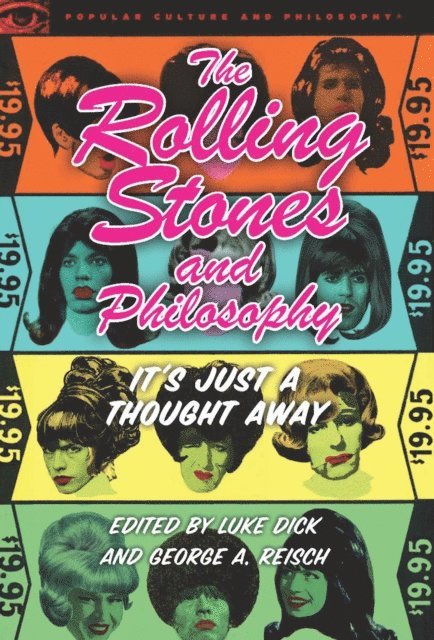
Rolling Stones and Philosophy
It's Just a Thought Away
Av Luke Dick, George A. Reisch
Häftad, 2012
396 kr
Lägg i varukorg
From their commanding role in the so-called British Invasion of the early 1960s to their status as the elder statesmen (and British Knight) of rock and roll, the Stones have become more than an evanescent phenomenon in pop culture. They have become a touchstone not only for the history of our …
Rolling Stones and Philosophy
It''s Just a Thought Away
Av George A. Reisch, Luke Dick
E-bok, 2011
253 kr
Lägg i varukorg
From their commanding role in the so-called British Invasion of the early 1960s to their status as the elder statesmen (and British Knight) of rock and roll, the Stones have become more than an evanescent phenomenon in pop culture. They have become a touchstone not only for the history of our …
Bullshit and Philosophy
Guaranteed to Get Perfect Results Every Time
Av George A. Reisch, Gary L. Hardcastle
E-bok, 2011
212 kr
Lägg i varukorg
Popular interest in bullshit — and its near relative, truthiness — is at an all-time high, but the subject has a rich philosophical history, with Hobbes, Locke, Hume, and Kant all weighing in on the matter. Here, contemporary philosophers reflect on bullshit from epistemological, ethical, …
Human Knowledge
A Classic Statement of Logical Empiricism
Av Eino Kaila, George A. Reisch m. fl.
Häftad, 2014
507 kr
Lägg i varukorg
Finnish philosopher Eino Kaila wrote a classic statement of logical empiricism. Having experienced the foundational debates of the Vienna Circle in 1929, Kaila was a keen follower of the further developments of the Circle. His synoptic presentation and analysis of the basic themes, or "theses," of …
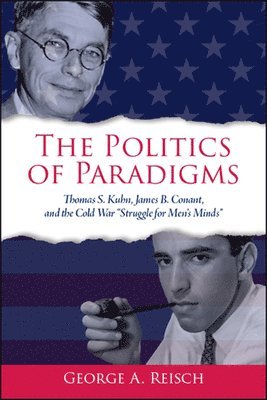
Politics of Paradigms
Thomas S. Kuhn, James B. Conant, and the Cold War "Struggle for Men’s Minds"
Häftad, 2020
667 kr
Lägg i varukorg
Uncovers long-ignored political themes—ideology, propaganda, mind-control, and Orwellian history—at work within the pages of The Structure of Scientific Revolutions.The Politics of Paradigms shows that America's most famous and influential book about science, The Structure of Scientific Revolutions …
Humanistic Background of Science
Av Philipp Frank, George A. Reisch m. fl.
Inbunden, 2021
1246 kr
Lägg i varukorg
The once-lost introduction to the philosophy of science by Philipp Frank (1884-1966), a leading member of the Vienna circle of philosophers and biographer of Albert Einstein.Philipp Frank (1884–1966) was an influential philosopher of science, public intellectual, and Harvard educator whose last …
Humanistic Background of Science
Av Philipp Frank, George A. Reisch m. fl.
Häftad, 2022
634 kr
Lägg i varukorg
The once-lost introduction to the philosophy of science by Philipp Frank (1884-1966), a leading member of the Vienna circle of philosophers and biographer of Albert Einstein.Philipp Frank (1884–1966) was an influential philosopher of science, public intellectual, and Harvard educator whose last …
Politics of Paradigms
Thomas S. Kuhn, James B. Conant, and the Cold War "Struggle for Men’s Minds"
Inbunden, 2019
1111 kr
Tillfälligt slut
Uncovers long-ignored political themes—ideology, propaganda, mind-control, and Orwellian history—at work within the pages of The Structure of Scientific Revolutions.The Politics of Paradigms shows that America's most famous and influential book about science, The Structure of Scientific Revolutions …