George Engelhard, Jr. - Böcker
Visar alla böcker från författaren George Engelhard, Jr.. Handla med fri frakt och snabb leverans.
9 produkter
9 produkter
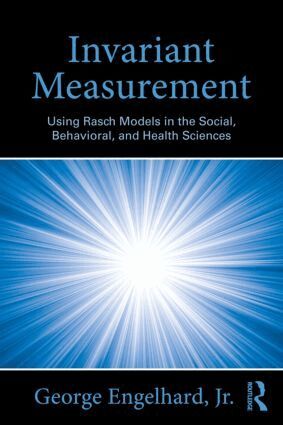
Invariant Measurement
Using Rasch Models in the Social, Behavioral, and Health Sciences
Inbunden, Engelska, 2012
1 482 kr
Tillfälligt slut
This introductory text describes the principles of invariant measurement, how invariant measurement can be achieved with Rasch models, and how to use invariant measurement to solve measurement problems in the social, behavioral, and health sciences. Rasch models are used throughout but a comparison of Rasch models to other item response theory (IRT) models is also provided. Written with students in mind, the manuscript was class tested to help maximize accessibility. Chapters open with an introduction and close with a summary and discussion. Numerous examples and exercises demonstrate the main issues addressed in each chapter. Key terms are defined when first introduced and in an end-of-text glossary. All of the book’s analyses were conducted with the Facets program. The data sets used in the book, sample syntax files for running the Facets program, Excel files for creating item and person response functions, links to related websites, and other material are available at www.GeorgeEngelhard.com. Highlights include:A strong philosophical and methodological approach to measurement in the human sciencesDemonstrations of how measurement problems can be addressed using invariant measurementPractical illustrations of how to create and evaluate scales using invariant measurementA history of measurement based on test-score and scaling traditionsPreviously unpublished work in analyzing rating data, the detection and measurement of rater errors, and the evaluation of rater accuracyA review of estimation methods, model-data fit, indices used to evaluate the quality of rater-mediated assessments, rater error and bias, and rater accuracy.Intended as a supplementary text for graduate or advanced undergraduate courses on measurement or test theory, item response theory, scaling theory, psychometrics, advanced measurement techniques, research methods, or evaluation research taught in education, psychology, and the social and health sciences, the book also appeals to practitioners and researchers in these fields who develop or use scales and instruments. Only a basic mathematical level is required including a basic course in statistic.
Invariant Measurement
Using Rasch Models in the Social, Behavioral, and Health Sciences
Häftad, Engelska, 2012
532 kr
Tillfälligt slut
This introductory text describes the principles of invariant measurement, how invariant measurement can be achieved with Rasch models, and how to use invariant measurement to solve measurement problems in the social, behavioral, and health sciences. Rasch models are used throughout but a comparison of Rasch models to other item response theory (IRT) models is also provided. Written with students in mind, the manuscript was class tested to help maximize accessibility. Chapters open with an introduction and close with a summary and discussion. Numerous examples and exercises demonstrate the main issues addressed in each chapter. Key terms are defined when first introduced and in an end-of-text glossary. All of the book’s analyses were conducted with the Facets program. The data sets used in the book, sample syntax files for running the Facets program, Excel files for creating item and person response functions, links to related websites, and other material are available at www.GeorgeEngelhard.com. Highlights include:A strong philosophical and methodological approach to measurement in the human sciencesDemonstrations of how measurement problems can be addressed using invariant measurementPractical illustrations of how to create and evaluate scales using invariant measurementA history of measurement based on test-score and scaling traditionsPreviously unpublished work in analyzing rating data, the detection and measurement of rater errors, and the evaluation of rater accuracyA review of estimation methods, model-data fit, indices used to evaluate the quality of rater-mediated assessments, rater error and bias, and rater accuracy.Intended as a supplementary text for graduate or advanced undergraduate courses on measurement or test theory, item response theory, scaling theory, psychometrics, advanced measurement techniques, research methods, or evaluation research taught in education, psychology, and the social and health sciences, the book also appeals to practitioners and researchers in these fields who develop or use scales and instruments. Only a basic mathematical level is required including a basic course in statistic.
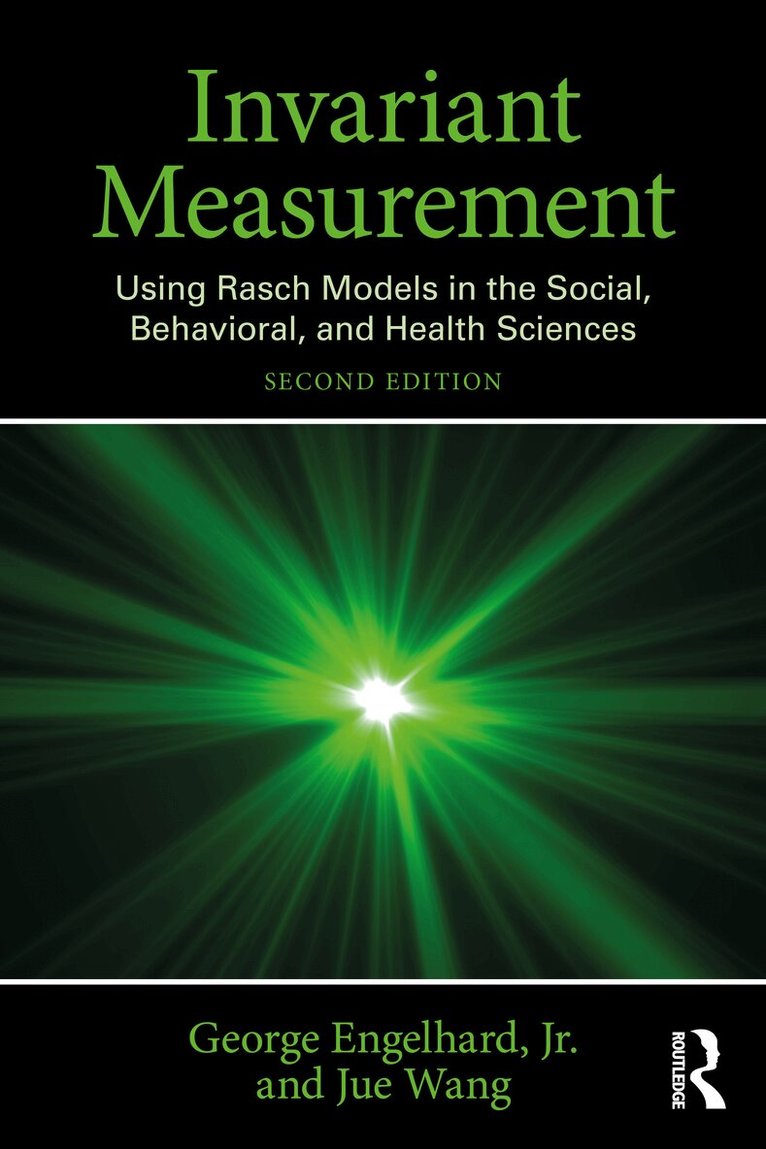
Invariant Measurement
Using Rasch Models in the Social, Behavioral, and Health Sciences
Häftad, Engelska, 2024
789 kr
Skickas inom 10-15 vardagar
This is the second edition of an introductory text that describes the principles of invariant measurement; how invariant measurement can be achieved using Rasch measurement theory; and how to use invariant measurement to solve a variety of measurement problems in the social, behavioral, and health sciences. Rasch models are used throughout the text, but brief comparisons of Rasch models to other item response theory (IRT) models are also provided.Written with students in mind, this new edition was class-tested to help maximize accessibility. Chapters open with an introduction and close with a discussion and summary. All chapters have been updated from the first edition, and a new chapter on explanatory Rasch models has been added. Features include numerous examples and exercises to demonstrate the main issues addressed in each chapter. Key terms are defined when first introduced and included in a helpful end-of-text glossary.This book also benefits from online materials which include the data sets used in the book, sample syntax files for running the Facets program, Excel files for creating item and person response functions, and links to related websites.This book will act as a supplementary text for graduate or advanced undergraduate courses on measurement or test theory, IRT, scaling theory, psychometrics, advanced measurement techniques, research methods, or evaluation research taught in education, psychology, and other social and health sciences. It will also appeal to practitioners and researchers in these fields who develop or use scales and instruments. Only a basic mathematical level is required, including a basic course in statistics, ensuring it is an accessible resource for students and researchers alike.
Invariant Measurement
Using Rasch Models in the Social, Behavioral, and Health Sciences
Inbunden, Engelska, 2024
2 012 kr
Skickas inom 10-15 vardagar
This is the second edition of an introductory text that describes the principles of invariant measurement; how invariant measurement can be achieved using Rasch measurement theory; and how to use invariant measurement to solve a variety of measurement problems in the social, behavioral, and health sciences. Rasch models are used throughout the text, but brief comparisons of Rasch models to other item response theory (IRT) models are also provided.Written with students in mind, this new edition was class-tested to help maximize accessibility. Chapters open with an introduction and close with a discussion and summary. All chapters have been updated from the first edition, and a new chapter on explanatory Rasch models has been added. Features include numerous examples and exercises to demonstrate the main issues addressed in each chapter. Key terms are defined when first introduced and included in a helpful end-of-text glossary.This book also benefits from online materials which include the data sets used in the book, sample syntax files for running the Facets program, Excel files for creating item and person response functions, and links to related websites.This book will act as a supplementary text for graduate or advanced undergraduate courses on measurement or test theory, IRT, scaling theory, psychometrics, advanced measurement techniques, research methods, or evaluation research taught in education, psychology, and other social and health sciences. It will also appeal to practitioners and researchers in these fields who develop or use scales and instruments. Only a basic mathematical level is required, including a basic course in statistics, ensuring it is an accessible resource for students and researchers alike.
581 kr
Skickas inom 10-15 vardagar
980 kr
Skickas inom 10-15 vardagar
The chapters in this new volume describe original research concerned with both theory and practice in measurement. The material originated in presentations made at a conference that brings together practicing professionals and theoreticians in diverse areas of measurement and related fields. The first group of papers embody the most important aspect of objective measurement — its application to diverse contexts and purposes. The examples included concentrate on two types of situations: performance assessment and criterion-referenced testing. The specific contexts range from writing assessment, to assessment of the professional development of teachers, to high school physics. The second group of papers are focused on an area of great importance in assessment today: the modeling of raters and judges in an assessment context. The volume concludes with papers that explore the domain of theory in measurement, characterized by an innovative approach to model-building. Even though they are categorized as theory papers, most are based on the complicated and interesting problems that arise in quite specific contexts. As such, they represent some of the most original and exciting developments in the field of measurement today ranging from multidimensional measurement to graph theory and clustering techniques.This volume presents original research concerned with the practice of measurement, and the theory of measurement. The words in the title, objective measurement indicate that the chapters are all related to a particular approach to the philosophy and practice of measurement. By objective measurement, we mean that, in a situation where a certain class of stimuli (for example, items) are used to measure certain individuals.The chapters in this book originated in presentations made at the International Objective Measurement Workshop (IOMW) devoted to exploring the interface between theory and practice in measurement. Based on the complicated and interesting problems that arise in quite specific contexts, they represent some of the most original and exciting developments in the field of measurement today.
565 kr
Skickas inom 10-15 vardagar
The chapters in this new volume describe original research concerned with both theory and practice in measurement. The material originated in presentations made at a conference that brings together practicing professionals and theoreticians in diverse areas of measurement and related fields. The first group of papers embody the most important aspect of objective measurement — its application to diverse contexts and purposes. The examples included concentrate on two types of situations: performance assessment and criterion-referenced testing. The specific contexts range from writing assessment, to assessment of the professional development of teachers, to high school physics. The second group of papers are focused on an area of great importance in assessment today: the modeling of raters and judges in an assessment context. The volume concludes with papers that explore the domain of theory in measurement, characterized by an innovative approach to model-building. Even though they are categorized as theory papers, most are based on the complicated and interesting problems that arise in quite specific contexts. As such, they represent some of the most original and exciting developments in the field of measurement today ranging from multidimensional measurement to graph theory and clustering techniques.This volume presents original research concerned with the practice of measurement, and the theory of measurement. The words in the title, objective measurement indicate that the chapters are all related to a particular approach to the philosophy and practice of measurement. By objective measurement, we mean that, in a situation where a certain class of stimuli (for example, items) are used to measure certain individuals.The chapters in this book originated in presentations made at the International Objective Measurement Workshop (IOMW) devoted to exploring the interface between theory and practice in measurement. Based on the complicated and interesting problems that arise in quite specific contexts, they represent some of the most original and exciting developments in the field of measurement today.
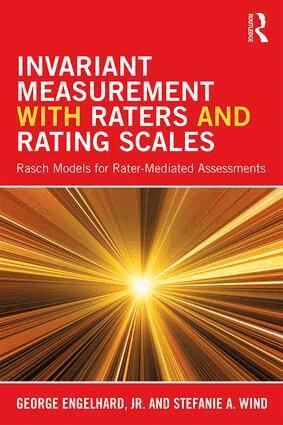
Invariant Measurement with Raters and Rating Scales
Rasch Models for Rater-Mediated Assessments
Inbunden, Engelska, 2017
2 426 kr
Skickas inom 10-15 vardagar
The purpose of this book is to present methods for developing, evaluating and maintaining rater-mediated assessment systems. Rater-mediated assessments involve ratings that are assigned by raters to persons responding to constructed-response items (e.g., written essays and teacher portfolios) and other types of performance assessments. This book addresses the following topics: (1) introduction to the principles of invariant measurement, (2) application of the principles of invariant measurement to rater-mediated assessments, (3) description of the lens model for rater judgments, (4) integration of principles of invariant measurement with the lens model of cognitive processes of raters, (5) illustration of substantive and psychometric issues related to rater-mediated assessments in terms of validity, reliability, and fairness, and (6) discussion of theoretical and practical issues related to rater-mediated assessment systems. Invariant measurement is fast becoming the dominant paradigm for assessment systems around the world, and this book provides an invaluable resource for graduate students, measurement practitioners, substantive theorists in the human sciences, and other individuals interested in invariant measurement when judgments are obtained with rating scales.
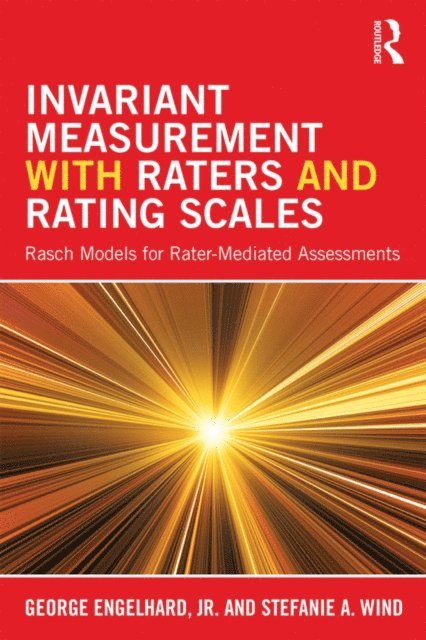
Invariant Measurement with Raters and Rating Scales
Rasch Models for Rater-Mediated Assessments
Häftad, Engelska, 2017
789 kr
Skickas inom 10-15 vardagar
The purpose of this book is to present methods for developing, evaluating and maintaining rater-mediated assessment systems. Rater-mediated assessments involve ratings that are assigned by raters to persons responding to constructed-response items (e.g., written essays and teacher portfolios) and other types of performance assessments. This book addresses the following topics: (1) introduction to the principles of invariant measurement, (2) application of the principles of invariant measurement to rater-mediated assessments, (3) description of the lens model for rater judgments, (4) integration of principles of invariant measurement with the lens model of cognitive processes of raters, (5) illustration of substantive and psychometric issues related to rater-mediated assessments in terms of validity, reliability, and fairness, and (6) discussion of theoretical and practical issues related to rater-mediated assessment systems. Invariant measurement is fast becoming the dominant paradigm for assessment systems around the world, and this book provides an invaluable resource for graduate students, measurement practitioners, substantive theorists in the human sciences, and other individuals interested in invariant measurement when judgments are obtained with rating scales.