Stefanie Wind – författare
945 kr
Skickas inom 10-15 vardagar
1 087 kr
Läs direkt efter köp
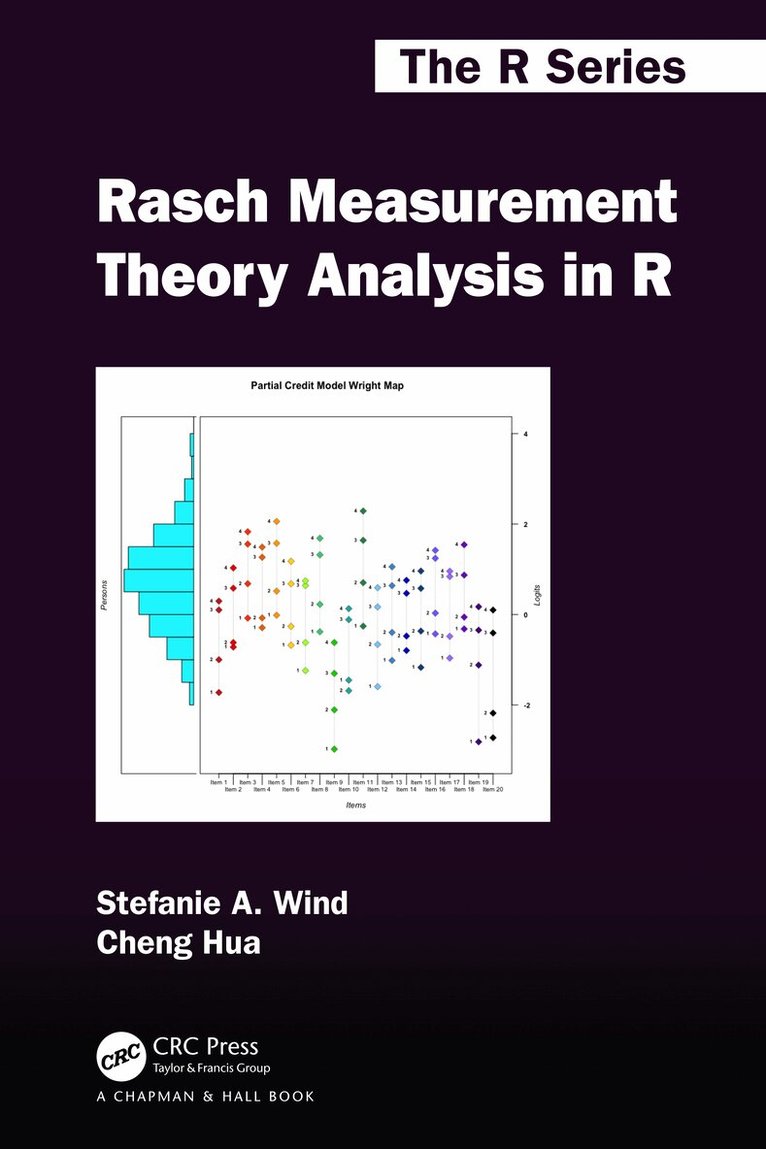
Rasch Measurement Theory Analysis in R provides researchers and practitioners with a step-by-step guide for conducting Rasch measurement theory analyses using R. It includes theoretical introductions to major Rasch measurement principles and techniques, demonstrations of analyses using several R packages that contain Rasch measurement functions, and sample interpretations of results.
Features:
Accessible to users with relatively little experience with R programming Reproducible data analysis examples that can be modified to accommodate users’ own data Accompanying e-book website with links to additional resources and R code updates as needed Features dichotomous and polytomous (rating scale) Rasch models that can be applied to data from a wide range of disciplinesThis book is designed for graduate students, researchers, and practitioners across the social, health, and behavioral sciences who have a basic familiarity with Rasch measurement theory and with R. Readers will learn how to use existing R packages to conduct a variety of analyses related to Rasch measurement theory, including evaluating data for adherence to measurement requirements, applying the dichotomous, Rating Scale, Partial Credit, and Many-Facet Rasch models, examining data for evidence of differential item functioning, and considering potential interpretations of results from such analyses.
1 087 kr
Läs direkt efter köp
Rasch Measurement Theory Analysis in R provides researchers and practitioners with a step-by-step guide for conducting Rasch measurement theory analyses using R. It includes theoretical introductions to major Rasch measurement principles and techniques, demonstrations of analyses using several R packages that contain Rasch measurement functions, and sample interpretations of results.
Features:
Accessible to users with relatively little experience with R programming Reproducible data analysis examples that can be modified to accommodate users’ own data Accompanying e-book website with links to additional resources and R code updates as needed Features dichotomous and polytomous (rating scale) Rasch models that can be applied to data from a wide range of disciplinesThis book is designed for graduate students, researchers, and practitioners across the social, health, and behavioral sciences who have a basic familiarity with Rasch measurement theory and with R. Readers will learn how to use existing R packages to conduct a variety of analyses related to Rasch measurement theory, including evaluating data for adherence to measurement requirements, applying the dichotomous, Rating Scale, Partial Credit, and Many-Facet Rasch models, examining data for evidence of differential item functioning, and considering potential interpretations of results from such analyses.
2 386 kr
Skickas inom 10-15 vardagar
936 kr
Läs direkt efter köp
The purpose of this book is to present methods for developing, evaluating and maintaining rater-mediated assessment systems. Rater-mediated assessments involve ratings that are assigned by raters to persons responding to constructed-response items (e.g., written essays and teacher portfolios) and other types of performance assessments.
This book addresses the following topics: (1) introduction to the principles of invariant measurement, (2) application of the principles of invariant measurement to rater-mediated assessments, (3) description of the lens model for rater judgments, (4) integration of principles of invariant measurement with the lens model of cognitive processes of raters, (5) illustration of substantive and psychometric issues related to rater-mediated assessments in terms of validity, reliability, and fairness, and (6) discussion of theoretical and practical issues related to rater-mediated assessment systems.
Invariant measurement is fast becoming the dominant paradigm for assessment systems around the world, and this book provides an invaluable resource for graduate students, measurement practitioners, substantive theorists in the human sciences, and other individuals interested in invariant measurement when judgments are obtained with rating scales.
936 kr
Läs direkt efter köp
The purpose of this book is to present methods for developing, evaluating and maintaining rater-mediated assessment systems. Rater-mediated assessments involve ratings that are assigned by raters to persons responding to constructed-response items (e.g., written essays and teacher portfolios) and other types of performance assessments.
This book addresses the following topics: (1) introduction to the principles of invariant measurement, (2) application of the principles of invariant measurement to rater-mediated assessments, (3) description of the lens model for rater judgments, (4) integration of principles of invariant measurement with the lens model of cognitive processes of raters, (5) illustration of substantive and psychometric issues related to rater-mediated assessments in terms of validity, reliability, and fairness, and (6) discussion of theoretical and practical issues related to rater-mediated assessment systems.
Invariant measurement is fast becoming the dominant paradigm for assessment systems around the world, and this book provides an invaluable resource for graduate students, measurement practitioners, substantive theorists in the human sciences, and other individuals interested in invariant measurement when judgments are obtained with rating scales.
2 529 kr
Skickas inom 10-15 vardagar
814 kr
Skickas inom 10-15 vardagar
386 kr
Skickas inom 3-6 vardagar
363 kr
Skickas inom 3-6 vardagar
311 kr
Skickas inom 3-6 vardagar
363 kr
Skickas inom 3-6 vardagar
516 kr
Skickas inom 3-6 vardagar
342 kr
Skickas inom 3-6 vardagar