George Heffernan - Böcker
Visar alla böcker från författaren George Heffernan. Handla med fri frakt och snabb leverans.
3 produkter
3 produkter
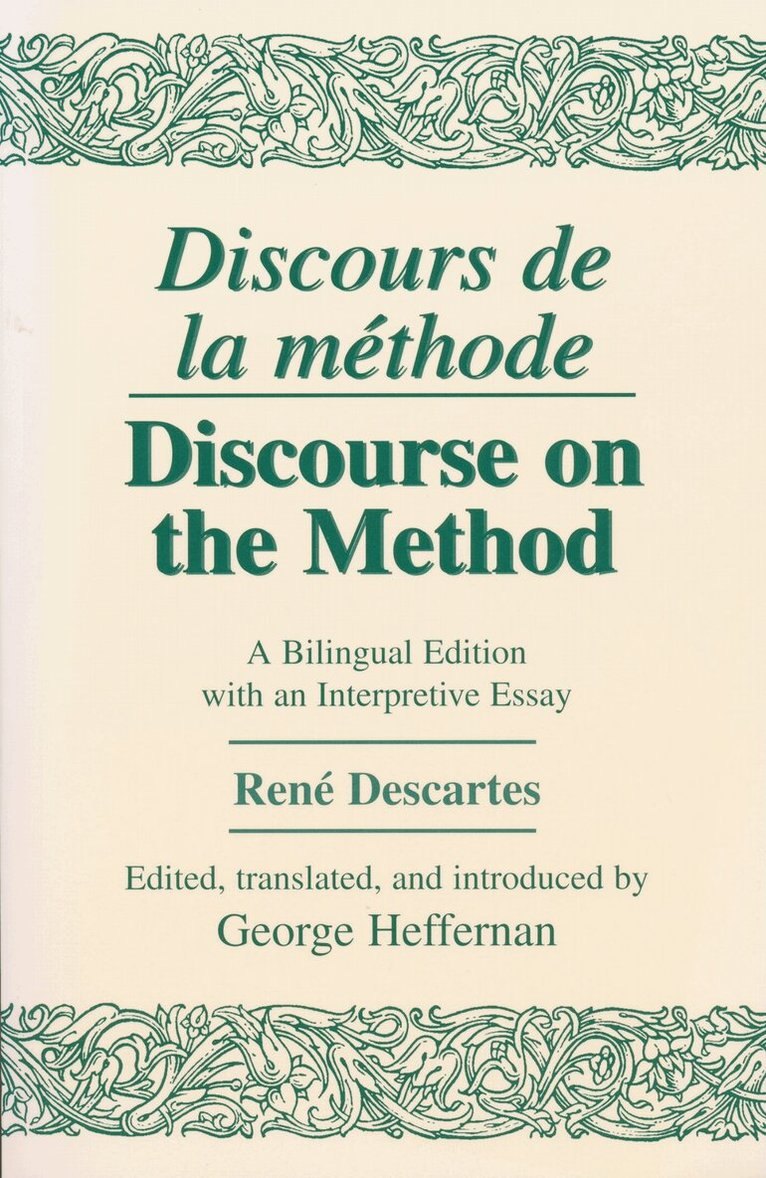
Discours De La Methode/Discourse on the Method
A Bilingual Edition with an Interpretive Essay
Häftad, Engelska, 1994
445 kr
Skickas inom 3-6 vardagar
No text has defined the self-understanding of the present time like Jean-François Lyotard's La condition postmoderne, Rapport sur le savoir (1979). But few participants in the dialogue between the moderns and the postmoderns can claim to understand exactly what "modernity" is. Yet one can hardly understand "post-modernism" without adequately understanding what it is supposed to supersede. Thus there also arises one of the biggest difficulties in understanding postmodernism itself.A good way to try to meet this need is by rereading, now more carefully than ever, the book to which Stephen Toulmin refers, in Cosmopolis, The Hidden Agenda of Modernity (1990), as one of ". . . the founding documents of modern thought . . ." (p.14). It is René Descartes' Discours de la méthode/Discourse on the Method (1637), which is both a classic of modern philosophy and the crucial source book of modernity.This unique edition of the Discours/Discourse contains an improved version of the original French text of Adam and Tannery, a new English translation as literal as possible and as liberal as necessary, an interpretive essay contextualizing the text historically and philosophically, an extensive bibliography, and a comprehensive index of Cartesian terminology.The edition is not only for advanced students and teachers of philosophy as well as of related disciplines such as literary and cultural criticism, but also for all those "human beings of good sense" motivated by an interest in uncovering "the hidden agenda of modernity". It is thus also intended as a timely contribution to the modern-postmodern debate.
1 392 kr
Skickas inom 10-15 vardagar
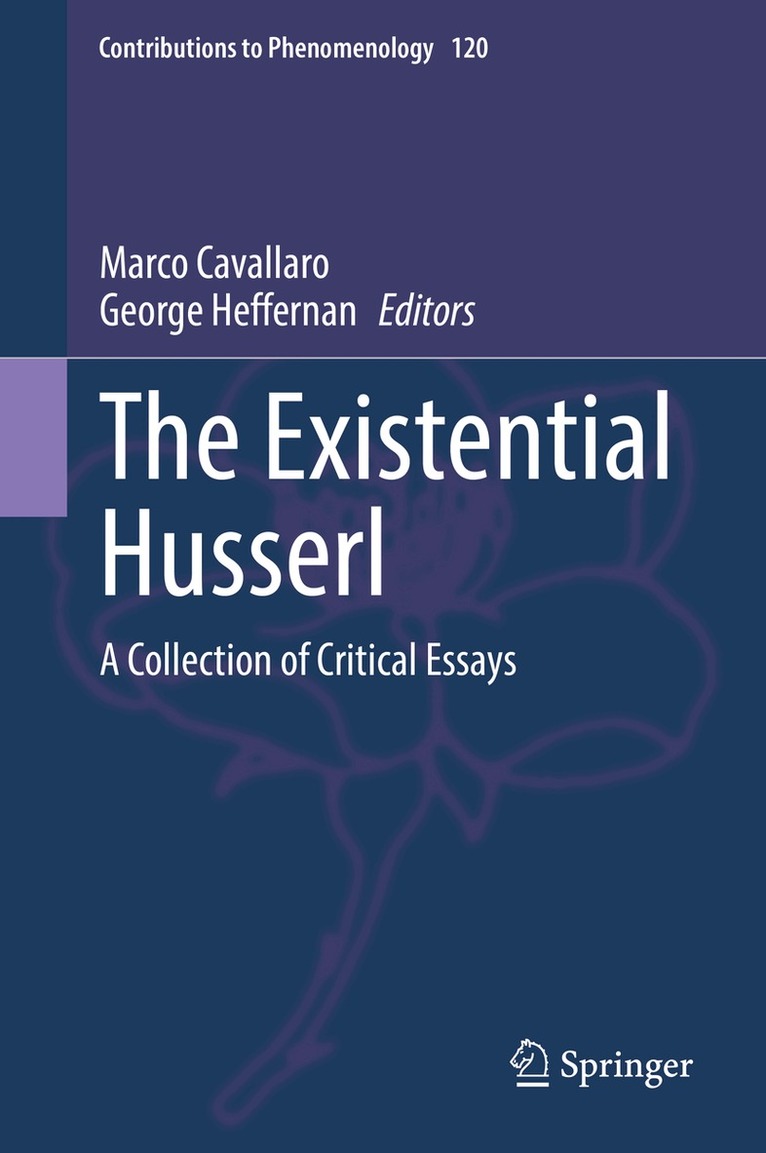
This book examines Husserl’s approach to the question concerning meaning in life and demonstrates that his philosophy includes a phenomenology of existence. Given his critique of the fashionable “philosophy of existence” of the late 1920s and early 1930s, one might think that Husserl posited an opposition between transcendental phenomenology and existential philosophy, as well as that in this respect he differed from existential phenomenologists after him. But texts composed between 1908 and 1937 and recently published in Husserliana XLII, Grenzprobleme der Phänomenologie (2014), show that the existential Husserl was not opposed but open to the phenomenological investigation of several basic topics of a philosophy of existence. A collection of contributions from a team of internationally recognized scholars drawing on these and other sources, the present volume offers insights into the relationship between phenomenology and philosophy of existence.It does so by (1) delineating the basic outlines of Husserl’s phenomenology of existence, (2) reinterpreting the tension between Husserl’s transcendental phenomenology and Jaspers’s and Heidegger’s philosophy of existence as well as Kierkegaard’s and Sartre’s existentialism, and (3) investigating the existential aspects of Husserl’s phenomenological ethics. Thus focusing on neglected aspects of Husserl’s thought, the volume shows that there is a consensus between classical phenomenology and existential phenomenology on the urgency of addressing the existential questions that in The Crisis of the European Sciences and Transcendental Phenomenology (1936) Husserl calls “the questions concerning the meaning or meaninglessness of this entire human existence”. The Existential Husserl represents a major contribution to the clarification of the historical and philosophical developments from transcendental phenomenology to existential phenomenology. The book should appeal to a wide audience of many readers at all levels looking for phenomenological answers to existential questions.
1 392 kr
Skickas inom 10-15 vardagar
This book examines Husserl’s approach to the question concerning meaning in life and demonstrates that his philosophy includes a phenomenology of existence. Given his critique of the fashionable “philosophy of existence” of the late 1920s and early 1930s, one might think that Husserl posited an opposition between transcendental phenomenology and existential philosophy, as well as that in this respect he differed from existential phenomenologists after him. But texts composed between 1908 and 1937 and recently published in Husserliana XLII, Grenzprobleme der Phänomenologie (2014), show that the existential Husserl was not opposed but open to the phenomenological investigation of several basic topics of a philosophy of existence. A collection of contributions from a team of internationally recognized scholars drawing on these and other sources, the present volume offers insights into the relationship between phenomenology and philosophy of existence.It does so by (1) delineating the basic outlines of Husserl’s phenomenology of existence, (2) reinterpreting the tension between Husserl’s transcendental phenomenology and Jaspers’s and Heidegger’s philosophy of existence as well as Kierkegaard’s and Sartre’s existentialism, and (3) investigating the existential aspects of Husserl’s phenomenological ethics. Thus focusing on neglected aspects of Husserl’s thought, the volume shows that there is a consensus between classical phenomenology and existential phenomenology on the urgency of addressing the existential questions that in The Crisis of the European Sciences and Transcendental Phenomenology (1936) Husserl calls “the questions concerning the meaning or meaninglessness of this entire human existence”. The Existential Husserl represents a major contribution to the clarification of the historical and philosophical developments from transcendental phenomenology to existential phenomenology. The book should appeal to a wide audience of many readers at all levels looking for phenomenological answers to existential questions.