George Joffé – författare
596 kr
Skickas inom 10-15 vardagar
2 252 kr
Skickas inom 10-15 vardagar
2 252 kr
Skickas inom 10-15 vardagar
779 kr
Skickas inom 10-15 vardagar
682 kr
Läs direkt efter köp
Celebrating the work of Keith McLachlan, a well-known and much-admired geographer of the Middle East and North Africa, this book combines three interrelated topics that define the region. The Middle East has been integral to the growth of the global oil industry, an aspect of its evolution since 1908 which has had profound geopolitical implications as well.
The territory was also the arena for the last European experiment in colonialism, a development that has left its legacy even today. And, historically, it has been the location of the great hydraulic civilisations of Egypt and Mesopotamia yet is still dependent on the flow of its two major river systems – the Nile and the Tigris-Euphrates – in an era of impending climate crisis. These themes form the essence of themes that are discussed in the chapters that follow. Keith McLachlan played a significant role in our understanding of these themes and of their effects in the contemporary world, as the comments of those who worked with him and have contributed towards this book reveal.
Examining agriculture, oil and state construction, this volume offers an insight into how the contemporary Middle East was constructed after the collapse of the Ottoman Empire. It is a key resource for scholars and students interested in geopolitics and the geography of the Middle East.
682 kr
Läs direkt efter köp
Celebrating the work of Keith McLachlan, a well-known and much-admired geographer of the Middle East and North Africa, this book combines three interrelated topics that define the region. The Middle East has been integral to the growth of the global oil industry, an aspect of its evolution since 1908 which has had profound geopolitical implications as well.
The territory was also the arena for the last European experiment in colonialism, a development that has left its legacy even today. And, historically, it has been the location of the great hydraulic civilisations of Egypt and Mesopotamia yet is still dependent on the flow of its two major river systems – the Nile and the Tigris-Euphrates – in an era of impending climate crisis. These themes form the essence of themes that are discussed in the chapters that follow. Keith McLachlan played a significant role in our understanding of these themes and of their effects in the contemporary world, as the comments of those who worked with him and have contributed towards this book reveal.
Examining agriculture, oil and state construction, this volume offers an insight into how the contemporary Middle East was constructed after the collapse of the Ottoman Empire. It is a key resource for scholars and students interested in geopolitics and the geography of the Middle East.
828 kr
Läs direkt efter köp
This comprehensive Routledge Handbook on the Modern Maghrib introduces and analyses the region in its full complexity, focussing on the countries of Morocco, Tunisia, Algeria and Libya, as well as the regions of the northern and western Sahara.
In addition to country studies that provide historical and geopolitical background, a series of thematic explorations engage with a range of social, linguistic, cultural and economic aspects, providing a rich mosaic of current scholarship on the region. Addressing important debates such as the volatile international relations among constituent states, the role of women in society and the environmental impact of climate change, the book considers natural resources, music, media and language, and revisits the history of borders and social tribal structures. What emerges is not only a variegated picture of the Maghrib as a complex and rapidly changing region, but one marked by stark contrasts and divergences among its constituent states based on their Ottoman and colonial experiences, their relationships with their Saharan and Mediterranean neighbours and their own political trajectories.
This Handbook fills an important gap in knowledge on a region increasingly significant in European and American affairs, and will appeal to anyone interested in the history, economies and societies of North Africa.
828 kr
Läs direkt efter köp
This comprehensive Routledge Handbook on the Modern Maghrib introduces and analyses the region in its full complexity, focussing on the countries of Morocco, Tunisia, Algeria and Libya, as well as the regions of the northern and western Sahara.
In addition to country studies that provide historical and geopolitical background, a series of thematic explorations engage with a range of social, linguistic, cultural and economic aspects, providing a rich mosaic of current scholarship on the region. Addressing important debates such as the volatile international relations among constituent states, the role of women in society and the environmental impact of climate change, the book considers natural resources, music, media and language, and revisits the history of borders and social tribal structures. What emerges is not only a variegated picture of the Maghrib as a complex and rapidly changing region, but one marked by stark contrasts and divergences among its constituent states based on their Ottoman and colonial experiences, their relationships with their Saharan and Mediterranean neighbours and their own political trajectories.
This Handbook fills an important gap in knowledge on a region increasingly significant in European and American affairs, and will appeal to anyone interested in the history, economies and societies of North Africa.
751 kr
Skickas inom 10-15 vardagar
442 kr
Skickas inom 10-15 vardagar
2 252 kr
Skickas inom 10-15 vardagar
1 481 kr
Skickas inom 10-15 vardagar
442 kr
Skickas inom 10-15 vardagar
496 kr
Läs direkt efter köp
496 kr
Läs direkt efter köp
744 kr
Skickas inom 10-15 vardagar
508 kr
Läs direkt efter köp
503 kr
Läs direkt efter köp
860 kr
Läs direkt efter köp
860 kr
Läs direkt efter köp
828 kr
Läs direkt efter köp
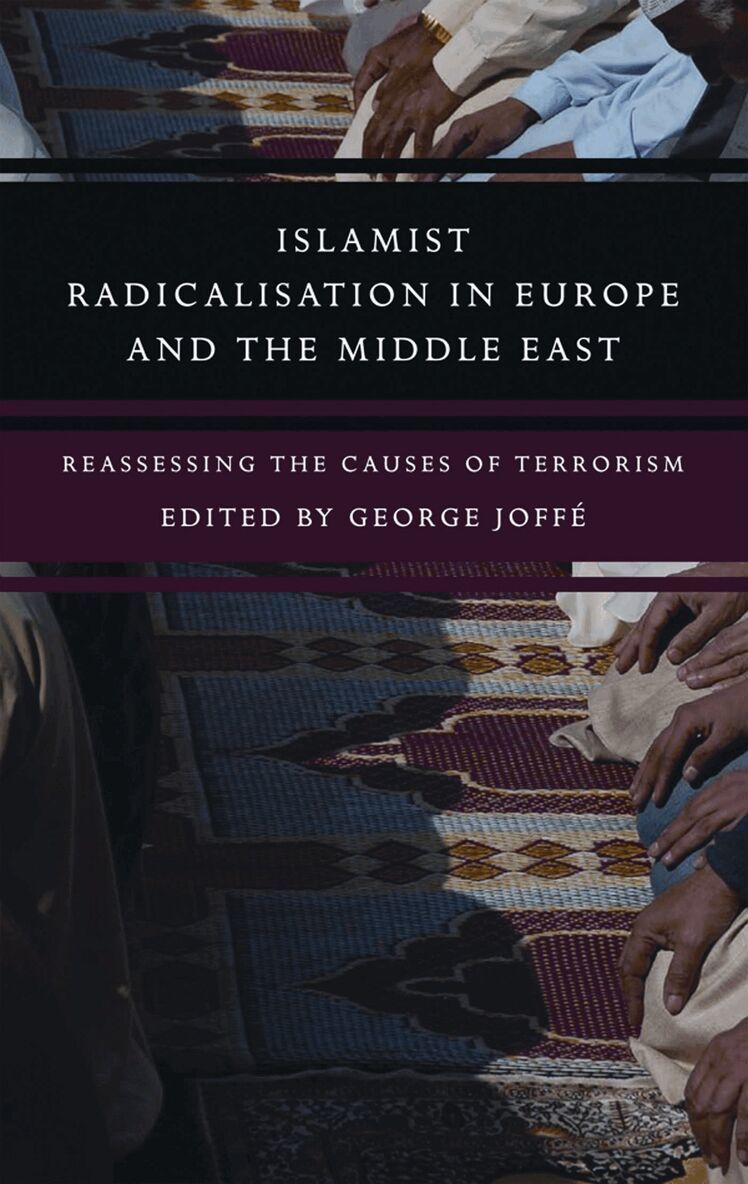
In the current climate of political extremism and violence, much attention has been directed towards "radicalisation" as the reasons behind such courses of action, along with a conviction that those who are radicalised represent an irrational deviation from the conventionally accepted norms of social and political behaviour.
This book focuses on the current issues and analytical approaches to the phenomenon of radicalisation in North Africa. Taking a comprehensive approach to the subject, it looks at the processes that lead to radicalisation, rather than the often violent outcomes. At the same time, chapters expand the discussion historically and conceptually beyond the preoccupations of recent years, in order to develop a more holistic understanding of a complex individual and collective process that has represented a permanent challenge to dominant political, social and, on occasion, economic norms.
With contributions from academics and policy-makers within and outside the region, the book is a comprehensive investigation of Islamist Radicalisation. As such, it will be of great interest to academics and students investigating North Africa and terrorism, as well as specialists in radicalism and extremism.
828 kr
Läs direkt efter köp
In the current climate of political extremism and violence, much attention has been directed towards "radicalisation" as the reasons behind such courses of action, along with a conviction that those who are radicalised represent an irrational deviation from the conventionally accepted norms of social and political behaviour.
This book focuses on the current issues and analytical approaches to the phenomenon of radicalisation in North Africa. Taking a comprehensive approach to the subject, it looks at the processes that lead to radicalisation, rather than the often violent outcomes. At the same time, chapters expand the discussion historically and conceptually beyond the preoccupations of recent years, in order to develop a more holistic understanding of a complex individual and collective process that has represented a permanent challenge to dominant political, social and, on occasion, economic norms.
With contributions from academics and policy-makers within and outside the region, the book is a comprehensive investigation of Islamist Radicalisation. As such, it will be of great interest to academics and students investigating North Africa and terrorism, as well as specialists in radicalism and extremism.
2 320 kr
Skickas inom 10-15 vardagar
568 kr
Skickas inom 10-15 vardagar
2 182 kr
Skickas inom 10-15 vardagar
3 331 kr
Skickas inom 10-15 vardagar
723 kr
Skickas inom 10-15 vardagar
640 kr
Läs direkt efter köp
North Africa differs from the Middle East in several significant ways. It was subject to a uniform colonial experience as part of the French empire; its populations are far more culturally homogeneous than those of the Middle East; and, since the Reconquista, it has always been far more susceptible to European influences than has the Middle East. It has thus had a far better basis for regional integration and for effective state formation than has the Middle East itself.
In the post-Cold War world, North Africa took on a new significance for Europe as issues of migration and regional trade began to dominate the European agenda. This book, first published in 1993, endeavours to investigate the background to the political developments of modern North Africa. It not only looks at the pre-colonial past but also investigates the effect of the colonial period itself on the regional dimension in view of the creation of the UMA, a confederal regional organisation, in early 1989. The contributors to this volume are all people with long experience of the North African political and historical scene.
640 kr
Läs direkt efter köp
North Africa differs from the Middle East in several significant ways. It was subject to a uniform colonial experience as part of the French empire; its populations are far more culturally homogeneous than those of the Middle East; and, since the Reconquista, it has always been far more susceptible to European influences than has the Middle East. It has thus had a far better basis for regional integration and for effective state formation than has the Middle East itself.
In the post-Cold War world, North Africa took on a new significance for Europe as issues of migration and regional trade began to dominate the European agenda. This book, first published in 1993, endeavours to investigate the background to the political developments of modern North Africa. It not only looks at the pre-colonial past but also investigates the effect of the colonial period itself on the regional dimension in view of the creation of the UMA, a confederal regional organisation, in early 1989. The contributors to this volume are all people with long experience of the North African political and historical scene.
947 kr
Läs direkt efter köp
This book addresses issues surrounding the evolution of the Arab Spring in North Africa. After a general introduction and explanation of the events on a region-wide basis, it turns to examine aspects of each of the countries concerned. The role of the Muslim Brotherhood during the Nasser regime and in the contemporary situation is compared, together with an analysis of the emergence of new political parties in Egypt. The book analyses the links between social media and satellite television during the revolution in Egypt. This is followed by a study of the intellectual and cultural background to the Tunisian revolution and an analysis of the new political parties in Tunisia. It also looks at the revolution process in Libya and concludes with a study of why there was no revolution in Algeria and how the Moroccan monarchy was able to sideline those who challenged it at the price of constitutional changes that are essentially cosmetic.
This book was originally published as a special issue of The Journal of North African Studies.