Giles Scott-Smith – författare
Visar alla böcker från författaren Giles Scott-Smith. Handla med fri frakt och snabb leverans.
40 produkter
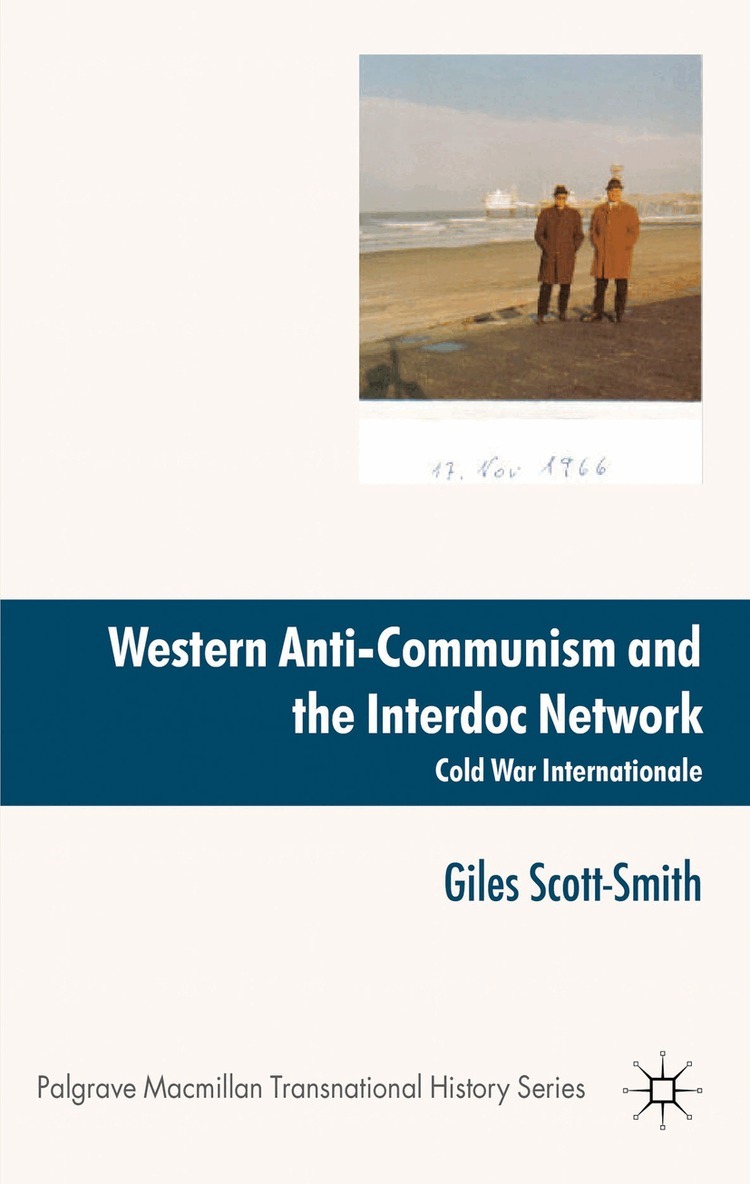
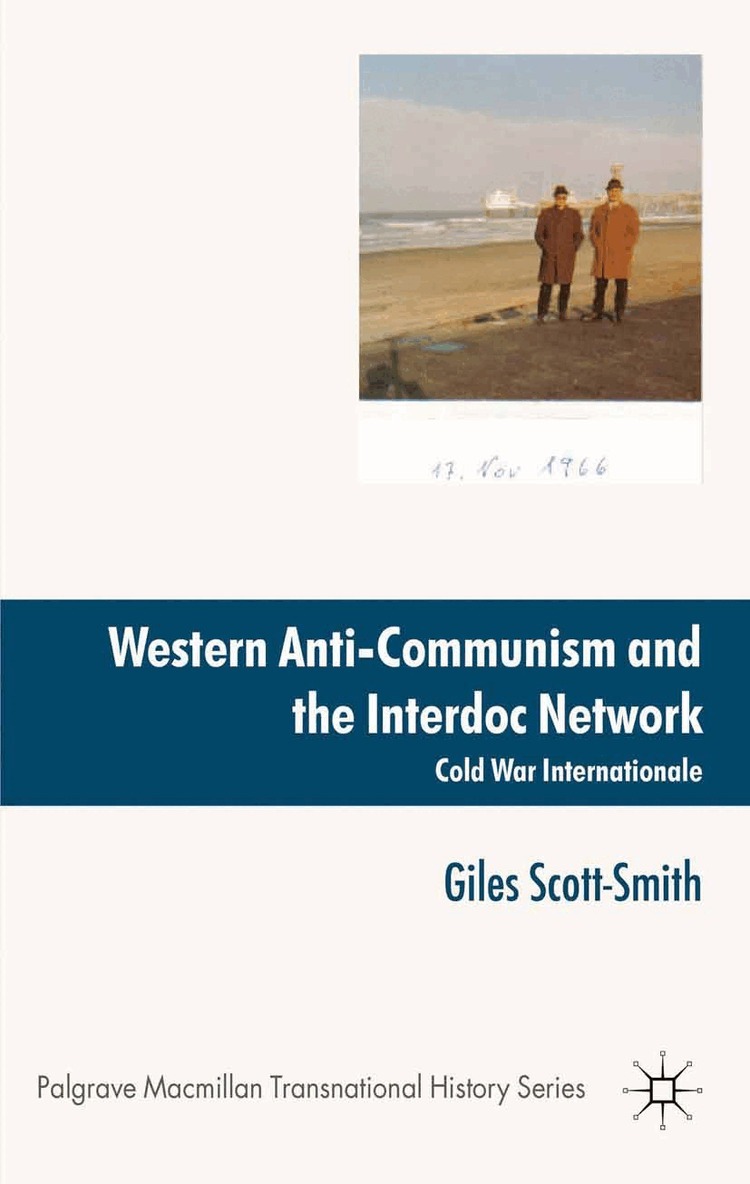
Western Anti-Communism and the Interdoc Network
Cold War Internationale
Inbunden, 2012
1129 kr
Lägg i varukorg
Interdoc was established in 1963 by Western intelligence services as a multinational effort to coordinate an anti-communist offensive. Drawing on exclusive sources and the memories of its participants, this book charts Interdoc's campaign, the people and ideas that lay behind it and the rise and …
Transatlantic Era (1989–2020) in Documents and Speeches
Av Bram Boxhoorn, Giles Scott-Smith
Inbunden, 2021
2585 kr
Lägg i varukorg
This accessible textbook uses key documents embedded in a clear narrative to chart the post-Cold War rise and decline of transatlantic relations. It provides a novel interpretive framework by proposing that the three decades between 1989 and 2020 represent a distinct ‘transatlantic era’. Providing …
Transatlantic Era (1989–2020) in Documents and Speeches
Av Bram Boxhoorn, Giles Scott-Smith
Häftad, 2021
727 kr
Lägg i varukorg
This accessible textbook uses key documents embedded in a clear narrative to chart the post-Cold War rise and decline of transatlantic relations. It provides a novel interpretive framework by proposing that the three decades between 1989 and 2020 represent a distinct ‘transatlantic era’. Providing …
Politics of Apolitical Culture
The Congress for Cultural Freedom and the Political Economy of American Hegemony 1945-1955
Inbunden, 2001
2510 kr
Lägg i varukorg
This book analyses a key episode in the cultural Cold War - the formation of the Congress for Cultural Freedom. Whilst the Congress was established to defend cultural values and freedom of expression in the Cold War Struggle, its close association with the CIA later undermined its claims to …
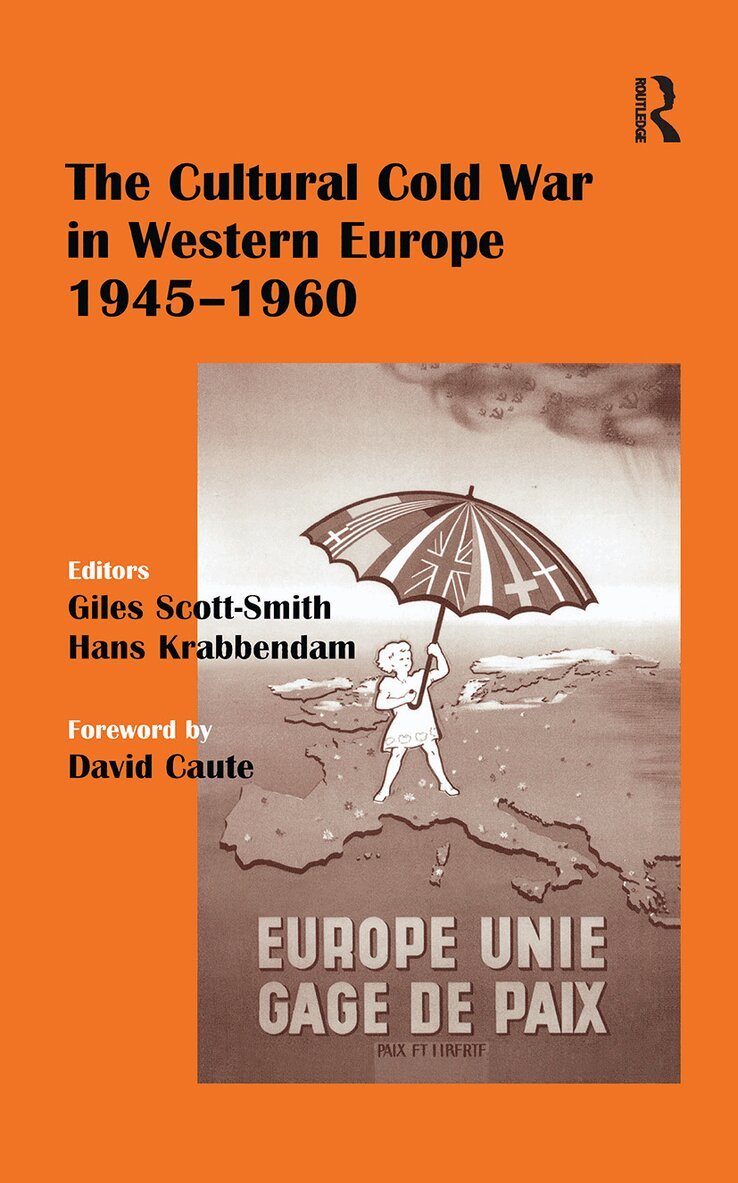
Cultural Cold War in Western Europe, 1945-60
Av G. Scott-Smith, Hans Krabbendam m. fl.
Inbunden, 2004
2825 kr
Lägg i varukorg
The idea of the Cold War as a propaganda contest as opposed to a military conflict is being increasingly accepted. This has led to a re-evaluation of the relationship between economic policies, political agendas and cultural activities in Western Europe post 1945.This book provides an important …
Cultural Cold War in Western Europe, 1945-60
Av Hans Krabbendam, Giles Scott-Smith
Häftad, 2004
772 kr
Lägg i varukorg
The idea of the Cold War as a propaganda contest as opposed to a military conflict is being increasingly accepted. This has led to a re-evaluation of the relationship between economic policies, political agendas and cultural activities in Western Europe post 1945.This book provides an important …
Transatlantic Era (1989-2020) in Documents and Speeches
Av Giles Scott-Smith, Bram Boxhoorn
E-bok, 2021
829 kr
Lägg i varukorg
This accessible textbook uses key documents embedded in a clear narrative to chart the post-Cold War rise and decline of transatlantic relations. It provides a novel interpretive framework by proposing that the three decades between 1989 and 2020 represent a distinct ‘transatlantic era’. Providing …
Transatlantic Era (1989-2020) in Documents and Speeches
Av Giles Scott-Smith, Bram Boxhoorn
E-bok, 2021
856 kr
Lägg i varukorg
This accessible textbook uses key documents embedded in a clear narrative to chart the post-Cold War rise and decline of transatlantic relations. It provides a novel interpretive framework by proposing that the three decades between 1989 and 2020 represent a distinct ‘transatlantic era’. Providing …
Politics of Apolitical Culture
The Congress for Cultural Freedom and the Political Economy of American Hegemony 1945-1955
E-bok, 2003
1051 kr
Lägg i varukorg
This book analyses a key episode in the cultural Cold War - the formation of the Congress for Cultural Freedom. Whilst the Congress was established to defend cultural values and freedom of expression in the Cold War Struggle, its close association with the CIA later undermined its claims to …
Politics of Apolitical Culture
The Congress for Cultural Freedom and the Political Economy of American Hegemony 1945-1955
E-bok, 2003
1074 kr
Lägg i varukorg
This book analyses a key episode in the cultural Cold War - the formation of the Congress for Cultural Freedom. Whilst the Congress was established to defend cultural values and freedom of expression in the Cold War Struggle, its close association with the CIA later undermined its claims to …
Cultural Cold War in Western Europe, 1945-60
Av Giles Scott-Smith, Hans Krabbendam
E-bok, 2004
910 kr
Lägg i varukorg
The idea of the Cold War as a propaganda contest as opposed to a military conflict is being increasingly accepted. This has led to a re-evaluation of the relationship between economic policies, political agendas and cultural activities in Western Europe post 1945. This book provides an important …
Cultural Cold War in Western Europe, 1945-60
Av Giles Scott-Smith, Hans Krabbendam
E-bok, 2004
890 kr
Lägg i varukorg
The idea of the Cold War as a propaganda contest as opposed to a military conflict is being increasingly accepted. This has led to a re-evaluation of the relationship between economic policies, political agendas and cultural activities in Western Europe post 1945. This book provides an important …
Western Anti-Communism and the Interdoc Network
Cold War Internationale
E-bok, 2012
1596 kr
Lägg i varukorg
Interdoc was established in 1963 by Western intelligence services as a multinational effort to coordinate an anti-communist offensive. Drawing on exclusive sources and the memories of its participants, this book charts Interdoc''s campaign, the people and ideas that lay behind it and the rise and …
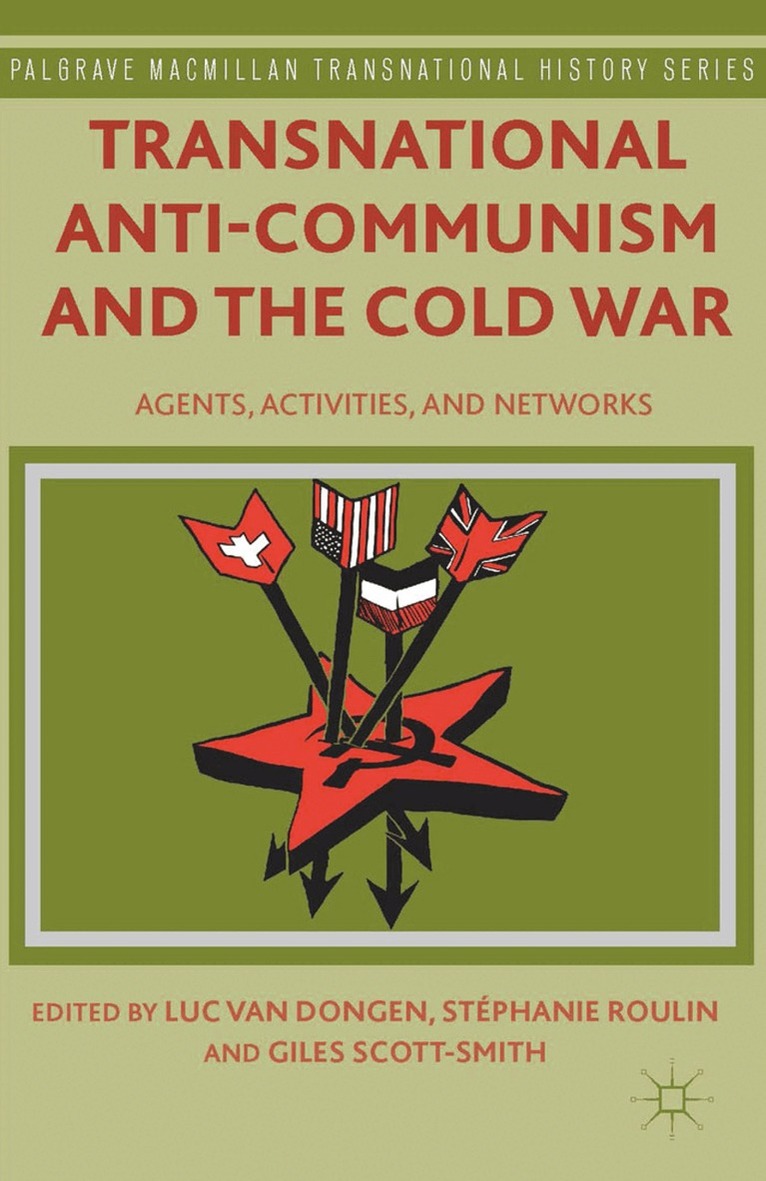
Transnational Anti-Communism and the Cold War
Agents, Activities, and Networks
Av Stéphanie Roulin, Giles Scott-Smith m. fl.
Inbunden, 2014
1577 kr
Lägg i varukorg
How was anti-communism organised in the West? This book covers the agents, aims, and arguments of various transnational anti-communist activists during the Cold War. Existing narratives often place the United States – and especially the CIA – at the centre of anti-communist activity. The book …
Transnational Anti-Communism and the Cold War
Agents, Activities, and Networks
Av Giles Scott-Smith, Stephanie Roulin
E-bok, 2014
2194 kr
Lägg i varukorg
How was anti-communism organised in the West? This book covers the agents, aims, and arguments of various transnational anti-communist activists during the Cold War. Existing narratives often place the United States – and especially the CIA – at the centre of anti-communist activity. The book …
Campaigning Culture and the Global Cold War
The Journals of the Congress for Cultural Freedom
Av Giles Scott-Smith, Charlotte A. Lerg
Inbunden, 2017
1465 kr
Lägg i varukorg
This book explores the lasting legacy of the controversial project by the Congress for Cultural Freedom, funded by the CIA, to promote Western culture and liberal values in the battle of ideas with global Communism during the Cold War. One of the most important elements of this campaign was a …
Campaigning Culture and the Global Cold War
The Journals of the Congress for Cultural Freedom
Av Charlotte A. Lerg, Giles Scott-Smith
E-bok, 2017
1911 kr
Lägg i varukorg
This book explores the lasting legacy of the controversial project by the Congress for Cultural Freedom, funded by the CIA, to promote Western culture and liberal values in the battle of ideas with global Communism during the Cold War. One of the most important elements of this campaign was a …
Politics of Apolitical Culture
The Congress for Cultural Freedom and the Political Economy of American Hegemony 1945-1955
Häftad, 2016
909 kr
Lägg i varukorg
This book analyses a key episode in the cultural Cold War - the formation of the Congress for Cultural Freedom. Whilst the Congress was established to defend cultural values and freedom of expression in the Cold War Struggle, its close association with the CIA later undermined its claims to …
Western Anti-Communism and the Interdoc Network
Cold War Internationale
Häftad, 2012
1127 kr
Lägg i varukorg
Interdoc was established in 1963 by Western intelligence services as a multinational effort to coordinate an anti-communist offensive. Drawing on exclusive sources and the memories of its participants, this book charts Interdoc's campaign, the people and ideas that lay behind it and the rise and …
Transnational Anti-Communism and the Cold War
Agents, Activities, and Networks
Av Stéphanie Roulin, Giles Scott-Smith m. fl.
Häftad, 2014
1577 kr
Lägg i varukorg
How was anti-communism organised in the West? This book covers the agents, aims, and arguments of various transnational anti-communist activists during the Cold War. Existing narratives often place the United States – and especially the CIA – at the centre of anti-communist activity. The book …
Public Health and the American State
Av Giles Scott-Smith, Gaetano Di Tommaso m. fl.
Inbunden, 2023
1266 kr
Lägg i varukorg
This book explores the importance of public health for understanding the transformation of American power, both domestically and internationally, over the past century. Two pandemics – Spanish Flu in 1918-1920 and Covid-19 in 2019-2021 – provide the context for analysing the actions and …
Public Health and the American State
Av Giles Scott-Smith, Gaetano Di Tommaso m. fl.
Häftad, 2025
315 kr
Lägg i varukorg
This book explores the importance of public health for understanding the transformation of American power, both domestically and internationally, over the past century. Two pandemics Spanish Flu in 1918-1920 and Covid-19 in 2019-2021 provide the context for analysing the actions and …
Embassies in Armed Conflict
Av G. R. Berridge, Giles Scott-Smith
Inbunden, 2012
1843 kr
Lägg i varukorg
This is an examination of how embassies work and cope during wartime, with a focus on the experiences of the British, American, and Indian embassies. During wartime, embassies assume different roles and face various situations. An embassy might represent a belligerent state while being situated in …
21st-Century Diplomacy
A Practitioner's Guide
Av Kishan S. Rana, Giles Scott-Smith
Inbunden, 2011
2407 kr
Lägg i varukorg
In the 21st century, new kinds of challenges resulting from interdependence among states and globalization have had a determining impact of the conduct of diplomacy. Diplomacy has become multifaceted, pluri-directional, volatile and intensive, due to the increased complexity in terms of actors, …
21st-Century Diplomacy
A Practitioner's Guide
Av Kishan S. Rana, Giles Scott-Smith
Häftad, 2011
559 kr
Lägg i varukorg
In the 21st century, new kinds of challenges resulting from interdependence among states and globalization have had a determining impact of the conduct of diplomacy.Diplomacy has become multifaceted, pluri-directional, volatile and intensive, due to the increased complexity in terms of actors, …
Embassies in Armed Conflict
Av G. R. Berridge, Giles Scott-Smith
Häftad, 2012
432 kr
Lägg i varukorg
This is an examination of how embassies work and cope during wartime, with a focus on the experiences of the British, American, and Indian embassies. During wartime, embassies assume different roles and face various situations. An embassy might represent a belligerent state while being situated in …
Cornerstone of Modern Diplomacy
Britain and the Negotiation of the 1961 Vienna Convention on Diplomatic Relations
Av Kai Bruns, Giles Scott-Smith
Häftad, 2015
513 kr
Lägg i varukorg
The Vienna Convention on Diplomatic Relations (VCDR) was signed at the height of the Cold War more than fifty years ago. The agreement and its negotiation have become a cornerstone of diplomatic law. A Cornerstone of Modern Diplomacy, which is based on archival research in the National Archives …
David Bruce and Diplomatic Practice
An American Ambassador in London, 1961-9
Av John W. Young, Giles Scott-Smith
Häftad, 2016
558 kr
Lägg i varukorg
David Bruce (1898-1977) was a prominent American diplomat, who served in France, Germany, and the UK. His work is examined here to provide an in-depth look at the practice of diplomacy and the role of the ambassador as diplomatic actor.This thorough survey aims to investigate the relevance of the …
US cultural diplomacy after the Cold War
Decline, recovery, and fall?
Av Jeffrey H. Michaels, Giles Scott-Smith
Inbunden, 2026
1298 kr
Lägg i varukorg
In the decades following the USSR’s collapse, the United States has shifted from unrivalled hegemon to a position of relative decline. Although America appeared dominant after 1991, its culture—like its diplomatic, military, and economic power—faced little competition. Such favourable conditions …
Reasserting America in the 1970s
U.S. Public Diplomacy and the Rebuilding of America’s Image Abroad
Av Hallvard Notaker, Giles Scott-Smith m. fl.
Inbunden, 2016
1263 kr
Lägg i varukorg
Reasserting America in the 1970s brings together two areas of burgeoning scholarly interest. On the one hand, scholars are investigating the many ways in which the 1970s constituted a profound era of transition in the international order. The American defeat in Vietnam, the breakdown of the Bretton …