Goran Larsson – författare
Visar alla böcker från författaren Goran Larsson. Handla med fri frakt och snabb leverans.
7 produkter
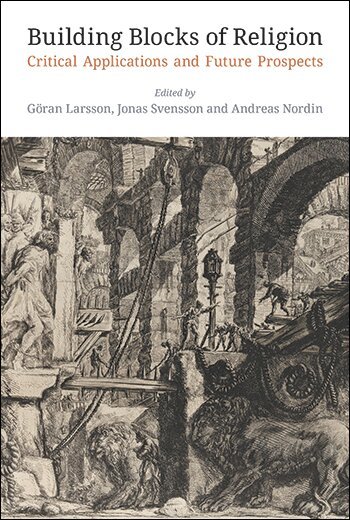
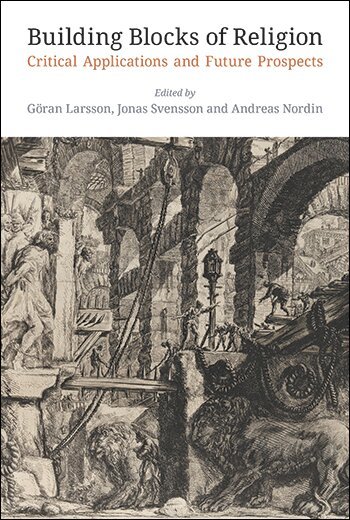
Building Blocks of Religion
Critical Applications and Future Prospects
Av Goran Larsson, Jonas Svensson m. fl.
Häftad, 2019
405 kr
Lägg i varukorg
The contributions in this book all concern the Building Block Approach to the study of religions as proposed and explored by Professor Ann Taves (University of California, Santa Barbara) during the last 30 years. This approach suggests that analysis of and explanations for complex cultural …
Islam in the Nordic and Baltic Countries
E-bok, 2009
970 kr
Lägg i varukorg
Although Muslims are now an important presence in Europe, little is known about the Muslim communities that exist in the Nordic and Baltic regions of Europe. This is the first comprehensive and detailed study of the history, context and development of Islamic institutions and Muslim groups in …
Islam in the Nordic and Baltic Countries
E-bok, 2009
970 kr
Lägg i varukorg
Although Muslims are now an important presence in Europe, little is known about the Muslim communities that exist in the Nordic and Baltic regions of Europe. This is the first comprehensive and detailed study of the history, context and development of Islamic institutions and Muslim groups in …
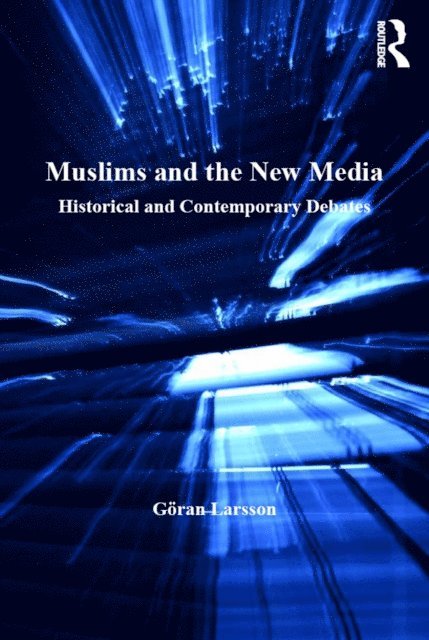
Muslims and the New Media
Historical and Contemporary Debates
E-bok, 2016
1022 kr
Lägg i varukorg
Scholars from an extensive range of academic disciplines have focused on Islam in cyberspace and the media, but there are few historical studies that have outlined how Muslim ''ulama'' have discussed and debated the introduction and impact of these new media. Muslims and the New Media explores how …
Muslims and the New Media
Historical and Contemporary Debates
E-bok, 2016
1022 kr
Lägg i varukorg
Scholars from an extensive range of academic disciplines have focused on Islam in cyberspace and the media, but there are few historical studies that have outlined how Muslim ''ulama'' have discussed and debated the introduction and impact of these new media. Muslims and the New Media explores how …
Building Blocks of Religion
Critical Applications and Future Prospects
Av Goran Larsson, Jonas Svensson m. fl.
Inbunden, 2020
1040 kr
Lägg i varukorg
The contributions in this book all concern the Building Block Approach to the study of religions as proposed and explored by Professor Ann Taves (University of California, Santa Barbara) during the last 30 years. This approach suggests that analysis of and explanations for complex cultural …
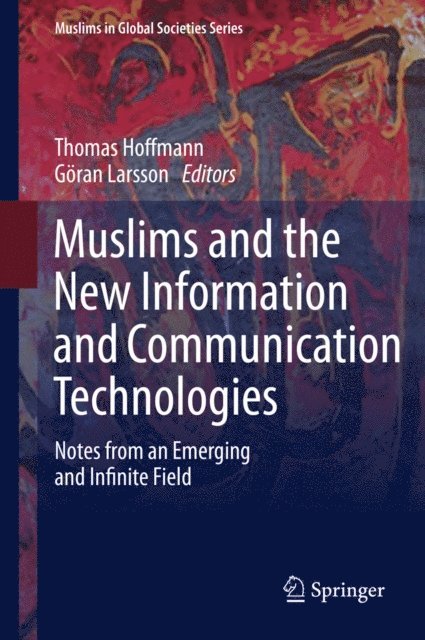
Muslims and the New Information and Communication Technologies
Notes from an Emerging and Infinite Field
Av Goran Larsson, Thomas Hoffmann
E-bok, 2014
1459 kr
Lägg i varukorg
This volume deals with the so-called new Information and Communication Technologies (ICT) and their interrelationship with Muslims and the interpretation of Islam. This volume taps into what has been labelled Media Studies 2.0, which has been characterized by an intensified focus on everyday …