Grady Booch – författare
Visar alla böcker från författaren Grady Booch. Handla med fri frakt och snabb leverans.
6 produkter
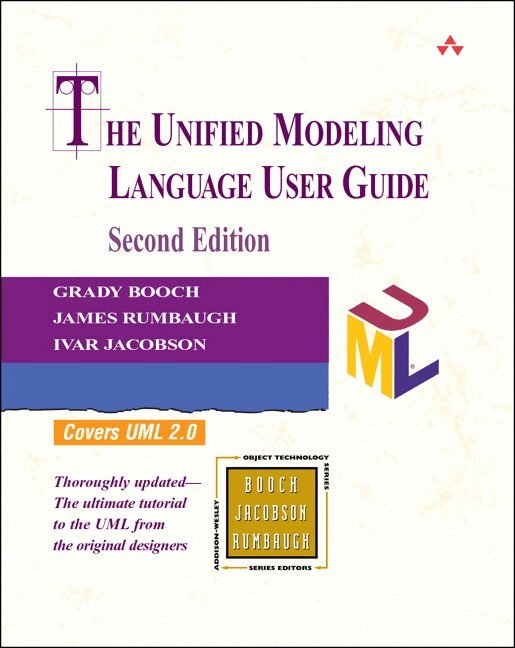
Unified Modeling Language User Guide, The
Av Grady Booch
Häftad, 2005
498 kr
Lägg i varukorg
For nearly ten years, the Unified Modeling Language (UML) has been the industry standard for visualizing, specifying, constructing, and documenting the artifacts of a software-intensive system. As the de facto standard modeling language, the UML facilitates communication and reduces confusion among …
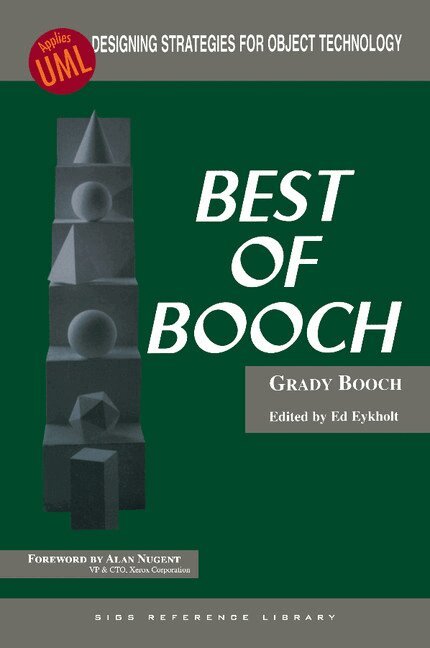
Best of Booch
Designing Strategies for Object Technology
Av Grady Booch, Grady Booch m. fl.
Häftad, 1997
989 kr
Lägg i varukorg
No one can dispute the impact Grady Booch's writings have had on object-oriented technology. The Best of Booch contains articles on various object-oriented topics published since Grady Booch's book Object Oriented Modeling and Design with Applications, second edition. Designed for software …
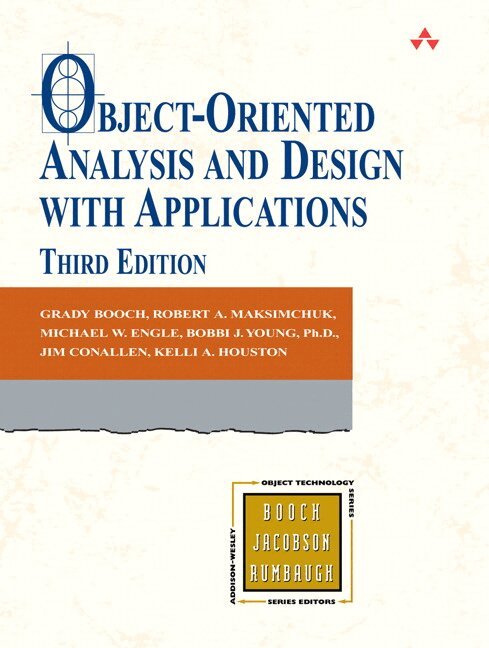
Object-Oriented Analysis and Design with Applications
Av Grady Booch, Robert Maksimchuk m. fl.
Inbunden, 2007
1,5 utav 5 stjärnor. Totalt antal röster: (2)
1156 kr
Lägg i varukorg
Object-Oriented Design with Applications has long been the essential reference to object-oriented technology, which, in turn, has evolved to join the mainstream of industrial-strength software development. In this third edition--the first revision in 13 years--readers can learn to apply …
Architectural Patterns and Techniques for Developing IoT Solutions
Build IoT applications using digital twins, gateways, rule engines, AI/ML integration, and related patterns
Av Jasbir Singh Dhaliwal, Grady Booch
Häftad, 2023
606 kr
Lägg i varukorg
Apply modern architectural patterns and techniques to achieve scalable, resilient, and secure intelligent IoT solutions built for manufacturing, consumer, agriculture, smart cities, and other domainsKey FeaturesGet empowered to quickly develop IoT solutions using listed patterns and related …
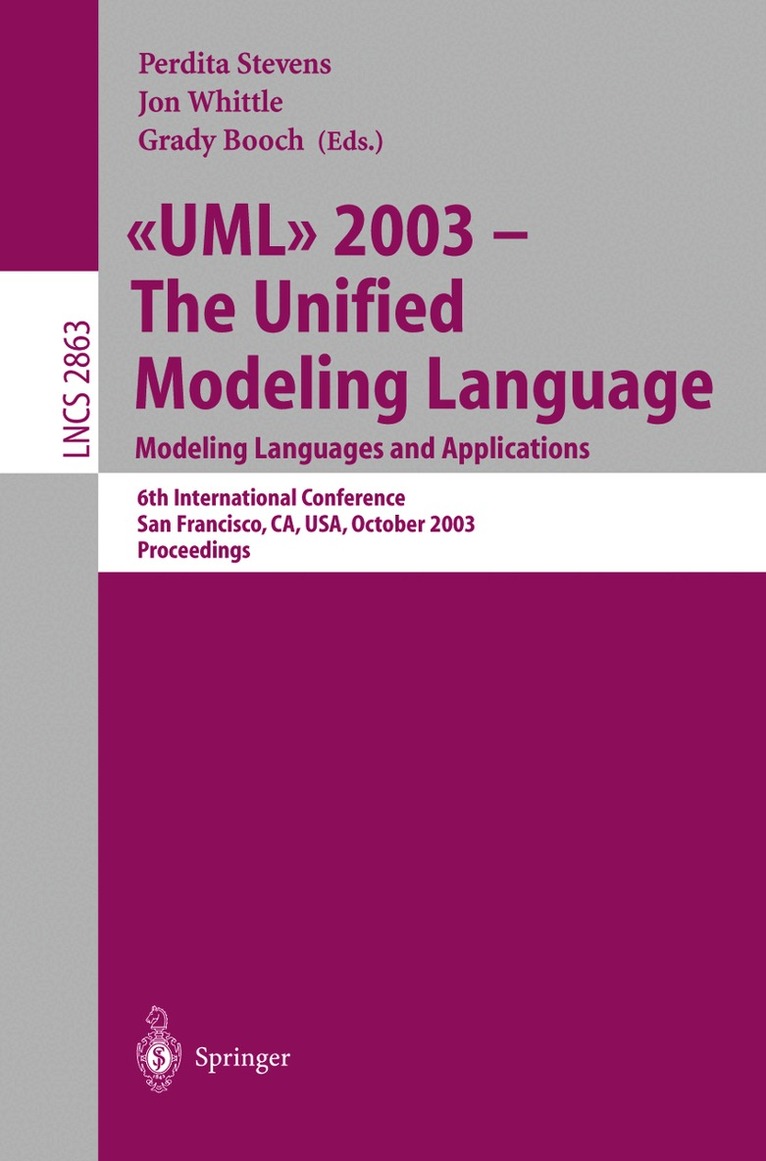
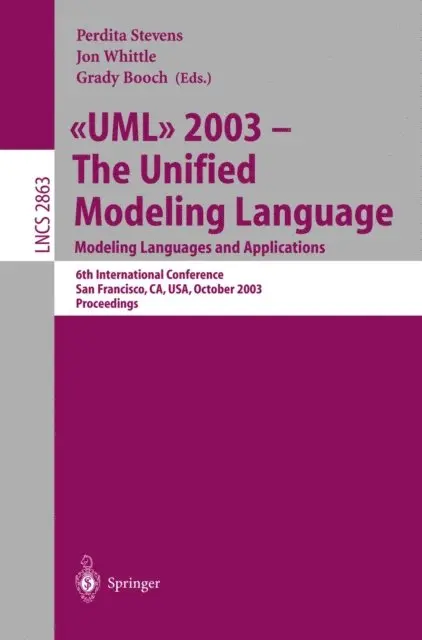
UML 2003 -- The Unified Modeling Language, Modeling Languages and Applications
6th International Conference San Francisco, CA, USA, October 20-24, 2003, Proceedings
Av Perdita Stevens, Jon Whittle m. fl.
Häftad, 2003
567 kr
Lägg i varukorg
Thepastyearhasbeenaneventfuloneforthoseinterestedinsoftwaremodeling. The ?rst major revision of the Uni?ed Modeling Language, UML2.0, is in the process of adoption by the Object Management Group (OMG), and it makes many long-desired additions and improvements to UML. At the same time, it expands …
UML 2003 -- The Unified Modeling Language, Modeling Languages and Applications
6th International Conference San Francisco, CA, USA, October 20-24, 2003, Proceedings
Av Grady Booch, Jon Whittle m. fl.
E-bok, 2003
755 kr
Lägg i varukorg
Thepastyearhasbeenaneventfuloneforthoseinterestedinsoftwaremodeling. The ?rst major revision of the Uni?ed Modeling Language, UML2.0, is in the process of adoption by the Object Management Group (OMG), and it makes many long-desired additions and improvements to UML. At the same time, it expands …