Graeme Kirkpatrick - Böcker
Visar alla böcker från författaren Graeme Kirkpatrick. Handla med fri frakt och snabb leverans.
11 produkter
11 produkter
278 kr
Skickas
This book draws on aesthetic theory, including ideas from the history of painting, music and dance, to offer a fresh perspective on the video game as a popular cultural form. It argues that games like Grand Theft Auto and Elektroplankton are aesthetic objects that appeal to players because they offer an experience of form, as this idea was understood by philosophers like Immanuel Kant and Theodor Adorno.Video games are awkward objects that have defied efforts to categorise them within established academic disciplines and intellectual frameworks. Yet no one can deny their importance in re-configuring contemporary culture and their influence can be seen in contemporary film, television, literature, music, dance and advertising. This book argues that their very awkwardness should form the starting point for a proper analysis of what games are and the reasons for their popularity. This book will appeal to anyone with a serious interest in the increasingly playful character of contemporary capitalist culture.
600 kr
Skickas inom 7-10 vardagar
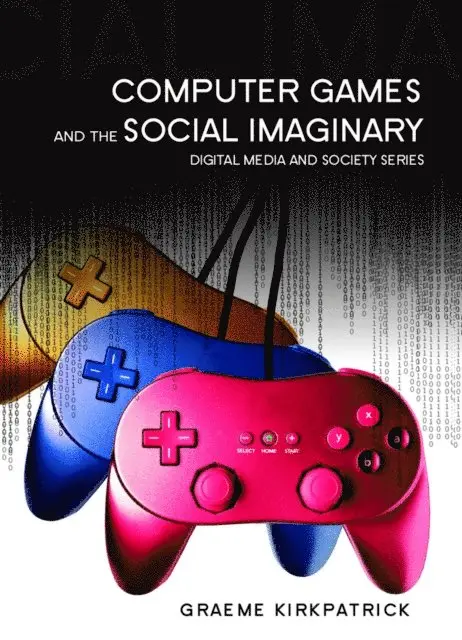
In this compelling book, Graeme Kirkpatrick argues that computer games have fundamentally altered the relation of self and society in the digital age.Tracing the origins of gaming to the revival of play in the 1960s counter culture, Computer Games and the Social Imaginary describes how the energies of that movement transformed computer technology from something ugly and machine-like into a world of colour and ‘fun’. In the process, play with computers became computer gaming – a new cultural practice with its own values.From the late 1980s gaming became a resource for people to draw upon as they faced the challenges of life in a new, globalizing digital economy. Gamer identity furnishes a revivified capitalism with compliant and ‘streamlined’ workers, but at times gaming culture also challenges the corporations that control game production.Analysing topics such as the links between technology and power, the formation of gaming culture and the subjective impact of play with computer games, this insightful text will be of great interest to students and scholars of digital media, games studies and the information society.
204 kr
Skickas inom 7-10 vardagar
In this compelling book, Graeme Kirkpatrick argues that computer games have fundamentally altered the relation of self and society in the digital age.Tracing the origins of gaming to the revival of play in the 1960s counter culture, Computer Games and the Social Imaginary describes how the energies of that movement transformed computer technology from something ugly and machine-like into a world of colour and ‘fun’. In the process, play with computers became computer gaming – a new cultural practice with its own values.From the late 1980s gaming became a resource for people to draw upon as they faced the challenges of life in a new, globalizing digital economy. Gamer identity furnishes a revivified capitalism with compliant and ‘streamlined’ workers, but at times gaming culture also challenges the corporations that control game production.Analysing topics such as the links between technology and power, the formation of gaming culture and the subjective impact of play with computer games, this insightful text will be of great interest to students and scholars of digital media, games studies and the information society.
1 297 kr
Skickas inom 10-15 vardagar
Have we resigned ourselves to a cyber-future that has been decided behind our backs? Why is technology - and our understanding of it - central to the concerns of critical social theory? In developing the PC technologists have borrowed ideas from the human sciences about what people are like, about the nature of meaning and the desirability of some experiences over others. Yet, to date, the academic disciplines most concerned with these ideas have offered neither resistance nor debate. In this book, Graeme Kirkpatrick shows why it is crucial that we initiate that debate. Offering a revealing critique of PC design and the social assumptions that underlie it, Kirkpatrick argues that it relies on a particular conception of a capitalistic society that expects its technology to come pre-packaged, mass-marketed and "user-friendly". Anyone who is critical of such a society and its commodification of human achievement should, he suggests, be suspicious. Kirkpatrick argues that the computer is a contested space within which major social conflicts are played out. On the one hand, there is a narrative of flexibility and human empowerment, and on the other a sense of a "system" that controls our lives, leaving us in thrall to the computer corporations, and at constant risk from phishers and hackers. The outcomes of these conflicts are extremely important as they will shape our future experience of technology, society and politics. Critical Technology is a lively, provocative and often radical book, which forces us to reflect on the meaning of an artefact that is central to our daily lives, yet that we too often take for granted.
441 kr
Skickas inom 10-15 vardagar
Have we resigned ourselves to a cyber-future that has been decided behind our backs? Why is technology - and our understanding of it - central to the concerns of critical social theory? In developing the PC technologists have borrowed ideas from the human sciences about what people are like, about the nature of meaning and the desirability of some experiences over others. Yet, to date, the academic disciplines most concerned with these ideas have offered neither resistance nor debate. In this book, Graeme Kirkpatrick shows why it is crucial that we initiate that debate. Offering a revealing critique of PC design and the social assumptions that underlie it, Kirkpatrick argues that it relies on a particular conception of a capitalistic society that expects its technology to come pre-packaged, mass-marketed and "user-friendly". Anyone who is critical of such a society and its commodification of human achievement should, he suggests, be suspicious. Kirkpatrick argues that the computer is a contested space within which major social conflicts are played out. On the one hand, there is a narrative of flexibility and human empowerment, and on the other a sense of a "system" that controls our lives, leaving us in thrall to the computer corporations, and at constant risk from phishers and hackers. The outcomes of these conflicts are extremely important as they will shape our future experience of technology, society and politics. Critical Technology is a lively, provocative and often radical book, which forces us to reflect on the meaning of an artefact that is central to our daily lives, yet that we too often take for granted.
1 833 kr
Skickas inom 10-15 vardagar
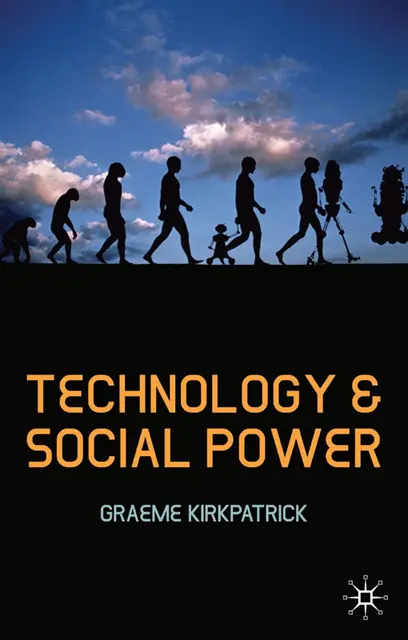
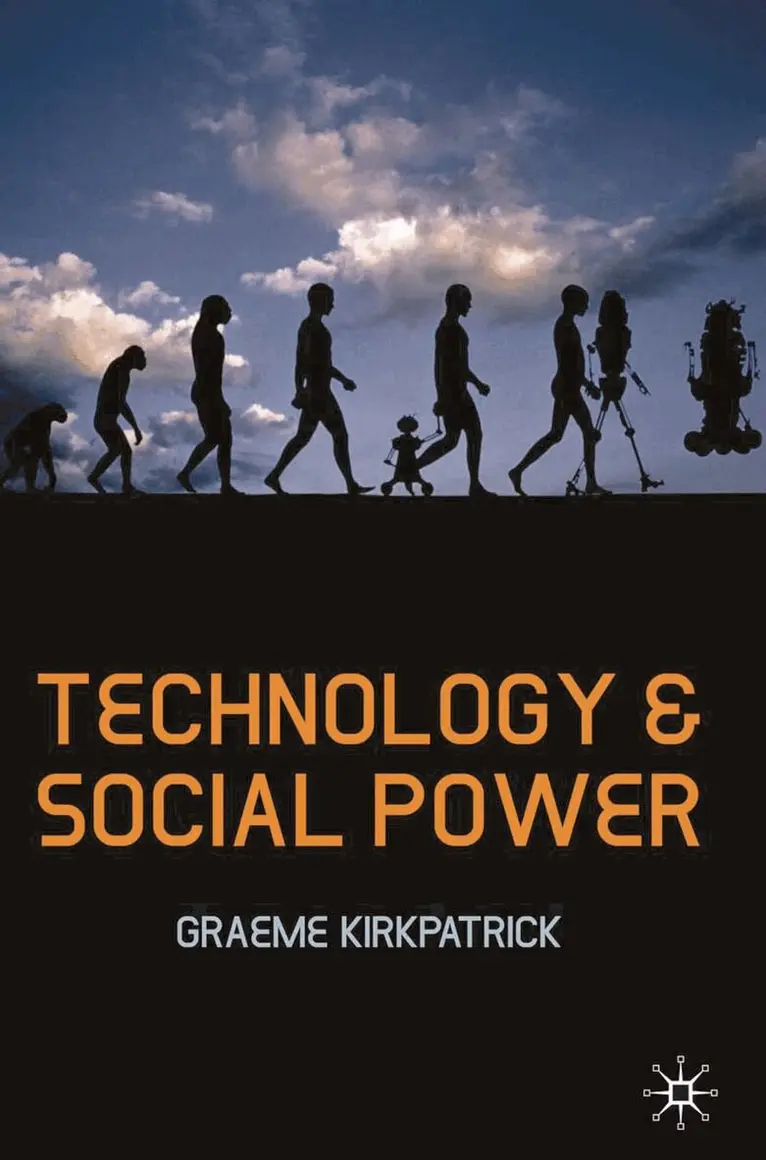
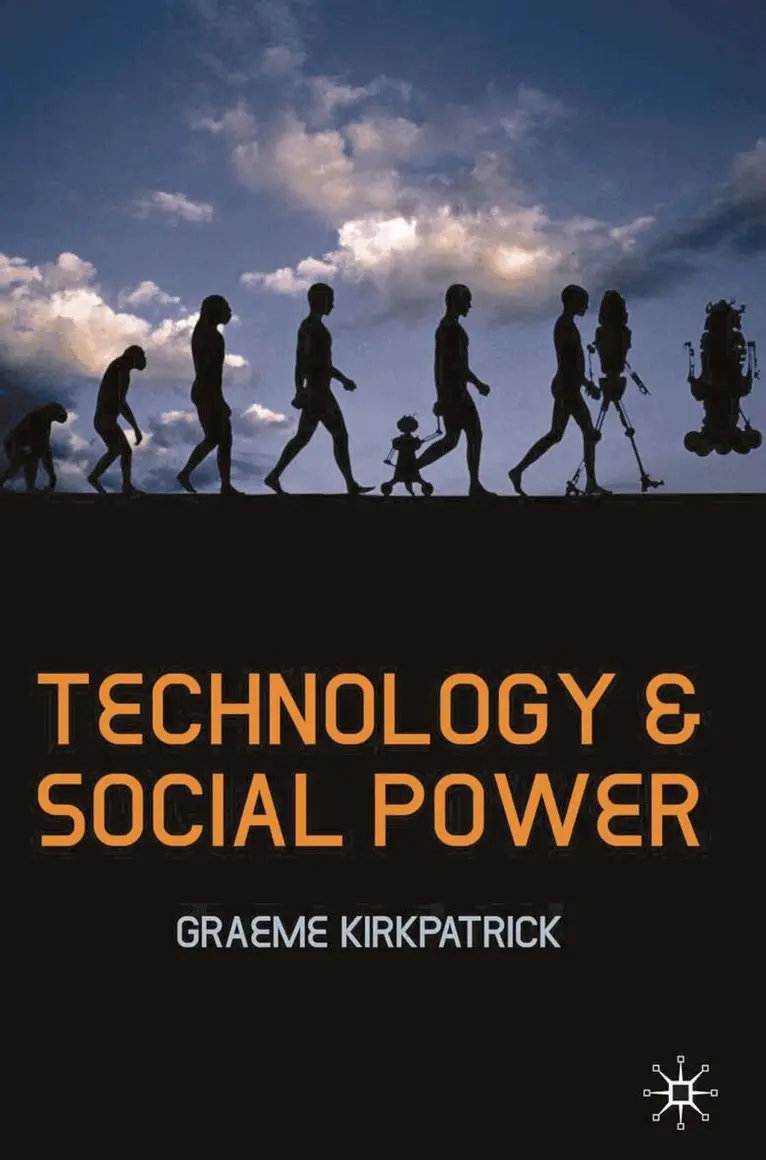
Technology permeates almost every dimension of our lives. But who controls technological development? Can technology cause social inequality? And how will technology continue to affect lives in the digital era? Technology and Social Power provides a fresh examination of the role of technology in our society. Bringing together critical, classical and contemporary social theories, it fully examines everything you need to know about the sociology of technology. From the invention of the modern toothbrush to the design of Google, the book uses relevant examples to give useful insights into the social dimension of everyday technology. With clear definitions of key terms alongside a well-balanced approach to the most important empirical and theoretical work in the field, this book provides a clear and thorough account of the subject. Making complex ideas accessible, it is invaluable reading for all students seeking to understand the role of technology in our society today, and its likely impact in the future.
541 kr
Skickas inom 10-15 vardagar
Technology permeates almost every dimension of our lives. But who controls technological development? Can technology cause social inequality? And how will technology continue to affect lives in the digital era? Technology and Social Power provides a fresh examination of the role of technology in our society. Bringing together critical, classical and contemporary social theories, it fully examines everything you need to know about the sociology of technology. From the invention of the modern toothbrush to the design of Google, the book uses relevant examples to give useful insights into the social dimension of everyday technology. With clear definitions of key terms alongside a well-balanced approach to the most important empirical and theoretical work in the field, this book provides a clear and thorough account of the subject. Making complex ideas accessible, it is invaluable reading for all students seeking to understand the role of technology in our society today, and its likely impact in the future.
1 167 kr
Skickas inom 5-8 vardagar
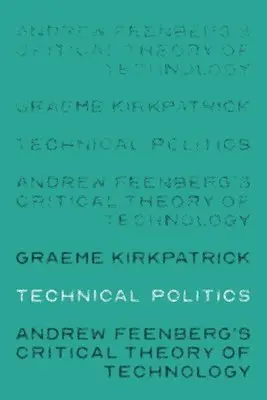
Technology often plays an ambiguous role in theories of social change. Viewed by Karl Marx as the driving force of historical progress, it has come to be associated with exploitation and alienation, thanks in large part to the work of Frankfurt School critical theorists such as Theodor Adorno and Max Horkheimer.Andrew Feenberg is an unusual figure: a critical theorist with an essentially optimistic view of technology. His concept of ‘technical politics’ puts technology design at the heart of disputes over the future shape of society. This book provides the first sustained critique of Feenberg’s work, describing how it has developed from the tradition of Marx and Marcuse and analysing the key ideas of formal bias, ambivalence, progressive rationalisation and primary and secondary instrumentalisation. Identifying the limitations resulting from Feenberg’s attachment to critique, the book offers a utopian corrective that can provide a fuller account of the process of willed technological transformation and of the author’s own idea of a technologically authorised socialism.An electronic edition of this book is freely available under a Creative Commons (CC BY-NC-ND) licence.
1 173 kr
Skickas inom 10-15 vardagar
This edited collection evaluates the relationship between Marxism and religion in two ways: Marxism’s treatment of religion and the religious aspects of Marxism. Its aim is to complicate the superficial understanding of Marxism as a simple rejection of religion both in theory and practice. Divided into two parts (Theory and Praxis), this book brings together the three different themes of Marxism, religion, and emancipation for the first time. The first part explores the more theoretical discussions regarding the relationship between Marxism and various themes (or currents) within religious thought, to highlight points of compatibility as well as incompatibilities/conflicts. The studies in the second part of the collection refer to how Marxist ideas are received in different parts of the world. They show that as soon as Marxism arrives in a new place, the theory interacts and bonds with a pre-existing stock of ideas, each changing the other reciprocally.
1 173 kr
Skickas inom 10-15 vardagar
This edited collection evaluates the relationship between Marxism and religion in two ways: Marxism’s treatment of religion and the religious aspects of Marxism. Its aim is to complicate the superficial understanding of Marxism as a simple rejection of religion both in theory and practice. Divided into two parts (Theory and Praxis), this book brings together the three different themes of Marxism, religion, and emancipation for the first time. The first part explores the more theoretical discussions regarding the relationship between Marxism and various themes (or currents) within religious thought, to highlight points of compatibility as well as incompatibilities/conflicts. The studies in the second part of the collection refer to how Marxist ideas are received in different parts of the world. They show that as soon as Marxism arrives in a new place, the theory interacts and bonds with a pre-existing stock of ideas, each changing the other reciprocally.
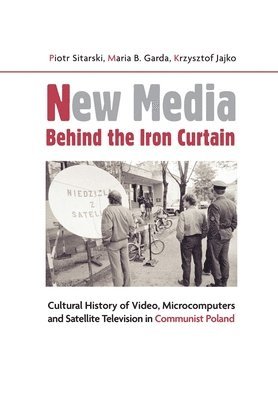
New Media Behind the Iron Curtain – Cultural History of Video, Microcomputers and Satellite Television in Communist Poland
Häftad, Engelska, 2021
416 kr
Skickas inom 7-10 vardagar
During the years of the Polish People's Republic, Poles were cut off from the western world. Travel was restricted, as was access to outside culture and goods. This unique situation led to a period of great ingenuity in the realm of new media. Not only were media adapted to suit Poles' needs, but new technology was fashioned to gain access to western television, film and video games. Bringing people together, VCRs, computers and satellite television were thus a window to the outside world and contemporary to the mobilisation of Solidarity and the end of communism. As such, their diffusion is an important but largely overlooked aspect of Poland's history. Acutely aware of this, the authors of this book recount new media behind the Iron Curtain in a way that will appeal to scholars and non-academic readers alike. Coupling archival research with in depth interviews, they bring to life the talent and determination of the PPR's new media pioneers, compelling others to dig further.