H. Carl Haywood – författare
Visar alla böcker från författaren H. Carl Haywood. Handla med fri frakt och snabb leverans.
7 produkter
7 produkter
Inbunden, Engelska, 1991
2 238 kr
Skickas inom 10-15 vardagar
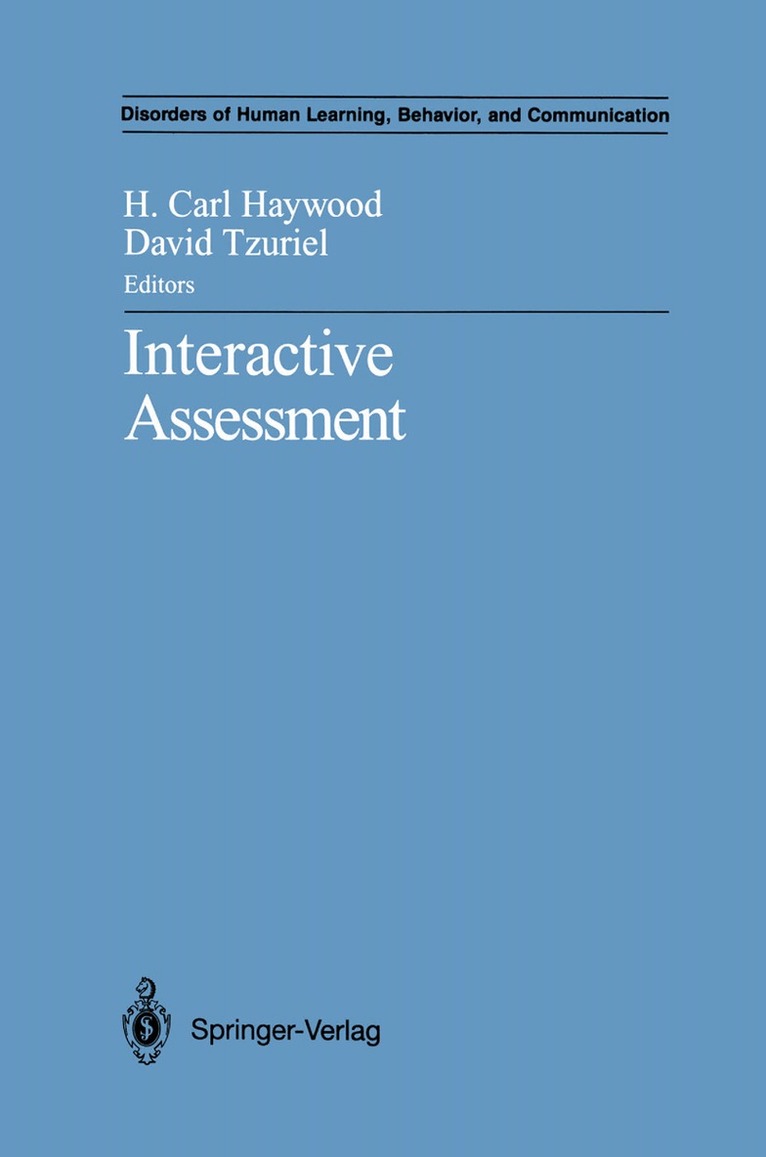
The richness of interactive approaches to psychoeducationalassessment has just begun to be explored and exploited. Thisbook demonstrates the extensive nature of developments ininteractive asessment and points to future directions ofapplied work and theoretical research in the field.
Häftad, Engelska, 2006
417 kr
Skickas inom 7-10 vardagar
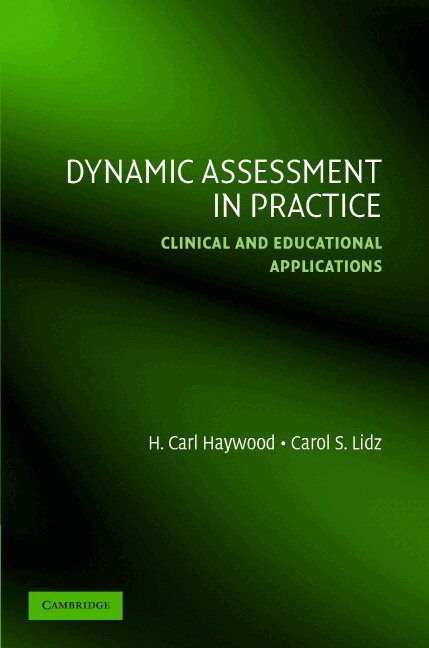
Dynamic assessment embeds interaction within the framework of a test-intervene-retest approach to psychoeducational assessment. This book offers an introduction to diagnostic assessors in psychology, education, and speech/language pathology to the basic ideas, principles, and practices of dynamic assessment. Most importantly, the book presents an array of specific procedures developed and used by the authors that can be applied to clients of all ages in both clinical and educational settings. The authors discuss their approach to report-writing, with a number of examples to demonstrate how they incorporate dynamic assessment into a comprehensive approach to assessment. The text concludes with a discussion of issues and questions that need to be considered and addressed. Two appendixes include descriptions of additional tests used by the authors that are adapted for dynamic assessment, as well as information about dynamic assessment procedures developed by others and sources for additional information about this approach.
Inbunden, Engelska, 2006
1 003 kr
Skickas inom 7-10 vardagar
Dynamic assessment embeds interaction within the framework of a test-intervene-retest approach to psychoeducational assessment. This book offers an introduction to diagnostic assessors in psychology, education, and speech/language pathology to the basic ideas, principles, and practices of dynamic assessment. Most importantly, the book presents an array of specific procedures developed and used by the authors that can be applied to clients of all ages in both clinical and educational settings. The authors discuss their approach to report-writing, with a number of examples to demonstrate how they incorporate dynamic assessment into a comprehensive approach to assessment. The text concludes with a discussion of issues and questions that need to be considered and addressed. Two appendixes include descriptions of additional tests used by the authors that are adapted for dynamic assessment, as well as information about dynamic assessment procedures developed by others and sources for additional information about this approach.
Häftad, Engelska, 2003
429 kr
Skickas inom 10-15 vardagar
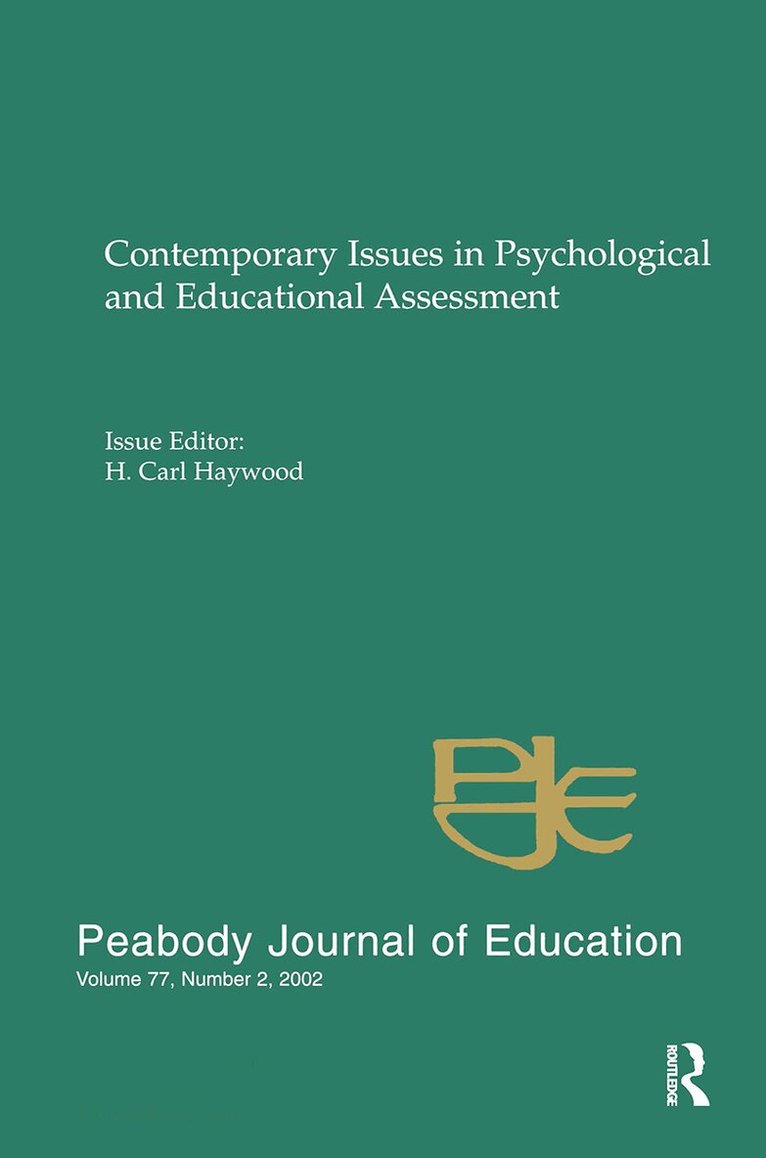
First published in 2003. Routledge is an imprint of Taylor & Francis, an informa company.
E-bok
PDF, Engelska, 20132 822 kr
Läs direkt efter köp
The terms interactive and dynamic would never have been associated with psychological and psychoeducational assessment a generation ago. They have currency now because of widespread dissatisfaction with the normative, standardized testing model, criticism of theoretical concepts of intelligence, recognition of abuses of standardized intelligence testing, and frustration with prediction and classification as primary goals of assessment. It is almost certainly true that public policy concerns propel scientific activity far more often than science propels public policy! In the case of psychological assessment, public policy concerns have arisen in the last 20 years primarily around issues of possible "discrimination" against members of ethnic minorities. At the same time, there has been a re surgence of dedication to "excellence in education" goals. These concerns have led to such extreme measures as prohibition of the use of standard ized intelligence tests to determine school placement decisions, especially for minority children. They have led also to a search for alternatives to standardized, normative testing. The chapters in this volume represent a variety of answers to this need.
Häftad, Engelska, 2013
2 238 kr
Skickas inom 10-15 vardagar
The terms interactive and dynamic would never have been associated with psychological and psychoeducational assessment a generation ago. They have currency now because of widespread dissatisfaction with the normative, standardized testing model, criticism of theoretical concepts of intelligence, recognition of abuses of standardized intelligence testing, and frustration with prediction and classification as primary goals of assessment. It is almost certainly true that public policy concerns propel scientific activity far more often than science propels public policy! In the case of psychological assessment, public policy concerns have arisen in the last 20 years primarily around issues of possible "discrimination" against members of ethnic minorities. At the same time, there has been a re surgence of dedication to "excellence in education" goals. These concerns have led to such extreme measures as prohibition of the use of standard ized intelligence tests to determine school placement decisions, especially for minority children. They have led also to a search for alternatives to standardized, normative testing. The chapters in this volume represent a variety of answers to this need.
E-bok
PDF, Engelska, 2013756 kr
Läs direkt efter köp
Developmental Follow-Up: Concepts, Domains, and Methods is a compendium of papers that deals with developmental follow-up research, follow-up studies, criterion assessment variables and instruments, as well as analyses of developmental data. The book discusses the historical, theoretical, and methodological considerations in developmental follow-up strategies. Some papers review the history of developmental follow-up research from the early 1920s to the late 1980s, with some insights into future-oriented themes. The book also cites as an example the study of the effects of prenatal alcohol exposure on child development. Other papers address health surveillance and child development, including early cognitive development and the contribution of peer interaction. Some papers consider the experimental design and data analysis such as those concerning planning for follow-up studies that will involve finances, time and resources, as well as the career impact for the investigator. Another paper reviews the significance of the time when children in the United States received a significant amount of care from someone who was not their mother. The book also discusses the role of the National Institute of Child Health and Human Development propelled by societal change in a postindustrial age. The text can prove valuable for psychologists, developmental scientists, social workers, and practitioners involved in human behavioral sciences and policy studies.