Hafedh Mili - Böcker
Visar alla böcker från författaren Hafedh Mili. Handla med fri frakt och snabb leverans.
5 produkter
5 produkter
2 143 kr
Skickas inom 7-10 vardagar
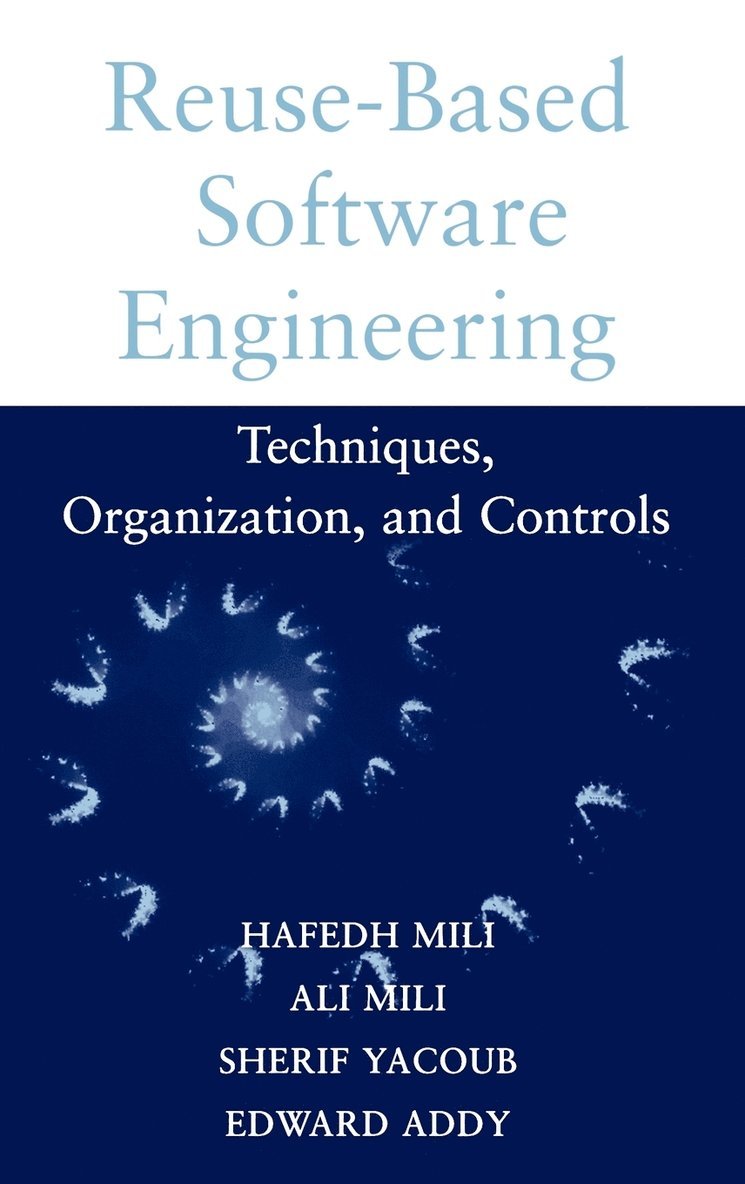
Integrating three important aspects of software reuse--technical, management, and organizational--this indispensable reference shows how these fundamental aspects are used in the development lifecycle of component-based software engineering and product line engineering. The book explores the basic foundations upon which reuse processes and approaches can be established and discusses state of the art and state of the practice of software reuse.
Del 12541 - Lecture Notes in Computer Science
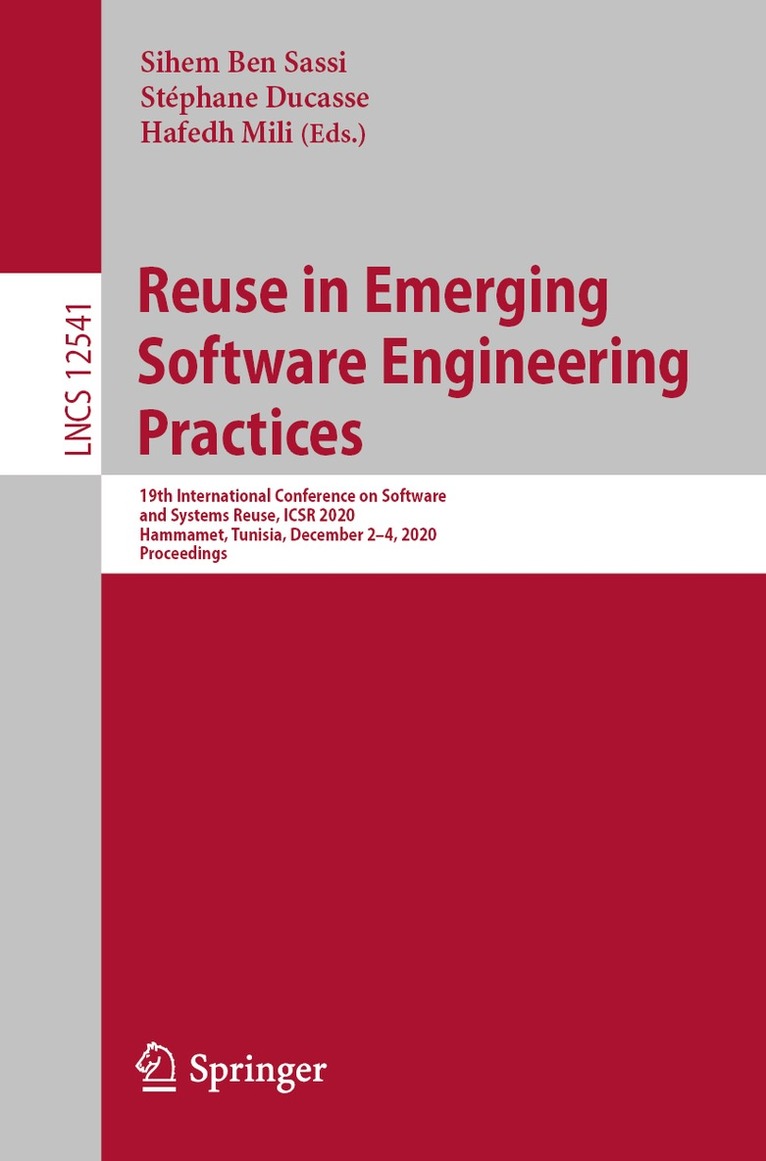
Reuse in Emerging Software Engineering Practices
19th International Conference on Software and Systems Reuse, ICSR 2020, Hammamet, Tunisia, December 2–4, 2020, Proceedings
Häftad, Engelska, 2020
552 kr
Skickas inom 10-15 vardagar
This book constitutes the proceedings of the 19th International Conference on Software and Systems Reuse, ICSR 2020, held in Hammamet, Tunesia in December 2020. Due to COVID-19 pandemic the Conference was held virtually. The 16 full papers and 2 short papers included in this book were carefully reviewed and selected from 60 submissions.
Del 209 - Lecture Notes in Business Information Processing
E-Technologies
6th International Conference, MCETECH 2015, Montréal, QC, Canada, May 12-15, 2015, Proceedings
Häftad, Engelska, 2015
552 kr
Skickas inom 10-15 vardagar
This book constitutes the refereed proceedings of the 6th International Conference on E-Technologies, MCETECH 2015, held in Montréal, Canada, in May 2015. The 18 papers presented in this volume were carefully reviewed and selected from 42 submissions. and eBusiness, eEducation and eLogistics.
552 kr
Skickas inom 10-15 vardagar
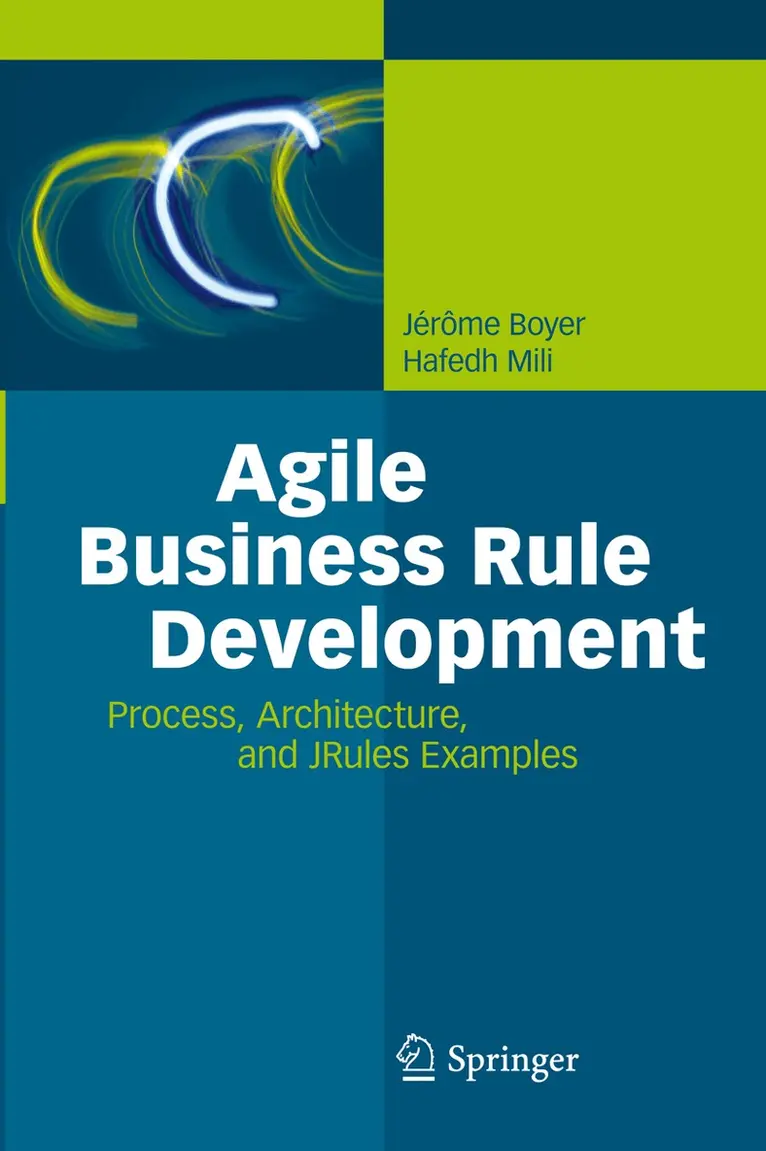
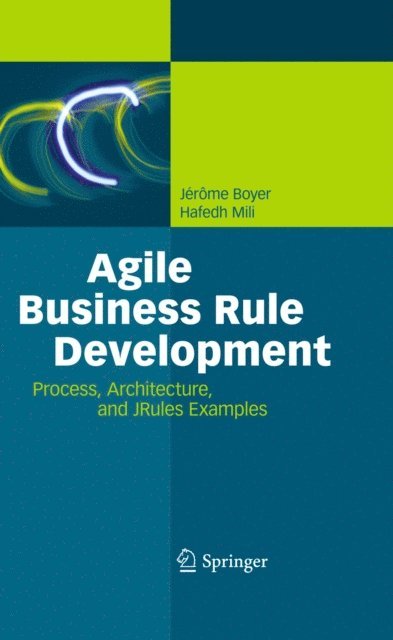
Business rules are everywhere. Every enterprise process, task, activity, or function is governed by rules. However, some of these rules are implicit and thus poorly enforced, others are written but not enforced, and still others are perhaps poorly written and obscurely enforced. The business rule approach looks for ways to elicit, communicate, and manage business rules in a way that all stakeholders can understand, and to enforce them within the IT infrastructure in a way that supports their traceability and facilitates their maintenance. Boyer and Mili will help you to adopt the business rules approach effectively. While most business rule development methodologies put a heavy emphasis on up-front business modeling and analysis, agile business rule development (ABRD) as introduced in this book is incremental, iterative, and test-driven. Rather than spending weeks discovering and analyzing rules for a complete business function, ABRD puts the emphasis on producing executable, tested rule sets early in the project without jeopardizing the quality, longevity, and maintainability of the end result. The authors’ presentation covers all four aspects required for a successful application of the business rules approach: (1) foundations, to understand what business rules are (and are not) and what they can do for you; (2) methodology, to understand how to apply the business rules approach; (3) architecture, to understand how rule automation impacts your application; (4) implementation, to actually deliver the technical solution within the context of a particular business rule management system (BRMS). Throughout the book, the authors use an insurance case study that deals with claim processing. Boyer and Mili cater to different audiences: Project managers will find a pragmatic, proven methodology for delivering and maintaining business rule applications. Business analysts and rule authors will benefit from guidelines and best practices for rule discovery and analysis. Application architects and software developers will appreciate an exploration of the design space for business rule applications, proven architectural and design patterns, and coding guidelines for using JRules.
552 kr
Skickas inom 10-15 vardagar
Business rules are everywhere. Every enterprise process, task, activity, or function is governed by rules. However, some of these rules are implicit and thus poorly enforced, others are written but not enforced, and still others are perhaps poorly written and obscurely enforced. The business rule approach looks for ways to elicit, communicate, and manage business rules in a way that all stakeholders can understand, and to enforce them within the IT infrastructure in a way that supports their traceability and facilitates their maintenance. Boyer and Mili will help you to adopt the business rules approach effectively. While most business rule development methodologies put a heavy emphasis on up-front business modeling and analysis, agile business rule development (ABRD) as introduced in this book is incremental, iterative, and test-driven. Rather than spending weeks discovering and analyzing rules for a complete business function, ABRD puts the emphasis on producing executable, tested rule sets early in the project without jeopardizing the quality, longevity, and maintainability of the end result. The authors’ presentation covers all four aspects required for a successful application of the business rules approach: (1) foundations, to understand what business rules are (and are not) and what they can do for you; (2) methodology, to understand how to apply the business rules approach; (3) architecture, to understand how rule automation impacts your application; (4) implementation, to actually deliver the technical solution within the context of a particular business rule management system (BRMS). Throughout the book, the authors use an insurance case study that deals with claim processing. Boyer and Mili cater to different audiences: Project managers will find a pragmatic, proven methodology for delivering and maintaining business rule applications. Business analysts and rule authors will benefit from guidelines and best practices for rule discovery and analysis. Application architects and software developers will appreciate an exploration of the design space for business rule applications, proven architectural and design patterns, and coding guidelines for using JRules.