Hans Hellendoorn - Böcker
Visar alla böcker från författaren Hans Hellendoorn. Handla med fri frakt och snabb leverans.
7 produkter
7 produkter
1 069 kr
Skickas inom 10-15 vardagar
Fuzzy controllers are a class of knowledge based controllers using artificial intelligence techniques with origins in fuzzy logic. They can be found either as stand-alone control elements or as integral parts of a wide range of industrial process control systems and consumer products. Applications of fuzzy controllers are an established practice for Japanese manufacturers, and are spreading in Europe and America. The main aim of this book is to show that fuzzy control is not totally ad hoc, that there exist formal techniques for the analysis of a fuzzy controller, and that fuzzy control can be implemented even when no expert knowledge is available. The book is mainly oriented to control engineers and theorists, although parts can be read without any knowledge of control theory and may interest AI people. This 2nd, revised edition incorporates suggestions from numerous reviewers and updates and reorganizes some of the material.
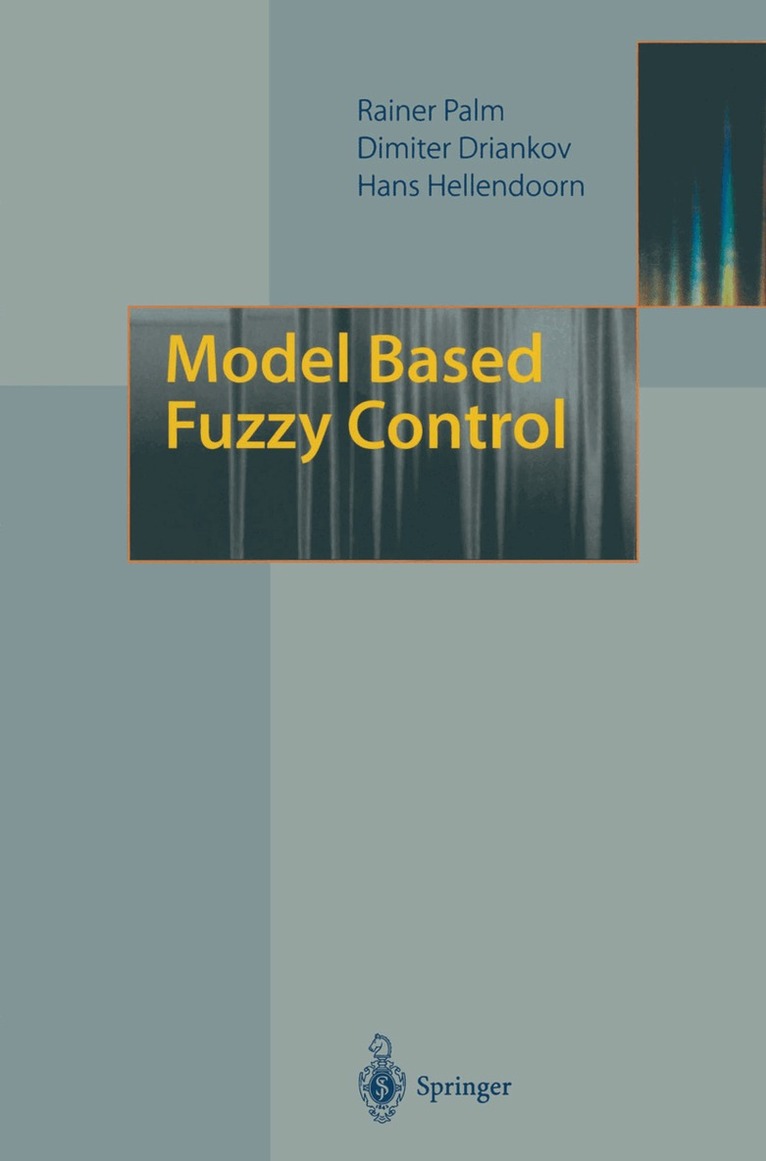
Model Based Fuzzy Control
Fuzzy Gain Schedulers and Sliding Mode Fuzzy Controllers
Inbunden, Engelska, 1996
538 kr
Skickas inom 10-15 vardagar
Model Based Fuzzy Control uses a given conventional or fuzzy open loop model of the plant under control to derive the set of fuzzy rules for the fuzzy controller. Of central interest are the stability, performance, and robustness of the resulting closed loop system. The major objective of model based fuzzy control is to use the full range of linear and nonlinear design and analysis methods to design such fuzzy controllers with better stability, performance, and robustness properties than non-fuzzy controllers designed using the same techniques. This objective has already been achieved for fuzzy sliding mode controllers and fuzzy gain schedulers - the main topics of this book. The primary aim of the book is to serve as a guide for the practitioner and to provide introductory material for courses in control theory.
538 kr
Skickas inom 10-15 vardagar
This carefully edited collection of recent works in fuzzy model identification opens the field to conventional control theorists as a complement to existing approaches, provides practicing engineers with new techniques, and emphasizes opportunities for new theory by bringing together different methods to identify the same types of fuzzy models. In control engineering, mathematical models are often constructed without using system data (white-box models) or using data but no insight (black-box models). The authors in this volume combine white- and black-box models chosen from types of structures known to be flexible and successful in applications. They use the same notation and terminology, and each describes a model with an identification technique and gives a practical example to show how the method works.
1 479 kr
Skickas inom 10-15 vardagar
Fuzzy controllers are a class of knowledge based controllers using artificial intelligence techniques with origins in fuzzy logic. They can be found either as stand-alone control elements or as integral parts of a wide range of industrial process control systems and consumer products. Applications of fuzzy controllers are an established practice for Japanese manufacturers, and are spreading in Europe and America. The main aim of this book is to show that fuzzy control is not totally ad hoc, that there exist formal techniques for the analysis of a fuzzy controller, and that fuzzy control can be implemented even when no expert knowledge is available. The book is mainly oriented to control engineers and theorists, although parts can be read without any knowledge of control theory and may interest AI people. This 2nd, revised edition incorporates suggestions from numerous reviewers and updates and reorganizes some of the material.
Model Based Fuzzy Control
Fuzzy Gain Schedulers and Sliding Mode Fuzzy Controllers
Häftad, Engelska, 2010
554 kr
Skickas inom 10-15 vardagar
Model Based Fuzzy Control uses a given conventional or fuzzy open loop model of the plant under control to derive the set of fuzzy rules for the fuzzy controller. Of central interest are the stability, performance, and robustness of the resulting closed loop system. The major objective of model based fuzzy control is to use the full range of linear and nonlinear design and analysis methods to design such fuzzy controllers with better stability, performance, and robustness properties than non-fuzzy controllers designed using the same techniques. This objective has already been achieved for fuzzy sliding mode controllers and fuzzy gain schedulers - the main topics of this book. The primary aim of the book is to serve as a guide for the practitioner and to provide introductory material for courses in control theory.
1 523 kr
Skickas inom 10-15 vardagar
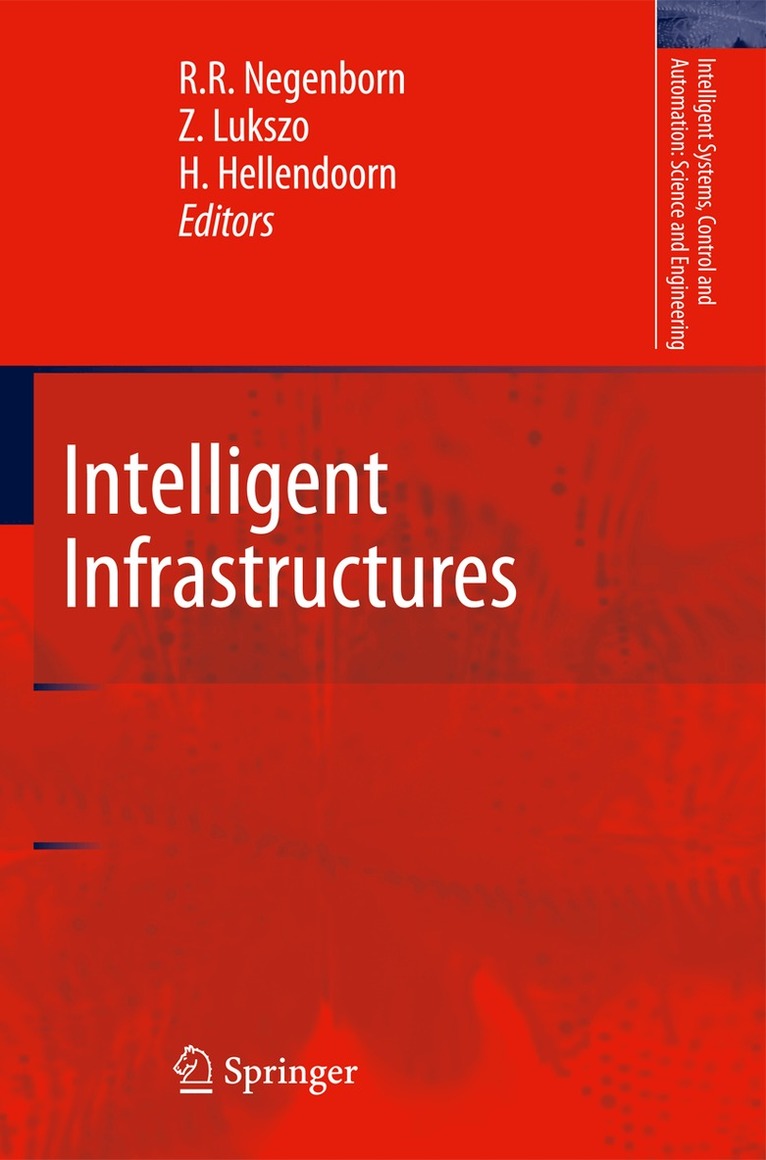
Society heavily depends on infrastructure systems, such as road-traffic networks, water networks, electricity networks, etc. Infrastructure systems are hereby considered to be large-scale, networked systems, that almost everybody uses on a daily basis, and that are so vital that their incapacity or destruction would have a debilitating impact on the defense or economic security and functioning of society. The operation and control of existing infrastructures such as road-traffic networks, water networks, electricity networks, etc. are failing: too often we are confronted with capacity problems, unsafety, unreliability and inefficiency. This book concentrates on a wide range of problems concerning the way infrastructures are functioning today and discuss novel advanced, intelligent, methods and tools for the operation and control of existing and future infrastructures.
1 523 kr
Skickas inom 10-15 vardagar
Society heavily depends on infrastructure systems, such as road-traffic networks, water networks, electricity networks, etc. Infrastructure systems are hereby considered to be large-scale, networked systems, that almost everybody uses on a daily basis, and that are so vital that their incapacity or destruction would have a debilitating impact on the defense or economic security and functioning of society. The operation and control of existing infrastructures such as road-traffic networks, water networks, electricity networks, etc. are failing: too often we are confronted with capacity problems, unsafety, unreliability and inefficiency. This book concentrates on a wide range of problems concerning the way infrastructures are functioning today and discuss novel advanced, intelligent, methods and tools for the operation and control of existing and future infrastructures.