Zofia Lukszo - Böcker
Visar alla böcker från författaren Zofia Lukszo. Handla med fri frakt och snabb leverans.
8 produkter
8 produkter
538 kr
Skickas inom 10-15 vardagar
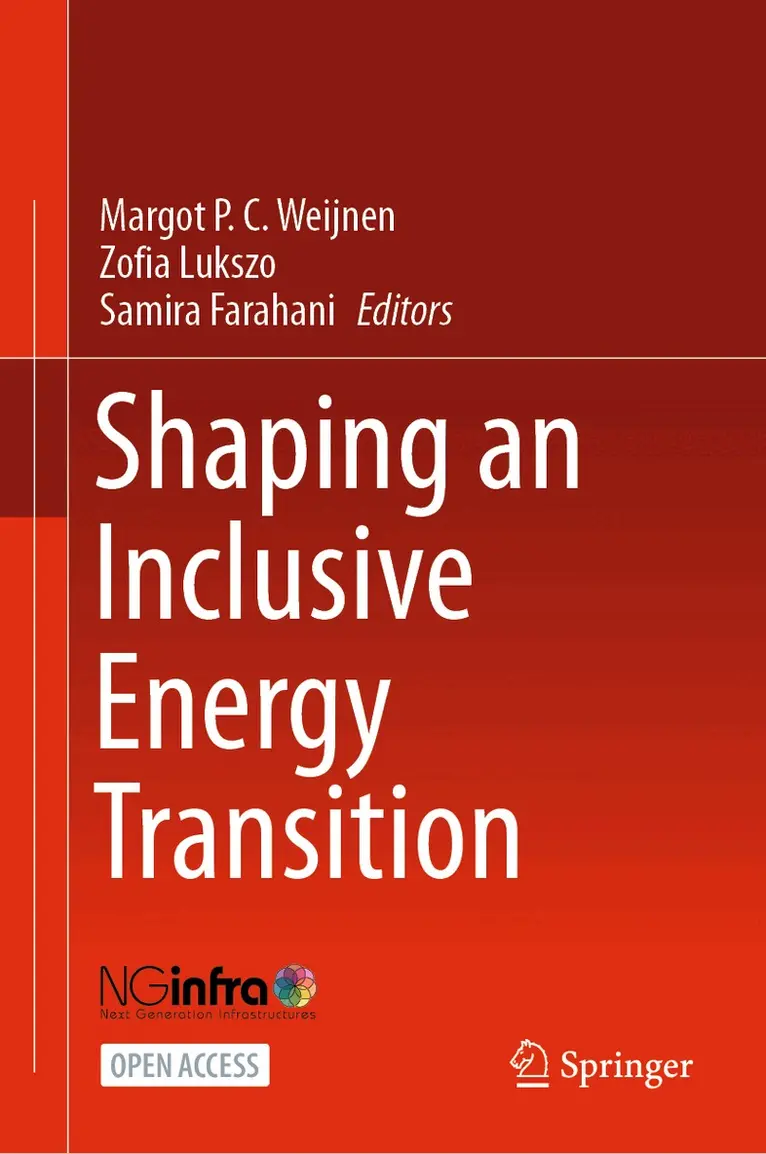
This open access book makes a case for a socially inclusive energy transition and illustrates how engineering and public policy professionals can contribute to shaping an inclusive energy transition, building on a socio-technical systems engineering approach.
432 kr
Skickas inom 10-15 vardagar
This open access book makes a case for a socially inclusive energy transition and illustrates how engineering and public policy professionals can contribute to shaping an inclusive energy transition, building on a socio-technical systems engineering approach.
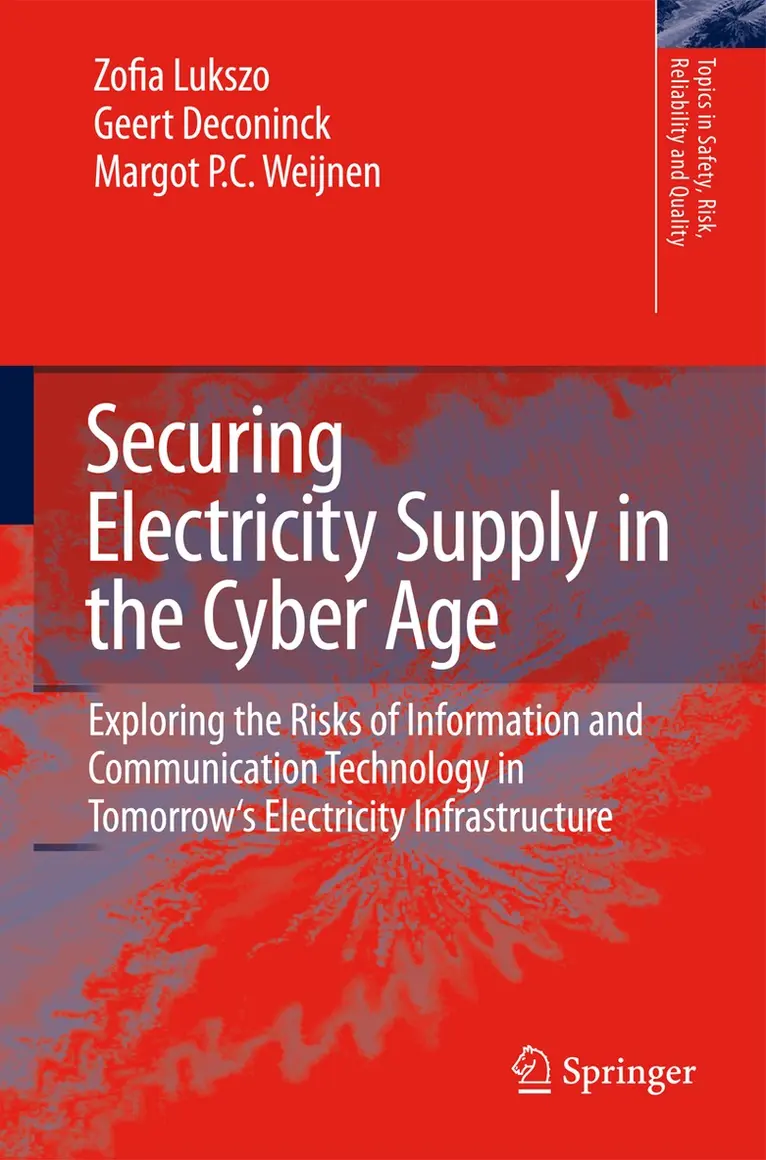
Securing Electricity Supply in the Cyber Age
Exploring the Risks of Information and Communication Technology in Tomorrow's Electricity Infrastructure
Inbunden, Engelska, 2010
1 069 kr
Skickas inom 10-15 vardagar
Margot P. C. Weijnen, Zofia Lukszo and Geert Deconinck Abstract The infrastructures for electric power and information and telecommunication services are critical enablers for all economic activity. Both of these infrastructure systems evolved over time as networks-of-networks in an institutionally fr- mented landscape. In understanding and steering the emergent behaviour of these infrastructure systems both their physical network complexity and their social n- work complexity pose a formidable challenge. On top of the socio-technical c- plexity of the electricity infrastructure and the information and telecommunication infrastructure as such, the two infrastructure systems show unprecedented mutual interdependency. Unravelling this multi-level interdependency and identifying strategies to curb the new risks and vulnerabilities it implies for the reliability of electric power services is the goal of this book. It clearly shows that technical so- tions alone will not suffice to ensure the future reliability and security of electricity infrastructure operations. Keywords Cybersecurity * infrastructure vulnerability * infrastructure depend- cies * power systems 1.1 Infrastructures Are Critical Infrastructures are the backbone of the economy and society. Especially the network bound infrastructures operated by public utilities and network industries provide essential services that are enabling for almost every economic and social activity. M. P. C. Weijnen (*) and Z. Lukszo Technology Policy and Management, Delft University of Technology, P. O. Box 5015, 2600 GA Delft, The Netherlands e-mail: M. P. C. Weijnen@tudelft. nl; Z. Lukszo@tudelft. nl G. Deconinck K. U.
1 523 kr
Skickas inom 10-15 vardagar
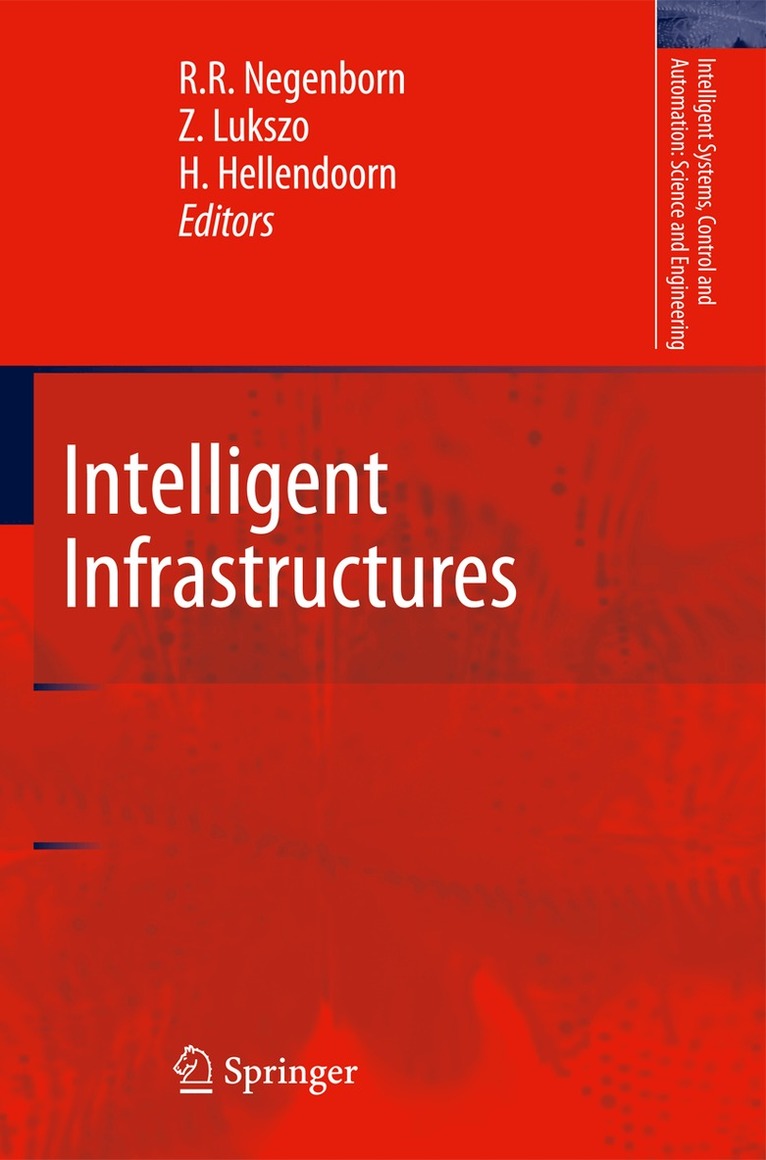
Society heavily depends on infrastructure systems, such as road-traffic networks, water networks, electricity networks, etc. Infrastructure systems are hereby considered to be large-scale, networked systems, that almost everybody uses on a daily basis, and that are so vital that their incapacity or destruction would have a debilitating impact on the defense or economic security and functioning of society. The operation and control of existing infrastructures such as road-traffic networks, water networks, electricity networks, etc. are failing: too often we are confronted with capacity problems, unsafety, unreliability and inefficiency. This book concentrates on a wide range of problems concerning the way infrastructures are functioning today and discuss novel advanced, intelligent, methods and tools for the operation and control of existing and future infrastructures.
1 523 kr
Skickas inom 10-15 vardagar
Society heavily depends on infrastructure systems, such as road-traffic networks, water networks, electricity networks, etc. Infrastructure systems are hereby considered to be large-scale, networked systems, that almost everybody uses on a daily basis, and that are so vital that their incapacity or destruction would have a debilitating impact on the defense or economic security and functioning of society. The operation and control of existing infrastructures such as road-traffic networks, water networks, electricity networks, etc. are failing: too often we are confronted with capacity problems, unsafety, unreliability and inefficiency. This book concentrates on a wide range of problems concerning the way infrastructures are functioning today and discuss novel advanced, intelligent, methods and tools for the operation and control of existing and future infrastructures.
Securing Electricity Supply in the Cyber Age
Exploring the Risks of Information and Communication Technology in Tomorrow's Electricity Infrastructure
Häftad, Engelska, 2012
1 069 kr
Skickas inom 10-15 vardagar
Margot P. C. Weijnen, Zofia Lukszo and Geert Deconinck Abstract The infrastructures for electric power and information and telecommunication services are critical enablers for all economic activity. Both of these infrastructure systems evolved over time as networks-of-networks in an institutionally fr- mented landscape. In understanding and steering the emergent behaviour of these infrastructure systems both their physical network complexity and their social n- work complexity pose a formidable challenge. On top of the socio-technical c- plexity of the electricity infrastructure and the information and telecommunication infrastructure as such, the two infrastructure systems show unprecedented mutual interdependency. Unravelling this multi-level interdependency and identifying strategies to curb the new risks and vulnerabilities it implies for the reliability of electric power services is the goal of this book. It clearly shows that technical so- tions alone will not suffice to ensure the future reliability and security of electricity infrastructure operations. Keywords Cybersecurity * infrastructure vulnerability * infrastructure depend- cies * power systems 1.1 Infrastructures Are Critical Infrastructures are the backbone of the economy and society. Especially the network bound infrastructures operated by public utilities and network industries provide essential services that are enabling for almost every economic and social activity. M. P. C. Weijnen (*) and Z. Lukszo Technology Policy and Management, Delft University of Technology, P. O. Box 5015, 2600 GA Delft, The Netherlands e-mail: M. P. C. Weijnen@tudelft. nl; Z. Lukszo@tudelft. nl G. Deconinck K. U.
1 632 kr
Skickas inom 10-15 vardagar
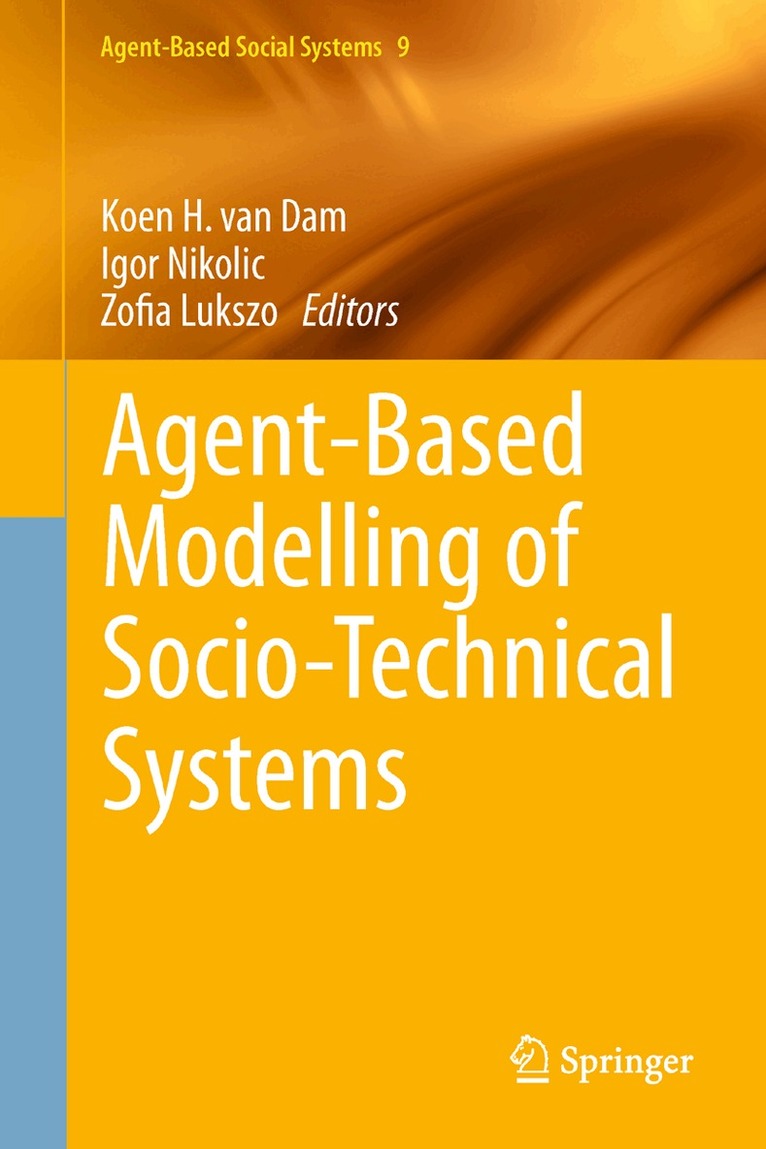
Decision makers in large scale interconnected network systems require simulation models for decision support. The behaviour of these systems is determined by many actors, situated in a dynamic, multi-actor, multi-objective and multi-level environment. How can such systems be modelled and how can the socio-technical complexity be captured? Agent-based modelling is a proven approach to handle this challenge. This book provides a practical introduction to agent-based modelling of socio-technical systems, based on a methodology that has been developed at TU Delft and which has been deployed in a large number of case studies. The book consists of two parts: the first presents the background, theory and methodology as well as practical guidelines and procedures for building models. In the second part this theory is applied to a number of case studies, where for each model the development steps are presented extensively, preparing the reader for creating own models.
1 632 kr
Skickas inom 10-15 vardagar
Decision makers in large scale interconnected network systems require simulation models for decision support. The behaviour of these systems is determined by many actors, situated in a dynamic, multi-actor, multi-objective and multi-level environment. How can such systems be modelled and how can the socio-technical complexity be captured? Agent-based modelling is a proven approach to handle this challenge. This book provides a practical introduction to agent-based modelling of socio-technical systems, based on a methodology that has been developed at TU Delft and which has been deployed in a large number of case studies. The book consists of two parts: the first presents the background, theory and methodology as well as practical guidelines and procedures for building models. In the second part this theory is applied to a number of case studies, where for each model the development steps are presented extensively, preparing the reader for creating own models.