Hans Westlund - Böcker
Visar alla böcker från författaren Hans Westlund. Handla med fri frakt och snabb leverans.
12 produkter
12 produkter
2 103 kr
Skickas inom 10-15 vardagar
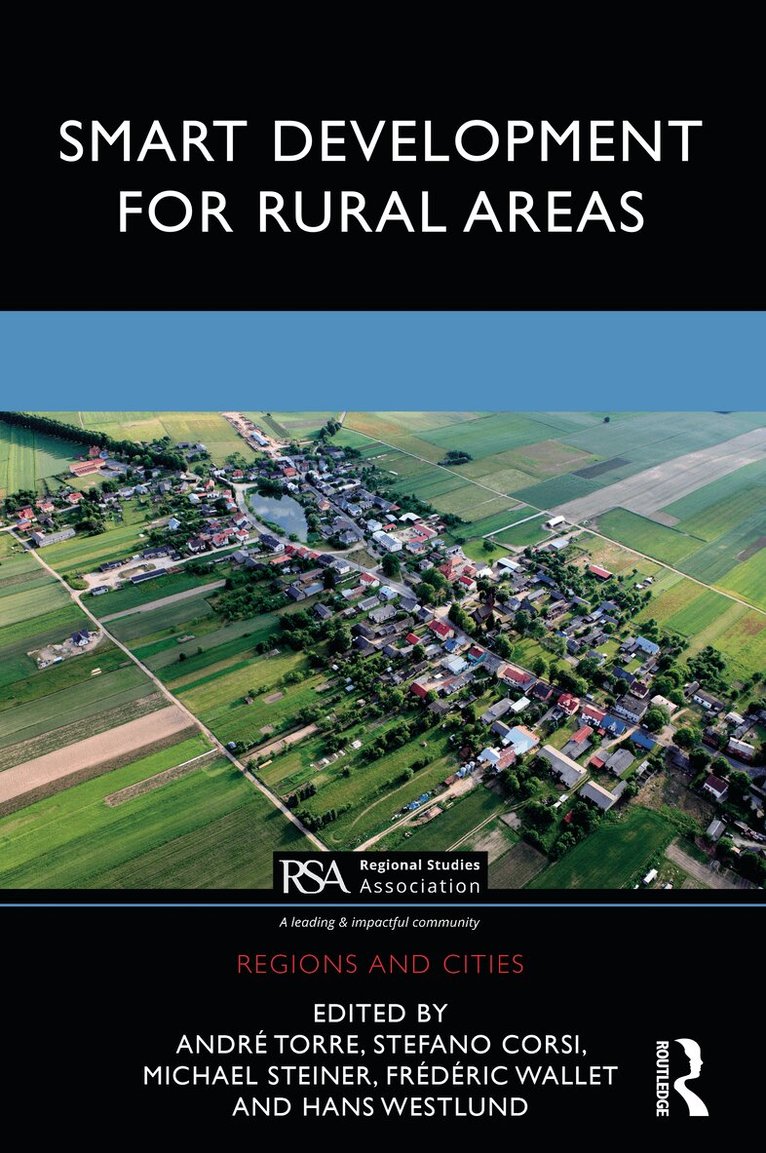
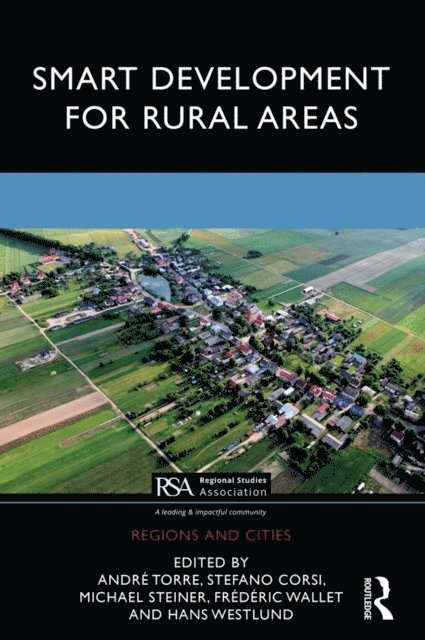
This thought-provoking book questions the framework of the Horizon 2020 strategy and the policies of smart development. It aims to answer the following question: Is there any possibility for a policy of smart development and smart specialization in rural and peri-urban areas? Based on detailed analytical studies, empirical and econometric methods, as well as various European case studies, several conclusions are drawn.Smart development policies are well adapted to the developed or intermediate regions containing at the same time rural and urban areas, but do not really function for the more rural or more peripheral regions. The development policies of rural areas must be adapted to their particular characteristics, to the structure of their economies (agriculture, small firms), as well as in their diversity (distant regions, intermediate regions, rural areas near the urban areas). It appears interesting to exploit natural and cultural amenities, to develop the multifunctional character of the agriculture, to promote territorial innovation under all its forms, to favor the synergies between the various uses of land and space, and to develop the knowledge on the ecological, socioeconomic processes, as well as on the mechanisms of territorial governance.These results are very important because they question the validity of the H2020 policy and the smart development and smart specialization policies and their applicability to the whole European area, and not only for the most urban and rich areas. It will be valuable reading for students, researchers and policy-makers in regional development, rural studies, spatial planning and economic geography.
621 kr
Skickas inom 10-15 vardagar
This thought-provoking book questions the framework of the Horizon 2020 strategy and the policies of smart development. It aims to answer the following question: Is there any possibility for a policy of smart development and smart specialization in rural and peri-urban areas? Based on detailed analytical studies, empirical and econometric methods, as well as various European case studies, several conclusions are drawn.Smart development policies are well adapted to the developed or intermediate regions containing at the same time rural and urban areas, but do not really function for the more rural or more peripheral regions. The development policies of rural areas must be adapted to their particular characteristics, to the structure of their economies (agriculture, small firms), as well as in their diversity (distant regions, intermediate regions, rural areas near the urban areas). It appears interesting to exploit natural and cultural amenities, to develop the multifunctional character of the agriculture, to promote territorial innovation under all its forms, to favor the synergies between the various uses of land and space, and to develop the knowledge on the ecological, socioeconomic processes, as well as on the mechanisms of territorial governance.These results are very important because they question the validity of the H2020 policy and the smart development and smart specialization policies and their applicability to the whole European area, and not only for the most urban and rich areas. It will be valuable reading for students, researchers and policy-makers in regional development, rural studies, spatial planning and economic geography.
2 170 kr
Skickas inom 10-15 vardagar
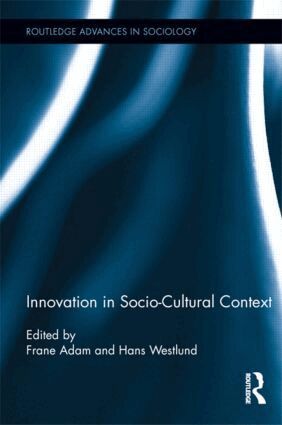
Innovation - the process of obtaining, understanding, applying, transforming, managing and transferring knowledge - is a result of human collaboration, but it has become an increasingly complex process, with a growing number of interacting parties involved. Lack of innovation is not necessarily caused by lack of technology or lack of will to innovate, but often by social and cultural forces that jeopardize the cognitive processes and prevent potential innovation. This book focuses on the rule of social capital in the process of innovation: the social networks and the norms; values and attitudes (such as trust) of the actors; social capital as both bonding and bridging links between actors; and social capital as a feature at all spatial levels, from the single inventor to the transnational corporation. Contributors from a wide variety of countries and disciplines explore the cultural framework of innovation through empirics, case studies and examination of conceptual and methodological dilemmas.
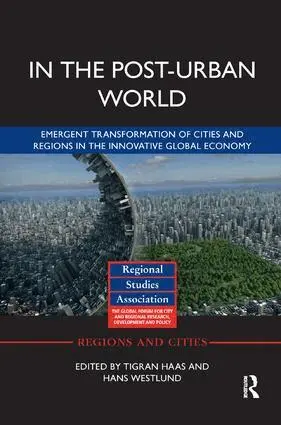
In The Post-Urban World
Emergent Transformation of Cities and Regions in the Innovative Global Economy
Häftad, Engelska, 2018
752 kr
Skickas inom 10-15 vardagar
In the last few decades, many global cities and towns have experienced unprecedented economic, social, and spatial structural change. Today, we find ourselves at the juncture between entering a post-urban and a post-political world, both presenting new challenges to our metropolitan regions, municipalities, and cities. Many megacities, declining regions and towns are experiencing an increase in the number of complex problems regarding internal relationships, governance, and external connections. In particular, a growing disparity exists between citizens that are socially excluded within declining physical and economic realms and those situated in thriving geographic areas. This book conveys how forces of structural change shape the urban landscape.In The Post-Urban World is divided into three main sections: Spatial Transformations and the New Geography of Cities and Regions; Urbanization, Knowledge Economies, and Social Structuration; and New Cultures in a Post-Political and Post-Resilient World. One important subject covered in this book, in addition to the spatial and economic forces that shape our regions, cities, and neighbourhoods, is the social, cultural, ecological, and psychological aspects which are also critically involved. Additionally, the urban transformation occurring throughout cities is thoroughly discussed. Written by today’s leading experts in urban studies, this book discusses subjects from different theoretical standpoints, as well as various methodological approaches and perspectives; this is alongside the challenges and new solutions for cities and regions in an interconnected world of global economies. This book is aimed at both academic researchers interested in regional development, economic geography and urban studies, as well as practitioners and policy makers in urban development.
676 kr
Skickas inom 10-15 vardagar
Innovation - the process of obtaining, understanding, applying, transforming, managing and transferring knowledge - is a result of human collaboration, but it has become an increasingly complex process, with a growing number of interacting parties involved. Lack of innovation is not necessarily caused by lack of technology or lack of will to innovate, but often by social and cultural forces that jeopardize the cognitive processes and prevent potential innovation. This book focuses on the rule of social capital in the process of innovation: the social networks and the norms; values and attitudes (such as trust) of the actors; social capital as both bonding and bridging links between actors; and social capital as a feature at all spatial levels, from the single inventor to the transnational corporation. Contributors from a wide variety of countries and disciplines explore the cultural framework of innovation through empirics, case studies and examination of conceptual and methodological dilemmas.
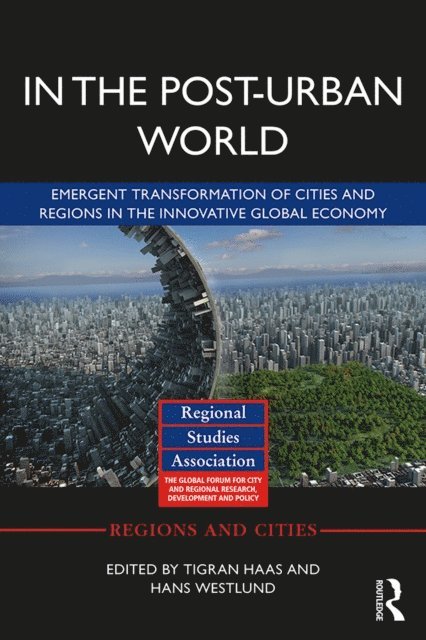
In The Post-Urban World
Emergent Transformation of Cities and Regions in the Innovative Global Economy
Inbunden, Engelska, 2017
2 374 kr
Skickas inom 10-15 vardagar
Winner of the Regional Studies Association's Best Book Award 2018.In the last few decades, many global cities and towns have experienced unprecedented economic, social, and spatial structural change. Today, we find ourselves at the juncture between entering a post-urban and a post-political world, both presenting new challenges to our metropolitan regions, municipalities, and cities. Many megacities, declining regions and towns are experiencing an increase in the number of complex problems regarding internal relationships, governance, and external connections. In particular, a growing disparity exists between citizens that are socially excluded within declining physical and economic realms and those situated in thriving geographic areas. This book conveys how forces of structural change shape the urban landscape.In The Post-Urban World is divided into three main sections: Spatial Transformations and the New Geography of Cities and Regions; Urbanization, Knowledge Economies, and Social Structuration; and New Cultures in a Post-Political and Post-Resilient World. One important subject covered in this book, in addition to the spatial and economic forces that shape our regions, cities, and neighbourhoods, is the social, cultural, ecological, and psychological aspects which are also critically involved. Additionally, the urban transformation occurring throughout cities is thoroughly discussed. Written by today’s leading experts in urban studies, this book discusses subjects from different theoretical standpoints, as well as various methodological approaches and perspectives; this is alongside the challenges and new solutions for cities and regions in an interconnected world of global economies. This book is aimed at both academic researchers interested in regional development, economic geography and urban studies, as well as practitioners and policy makers in urban development.
2 187 kr
Skickas inom 7-10 vardagar
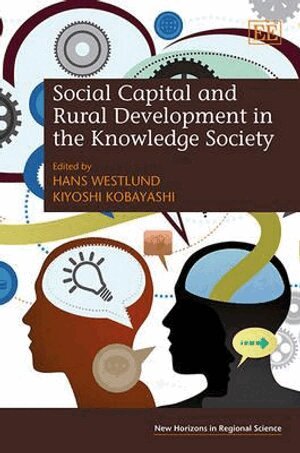
Social capital is often considered a key factor for local development. This book analyzes the role of social capital for rural areas' survival and development in the current age of metropolitan growth - an era in which urban is the norm and where rural areas must adapt to this new situation and build innovative urban-rural relations.The traditional division between 'rural' and 'urban' is no longer valid in the knowledge society. Instead of being a homogeneous unit based on primary sector production, the countryside in the developed world increasingly consists of areas with very different development paths. With examples from Europe, Asia and America, the book discusses building and renewal of rural social capital from both bottom-up and top-down perspectives, and from the standpoint of business, and both the public and private sectors.Being the first book to treat social capital and rural development in the age of megacities and the knowledge economy, it will be of great benefit to academics interested in social capital research and rural development.Contributors: L. Dahlgren, K. Eliasson, M. Emmelin, M. Eriksson, S. Fölster, A. Forsberg, A. Gasior-Niemiec, T. Hatori, K. Ito, H. Jeong, K. Kobayashi, Y. Li, D. Natcher, M.R. Olfert, G. Ray, C. Waldenström, L. Westin, H. Westlund, J. Zola
3 477 kr
Skickas inom 7-10 vardagar
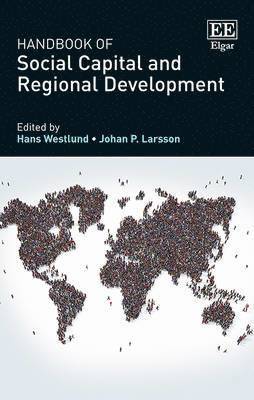
The role of social capital in regional development is a multifaceted topic which is studied all over the world using various methods and across numerous disciplines. It has long been evident that social capital is important for regional development, however, it is less clear how this works in practice. Do all types of social capital have the same effects and are different kinds of regions impacted in the same way? This book is the first to offer an overview of this rapidly expanding field of research and to thoroughly analyze the complex issue of social capital and regional development.The authoritative and original chapters, written by leading scholars from around the world, combine theory and new empirical research to analyze various types of regions from metropolitan to rural. A particular focus is on entrepreneurship and the social capital of enterprises, whilst the role of social capital for modern governance and planning is also highlighted. The different components of social capital and data availability are also treated in depth. This handbook is an ideal resource for students and scholars studying social capital, social networks, and regional growth and development.It also offers great insight for policymaker and planners in the fields of urban, regional and rural development.Contributors include: M. Andersson, P. Arenius, R.E. Bolton, N. Bosma, A. Christoforou, M. Emmelin, M. Eriksson, M.P. Feldman, E. Ferragina, R. Franzén, M. Fritsch, T. Hatori, D. Iriwati, B. Johannisson, B. Johansson, L. King, K. Kobayashi, J.P. Larsson, M. Lindberg, M. Ljunggren, J. Peiró-Palomino, E. Pisani, J. Poot, Y. Pu, M. Ramírez Pasillas, M. Roskruge, R. Rutten, V. Schutjens, E. Setiawan, T.F. Slaper, M.F. Thompson, E. Tortosa-Ausina, B. Volker, J. Wernberg, H. Westlund, M. Wyrwich, A. Xiong, T.D. Zoller
1 770 kr
Skickas inom 7-10 vardagar
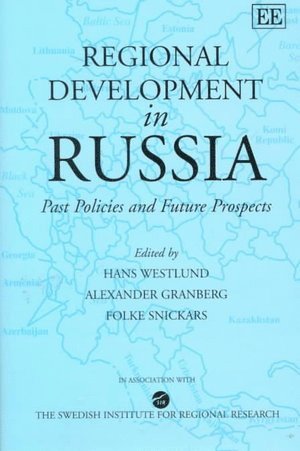
Ten years ago the former Soviet Union was pictured in the West as a monolithic unit governed from Moscow with a firm hand. Today, the geographical area which once constituted the USSR no longer exists and the disparities between regions are increasing all the time. This is the first book to provide an overview of Russia's regional development during the entire Soviet period as well as presenting a penetrating analysis of the array of regional problems facing Russia as we move into the twenty-first century. It analyses factors contributing to cohesion and disintegration in Russia today, stressing the importance of ethnicity, religion and Russian nationalism. In examining regional developments and spatial policy during the Soviet period, the authors reveal a remarkable paradox that the development of heavy industry actually reduced regional inequalities, but as the economy diversified disparities widened. The book is also a document from 'the people who were there' - that is, those trying in the circumstances then prevailing to develop regional science which never achieved practical application under central planning. The authors conclude that the development of Russia is increasingly becoming an issue of the development of its regions.This book will be useful for academics working in the areas of transitional economics, economic geography, particularly those interested in long term regional divergence and convergence, and economic history.
1 073 kr
Skickas inom 10-15 vardagar
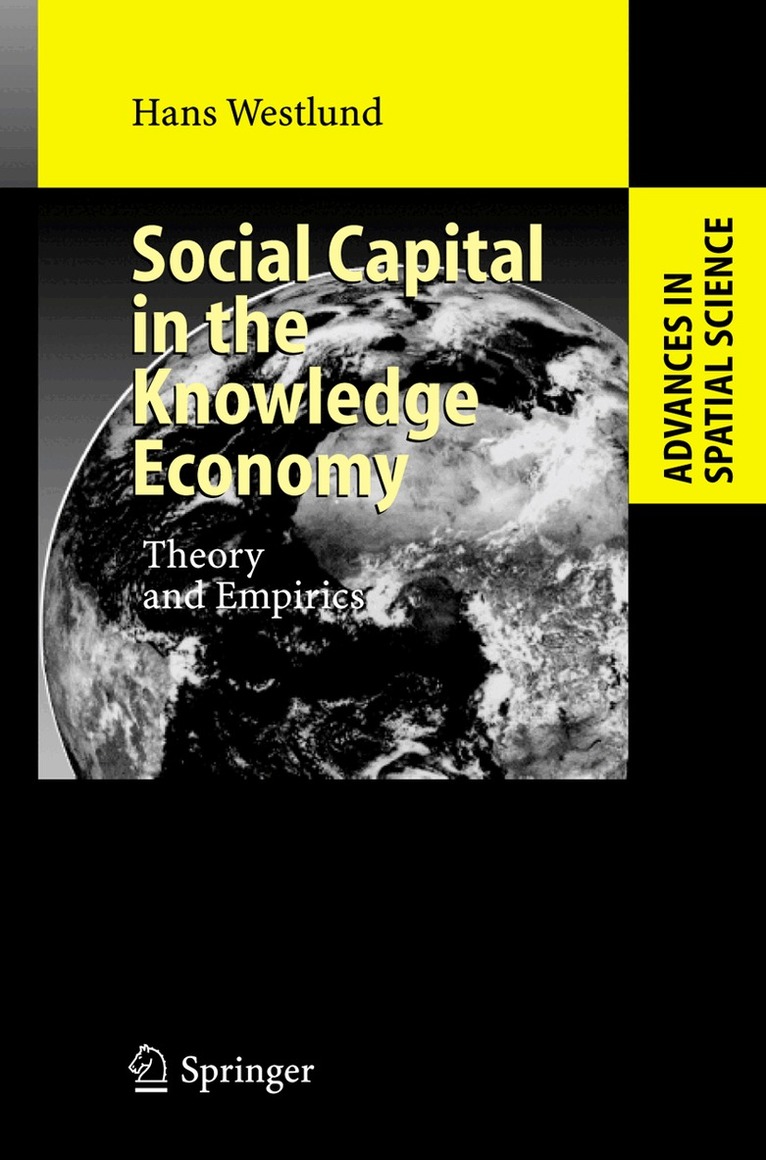
It is possible that there once was a time when scholars used to sit isolated with their cogitations in their attics, emerging now and then to publish their latest e- dite offerings which no one had ever thought of before. If such a time did once - ist, it certainly does so no longer. Writing a scientific or scholarly book in our era is to a large extent a team effort in which your team members are continually changing and you are unceasingly grateful for the privilege of enjoying and be- fiting from the exertions, ideas, comments and support of a large number of very able people. Scientific and scholarly work nowadays is a process impossible wi- out the existence and use of social capital. This book is no exception to the above stated. There are very many colleagues (some of them referees and thus anonymous) and friends who have made the book possible. The foremost of these is Roger Bolton, with whom I wrote my first paper on social capital. Most of that paper has found its way into various passages of this book, while Chapter 6, Social Capital and Entrepreneurship, comes almost c- pletely from Roger's pen. Thank you, Roger, for letting me use your text! The empirical studies of the biotech industries of Japan, California and Sweden would have been impossible without a great deal of help.
1 105 kr
Skickas inom 10-15 vardagar
It is possible that there once was a time when scholars used to sit isolated with their cogitations in their attics, emerging now and then to publish their latest e- dite offerings which no one had ever thought of before. If such a time did once - ist, it certainly does so no longer. Writing a scientific or scholarly book in our era is to a large extent a team effort in which your team members are continually changing and you are unceasingly grateful for the privilege of enjoying and be- fiting from the exertions, ideas, comments and support of a large number of very able people. Scientific and scholarly work nowadays is a process impossible wi- out the existence and use of social capital. This book is no exception to the above stated. There are very many colleagues (some of them referees and thus anonymous) and friends who have made the book possible. The foremost of these is Roger Bolton, with whom I wrote my first paper on social capital. Most of that paper has found its way into various passages of this book, while Chapter 6, Social Capital and Entrepreneurship, comes almost c- pletely from Roger's pen. Thank you, Roger, for letting me use your text! The empirical studies of the biotech industries of Japan, California and Sweden would have been impossible without a great deal of help.
161 kr
Skickas inom 5-8 vardagar