Heather Logue – författare
Visar alla böcker från författaren Heather Logue. Handla med fri frakt och snabb leverans.
6 produkter
6 produkter
E-bok
PDF, Engelska, 20211 086 kr
Läs direkt efter köp
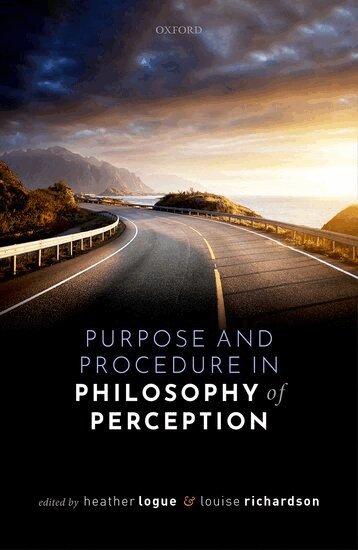
Contemporary philosophy of perception is dominated by highly polarized debates. The polarization is particularly acute in the debate between naïve realist disjunctivists and their opponents, but divisions seem almost as stark in other areas of dispute, for example, the debate over whether we experience so-called ''high-level'' properties, and the debate concerning individuation of the senses. The guiding hypothesis underlying this volume is that such polarization stems from insufficient attention to how we should go about settling these debates. In general, there is widespread, largely implicit disagreement concerning what philosophical theories of perception are supposed to explain, the claims that we should hold fixed in the course of theorizing, and the methods that such theorizing should employ. The goal of this volume is to move such methodological questions from the background to the front of the debate, in the hope of facilitating progress. The contributions constitute an initial effort to spur more explicit, systematic discussion of methodology in philosophy of perception, covering a wide range of relevant topics, from the relation between scientific and philosophical theorizing about perception, to lessons we can learn from the history of philosophy of perception.
E-bok
Engelska, 20211 086 kr
Läs direkt efter köp
Contemporary philosophy of perception is dominated by highly polarized debates. The polarization is particularly acute in the debate between naïve realist disjunctivists and their opponents, but divisions seem almost as stark in other areas of dispute, for example, the debate over whether we experience so-called ''high-level'' properties, and the debate concerning individuation of the senses. The guiding hypothesis underlying this volume is that such polarization stems from insufficient attention to how we should go about settling these debates. In general, there is widespread, largely implicit disagreement concerning what philosophical theories of perception are supposed to explain, the claims that we should hold fixed in the course of theorizing, and the methods that such theorizing should employ. The goal of this volume is to move such methodological questions from the background to the front of the debate, in the hope of facilitating progress. The contributions constitute an initial effort to spur more explicit, systematic discussion of methodology in philosophy of perception, covering a wide range of relevant topics, from the relation between scientific and philosophical theorizing about perception, to lessons we can learn from the history of philosophy of perception.
Inbunden, Engelska, 2021
1 336 kr
Skickas inom 5-8 vardagar
Contemporary philosophy of perception is dominated by highly polarized debates. The polarization is particularly acute in the debate between naïve realist disjunctivists and their opponents, but divisions seem almost as stark in other areas of dispute, for example, the debate over whether we experience so-called 'high-level' properties, and the debate concerning individuation of the senses. The guiding hypothesis underlying this volume is that such polarization stems from insufficient attention to how we should go about settling these debates. In general, there is widespread, largely implicit disagreement concerning what philosophical theories of perception are supposed to explain, the claims that we should hold fixed in the course of theorizing, and the methods that such theorizing should employ. The goal of this volume is to move such methodological questions from the background to the front of the debate, in the hope of facilitating progress. The contributions constitute an initial effort to spur more explicit, systematic discussion of methodology in philosophy of perception, covering a wide range of relevant topics, from the relation between scientific and philosophical theorizing about perception, to lessons we can learn from the history of philosophy of perception.
Häftad, Engelska, 2026
239 kr
Kommande
This Element brings three topics into closer contact: scepticism about the external world, the metaphysics of perception, and the epistemology of perception. It argues that a certain kind of response to external world scepticism is significantly stronger if we make certain theoretical commitments regarding the metaphysics and epistemology of perception. Particularly, it argues that a neo-Moorean epistemological disjunctivist response to scepticism is much more compelling when underpinned by a naïve realist theory of perceptual phenomenal character and the transparency model of how we acquire knowledge of our perceptual states. The possibility that these theories are true radically alters the dialectical situation with respect to external world scepticism: the sceptical argument is on much shakier ground than is usually appreciated. Integrating our theorising about our knowledge of the external world and our theorising about the metaphysics and epistemology of perception affords a more comprehensive view of our anti-sceptical options.
Inbunden, Engelska, 2026
769 kr
Kommande
This Element brings three topics into closer contact: scepticism about the external world, the metaphysics of perception, and the epistemology of perception. It argues that a certain kind of response to external world scepticism is significantly stronger if we make certain theoretical commitments regarding the metaphysics and epistemology of perception. Particularly, it argues that a neo-Moorean epistemological disjunctivist response to scepticism is much more compelling when underpinned by a naïve realist theory of perceptual phenomenal character and the transparency model of how we acquire knowledge of our perceptual states. The possibility that these theories are true radically alters the dialectical situation with respect to external world scepticism: the sceptical argument is on much shakier ground than is usually appreciated. Integrating our theorising about our knowledge of the external world and our theorising about the metaphysics and epistemology of perception affords a more comprehensive view of our anti-sceptical options.
Häftad, Engelska, 2008
184 kr
Tillfälligt slut