Heike Holbig – författare
Visar alla böcker från författaren Heike Holbig. Handla med fri frakt och snabb leverans.
8 produkter
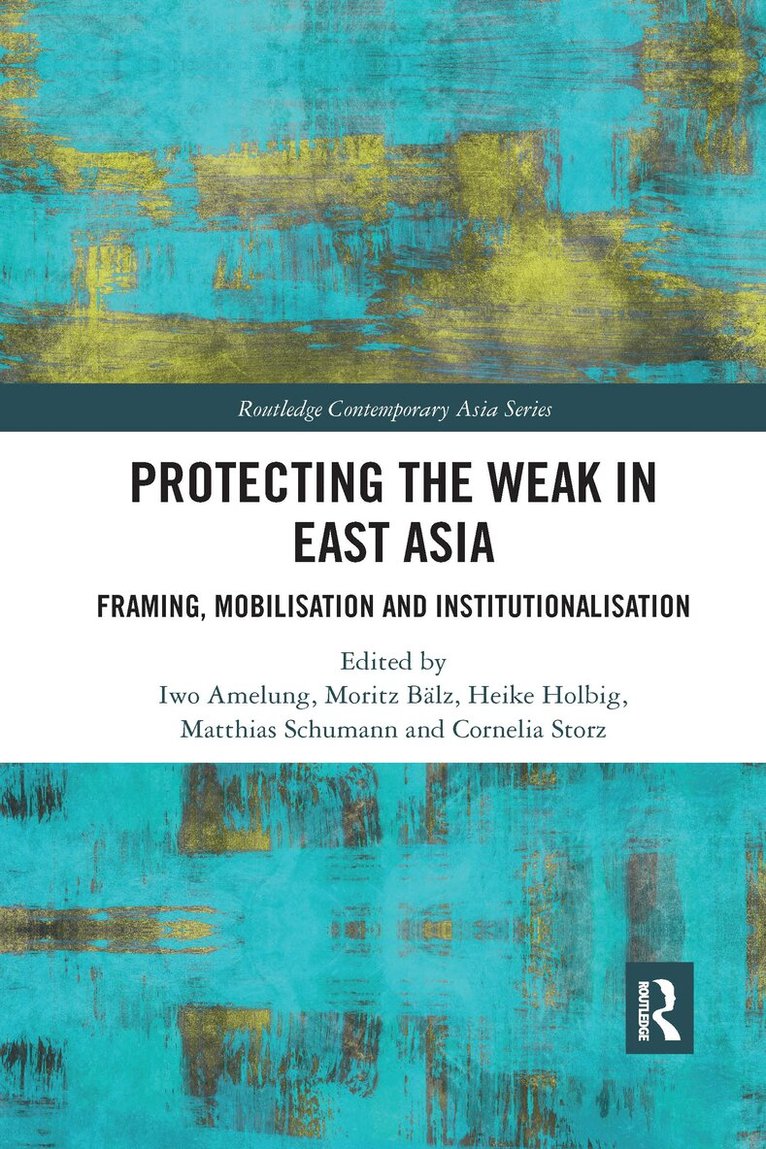
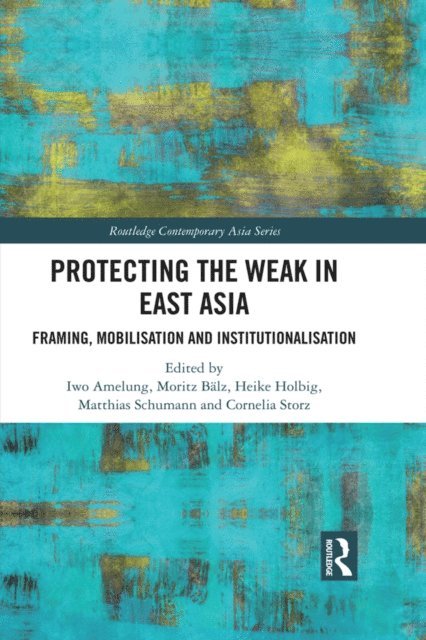
Protecting the Weak in East Asia
Framing, Mobilisation and Institutionalisation
Av Iwo Amelung, Moritz Bälz m. fl.
Häftad, 2021
710 kr
Lägg i varukorg
This book investigates public claims for the protection of weak groups and interests in Japan and China from the nineteenth century to the present day. Taking an interdisciplinary approach, it engages with ongoing global debates relevant to both Western and non-Western societies whilst also …
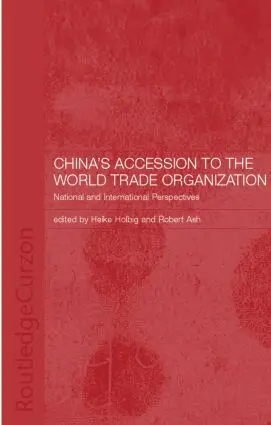
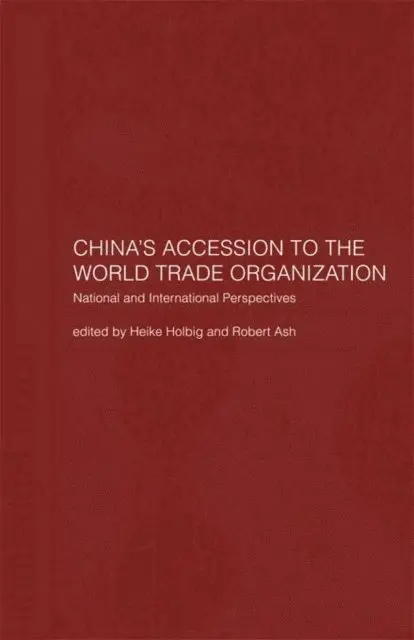
China's Accession to the World Trade Organization
National and International Perspectives
Inbunden, 2002
2506 kr
Lägg i varukorg
With China's accession to the World Trade Organization imminent, this book brings together the expert views of scholars, policy-makers and business representatives on the consequences of this historic event. Insight into the past and future of China's relationship to the WTO is offered by authors …
Protecting the Weak in East Asia
Framing, Mobilisation and Institutionalisation
Av Iwo Amelung, Moritz Bälz m. fl.
Inbunden, 2018
2590 kr
Lägg i varukorg
This book investigates public claims for the protection of weak groups and interests in Japan and China from the nineteenth century to the present day. Taking an interdisciplinary approach, it engages with ongoing global debates relevant to both Western and non-Western societies whilst also …
China's Accession to the World Trade Organization
National and International Perspectives
E-bok, 2013
871 kr
Lägg i varukorg
With China''s accession to the World Trade Organization imminent, this book brings together the expert views of scholars, policy-makers and business representatives on the consequences of this historic event. Insight into the past and future of China''s relationship to the WTO is offered by authors …
China's Accession to the World Trade Organization
National and International Perspectives
E-bok, 2013
845 kr
Lägg i varukorg
With China''s accession to the World Trade Organization imminent, this book brings together the expert views of scholars, policy-makers and business representatives on the consequences of this historic event. Insight into the past and future of China''s relationship to the WTO is offered by authors …
China's Accession to the World Trade Organization
National and International Perspectives
Häftad, 2016
691 kr
Lägg i varukorg
With China's accession to the World Trade Organization imminent, this book brings together the expert views of scholars, policy-makers and business representatives on the consequences of this historic event. Insight into the past and future of China's relationship to the WTO is offered by authors …
Protecting the Weak in East Asia
Framing, Mobilisation and Institutionalisation
Av Cornelia Storz, Matthias Schumann m. fl.
E-bok, 2018
796 kr
Lägg i varukorg
This book investigates public claims for the protection of weak groups and interests in Japan and China from the nineteenth century to the present day. Taking an interdisciplinary approach, it engages with ongoing global debates relevant to both Western and non-Western societies whilst also …
Protecting the Weak in East Asia
Framing, Mobilisation and Institutionalisation
Av Cornelia Storz, Matthias Schumann m. fl.
E-bok, 2018
814 kr
Lägg i varukorg
This book investigates public claims for the protection of weak groups and interests in Japan and China from the nineteenth century to the present day. Taking an interdisciplinary approach, it engages with ongoing global debates relevant to both Western and non-Western societies whilst also …