Heikki Lempa – författare
1 231 kr
Läs direkt efter köp
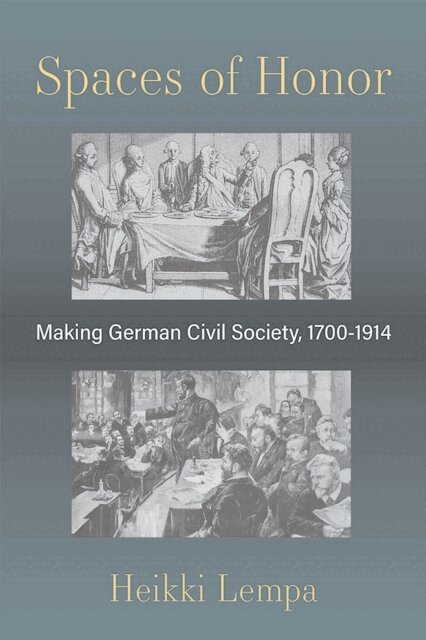
The common understanding is that honor belongs to a bygone era, whereas civil society belongs to the future and modern society. Heikki Lempa argues that honor was not gone or even in decline between 1700 and 1914, and that civil society was not new but had long roots that stretched into the Middle Ages. In fact, what is peculiar for this era in Germany were the deep connections between practices of honor and civil society. This study focuses on collective actions of honor and finds them, in a series of case studies, at such communal spaces as schools, theaters, lunch and dinner tables, spas, workers’ strikes, and demonstrations. It is in these collective actions that we see civil society in making.
The Spaces of Honor sees civil society not primarily as an idea or an intellectual project but as a set of practices shaped in physical spaces. Around 1700, the declining power of religious authorities allowed German intellectuals to redefine civil society, starting with a new language of honor. Then, in the middle of the eighteenth century, an increasing number of voluntary associations and public spaces turned it into reality. Here, honor provided cohesion. In the nineteenth century, urbanization and industrialization ushered in powerful forces of atomization that civil society attempted to remedy. The remedy came from social and physical spaces that generated a culture of honor and emotional belonging. We find them in voluntary associations, spas, revived guilds, and labor unions. By the end of the nineteenth century, honor was deeply embedded in German civil society.
1 136 kr
Skickas inom 5-8 vardagar
1 583 kr
Skickas inom 10-15 vardagar
795 kr
Skickas inom 10-15 vardagar
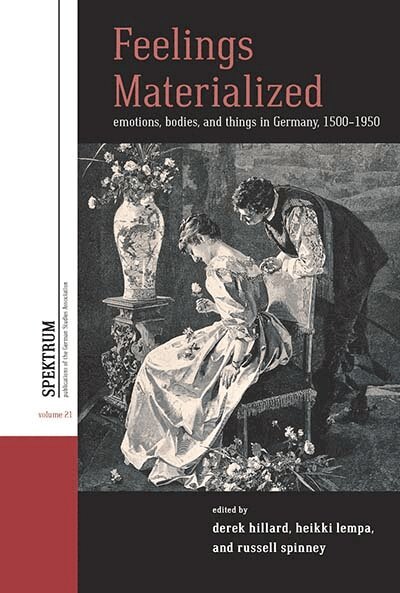
Feelings Materialized
Emotions, Bodies, and Things in Germany, 1500-1900
2 058 kr
Skickas inom 3-6 vardagar
326 kr
Läs direkt efter köp
Of the many innovative approaches to emerge during the twenty-first century, one of the most productive has been the interdisciplinary nexus of theories and methodologies broadly defined as “the study of emotions.” While this conceptual toolkit has generated significant insights, it has overwhelmingly focused on emotions as linguistic and semantic phenomena. This edited volume looks instead to the material aspects of emotion in German culture, encompassing the body, literature, photography, aesthetics, and a variety of other themes.
594 kr
Skickas inom 3-6 vardagar
2 207 kr
Skickas inom 5-8 vardagar
2 232 kr
Läs direkt efter köp
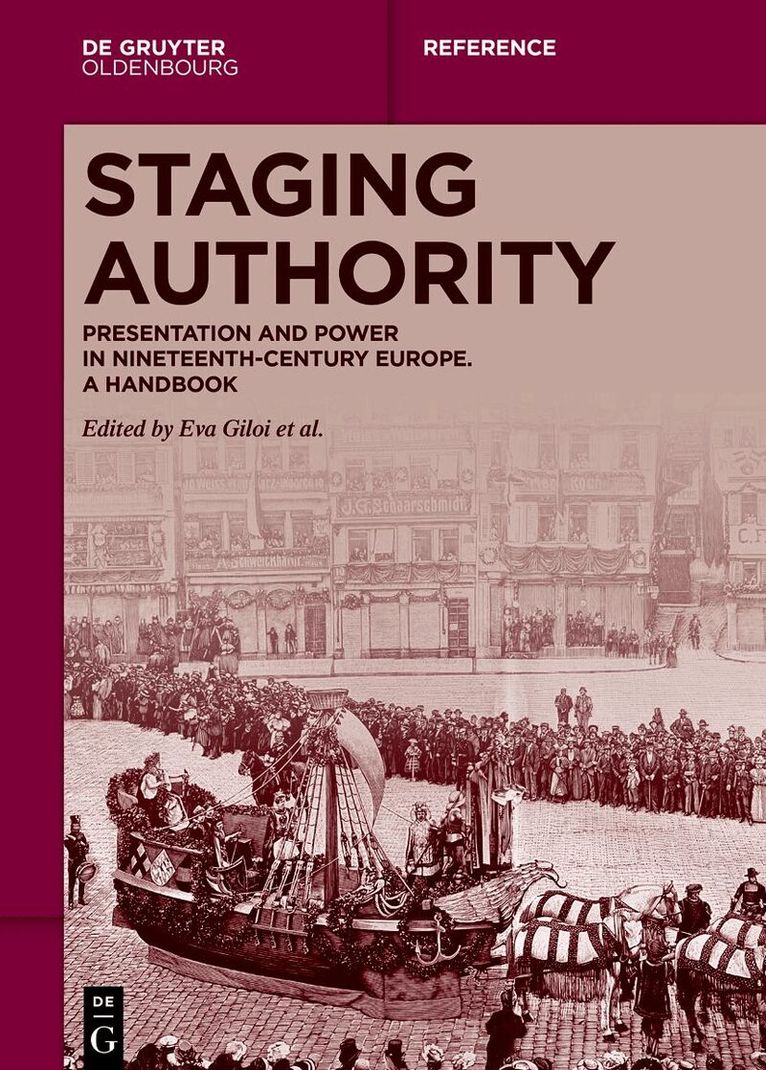
Staging Authority: Presentation and Power in Nineteenth-Century Europe is a comprehensive handbook on how the presentation, embodiment, and performance of authority changed in the long nineteenth century. It focuses on the diversification of authority: what new forms and expressions of authority arose in that critical century, how traditional authority figures responded and adapted to those changes, and how the public increasingly participated in constructing and validating authority. It pays particular attention to how spaces were transformed to offer new possibilities for the presentation of authority, and how the mediatization of presence affected traditional authority. The handbook’s fourteen chapters draw on innovative methodologies in cultural history and the aligned fields of the history of emotions, urban geography, persona studies, gender studies, media studies, and sound studies.
2 232 kr
Läs direkt efter köp
Staging Authority: Presentation and Power in Nineteenth-Century Europe is a comprehensive handbook on how the presentation, embodiment, and performance of authority changed in the long nineteenth century. It focuses on the diversification of authority: what new forms and expressions of authority arose in that critical century, how traditional authority figures responded and adapted to those changes, and how the public increasingly participated in constructing and validating authority. It pays particular attention to how spaces were transformed to offer new possibilities for the presentation of authority, and how the mediatization of presence affected traditional authority. The handbook’s fourteen chapters draw on innovative methodologies in cultural history and the aligned fields of the history of emotions, urban geography, persona studies, gender studies, media studies, and sound studies.