Helen Tiffin - Böcker
Visar alla böcker från författaren Helen Tiffin. Handla med fri frakt och snabb leverans.
14 produkter
14 produkter
2 402 kr
Skickas inom 10-15 vardagar
The experience of colonization and the challenges of a post-colonial world have produced an explosion of new writing in English. This diverse and powerful body of literature has established a specific practice of post-colonial writing in cultures as various as India, Australia, the West Indies and Canada, and has challenged both the traditional canon and dominant ideas of literature and culture.The Empire Writes Back was the first major theoretical account of a wide range of post-colonial texts and their relation to the larger issues of post-colonial culture, and remains one of the most significant works published in this field. The authors, three leading figures in post-colonial studies, open up debates about the interrelationships of post-colonial literatures, investigate the powerful forces acting on language in the post-colonial text, and show how these texts constitute a radical critique of Eurocentric notions of literature and language. This book is brilliant not only for its incisive analysis, but for its accessibility for readers new to the field. Now with an additional chapter and an updated bibliography, The Empire Writes Back is essential for contemporary post-colonial studies.
476 kr
Skickas inom 10-15 vardagar
The experience of colonization and the challenges of a post-colonial world have produced an explosion of new writing in English. This diverse and powerful body of literature has established a specific practice of post-colonial writing in cultures as various as India, Australia, the West Indies and Canada, and has challenged both the traditional canon and dominant ideas of literature and culture.The Empire Writes Back was the first major theoretical account of a wide range of post-colonial texts and their relation to the larger issues of post-colonial culture, and remains one of the most significant works published in this field. The authors, three leading figures in post-colonial studies, open up debates about the interrelationships of post-colonial literatures, investigate the powerful forces acting on language in the post-colonial text, and show how these texts constitute a radical critique of Eurocentric notions of literature and language. This book is brilliant not only for its incisive analysis, but for its accessibility for readers new to the field. Now with an additional chapter and an updated bibliography, The Empire Writes Back is essential for contemporary post-colonial studies.
2 209 kr
Tillfälligt slut
The essential introduction to the most important texts in post-colonial theory and criticism, this second edition has been thoroughly revised and updated to include 121 extracts from key works in the field. Leading, as well as lesser known figures in the fields of writing, theory and criticism contribute to this inspiring body of work that includes sections on nationalism, hybridity, diaspora and globalization. The Reader’s wide-ranging approach reflects the remarkable diversity of work in the discipline along with the vibrancy of anti-imperialist writing both within and without the metropolitan centres. Covering more debates, topics and critics than any comparable book in its field, The Post-Colonial Studies Reader is the ideal starting point for students and issues a potent challenge to the ways in which we think and write about literature and culture.
523 kr
Tillfälligt slut
The essential introduction to the most important texts in post-colonial theory and criticism, this second edition has been thoroughly revised and updated to include 121 extracts from key works in the field. Leading, as well as lesser known figures in the fields of writing, theory and criticism contribute to this inspiring body of work that includes sections on nationalism, hybridity, diaspora and globalization. The Reader’s wide-ranging approach reflects the remarkable diversity of work in the discipline along with the vibrancy of anti-imperialist writing both within and without the metropolitan centres. Covering more debates, topics and critics than any comparable book in its field, The Post-Colonial Studies Reader is the ideal starting point for students and issues a potent challenge to the ways in which we think and write about literature and culture.
1 358 kr
Tillfälligt slut
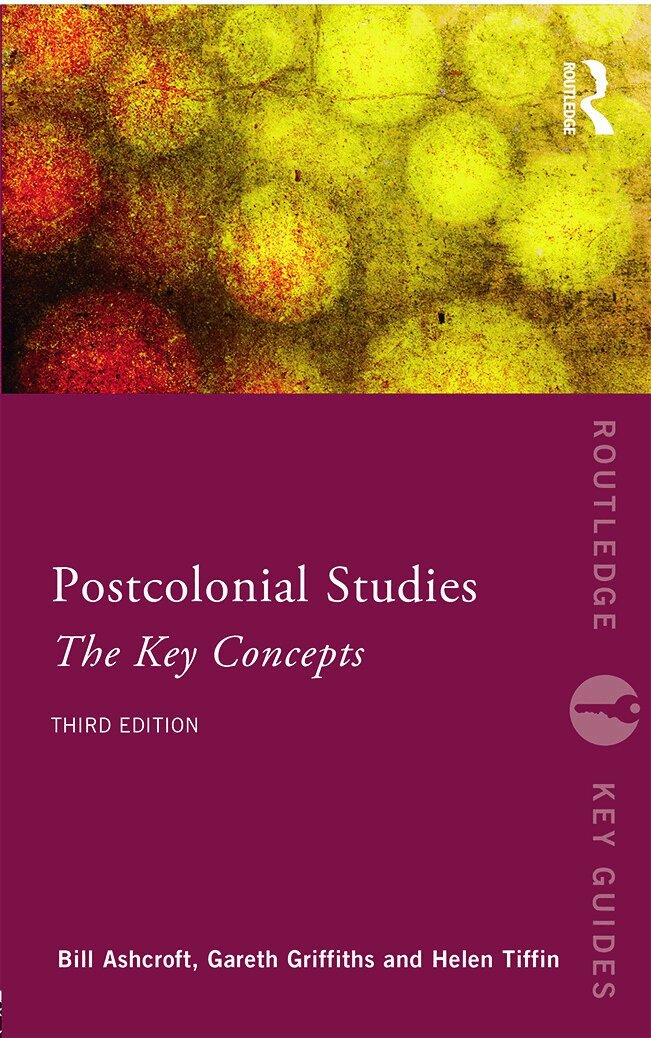
This hugely popular A-Z guide provides a comprehensive overview of the issues which characterize post-colonialism: explaining what it is, where it is encountered and the crucial part it plays in debates about race, gender, politics, language and identity. For this third edition over thirty new entries have been added including:CosmopolitanismDevelopmentFundamentalismNostalgiaPost-colonial cinemaSustainabilityTraffickingWorld Englishes.Post-Colonial Studies: The Key Concepts remains an essential guide for anyone studying this vibrant field.
341 kr
Tillfälligt slut
This hugely popular A-Z guide provides a comprehensive overview of the issues which characterize post-colonialism: explaining what it is, where it is encountered and the crucial part it plays in debates about race, gender, politics, language and identity. For this third edition over thirty new entries have been added including:CosmopolitanismDevelopmentFundamentalismNostalgiaPost-colonial cinemaSustainabilityTraffickingWorld Englishes.Post-Colonial Studies: The Key Concepts remains an essential guide for anyone studying this vibrant field.
292 kr
Skickas inom 7-10 vardagar
Wild Man from Borneo offers the first comprehensive history of the human-orangutan encounter. Arguably the most humanlike of all the great apes, particularly in intelligence and behavior, the orangutan has been cherished, used, and abused ever since it was first brought to the attention of Europeans in the seventeenth century. The red ape has engaged the interest of scientists, philosophers, artists, and the public at large in a bewildering array of guises that have by no means been exclusively zoological or ecological. One reason for such a long-term engagement with a being found only on the islands of Borneo and Sumatra is that, like its fellow great apes, the orangutan stands on that most uncomfortable dividing line between human and animal, existing, for us, on what has been called “the dangerous edge of the garden of nature.” Beginning with the scientific discovery of the red ape more than three hundred years ago, this work goes on to examine the ways in which its human attributes have been both recognized and denied in science, philosophy, travel literature, popular science, literature, theatre, museums, and film. The authors offer a provocative analysis of the origin of the name “orangutan,” trace how the ape has been recruited to arguments on topics as diverse as slavery and rape, and outline the history of attempts to save the animal from extinction. Today, while human populations increase exponentially, that of the orangutan is in dangerous decline. The remaining “wild men of Borneo” are under increasing threat from mining interests, logging, human population expansion, and the widespread destruction of forests. The authors hope that this history will, by adding to our knowledge of this fascinating being, assist in some small way in their preservation.
632 kr
Skickas inom 10-15 vardagar
The most comprehensive collection of postcolonial writing theory and criticism, this third edition has been thoroughly revised and updated to include 125 extracts from key works in the field.Leading, as well as lesser-known figures in the fields of writing, theory and criticism contribute to this inspiring body of work that includes sections on nationalism, hybridity, diaspora and globalisation. As in the first two editions, this new edition of The Postcolonial Studies Reader ranges as widely as possible to reflect the remarkable diversity of work in the discipline and the vibrancy of anti-imperialist and decolonising writing both within and without the metropolitan centres.This volume includes new work in the field over the decade and a half since the second edition was published. Covering more debates, topics and critics than any comparable book in its field The Postcolonial Studies Reader provides the ideal starting point for students and issues a potent challenge to the ways in which we think and write about literature and culture.
663 kr
Skickas inom 10-15 vardagar
Now in its fourth edition, this popular A-Z guide provides a comprehensive overview of the issues which characterize postcolonialism: explaining what it is, where it is encountered and the crucial part it plays in debates about race, gender, politics, language and identity.Fully revised and updated, the fourth edition contains more than 30 new entries, including:AnthropoceneBiopoliticsDecolonialityEcocriticismGlobal SouthPostcolonial sciencesTransnationalism.With substantial updates to the further reading, Postcolonial Studies: The Key Concepts remains an essential guide for anyone studying this vibrant field.
2 402 kr
Skickas inom 10-15 vardagar
Now in its fourth edition, this popular A-Z guide provides a comprehensive overview of the issues which characterize postcolonialism: explaining what it is, where it is encountered and the crucial part it plays in debates about race, gender, politics, language and identity.Fully revised and updated, the fourth edition contains more than 30 new entries, including:AnthropoceneBiopoliticsDecolonialityEcocriticismGlobal SouthPostcolonial sciencesTransnationalism.With substantial updates to the further reading, Postcolonial Studies: The Key Concepts remains an essential guide for anyone studying this vibrant field.
2 402 kr
Skickas inom 10-15 vardagar
The most comprehensive collection of postcolonial writing theory and criticism, this third edition has been thoroughly revised and updated to include 125 extracts from key works in the field.Leading, as well as lesser-known figures in the fields of writing, theory and criticism contribute to this inspiring body of work that includes sections on nationalism, hybridity, diaspora and globalisation. As in the first two editions, this new edition of The Postcolonial Studies Reader ranges as widely as possible to reflect the remarkable diversity of work in the discipline and the vibrancy of anti-imperialist and decolonising writing both within and without the metropolitan centres.This volume includes new work in the field over the decade and a half since the second edition was published. Covering more debates, topics and critics than any comparable book in its field The Postcolonial Studies Reader provides the ideal starting point for students and issues a potent challenge to the ways in which we think and write about literature and culture.
2 402 kr
Skickas inom 10-15 vardagar
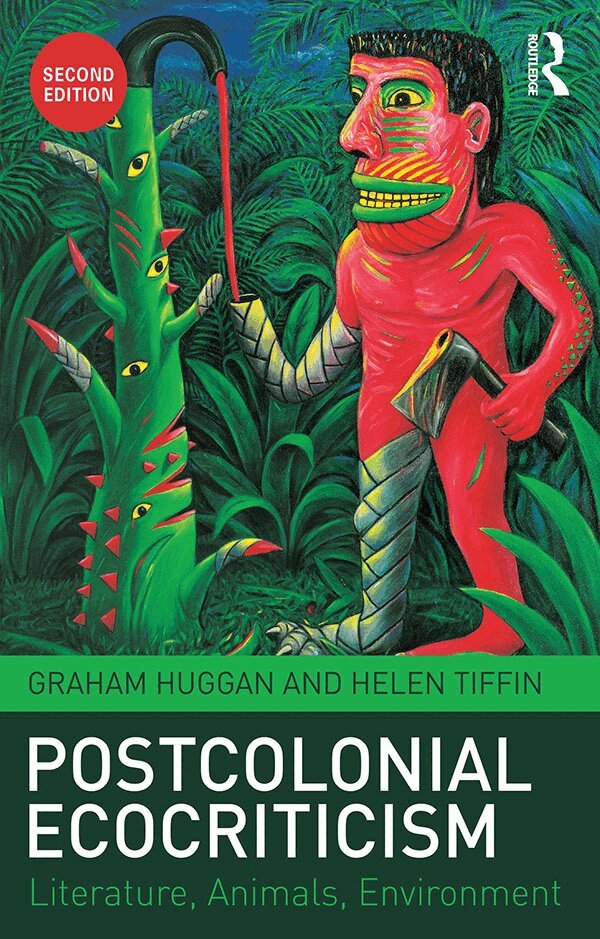
This second edition of Postcolonial Ecocriticism, a book foundational for its field, has been updated to consider recent developments in the area such as environmental humanities and animal studies. Graham Huggan and Helen Tiffin examine transverse relations between humans, animals and the environment across a wide range of postcolonial literary texts and also address key issues such as global warming, food security, human over-population in the context of animal extinction, queer ecology, and the connections between postcolonial and disability theory. Considering the postcolonial first from an environmental and then a zoocritical perspective, the book looks at:Narratives of development in postcolonial writingEntitlement, belonging and the pastoralColonial 'asset stripping' and the Christian missionThe politics of eating and the representation of cannibalismAnimality and spiritualitySentimentality and anthropomorphismThe changing place of humans and animals in a 'posthuman' world. With a new preface written specifically for this edition and an annotated list of suggestions for further reading, Postcolonial Ecocriticism offers a comprehensive and fully up-to-date introduction to a rapidly expanding field.
663 kr
Skickas inom 10-15 vardagar
This second edition of Postcolonial Ecocriticism, a book foundational for its field, has been updated to consider recent developments in the area such as environmental humanities and animal studies. Graham Huggan and Helen Tiffin examine transverse relations between humans, animals and the environment across a wide range of postcolonial literary texts and also address key issues such as global warming, food security, human over-population in the context of animal extinction, queer ecology, and the connections between postcolonial and disability theory. Considering the postcolonial first from an environmental and then a zoocritical perspective, the book looks at:Narratives of development in postcolonial writingEntitlement, belonging and the pastoralColonial 'asset stripping' and the Christian missionThe politics of eating and the representation of cannibalismAnimality and spiritualitySentimentality and anthropomorphismThe changing place of humans and animals in a 'posthuman' world. With a new preface written specifically for this edition and an annotated list of suggestions for further reading, Postcolonial Ecocriticism offers a comprehensive and fully up-to-date introduction to a rapidly expanding field.
1 391 kr
Skickas inom 10-15 vardagar
Ecocritical Concerns and the Australian Continent investigates literary, historical, anthropological, and linguistic perspectives in connection with activist engagements. The necessary cross-fertilization between these different perspectives throughout this volume emerges in the resonances between essays exploring recurring concerns ranging from biodiversity and preservation policies to the devastating effects of the mining industries, to present concerns and futuristic visions of the effects of climate change. Of central concern in all of these contexts is the impact of settler colonialism and an increasing turn to indigenous knowledge systems. A number of chapters engage with questions of ecological imperialism in relation to specific sociohistorical moments and effects, probing early colonial encounters between settlers and indigenous people, or rereading specific forms of colonial literature. Other essays take issue with past and present constructions of indigeneity in different contexts, as well as with indigenous resistance against such ascriptions, while the importance of an understanding of indigenous notions of “care for country” is taken up from a variety of different disciplinary angles in terms of interconnectedness, anchoredness, living country, and living heritage.